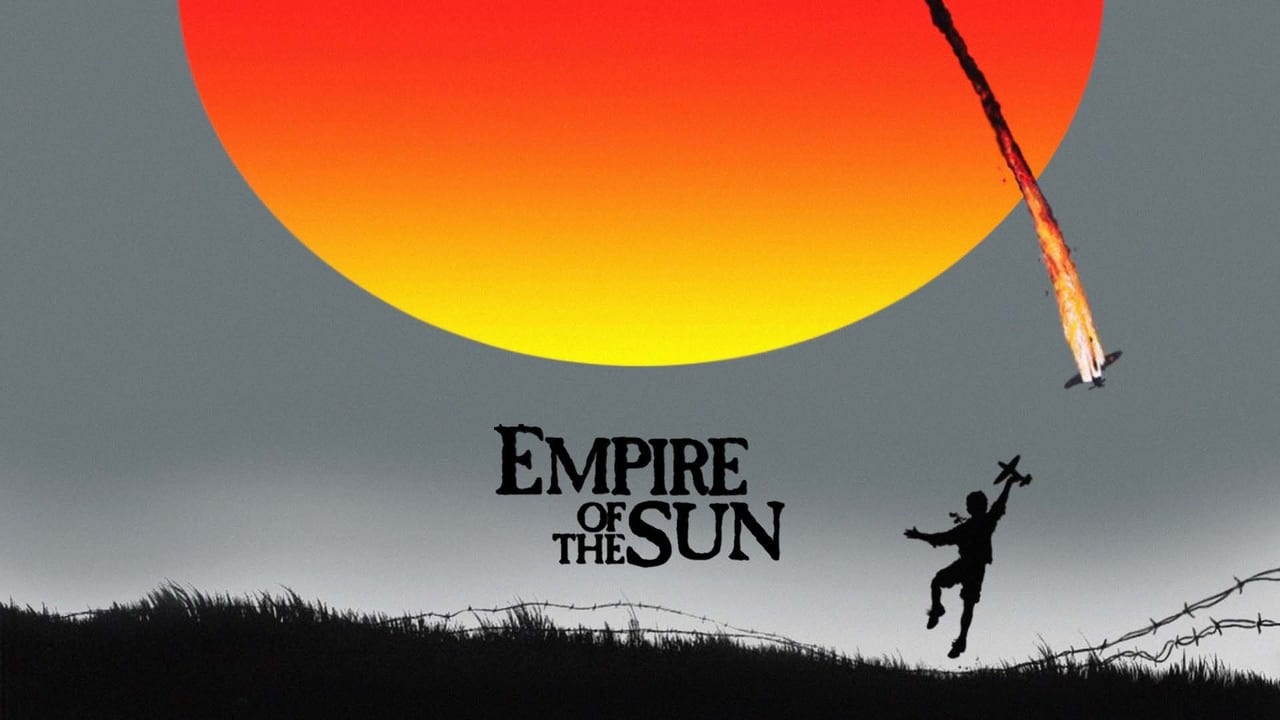
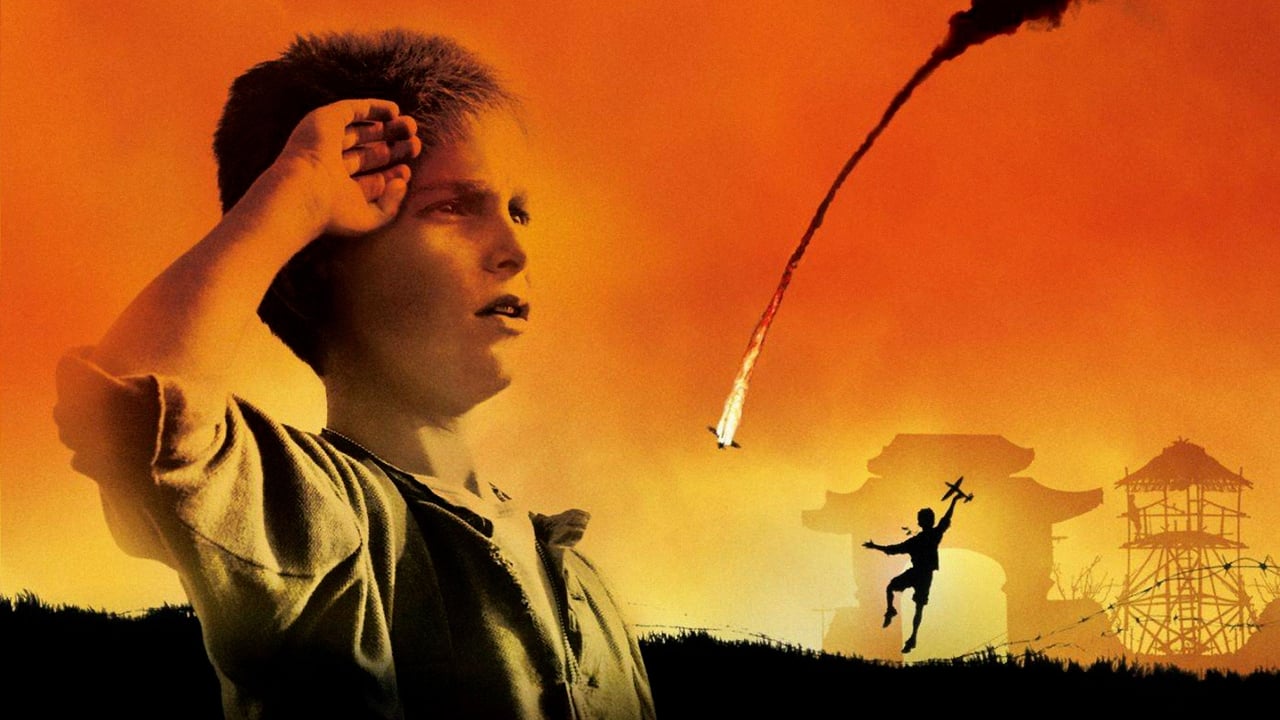
It begins with a boy's fascination, doesn't it? A privileged English child utterly captivated by the sleek, dangerous beauty of Japanese warplanes cutting through the Shanghai sky. That striking image, young Jamie Graham reaching out almost in worship towards the very forces that will soon shatter his world, is perhaps the most haunting and enduring takeaway from Steven Spielberg’s 1987 epic, Empire of the Sun. This wasn't the Spielberg of soaring bicycles or bullwhip-cracking adventurers many of us expected back then. Renting this tape, likely nestled between action flicks and comedies at the local video store, felt like discovering a different facet of a familiar filmmaker, one grappling with the profound loss of innocence against the vast, indifferent canvas of war.
A World Turned Upside Down
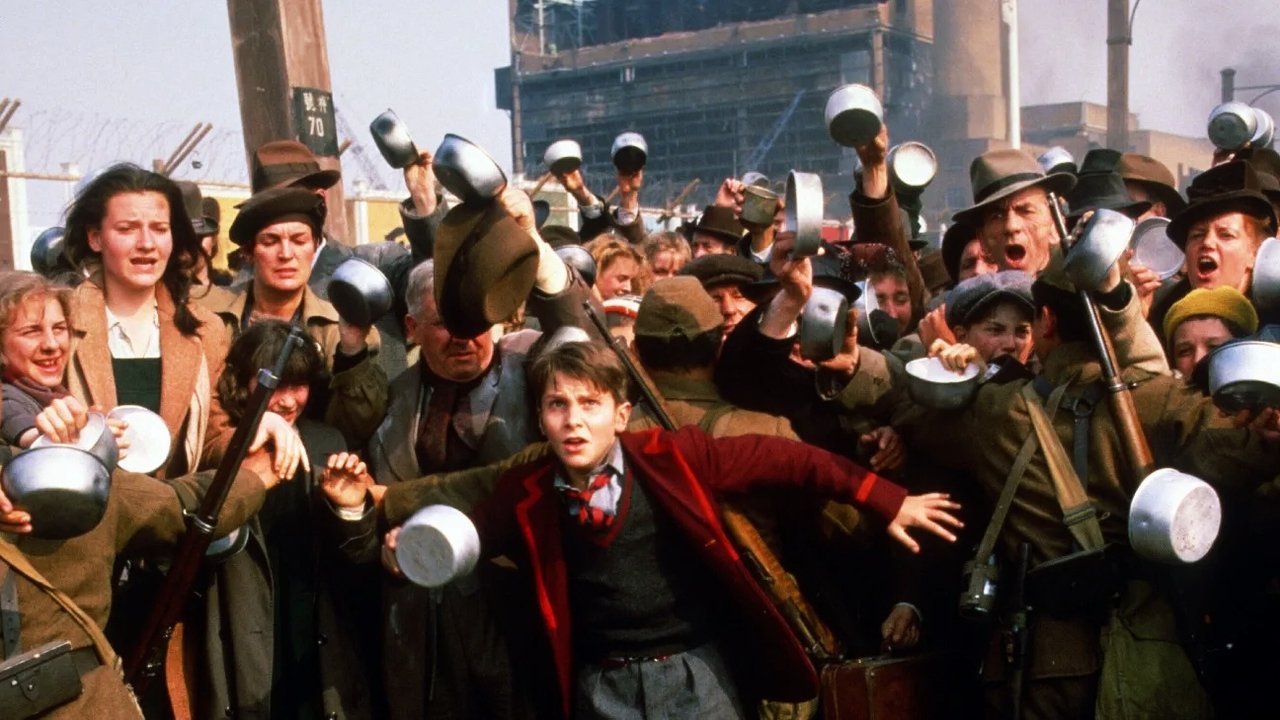
Based on J.G. Ballard's deeply personal, semi-autobiographical novel, the film plunges us into the dying days of Shanghai's International Settlement in 1941. We see the insulated luxury of expatriate life – the costume parties, the chauffeurs, the casual sense of colonial superiority – all rendered with Spielberg's characteristic visual richness. But this comfortable bubble is violently burst by the Japanese invasion. In a sequence of terrifying, expertly orchestrated chaos, young Jim (played by a remarkably young Christian Bale) is separated from his parents. What follows isn't a straightforward tale of rescue, but a harrowing, often surreal journey of survival as Jim navigates the treacherous landscape of occupied China, eventually landing in the Soo Chow Creek internment camp.
The Astonishing Arrival of Christian Bale

Let's be honest, the absolute anchor of Empire of the Sun is the performance at its center. It’s almost impossible to talk about this film without marveling at Christian Bale. Reportedly chosen from over 4,000 hopefuls (after Spielberg's then-wife, Amy Irving, spotted him in the television miniseries Anastasia: The Mystery of Anna), Bale delivers a performance of staggering maturity and nuance. He is Jim Graham – bright, resourceful, frustratingly naive at times, yet possessing an unnerving capacity for adaptation. We watch him transform from a coddled choirboy into a hardened survivor, his eyes reflecting both the lingering wonder of childhood (especially his obsession with flight) and the chilling pragmatism forced upon him by circumstance. It’s a performance that doesn't just carry the film; it elevates it, making Jim's experiences feel achingly real. Watching it again now, knowing the powerhouse actor Bale would become, only adds another layer to the viewing experience. You can see the intensity, the commitment, already fiercely present.
Survival's Strange Companions
Jim doesn't navigate this new reality alone, though his companions are far from conventional guardians. He falls under the dubious wing of Basie, a charismatic, opportunistic American merchant sailor played with slippery charm by John Malkovich (who had recently garnered attention for The Killing Fields (1984)). Basie is a complex figure – part mentor, part exploiter, teaching Jim the art of the hustle ("New Buick, kid!") while always looking out for number one. Their relationship is one of the film's most compelling threads, a portrayal of the ambiguous bonds forged in desperation. The supporting cast, including Miranda Richardson as the stoic Mrs. Victor and Nigel Havers as the weary Dr. Rawlins, add further depth to the tapestry of lives intersecting within the camp's confines.

Spielberg's Epic Vision and Retro Insights
Directing Empire of the Sun marked a significant step for Steven Spielberg. While retaining his mastery of visual storytelling and capturing moments of breathtaking beauty (aided by Allen Daviau's gorgeous cinematography), there's a weight and gravity here that felt new after the likes of E.T. the Extra-Terrestrial (1982). The scale is immense, particularly impressive considering this was one of the first major American productions granted extensive filming access within China. Imagine the logistics: coordinating thousands of extras, navigating cultural differences, all while telling an intimate story amidst epic historical events. Apparently, author J.G. Ballard himself visited the set (built partially in Spain, partially on location in Shanghai) and was reportedly moved by the recreation of his childhood experiences.
One particularly memorable sequence, Jim's awestruck salute to the American P-51 Mustang pilots – the "Cadillacs of the skies" – attacking the nearby airfield, perfectly encapsulates the film's blend of childlike wonder and wartime horror. Achieving that scene involved a combination of real, vintage aircraft and intricate model work, a testament to the practical effects magic of the era. And who could forget John Williams' soaring, evocative score, nominated for an Oscar, which beautifully underscores both the grandeur and the tragedy? Despite critical acclaim and multiple Academy Award nominations (though, surprisingly, none for Bale or Spielberg), the film, budgeted around $35 million, was only a modest success at the box office, earning about $66 million worldwide. Perhaps audiences weren't quite ready for this more somber Spielberg back in '87, making it something of a cherished discovery on VHS for many of us.
The Lingering Echoes
What stays with you after the credits roll on Empire of the Sun? For me, it’s the resilience of the human spirit, particularly that of a child forced to grow up far too soon. It’s a film that doesn't shy away from the ugliness of war but filters it through Jim's unique, often strangely poetic perspective. His journey raises questions about identity, adaptation, and what parts of ourselves we lose – or gain – when stripped of everything familiar. Does survival necessitate a compromise of innocence? How do we find connection in the most desolate of circumstances? These aren't easy questions, and the film, much like Ballard's novel and the adapted screenplay by the brilliant Tom Stoppard (Brazil, Shakespeare in Love), offers no simple answers. It presents the harrowing reality and leaves the viewer to contemplate the echoes.
Rating: 9/10
This rating reflects the film's powerful performances, particularly Bale's breakout role, Spielberg's masterful direction balancing epic scope with intimate focus, the stunning visuals, and its thoughtful, challenging exploration of complex themes. It's a beautifully crafted, emotionally resonant film that might have been overshadowed by Spielberg's more populist fare upon release but stands today as one of his most mature and moving works. A truly substantial film discovery waiting on that video store shelf.
Empire of the Sun remains a potent reminder of war's devastating impact, seen through the unforgettable eyes of a boy who simply loved airplanes, even as they heralded the end of his world. It’s a film that truly earns its epic scope and leaves a lasting impression, long after the tape has been rewound.