Some films linger like a stain on the mind, refusing to be scrubbed away. They arrive uninvited, perhaps whispered about in hushed tones online or stumbled upon in the deepest digital archives, relics of a time when cinematic boundaries felt violently elastic. Svetlana Baskova's 1999 descent into hell, The Green Elephant (Zelyonyy slonik), is precisely such a film – less a movie, more a psychic wound inflicted via flickering, low-resolution video. It’s the kind of artifact that feels like it clawed its way out of the late 90s Russian underground, bypassing censorship and taste entirely, destined to fester in the darker corners of cult cinema history. Forget nostalgia for cosy video nights; this evokes the memory of finding that one tape, the one without a proper label, that felt genuinely dangerous to watch.
Four Walls and a Creeping Stain
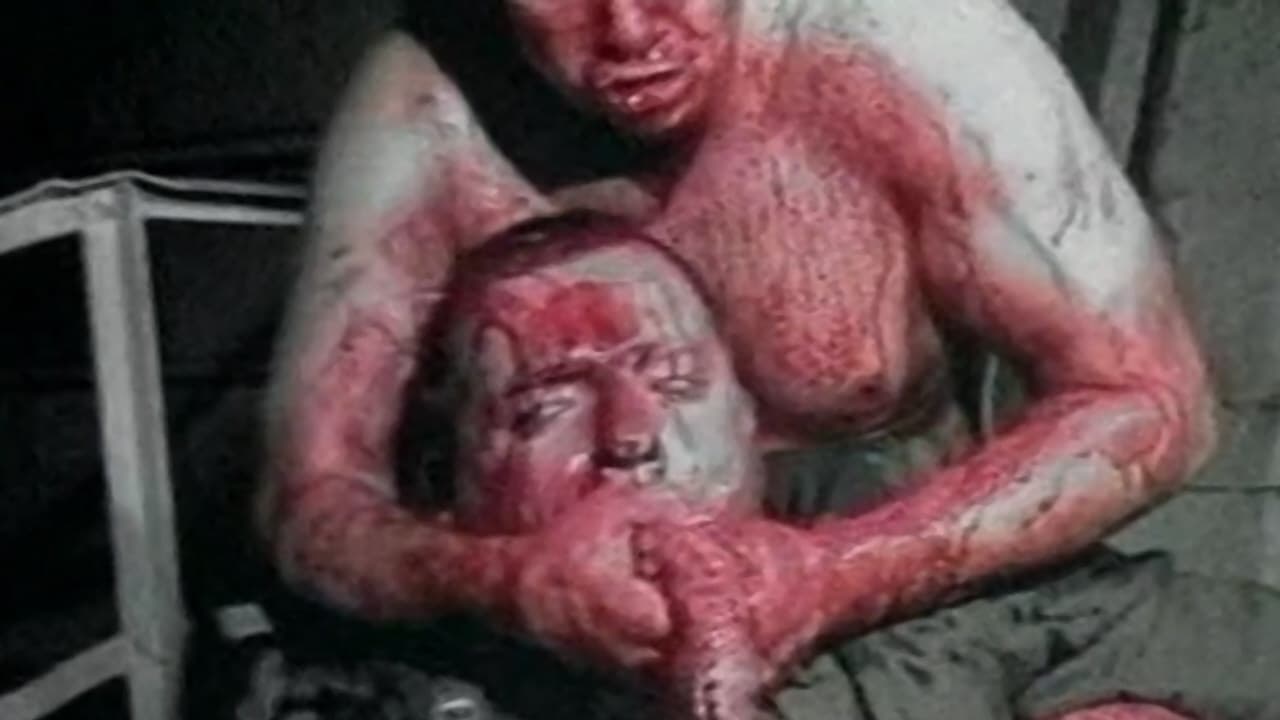
The setup is deceptively simple, almost Beckettian in its starkness. Two junior army officers, colloquially known as "Poehavshiy" (roughly "Bonkers," played with unsettling vacancy by performance artist Sergey Pakhomov) and "Bratishka" ("Little Brother," a simmering Vladimir Epifantsev), are confined to a squalid military prison cell – the "gaubtvakhta" – for some unspecified infraction. Their initial interactions are mundane, bordering on the absurd: rambling stories, pointless requests, the crushing boredom of confinement. But beneath the surface chit-chat, something rancid is brewing. The oppressive heat, the filth, the sheer pointlessness of their situation – it all presses down, creating an atmosphere so thick with grime and sweat you can almost smell it through the screen. Baskova uses the limitations of her medium – reportedly shot on Betacam SP for next to nothing – to amplify the claustrophobia. The grainy image, the flat lighting, the often-static camera; it all contributes to a feeling of being trapped with them, watching helplessly as the psychological decay sets in.
The Point of No Return
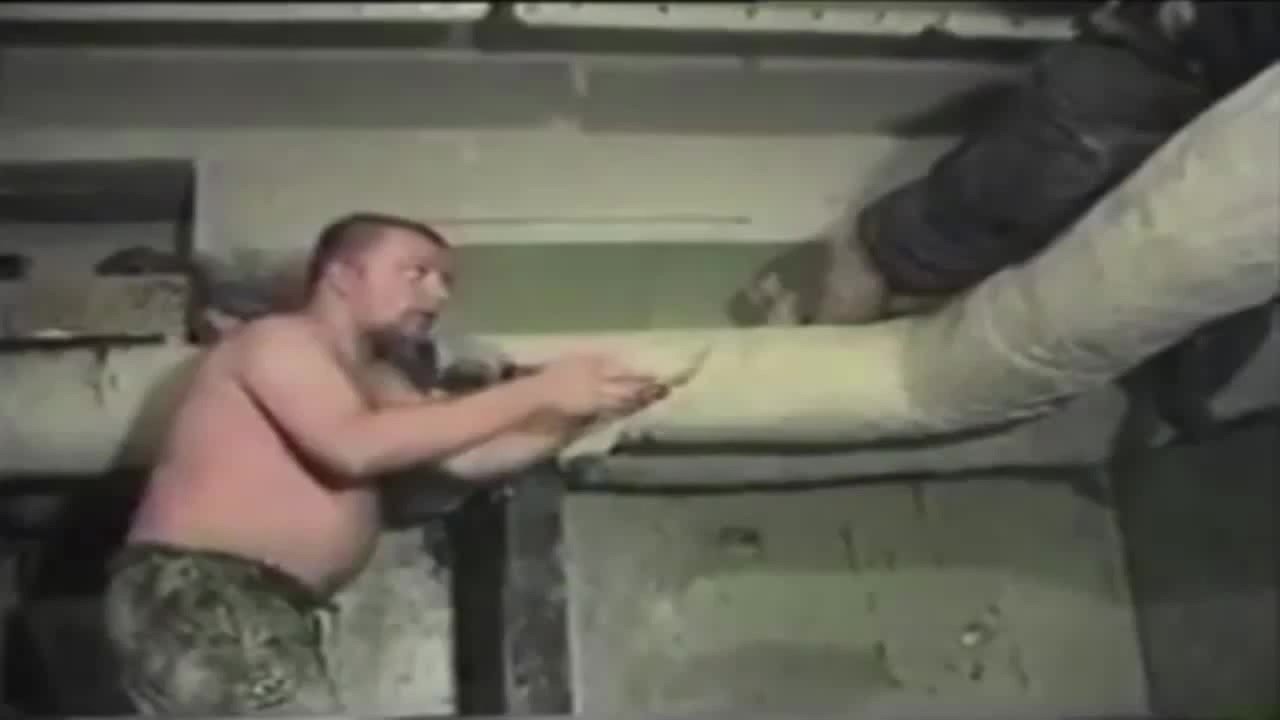
What follows is a descent into degradation that has become legendary, whispered about in online forums and spawning countless internet memes that bizarrely contrast with the film's utter bleakness. Pakhomov's character, initially just eccentric, spirals into profound scatological madness, delivering monologues that are both nonsensical and deeply disturbing. His infamous "sweet bread" story is a moment of such bizarre, repulsive fixation that it burns itself into your memory. Epifantsev, the seemingly saner of the two, finds his composure methodically stripped away, layer by agonizing layer, by his cellmate's lunacy and the abuses inflicted by their superiors, particularly the menacing Captain (played by another notable figure from the Moscow art scene, Anatoly Osmolovsky). There's a sense here of the rigid, dehumanizing structures of military life, or perhaps post-Soviet society itself, grinding individuals down into base components. Baskova offers no easy answers, no comforting narrative arc – just a relentless, unflinching stare into the abyss. Did anyone involved truly anticipate the bizarre afterlife this film would have, propelled by the very internet culture that barely existed when it was made?
An Artifact of Transgression
Understanding The Green Elephant requires acknowledging its context. Emerging from the turbulent Russian 90s, filmed with pocket change and featuring actors deeply embedded in the confrontational Moscow Actionism art movement (Pakhomov and Osmolovsky especially), it feels less like a conventional narrative film and more like a piece of brutalist performance art captured on tape. The extreme content – involving feces, graphic violence, and psychological torture – isn't just for shock value (though it certainly shocks); it feels like a deliberate transgression, a primal scream against societal norms, sanity, and perhaps cinema itself. There’s a horrifying authenticity to the performances, particularly Pakhomov's, that blurs the line between acting and… something else. Rumors and "dark legends" about the shoot abound online, mostly unverifiable, but they speak to the film's power to make viewers believe they’ve witnessed something genuinely unhinged. Its journey from obscure art project to notorious internet phenomenon is a strange testament to the digital age's ability to resurrect and disseminate even the most challenging material, much like those forbidden VHS tapes found their way through underground networks.
The Verdict
Assigning a numerical score to The Green Elephant feels almost profane, like trying to rate a natural disaster. It exists outside conventional metrics of "good" or "bad" filmmaking. It is repellent, nauseating, technically crude, and utterly unforgettable. Yet, in its uncompromising vision and its power to evoke genuine, visceral reactions – disgust, horror, morbid fascination – it achieves a kind of terrible success. It pushes boundaries further than most would dare, forcing viewers to confront the extremes of human degradation and the fragility of sanity. It's not a film to "enjoy," and certainly not one for the faint of heart (or stomach). This isn't the warm hug of nostalgia; it's the cold slap of cinematic extremity.
Rating: 3/10
Explanation: This score reflects the film's near-total hostility towards the viewer and its technical crudeness, making it impossible to recommend in any conventional sense. However, the score acknowledges its undeniable impact, its historical significance as a piece of extreme underground art, and its terrifying effectiveness in achieving its goal: to utterly disturb. It’s a potent, if poisonous, artifact.
Final Thought: The Green Elephant remains a notorious benchmark in transgressive cinema, a film more talked about (and memed) than actually watched. It’s a brutal reminder from the fringes of the late VHS/early digital era that sometimes, the most resonant cinematic experiences are the ones that leave you feeling profoundly unwell, questioning not just what you watched, but why it was ever made.