It starts with an accident, a moment of chaos under the California night sky. A young actress, Julie Sawyer (Kristy McNichol, then a familiar face from shows like Family and films like Little Darlings (1980)), strikes a stray white German Shepherd with her car. What follows is an act of compassion that spirals into a confrontation with something truly ugly, something far more dangerous than a lost animal. This is the unsettling entry point into Samuel Fuller's 1982 film, White Dog, a movie that pulls no punches and asks questions so uncomfortable that its original distributor essentially buried it for years.
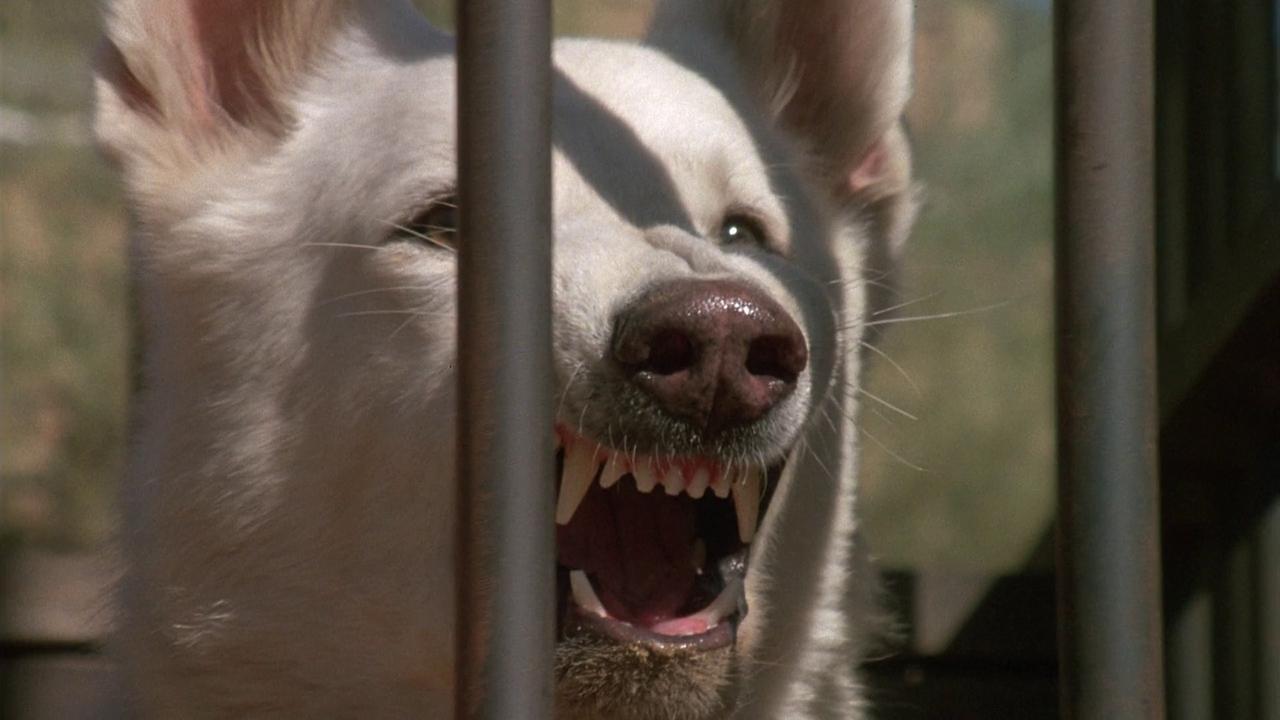
An Unsettling Companion
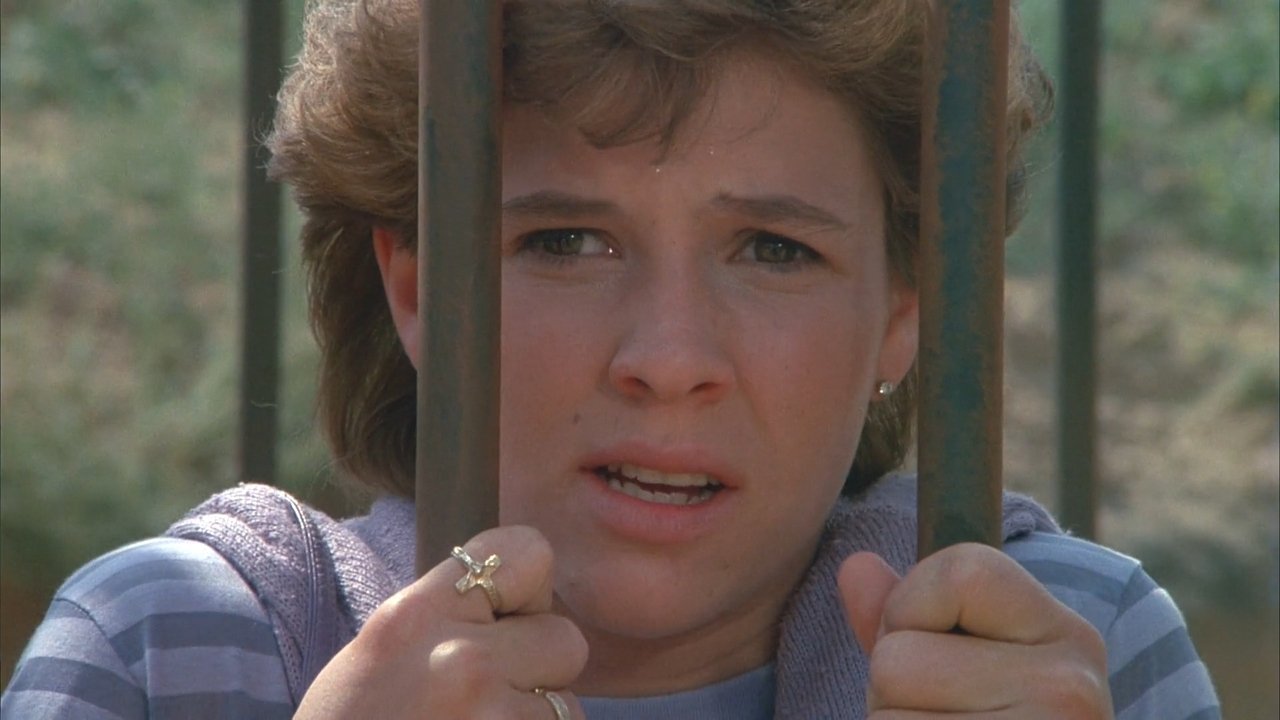
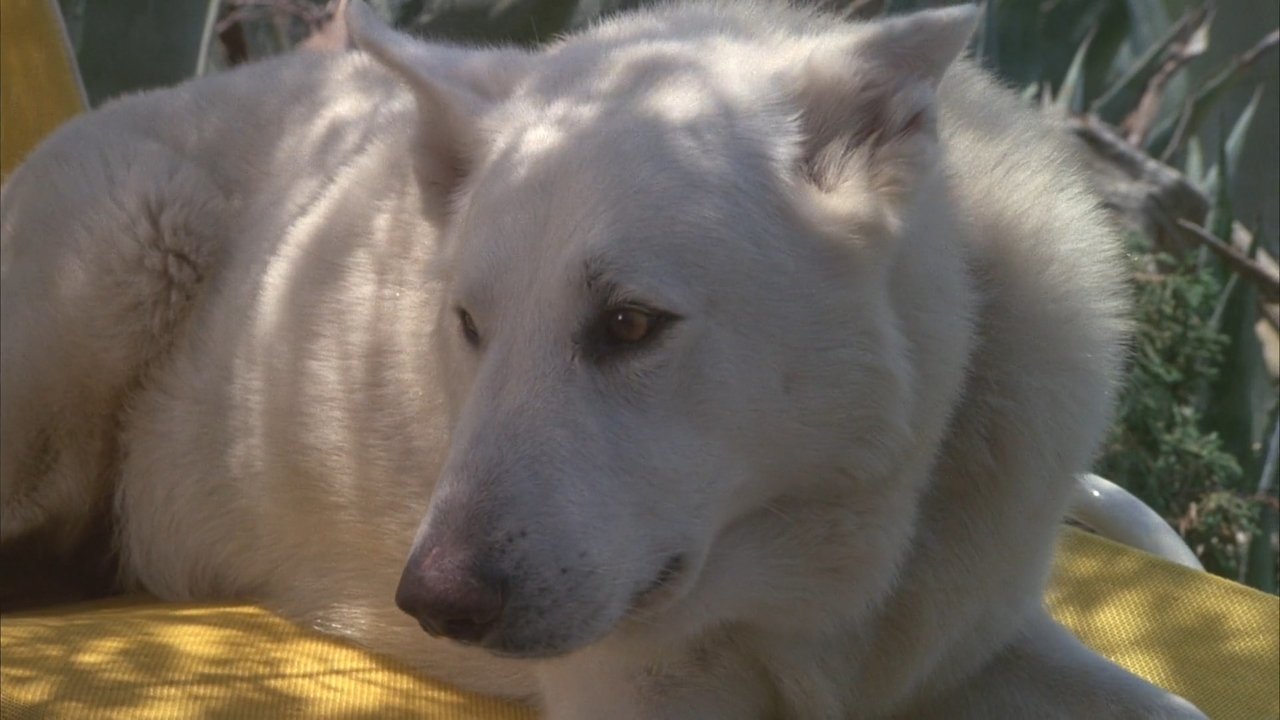
Julie nurses the dog back to health, discovering a loyal, intelligent, and seemingly loving companion. He defends her from an intruder, cementing her affection. But then, the horrifying truth claws its way to the surface. The dog isn't just protective; it's a weapon, meticulously trained from puppyhood by racists to savagely attack Black people on sight. The shock of this revelation, the dissonance between the gentle creature Julie thought she knew and the hate-filled beast it becomes, is the film's raw, beating heart. Kristy McNichol, navigating the tricky transition from teen stardom, effectively portrays Julie’s dawning horror and desperate hope that this learned hatred can somehow be unlearned. Her journey mirrors the audience's – grappling with the awful reality hidden beneath a seemingly innocent surface.
The Impossibility of Re-Education?
Desperate, Julie takes the dog to Carruthers (Burl Ives, bringing his familiar folksy gravitas, here tinged with a pragmatic weariness), who runs an exotic animal training facility. But Carruthers recognizes the poison instantly; his advice is stark – put the dog down. It’s Keys (Paul Winfield), Carruthers' Black associate and a master trainer, who sees a sliver of hope, or perhaps a profound challenge he cannot ignore. Can pure, ingrained hatred be reprogrammed? Winfield delivers a performance of staggering power and restraint. Keys is quiet, watchful, immensely skilled, but beneath the surface simmers a lifetime of understanding the very prejudice embodied by the dog. He takes on the task not just as a trainer, but as a man confronting the symbolic manifestation of the racism he faces daily. His scenes with the dog are fraught with tension – a silent battle of wills, a desperate attempt to reverse psychological conditioning that feels almost absolute. Paul Winfield, who gave us such memorable turns in films like Sounder (1972) and later Star Trek II: The Wrath of Khan (1982), is the undeniable soul of White Dog. His quiet determination, the flicker of hope warring with weary knowledge in his eyes, makes the film’s central question agonizingly real.
Fuller's Blunt Instrument
Director Samuel Fuller, known for his hard-hitting, confrontational style in films like Pickup on South Street (1953) and The Big Red One (1980), doesn't shy away from the ugliness here. Working from a script he co-wrote with Curtis Hanson (who would later find mainstream success directing L.A. Confidential (1997)), based loosely on Romain Gary's novel, Fuller crafts a stark, potent allegory. There's little room for subtlety; the dog is racism – conditioned, irrational, deadly, yet tragically, itself a victim of its upbringing. Fuller uses stark visuals, including unsettling dog's-eye-view shots during attacks, to immerse us in the horror.
This bluntness, however, proved too much for Paramount Pictures. Fearing boycotts and accusations of promoting racism (despite the film's clear anti-racist message), the studio effectively shelved White Dog in the United States. It received releases overseas but became a legendary unseen film stateside, whispered about among cinephiles and occasionally surfacing on grainy bootleg VHS tapes. I distinctly remember the almost illicit thrill of finally tracking down a copy back in the day; it felt like watching something forbidden, something deemed too dangerous for public consumption. Fuller himself was deeply wounded by the experience, largely abandoning Hollywood filmmaking afterward. The studio allegedly pushed for a more palatable, hopeful ending, but Fuller, ever the uncompromising filmmaker, refused. The ending we have is stark, unforgettable, and refuses easy answers.
A Legacy Unearthed
Finding White Dog on VHS felt like uncovering a secret history. It was so different from the slick blockbusters or goofy comedies dominating the rental shelves. It felt raw, angry, and deeply serious. The practical challenges must have been immense – working with multiple trained dogs (the lead was apparently a rescue) to portray both gentle companion and savage attacker convincingly adds another layer to the production's intensity. There are stories about the difficulty in achieving certain shots, the careful choreography needed for the attack sequences to be terrifying without actually harming anyone. This wasn't CGI; this was real animals, real trainers, real tension on set, trying to capture something profoundly disturbing.
The film's suppression inadvertently cemented its cult status. When it finally received proper distribution and critical reappraisal years later (including a Criterion Collection release), it felt like justice, albeit delayed. Does the allegory sometimes feel heavy-handed by today's standards? Perhaps. But its core message – about the insidious nature of learned hatred, the difficulty of eradicating prejudice once it takes root, and the question of whether some damage is irreparable – remains tragically relevant. It forces us to confront whether societal conditioning can truly be overcome.

Rating: 8/10
White Dog is a challenging, often brutal film, anchored by a phenomenal performance from Paul Winfield and guided by Samuel Fuller's unflinching directorial vision. Its power lies in its directness, its refusal to soften the blow or offer comforting solutions. The controversy surrounding its release speaks volumes about the nerves it touched, and its journey from studio pariah to cult classic is a fascinating piece of cinema history. The 8 rating reflects its potent thematic resonance, unforgettable performances, and Fuller's uncompromising direction, acknowledging its difficult subject matter might not be for everyone, but its importance as a piece of brave, confrontational filmmaking is undeniable.
It’s a film that lingers, leaving you chewing on its bleak implications long after the static fills the screen. What does it truly take to unlearn hate, and is it always possible? White Dog doesn't offer easy answers, and maybe that's precisely why it remains so vital.