The glow of the television paints the room in cold, shifting colours. Outside, the world sleeps, but inside, the VCR whirs, transporting us not to a world of slashers or space battles, but somewhere far more unsettling: the meticulously ordered, chillingly detached mind of a Bull Terrier named Baxter. Forget jump scares; Jérôme Boivin’s 1989 French oddity Baxter burrows under your skin with a quiet, philosophical dread that lingers like the metallic taste of fear. It's the kind of film you might have stumbled upon late one night on Channel 4, or perhaps picked up from the 'World Cinema' shelf at the video store, drawn by its stark cover and the promise of something… different. Different it certainly is.
### A Canine State of Mind
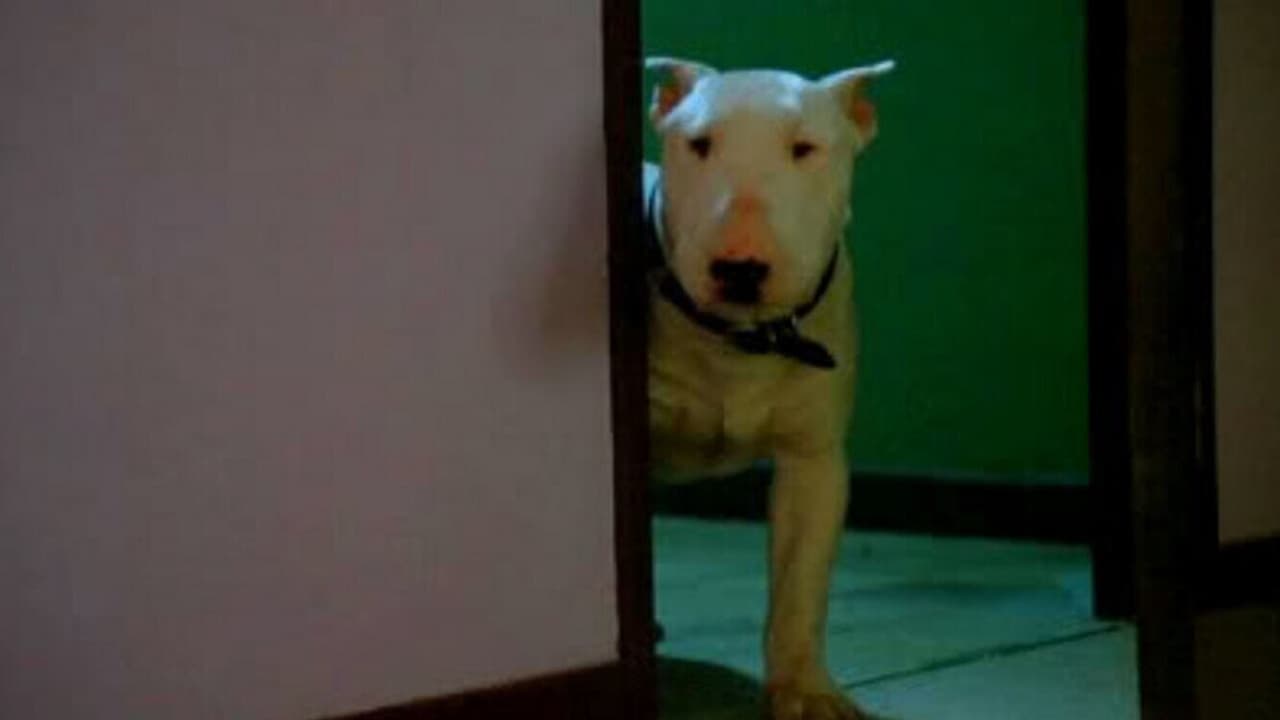
Based on Ken Greenhall's bleak novel Hell Hound, Baxter isn't your typical "killer dog" movie. There are no rabid mutations or supernatural possessions here. Instead, we are privy to Baxter's internal monologue (voiced with unsettling calm by Maxime Leroux in the original French), a stream of consciousness obsessed with finding the perfect master, achieving perfect order, and understanding the baffling, often disappointing, world of humans. His desires start simply – structure, discipline, a strong hand – but curdle into something far more sinister as he moves from one owner to another, each failing to meet his increasingly rigid, almost fascistic, ideals. The film was co-written by Jacques Audiard, who would later direct acclaimed, intense dramas like A Prophet (2009) and Rust and Bone (2012), and you can already sense his fascination with complex, often dangerous, psychologies here.
### The Unsettling Banality of Evil
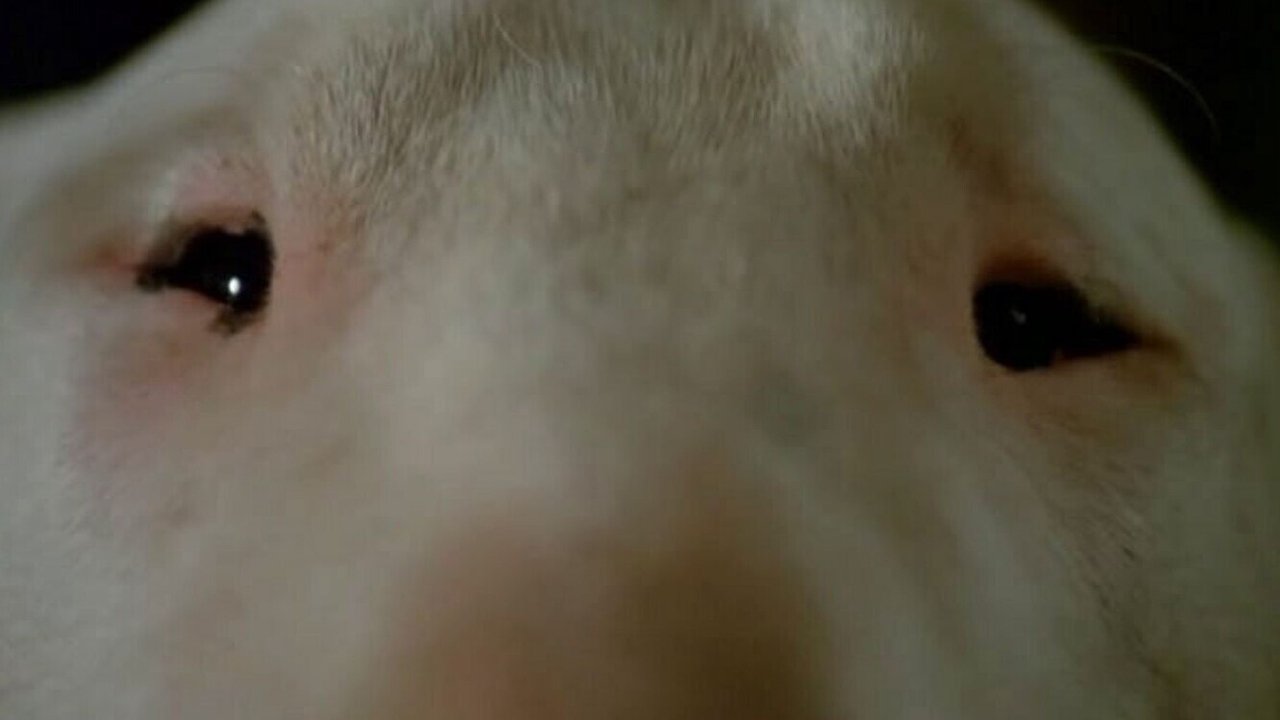
What makes Baxter so uniquely chilling is its setting and aesthetic. Director Jérôme Boivin, in his feature debut, deliberately avoids gothic castles or shadowy alleys. Instead, the horror unfolds in brightly lit, nondescript French suburban homes, gardens, and streets. The cinematography is clean, almost clinical, mirroring Baxter's detached observations. This juxtaposition of the mundane and the monstrous is profoundly effective. The terror isn't lurking in the dark; it's sitting right there on the living room rug, observing, judging, and planning. It taps into that primal fear of the familiar turning malevolent, the trusted companion revealing a hidden, alien consciousness.
The human characters are viewed entirely through Baxter's dismissive perspective. There’s the elderly Madame Deville (Lise Delamare, a veteran French actress bringing a fragile dignity to the role), whose quiet affection Baxter interprets as weakness. There's the young couple whose chaotic love life fails to provide the structure he craves. And then there's the boy, Charles (François Driancourt), a lonely, budding sociopath whose fascination with Nazism and solitary intensity finally seems to offer Baxter the kind of master he's been seeking. Their relationship forms the film's dark heart, a disturbing reflection of shared pathologies across species. Doesn't that mirroring feel more profoundly chilling than any gore?
### More Than Just a Dog Story

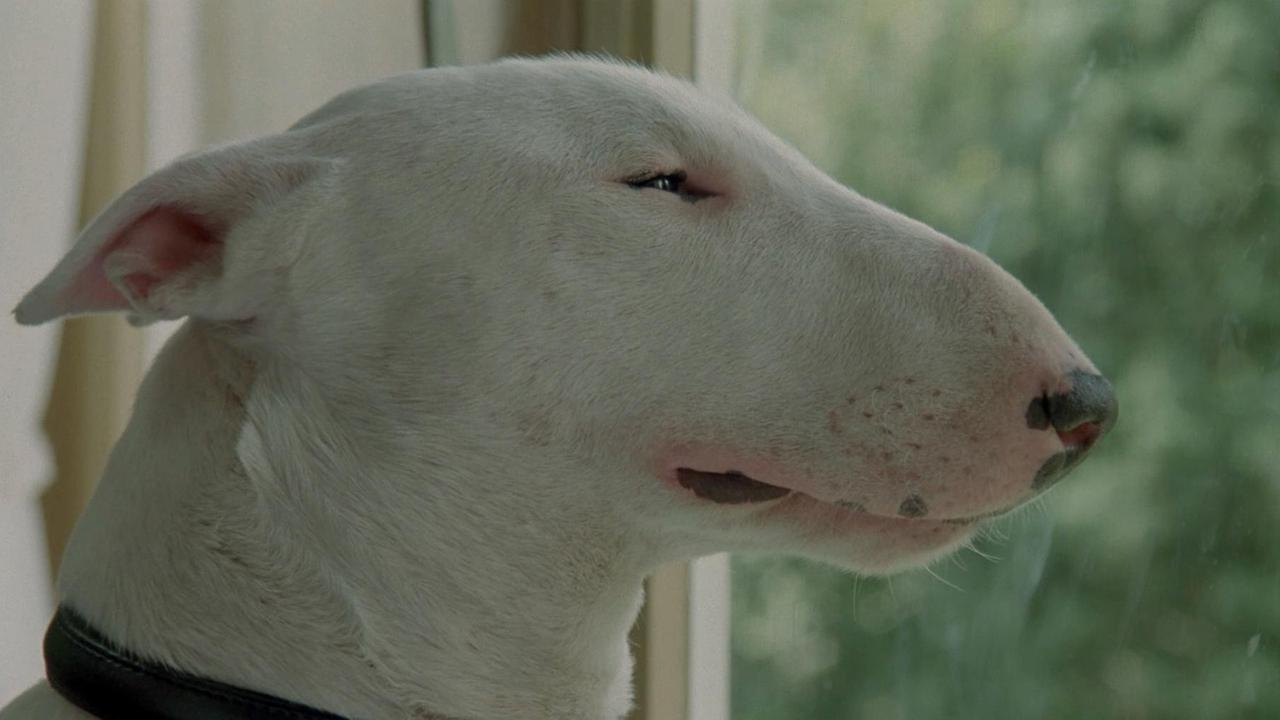
While on the surface it's a film about a dog, Baxter operates on potent allegorical levels. Baxter's yearning for absolute order, his contempt for perceived weakness, and his ultimate attraction to the cold discipline embodied by the young neo-Nazi admirer clearly evoke themes of fascism and authoritarianism. It's a political commentary delivered with icy precision, using the animal's perspective to critique dangerous human ideologies without resorting to heavy-handed speeches. It’s a thinking person’s horror film, relying on intellectual discomfort rather than visceral shocks. The film reportedly garnered critical acclaim upon its French release, winning awards at the prestigious Avoriaz Fantastic Film Festival, recognized for its intelligent and disturbing approach.
Finding this tape back in the day felt like unearthing a secret. It wasn’t the kind of film discussed widely amongst friends like A Nightmare on Elm Street or RoboCop. It was quieter, stranger, more cerebral. I distinctly remember renting it based purely on the unsettling cover art – that intense stare of the Bull Terrier – and being completely unprepared for the cold, existential dread it delivered. It wasn't scary in a 'hide behind the sofa' way, but in a 'stare at the ceiling contemplating the void' kind of way. It’s a film that makes you look at your own pets with a flicker of suspicion, even if just for a moment.
### Legacy of Unease
Baxter remains a unique entry in the annals of psychological horror and a standout cult classic from the late VHS era. It avoids genre tropes, delivering a slow-burn philosophical chiller that uses its unusual perspective to explore dark corners of both animal and human nature. The performances are understated, serving the film's cold tone perfectly, while Boivin's direction maintains a tight grip on the unsettling atmosphere throughout. It’s not a film for everyone – its deliberate pace and intellectual bent might bore those seeking conventional thrills. But for those who appreciate atmospheric dread and films that provoke thought long after the credits roll, Baxter is a chilling, unforgettable experience. Its starkness hasn't aged; if anything, its themes feel disturbingly relevant.
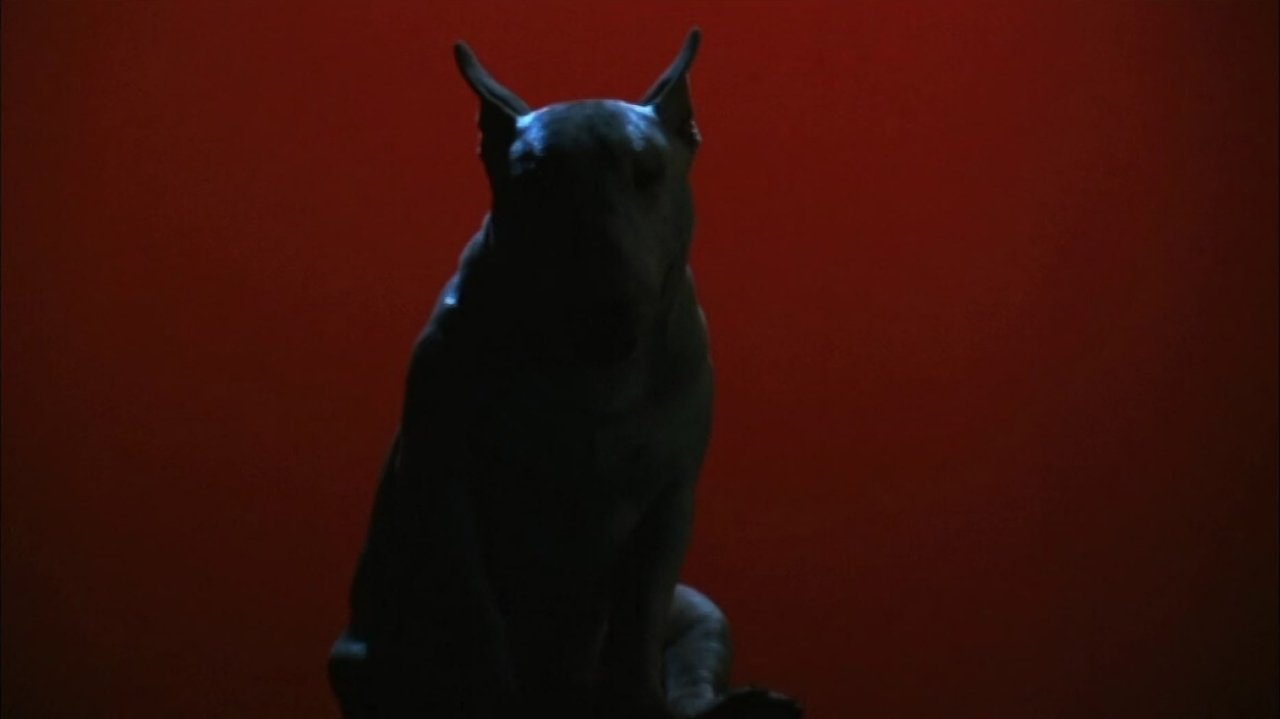
VHS Heaven Rating: 8.5/10
Justification: Baxter earns its high score for its chillingly unique premise, masterful atmospheric control, intelligent allegorical depth, and its unsettling effectiveness in creating psychological dread rather than relying on gore or jump scares. It's a standout piece of French genre filmmaking from the era, elevated by Jacques Audiard's sharp writing and Jérôme Boivin's assured direction. The slightly lower mark reflects that its deliberate pacing and detached tone might not resonate universally, making it more of a cult favourite than a mainstream classic.
Final Thought: Forget Cujo; Baxter is the thinking person's nightmare pet, a furry philosopher whose quest for order leaves a trail of quiet devastation. A truly unsettling gem from the twilight of the 80s.