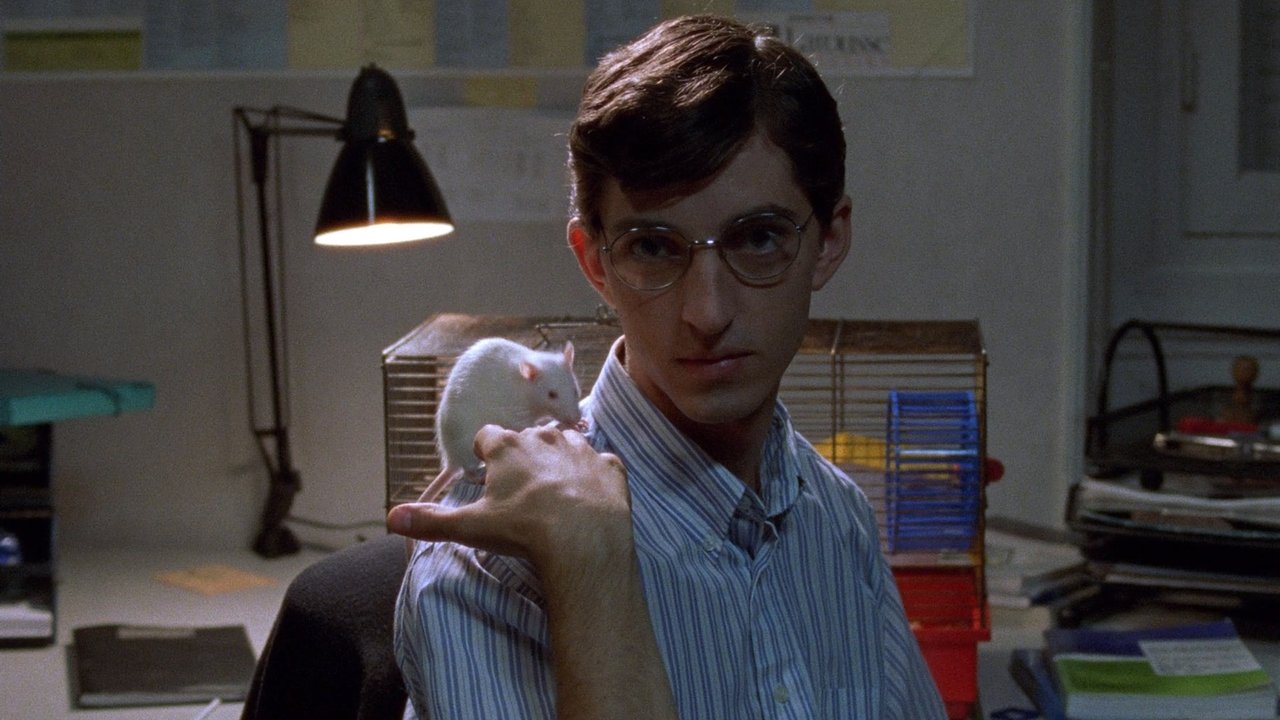
It often begins quite simply, doesn't it? A small shift, an unexpected arrival that subtly alters the domestic landscape. In François Ozon's audacious 1998 feature debut, Sitcom, that catalyst is a humble white rat, brought home by the patriarch (François Marthouret) to his picture-perfect suburban family. But this is no heartwarming tale of a new pet uniting a household. Instead, the rat seems to uncork a hidden reservoir of repressed desires, sexual confusion, and outright rebellion, sending the family spiraling into territories far removed from the cozy confines its title ironically suggests. Finding this on a video store shelf back in the day, perhaps nestled in the ‘World Cinema’ section, felt like discovering something potentially dangerous, definitely unusual.

Beneath the Veneer
Ozon, who would later give us more polished but often equally provocative films like Swimming Pool (2003) and 8 Women (2002), bursts onto the feature scene here with a Molotov cocktail disguised as a family portrait. The setup is deceptively familiar: the affluent parents, the brooding son Nicolas (Adrien de Van), the curious daughter Sophie (Marina de Van), and the pragmatic maid Maria (Lucia Sanchez). The initial interactions carry the stilted politeness of their bourgeois existence. But exposure to the rat acts like a truth serum, stripping away inhibitions with alarming speed. Nicolas announces his homosexuality, Sophie explores extreme sadomasochism with her boyfriend (Stéphane Rideau), the father reveals hidden proclivities, and the mother, Hélène (Évelyne Dandry), undergoes the most profound and unsettling transformation of all.
What unfolds is less a conventional narrative and more a series of escalating provocations. Ozon delights in pushing buttons, juxtaposing the clean, almost sterile aesthetic of the family home – reportedly filmed in Ozon's own grandmother's house, adding a layer of pointed personal commentary – with increasingly taboo subject matter. Incest, group sex, BDSM, even hints of bestial transformation; nothing seems off-limits. Is it purely for shock value? Perhaps partly. But beneath the surface lurks a biting critique of societal norms and the suffocating nature of enforced respectability. The film seems to ask: what happens when the carefully constructed dam of middle-class propriety finally breaks?
Committed to the Chaos
For Sitcom to work even on its own outrageous terms, the performances needed to be utterly committed, navigating the hairpin turns from mundane domesticity to shocking transgression without flinching. And largely, they succeed. Évelyne Dandry, often seen in more traditional French roles, is a standout as Hélène. Her journey from poised matriarch to something primal and liberated (in the film's twisted logic) is both horrifying and weirdly compelling. She grounds the escalating absurdity in a believable emotional decay, or perhaps, awakening. Marina de Van, who would later explore themes of the body and transgression in her own directorial work like the challenging In My Skin (2002), brings a fascinating intensity to Sophie's explorations of pain and pleasure. The entire cast embraces the film's dark, surreal humor, playing even the most outlandish scenes with a seriousness that amplifies the satire.
Ozon's Provocative Calling Card


Shot on a relatively modest budget (around FRF 6 million, roughly $1 million USD at the time), Sitcom feels raw and immediate. It doesn't have the visual gloss of Ozon's later work, but its lo-fi energy suits the material. The direction is confident, clearly influenced by the transgressive spirit of filmmakers like Luis Buñuel and John Waters, reveling in the grotesque and the absurd. When it premiered at the Cannes Film Festival's International Critics' Week, reactions were predictably strong and divided – a testament to its confrontational power. It wasn't aiming for universal appeal; it was announcing a singular, fearless new voice in French cinema. One wonders if the cast fully grasped the extremes the script would demand until they were deep into production, navigating scenes that surely tested boundaries.
The film isn't subtle. Its symbolism (the rat as id, the home as prison) is laid bare. Some moments might feel gratuitous, designed purely to provoke a gasp or a nervous laugh. It certainly won't be for everyone, and revisiting it now, its shock tactics might seem less potent in a landscape saturated with extreme content. Yet, there's an undeniable energy, a punk-rock sensibility to its dismantling of the family unit. It’s the kind of film that sparked heated discussions after the tape was ejected – did you love it? Hate it? Were you simply stunned into silence?
Final Reflection

Sitcom remains a potent, if abrasive, piece of late-90s provocative cinema. It’s a film that dares you to look away, challenging comfort zones and expectations with gleeful abandon. While undeniably confrontational and certainly not a 'feel-good' watch, its fearless satire and the committed performances make it a significant marker in François Ozon's early career and a memorable, squirm-inducing oddity from the VHS era. It’s the cinematic equivalent of finding something genuinely weird and unsettling at the back of the video store shelf – a discovery you wouldn't easily forget.
Rating: 7/10 - A provocative and audacious debut that, while potentially alienating and uneven, showcases Ozon's early talent for dark satire and features brave performances. Its shock value might have diminished slightly, but its critique of bourgeois repression still bites, justifying its status as a memorable cult entry, even if it's one you admire more than love.