It arrives less like a narrative and more like a fever dream sketched in watercolour and rose petals. Watching Revolutionary Girl Utena: The Movie (or Adolescence of Utena, as it’s sometimes known) for the first time, especially back around the turn of the millennium when ambitious, art-house anime like this felt like contraband smuggled from another dimension, was an exercise in surrender. You either let its tide of opulent visuals, fragmented reality, and operatic emotion wash over you, or you drowned trying to piece together a conventional story. For those familiar with the preceding 39-episode TV series, it was perhaps even more disorienting – a familiar world shattered and rebuilt into something bolder, stranger, and arguably, more intensely focused.
Echoes in a Twisted Garden
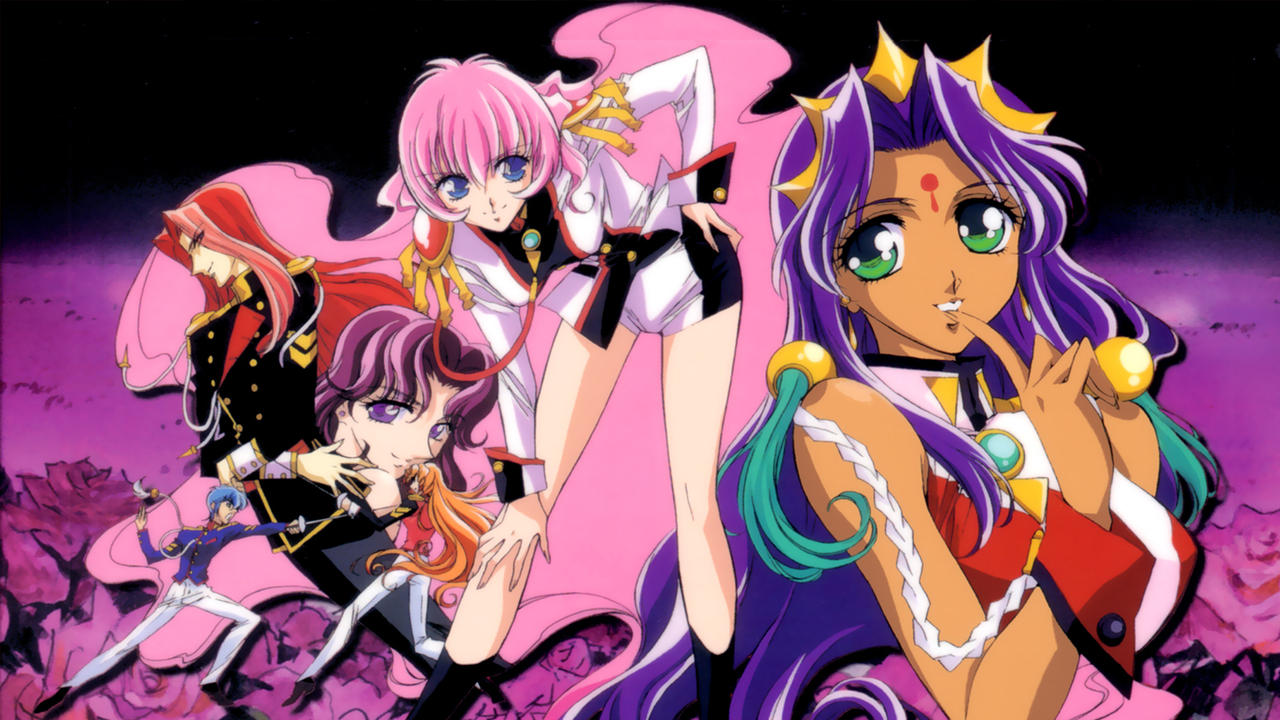
Directed by the visionary Kunihiko Ikuhara, who had already steered parts of Sailor Moon into unexpected territory, and penned by his frequent collaborator Yōji Enokido (whose credits also include challenging works like Neon Genesis Evangelion and FLCL), the 1999 film isn't a sequel or a summary. It's a radical reimagining. We are reintroduced to Ohtori Academy, that impossible Gakuen seemingly adrift from time and space, and to Utena Tenjou (Tomoko Kawakami), a new transfer student whose boyish uniform and princely demeanor immediately set her apart. She swiftly encounters Anthy Himemiya (Yuriko Fuchizaki), the enigmatic Rose Bride, bound in servitude to the winner of the school's duels. The core elements – the dueling arena, the Student Council, the quest for revolution – echo the series, but the context, the character dynamics, and the ultimate destination are profoundly altered. This isn't just a remix; it feels like the original symphony performed backwards, underwater, during an earthquake.
A Feast for the Senses, A Puzzle for the Mind
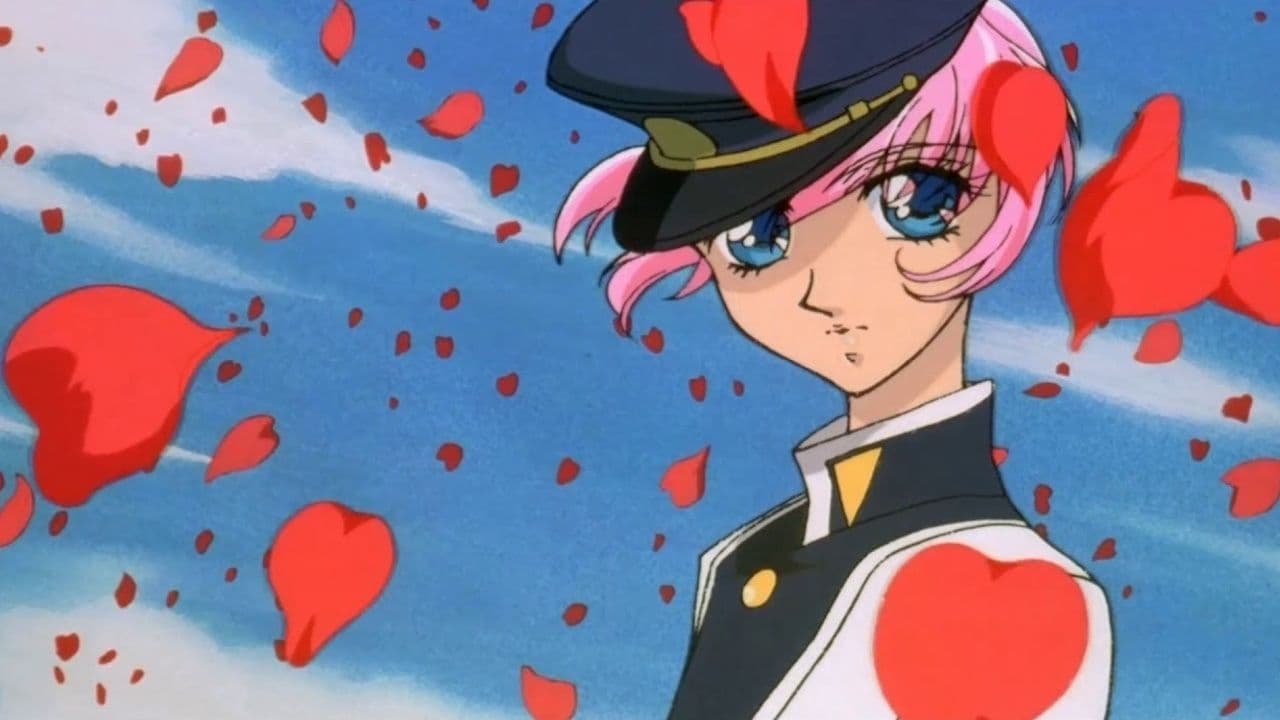
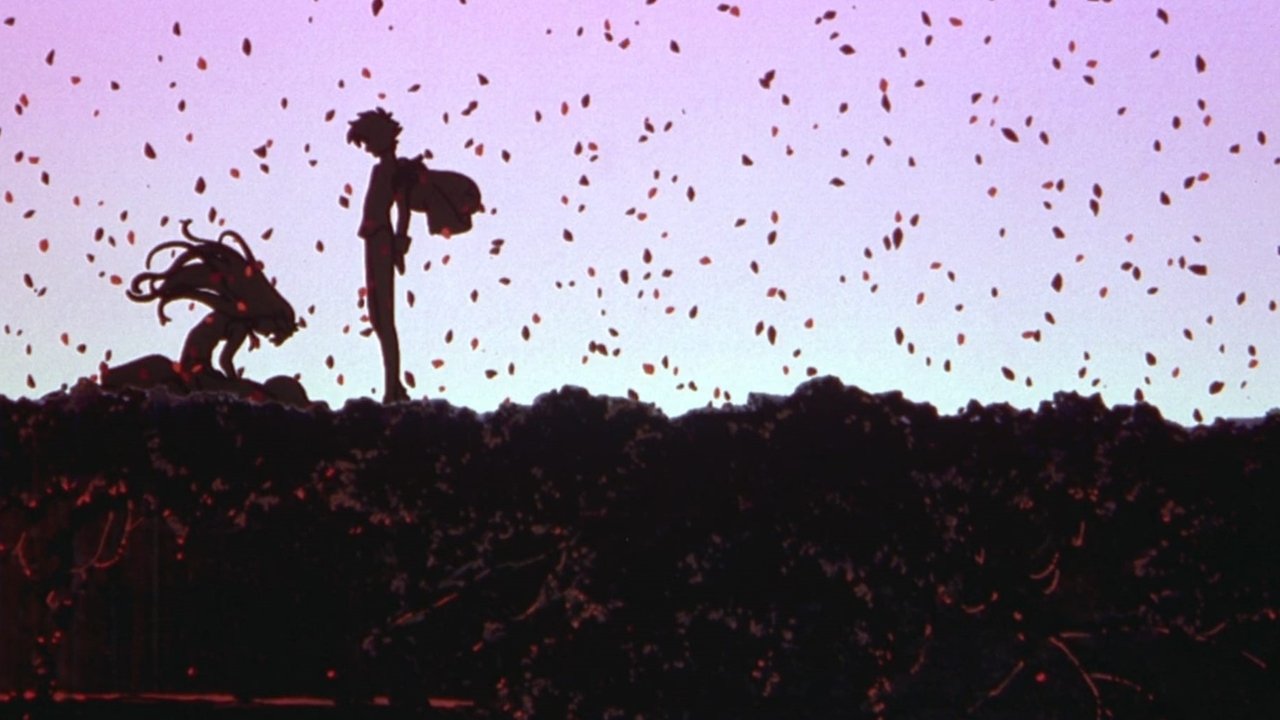
What immediately grabs you is the sheer visual extravagance. J.C.Staff pushed the boat out, creating a world dripping with symbolism. The architecture of Ohtori is even more impossible, a baroque collision of European castles and Escher-like geometry. Roses are everywhere, naturally, but now infused with a deeper, almost violent sensuality. Ikuhara’s direction is relentlessly stylish, employing split screens, theatrical framing, and abstract sequences that feel like Jungian therapy sessions rendered as animation. The influence of the all-female Takarazuka Revue, a touchstone for the original series, feels even more pronounced here in Utena's heightened androgyny and the operatic staging of confrontations. This visual density is both the film's greatest strength and its most significant barrier. It demands interpretation, constantly throwing symbols at the viewer – keys, coffins, decaying princes, that infamous, physics-defying car transformation sequence – without offering easy answers. What does it mean when the dueling arena transforms Utena into a speeding pink car? The film trusts you to feel the why rather than needing a precise what.
Voices in the Dream
Amidst the surrealism, the voice performances remain grounding anchors. Tomoko Kawakami brings a potent mix of naivete, determination, and burgeoning confusion to Utena, navigating her shifting identity and desires. Yuriko Fuchizaki as Anthy is perhaps even more transformed from her series counterpart; still passive initially, but with sharper edges, a more overt sense of manipulation, and a deeper well of hidden agency. Their relationship, always the core of Utena, becomes explicitly romantic here, presented with an intensity and frankness that was still relatively rare in mainstream anime at the time. It's this central emotional thread – the desperate, complex love between Utena and Anthy as they seek mutual liberation – that provides the film's most tangible and moving aspect.
Beyond the World's Shell
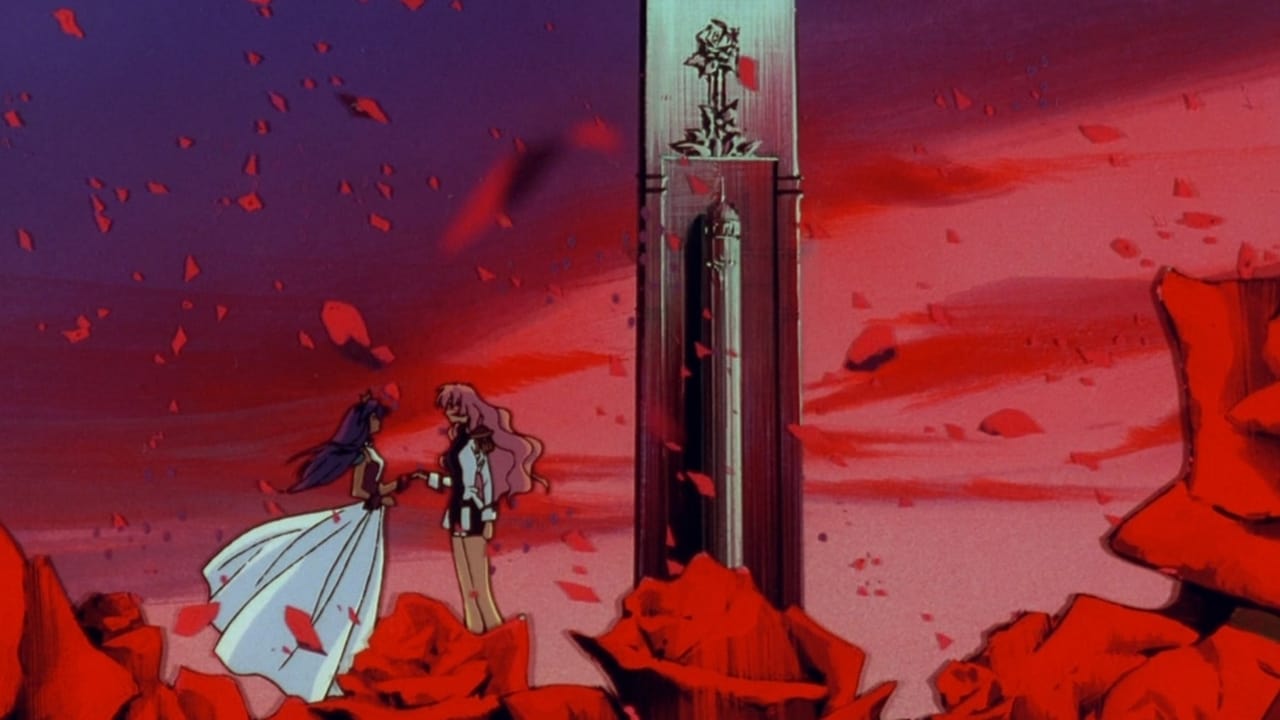
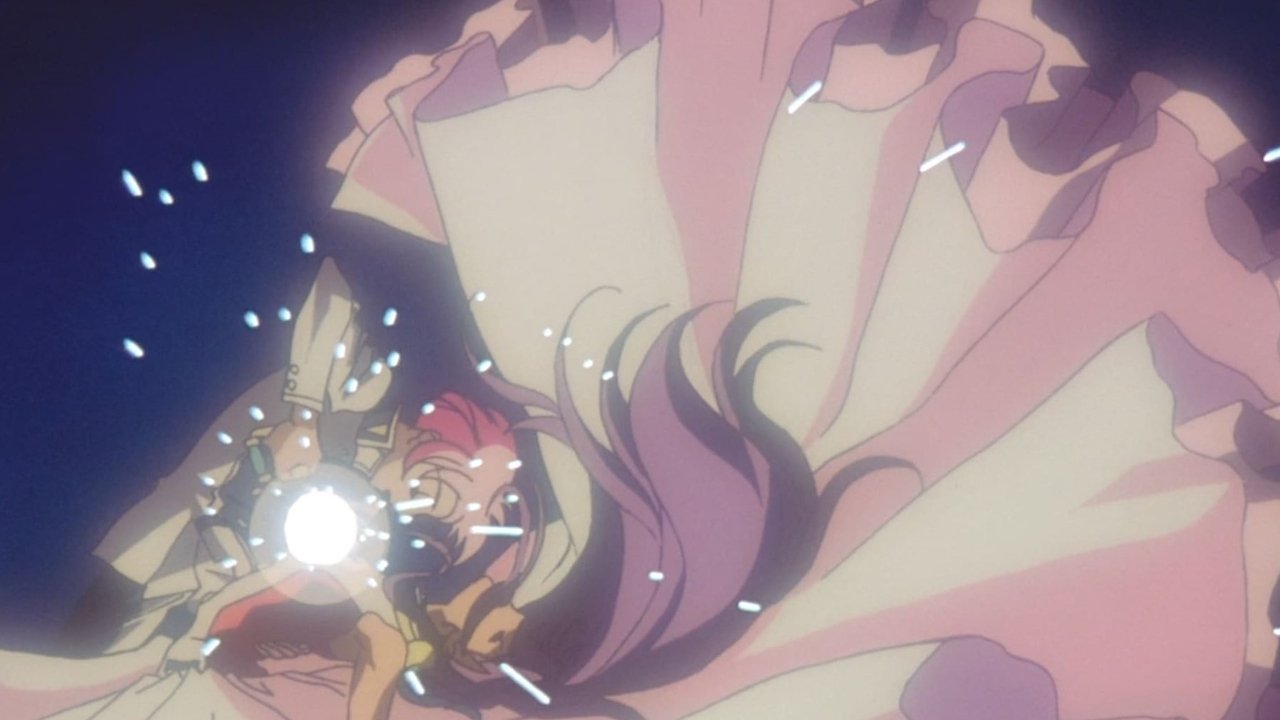
Trying to pin down Utena: The Movie with concrete plot points feels almost counterproductive. It’s a film about adolescence, yes – that tumultuous period of shattering old identities and forging new ones. It's about rebellion against oppressive systems, whether they be societal expectations, gender roles, or the suffocating weight of fairy tales that promise princes but deliver cages. It asks profound questions about agency, sacrifice, and what it truly means to "revolutionize the world." Does it mean destruction? Escape? Or finding freedom within a flawed reality? The film's deliberate ambiguity, a hallmark of Ikuhara and Enokido's work, leaves these questions shimmering in the air long after the credits roll. Some find this frustrating, wishing for the (relative) clarity of the TV series. Others find it liberating, an invitation to project their own interpretations onto its rich tapestry. I distinctly remember acquiring the VHS (or maybe it was an early DVD import?) after hearing whispers about it online, feeling like I’d found a secret key to unlock… something. It didn’t unlock easy answers, but it certainly unlocked a different way of seeing what animation could do.
Rating: 8/10
Revolutionary Girl Utena: The Movie is not an easy watch, nor is it necessarily a better version of the Utena story than the series; it's a fascinating, challenging alternative. Its narrative is fractured, its symbolism dense, and its pacing often dreamlike to the point of disorientation. However, its breathtaking artistry, the raw emotional power of its central relationship, and its fearless exploration of complex themes make it an unforgettable piece of late-90s anime. The 8 rating reflects its stunning ambition and visual poetry, tempered slightly by an approach that can feel willfully obtuse, potentially alienating viewers seeking a more straightforward experience. It earns its place not just as a cult classic, but as a benchmark for anime willing to prioritize symbolic depth and emotional resonance over narrative convention.
What lingers most isn't a specific plot point, but the feeling – the yearning for escape, the shattering of glass, the scent of roses mixed with exhaust fumes. It's a beautiful enigma, forever inviting us back to puzzle over its meaning, even if we know we'll never fully grasp it.