### A Line Drawn in Dust, A Wound Across the Heart
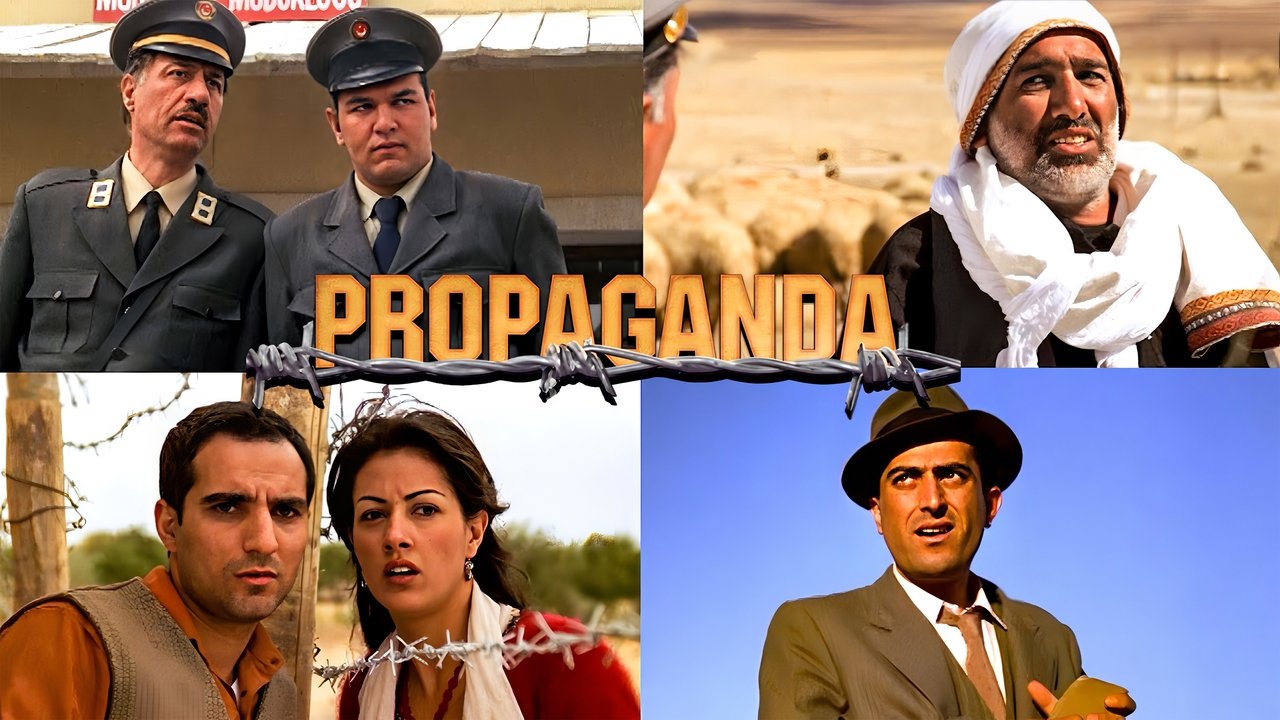
Imagine waking up one morning to find an invisible, yet utterly impassable, line has been drawn straight through your village, your home, even your family. This isn't some Kafkaesque nightmare; it's the stark, tragicomic reality at the heart of Sinan Çetin's 1999 film, Propaganda (Propaganda). It’s a film that begins with the dry ink of bureaucracy and ends with the wet stain of tears, forcing us to confront the arbitrary cruelty of borders and the enduring power of human connection, even when severed by political decree. What happens when the map redraws the boundaries of belonging?
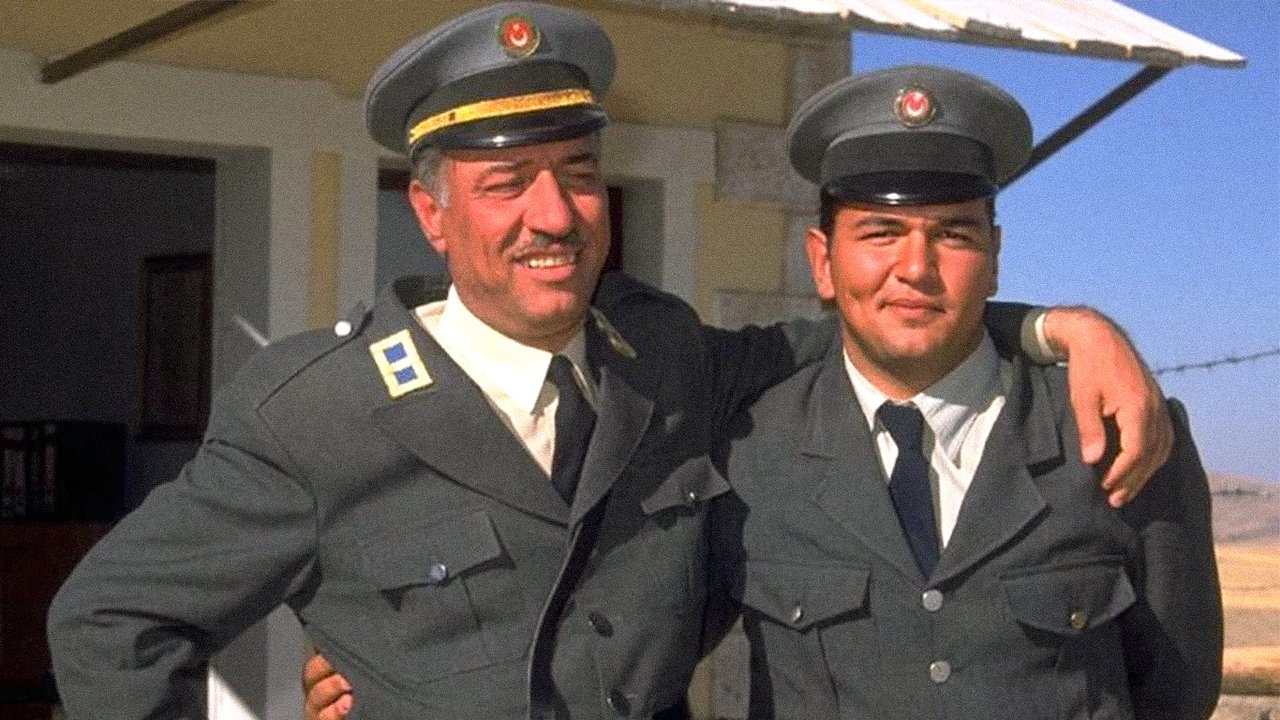
Set in 1948 in a village nestled near the Syrian border, the story follows Mehdi, a newly appointed customs officer returning to his hometown. His duty: to enforce the newly demarcated border line, a line that tragically bisects the village, separating neighbours, families, and lovers. The bitter irony? Mehdi himself, played with poignant gravity by the legendary Turkish comedian Kemal Sunal in a startlingly dramatic role, is tasked with enforcing a separation that isolates him from his own community, including his closest childhood friend, Rahim (Metin Akpınar).
The Weight of Unexpected Seriousness

For Turkish audiences, seeing Kemal Sunal in this role was something profound. Sunal built an unparalleled career playing lovable, often naive, everyman characters in countless wildly popular comedies throughout the 70s, 80s, and early 90s. His face was synonymous with laughter, with physical comedy, with characters who often stumbled into absurdity but always retained a core of relatable humanity. His casting here as the conflicted, duty-bound Mehdi was a deliberate, powerful choice by director Sinan Çetin. It immediately signals that Propaganda, despite moments of bleak humour born from the sheer absurdity of the situation, is aiming for something far heavier. Sunal carries this weight beautifully, his familiar features etched with a sorrow and conflict that feels deeply authentic. His performance isn't just acting; it's a quiet testament to the pain of enforcing inhumanity. Sadly, this would be one of Sunal's final roles before his untimely passing in 2000, adding another layer of poignancy to the viewing experience.
Life Bisected
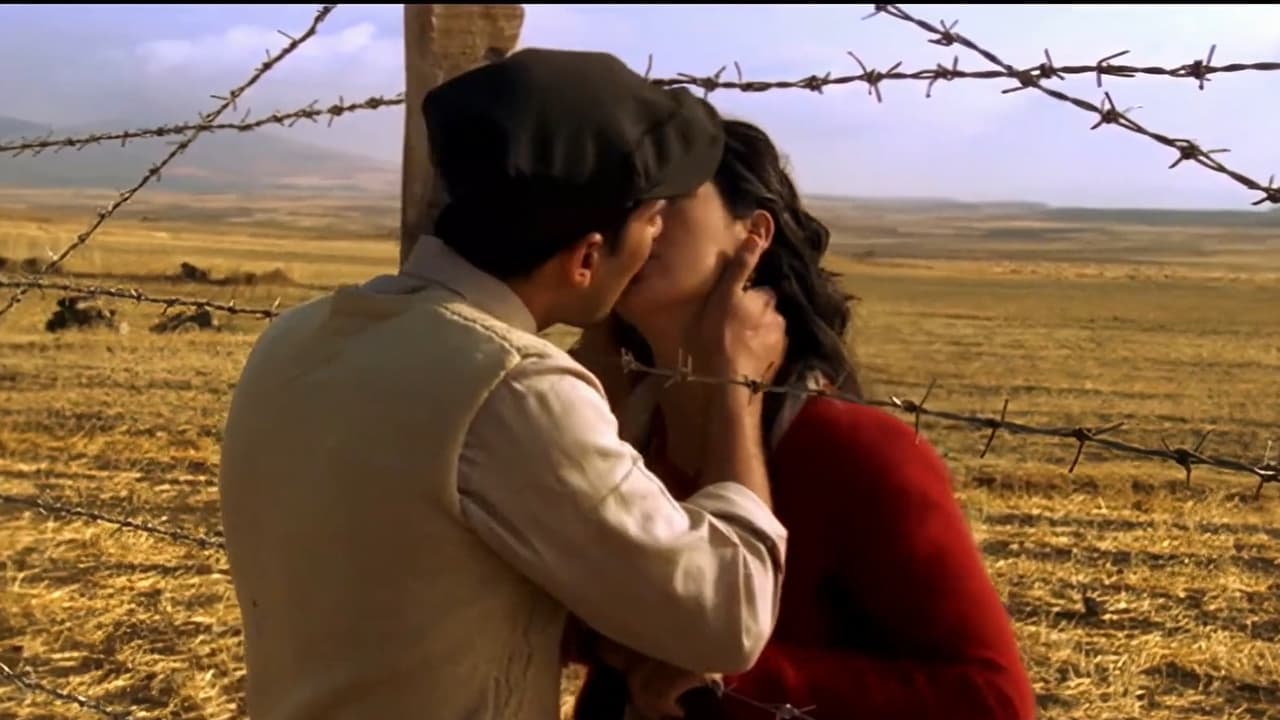
Çetin, who also wrote the screenplay, doesn't shy away from showing the immediate, devastating impact of the border. A shared well becomes inaccessible; lovers like Mehdi’s son Adem (Rafet El Roman) and Rahim’s daughter Filiz (Meltem Cumbul) are separated by mere feet but miles of red tape; families find their homes literally divided. The film excels in portraying the bewildered disbelief turning into simmering resentment and open heartbreak. Meltem Cumbul, radiating youthful hope tragically curtailed, and Metin Akpınar, Sunal's frequent comedic partner now embodying the anguished ‘other side’, provide crucial emotional anchors. Their interactions with Sunal crackle with the history of their shared past, now fractured by an invisible political line. The film asks: Can friendship, love, and community survive the cold logic of the state?
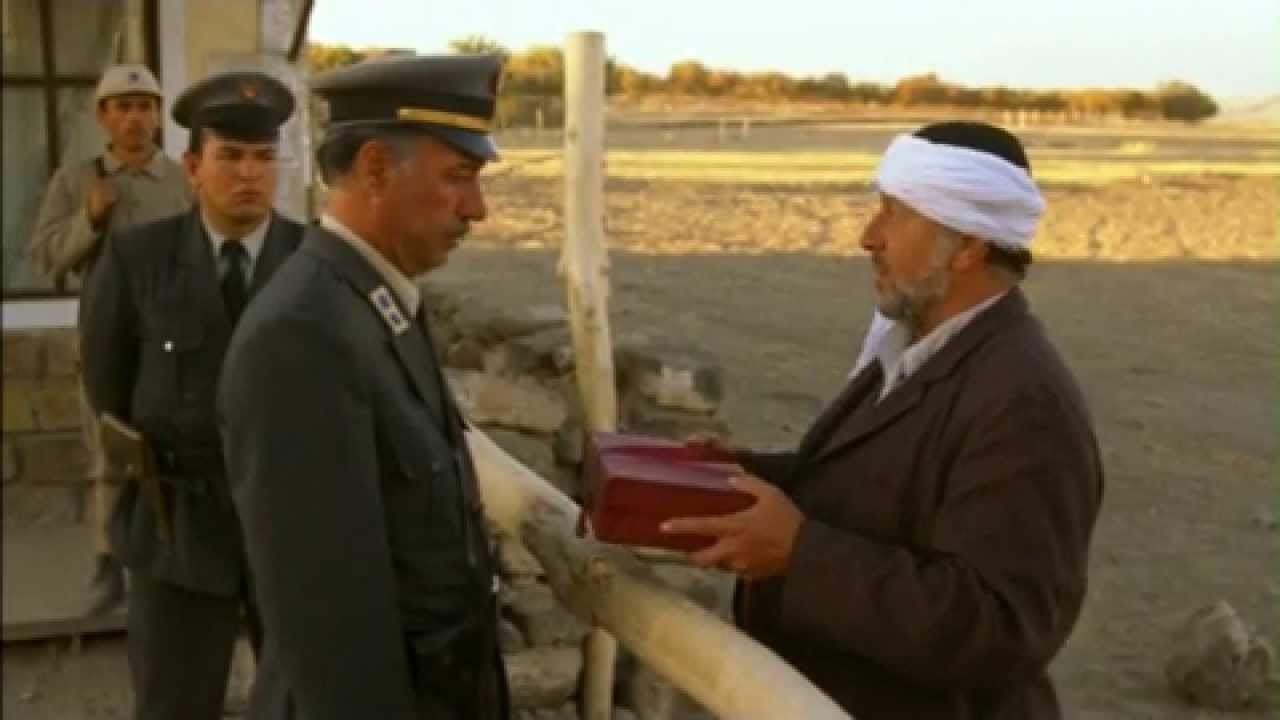
Retro Fun Fact Corner: The story is said to have been inspired by a real village, Hisli Hisar (now apparently fictionalized, though border disputes are common), situated on the Turkish-Syrian border, which faced similar divisions. Director Sinan Çetin reportedly heard tales of this absurdity and felt compelled to bring its human cost to the screen. This grounding in potential reality, even if dramatized, gives the film's central premise a chilling resonance.
Beyond the Absurdity
While the premise invites satire, Propaganda leans more towards tragedy. The humour arises naturally from the ridiculousness of the bureaucracy – the forms, the stamps, the officious pronouncements – clashing with the earthy reality of village life. Çetin’s direction captures the sun-baked textures of the village, the close-knit community now arbitrarily torn. The cinematography often emphasizes the visual absurdity of the line – a simple rope, a painted demarcation – holding such immense, destructive power. There’s a palpable sense of place, a community rhythm disrupted by an external, nonsensical force.
Retro Fun Fact Corner II: The film was a significant production for its time in Turkey, boasting a relatively substantial budget aimed at capturing the period detail and achieving a cinematic scope. While perhaps not a massive international hit, it resonated deeply domestically, partly due to Kemal Sunal's dramatic turn and the film's timely exploration of identity and borders, themes acutely relevant in the region. Its budget was reportedly around $2 million USD, a considerable sum for Turkish cinema in the late 90s, translating to roughly $3.7 million today.
A Universal Ache
What lingers long after the credits roll is the film's quiet despair. It’s a powerful statement about nationalism and the often-invisible violence of bureaucratic decisions made far away from the lives they impact. The 'propaganda' of the title isn't just overt political messaging; it's the insidious way abstract concepts like 'nation' and 'border' are used to justify cruelty and override basic human decency. Doesn't this resonate even today, in countless places where lines on maps dictate fates and sever ties?
Retro Fun Fact Corner III: Sinan Çetin himself is a fascinating figure in Turkish cinema – a director, producer, and sometimes actor known for his often bold, sometimes controversial, and stylistically diverse work, ranging from commercials to feature films like the earlier hit Berlin in Berlin (1993). Propaganda stands as one of his most emotionally direct and thematically potent films.
The film isn't perfect; some might find the pacing occasionally uneven, or certain character arcs less developed than others. Yet, its core message, delivered through the heartbreaking performances – especially Sunal's brave departure from type – and the stark visual metaphor of the divided village, remains incredibly potent. It’s a film that uses a specific historical context to explore universal anxieties about belonging, identity, and the arbitrary lines that seek to define us.
Rating Justification & Final Reflection
Rating: 8/10
Propaganda earns a strong 8 for its powerful central concept, the deeply affecting and significant performance by Kemal Sunal, and its unflinching look at the human cost of bureaucratic borders. The film's ability to blend tragic elements with the inherent absurdity of the situation is commendable, and Sinan Çetin’s direction effectively grounds the political commentary in tangible human emotion. The supporting performances, particularly from Metin Akpınar and Meltem Cumbul, add crucial layers to the narrative. While minor pacing issues or occasional tonal shifts might slightly detract for some, the film’s thematic resonance and Sunal’s career-defining dramatic turn make it a memorable and important piece of late 90s cinema, particularly within the Turkish context. Its strength lies in its quiet devastation rather than overt spectacle.
This film stays with you, not as a nostalgic romp, but as a haunting question mark. It reminds us that behind every border, every policy, every line drawn on a map, there are human lives, loves, and histories hanging precariously in the balance. How easily can the familiar become foreign, the neighbour become the other? Propaganda doesn't offer easy answers, but its portrayal of a community cleaved in two is a potent, enduring warning.