### Behind the Greasepaint, Beyond the Footlights
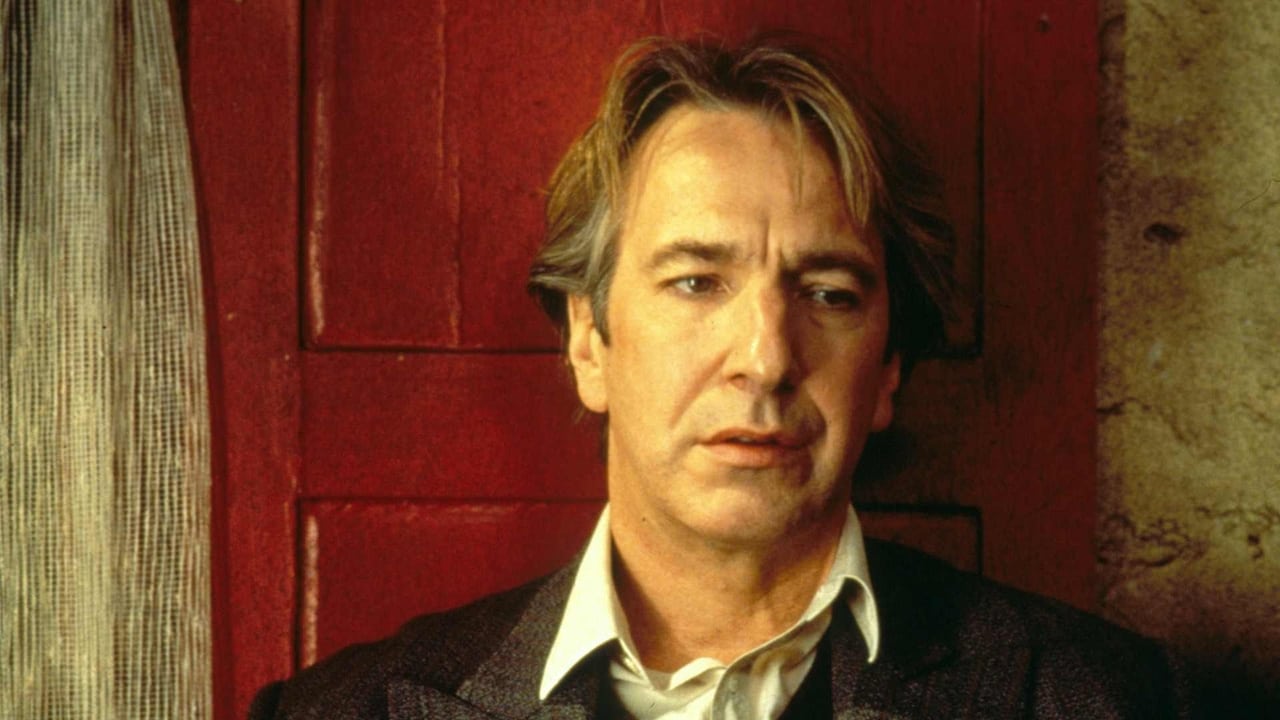
The title promises something grand, doesn't it? An Awfully Big Adventure. It conjures images lifted straight from J.M. Barrie – of flight, fantasy, and youthful daring. But step inside the world of Mike Newell's 1995 film, adapted from Beryl Bainbridge's semi-autobiographical novel, and the adventure awaiting is of a vastly different sort. Set against the damp, ration-book reality of post-war Liverpool, this isn't a tale of pirates and pixie dust; it's a stark, often uncomfortable look at the messy collision of adolescence, ambition, and the tarnished glamour of repertory theatre. It’s the kind of film that might have sat slightly uneasily on the video store shelf, perhaps rented on a whim after Newell's smash hit Four Weddings and a Funeral the previous year, only to deliver something far more complex and shadowed.
A World of Drafty Illusions
Our entry point is Stella Bradshaw, played with a compelling, almost unnerving blend of naivete and calculation by newcomer Georgina Cates. Barely sixteen, Stella abandons a drab existence to join the Liverpool Playhouse company as an assistant stage manager. She’s drawn, like so many, to the perceived magic of the theatre – the costumes, the drama, the larger-than-life personalities. The film excels in capturing the specific atmosphere of this world: the backstage chaos, the faded grandeur, the constant oscillation between on-stage illusion and off-stage reality. Newell, working with screenwriter Charles Wood, paints a picture that feels authentic – you can almost smell the damp, the cigarette smoke, and the cheap makeup. Interestingly, while set firmly in Liverpool, much of the filming took place in Dublin, Ireland, with locations like the historic Gaiety Theatre doubling for the Playhouse – a fitting layer of performance upon performance.
Stella navigates this world with wide eyes, initially infatuated with the company's charismatic, yet utterly self-absorbed director, Meredith Potter. And here we see Hugh Grant, fresh from charming the world as Charles in Four Weddings, deliberately playing against type. Potter is narcissistic, casually cruel, and oblivious to the emotional wake he leaves behind. It was a brave choice for Grant, and while perhaps not as nuanced as his later character work, it effectively shatters the romantic leading man image, reminding us of his range beyond floppy-haired affability. He embodies the surface appeal and underlying hollowness that Stella initially mistakes for depth.
Enter O'Hara
The film truly deepens, however, with the arrival of P.L. O'Hara, the seasoned actor brought in to play Captain Hook in the company's Christmas production of Peter Pan. Embodied by the incomparable Alan Rickman, O'Hara is a figure of profound weariness and contained intensity. Rickman, drawing perhaps on his own extensive stage background with the Royal Shakespeare Company, invests O'Hara with a quiet authority that immediately commands attention. His performance is a masterclass in subtlety; there's charm, yes, but laced with a palpable sense of danger and deep-seated melancholy. He sees through the theatrical artifice, and perhaps through Stella herself, in a way that is both magnetic and unsettling. It's no surprise Rickman earned a BAFTA nomination for Best Supporting Actor for this role; his presence anchors the film's darker currents. The resonance between O'Hara playing Hook and the film's title, taken from Hook's famous line "To die will be an awfully big adventure," hangs heavy, foreshadowing the story's tragic dimensions.
The Shadows Lengthen
An Awfully Big Adventure doesn't shy away from the grim realities beneath the surface. Themes of exploitation, particularly the vulnerability of young women in environments dominated by older, powerful men, are handled with a frankness that can be disquieting. Stella's journey is less a coming-of-age and more a stripping away of innocence, a harsh education in the complexities and compromises of adult life. The film explores the ways people use performance not just on stage, but in their daily lives – constructing facades to hide pain, ambition, or emptiness. Cates, who was only 19 during filming and relatively unknown (reportedly cast after a lengthy search), carries a significant weight, portraying Stella's ambiguous motivations and shifting desires with remarkable poise. Is she a victim, a manipulator, or simply a young woman desperately trying to find her place in a confusing world? The film wisely leaves room for interpretation.
This isn't always an easy watch. The pacing is deliberate, the colour palette muted, reflecting the era and the emotional landscape. Newell, who would later helm bigger projects like Donnie Brasco (1997) and Harry Potter and the Goblet of Fire (2005), demonstrates a sensitive hand here, focusing on character and atmosphere over flashy technique. Made on a relatively modest budget (around £3 million), it possesses an intimacy and focus that larger productions often lack. It didn't set the box office alight, certainly not like Four Weddings, but it garnered significant critical respect, standing as a testament to a different kind of British filmmaking emerging in the mid-90s – literate, character-driven, and unafraid of ambiguity.
Final Reflection
Rediscovering An Awfully Big Adventure on tape felt like uncovering a hidden corner of 90s cinema. It lacks the immediate, feel-good appeal of many contemporaries, opting instead for a more challenging, melancholic exploration of desire, disillusionment, and the harsh lessons learned behind the curtain. The performances, particularly Rickman's haunted gravitas and Grant's calculated unpleasantness, remain potent. It’s a film that probes the darkness often lurking beneath bright surfaces, asking uncomfortable questions about innocence, experience, and the roles we play for others and ourselves.
Rating: 8/10
This score reflects the film's undeniable strengths: superb performances, particularly from Alan Rickman; its evocative, authentic atmosphere; and its willingness to tackle complex, uncomfortable themes with intelligence. While its deliberate pacing and bleak undercurrents might not resonate with everyone expecting a lighter 'adventure', its nuanced portrayal of the grubby reality behind theatrical fantasy, anchored by Georgina Cates' compelling central performance and Mike Newell's assured direction, makes it a significant and lingering piece of 90s British cinema. It’s a reminder that the most profound adventures are often internal, and sometimes, awfully painful.