Okay, settle back into that worn spot on the couch, maybe imagine the faint whir of a VCR rewinding. Tonight, we’re diving into something grand, something that felt almost impossibly ambitious when it landed on rental shelves near the tail end of the VHS era: Nikita Mikhalkov’s sprawling 1998 epic, The Barber of Siberia (Сибирский цирюльник). This wasn't your typical late-90s fare; it was a lavish, three-hour declaration from post-Soviet Russia, a film brimming with operatic emotion, historical sweep, and a budget that frankly boggled the mind back then.
An Echo from a Bygone Empire
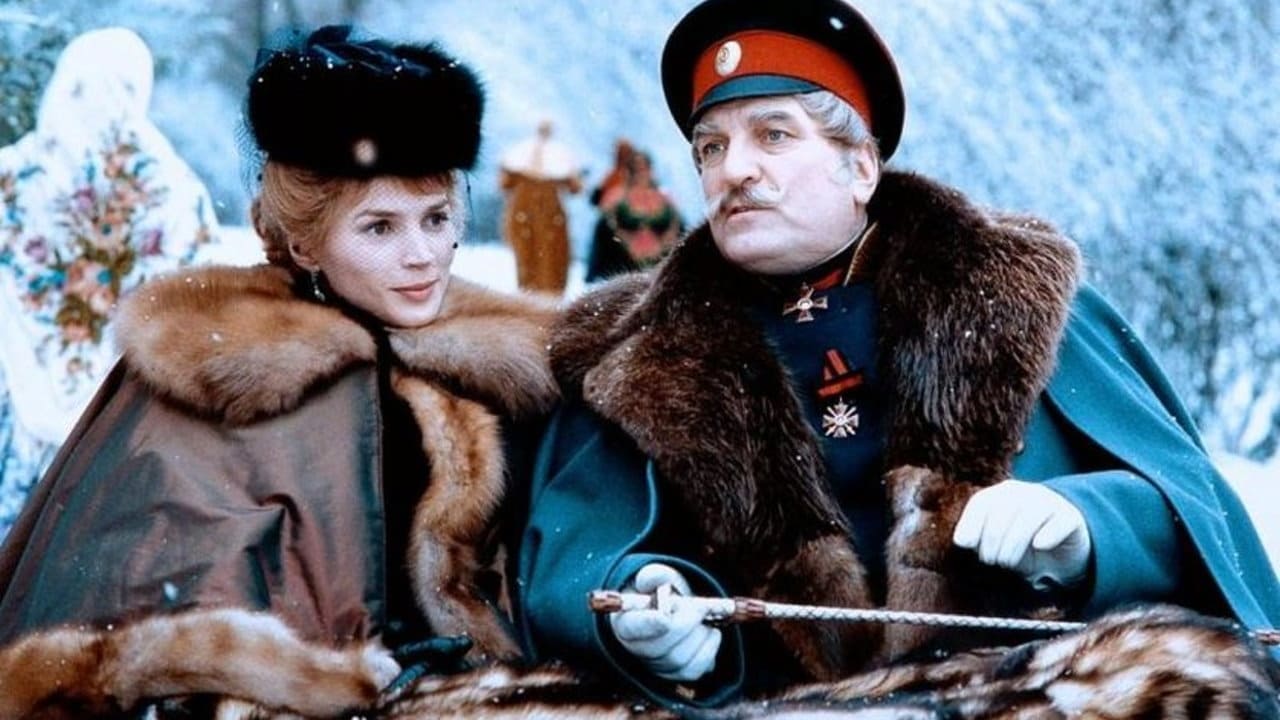
What strikes you first, even watching it now, perhaps on a format far sharper than the tape we first rented (likely a double-tape set!), is the sheer, unadulterated scale. This film feels enormous. Set primarily in 1885 Russia, it spins the tale of Jane Callahan (Julia Ormond), a spirited American woman who travels to Moscow ostensibly to assist inventor Douglas McCracken (Richard Harris) in gaining patronage for his colossal steam-powered logging machine – the titular "Barber". Her real mission, however, involves charming General Radlov (Aleksei Petrenko), head of the Imperial Military Academy, to grease the wheels. But fate, as it often does in these grand tales, intervenes when Jane meets Andrei Tolstoy (Oleg Menshikov), a young, intensely passionate cadet at the academy. Their connection is immediate, powerful, and utterly doomed to complicate everything.
Mikhalkov's Imperial Canvas
Director Nikita Mikhalkov, who had already tasted international acclaim with the Oscar-winning Burnt by the Sun (1994), clearly poured his heart, soul, and a staggering amount of rubles into this project. The reported budget hovered around $35-40 million, an almost unheard-of sum for a Russian production at the time, translating to roughly $65-75 million today. And you see every bit of it on screen. From the meticulously recreated Imperial Military Academy, bustling with cadets in crisp uniforms, to the breathtaking, snow-drenched vistas of Siberia, the film is a visual feast. The Maslenitsa festival sequence alone, a riot of colour, tradition, and barely controlled chaos, feels like stepping directly into a 19th-century painting. Mikhalkov, clearly feeling the weight of Russian history, even cast himself as Tsar Alexander III, adding another layer to the film’s personal, almost nationalistic fervor. This ambition wasn't just financial; it was artistic, aiming to craft a definitive statement about Russian identity, honour, and the enduring power of love against imposing odds.
Heartbreak Amidst the Spectacle
For all its epic scope, the film's pulse beats within the central romance. Julia Ormond, who was riding high from films like Legends of the Fall (1994) and Sabrina (1995), brings a captivating blend of American pragmatism, adventurous spirit, and underlying vulnerability to Jane. You believe her charm, but also sense the complex game she's playing. Yet, it’s Oleg Menshikov as Andrei who truly ignites the screen. Already a major star in Russia, his performance is a force of nature – conveying youthful idealism, fiery jealousy, unwavering honour, and profound love with an intensity that feels almost overwhelming at times. His gaze alone carries continents of emotion. Their chemistry is palpable, making the inevitable trajectory of their story all the more poignant. And let's not forget Richard Harris, lending his particular brand of eccentric gravitas to the inventor McCracken, whose fantastical machine serves as the story's catalyst, seen mostly through the framing device of his letters to his daughter decades later.
More Than Just a Love Story?
The Barber of Siberia delves into potent themes: the rigid codes of honour within the Tsarist military, the clash between passionate individualism and societal expectation, and a deep, almost aching nostalgia for a perceived golden age of Russia. This latter aspect drew some criticism internationally upon its release (it opened the 1999 Cannes Film Festival out of competition) for perceived nationalism. Watching it today, it feels more like a grand, romanticized exploration of the "Russian soul" – complex, contradictory, capable of both immense love and tragic self-destruction. Does it sometimes tip into melodrama? Absolutely. Does its three-hour runtime feel indulgent? Perhaps. But the sincerity is undeniable. It’s a film that means everything it’s showing you, with an earnestness rare in cynical times.
Retro Fun Facts
The sheer logistics of this production were immense. Filming took place across Russia, the Czech Republic, and even Portugal, involving thousands of extras and reportedly assistance from the actual Russian military for certain scenes. Imagine coordinating that in the Russia of the mid-90s! Julia Ormond committed impressively, learning much of her Russian dialogue phonetically to enhance authenticity. The film's length necessitated those hefty double-VHS boxes that took up prime real estate on the rental shelf – a commitment for a weekend viewing! Its massive budget, while enabling the spectacle, didn't translate into massive international box office success, making it something of a glorious folly in financial terms, though it was generally well-received within Russia itself, tapping into a sense of national pride.
The Lingering Resonance
The Barber of Siberia isn't a perfect film. It's sprawling, sometimes unwieldy, and wears its heart so prominently on its sleeve that cynicism doesn't stand a chance. But its ambition, its visual splendour, and the raw emotional power of its central performances, particularly Menshikov's, make it unforgettable. It stands as a unique monument from late 90s cinema – a deeply personal, defiantly grandiose epic from a corner of the world finding its voice on the global stage. Watching it evokes memories of committing to those longer tapes, of being swept away by stories that felt bigger than your living room TV.
Rating: 7.5/10
Justification: The film earns high marks for its breathtaking production value, stunning visuals, and the passionate, compelling central performances from Ormond and especially Menshikov. Mikhalkov's ambition is palpable and largely successful in creating an immersive historical world. However, it loses points for its excessive length, occasional slips into melodrama, and a narrative that sometimes feels stretched thin by its own grandeur. The 7.5 reflects a deeply impressive, emotionally resonant, yet flawed epic.
Final Thought: More than just a movie, The Barber of Siberia feels like a time capsule – capturing not only Tsarist Russia through a romantic lens, but also a moment when Russian cinema reached for spectacular, heartfelt grandeur on a global scale, leaving a unique and imposing silhouette on the landscape of late 90s film.