Alright folks, gather 'round the flickering glow of the metaphorical CRT, because tonight on VHS Heaven, we're cracking open a titan. Forget just renting this one – Padayappa (1999) wasn't merely a movie; it was an event. You didn't just watch it; you experienced it, probably multiple times, the tape likely worn thin from rewinds. This wasn't just another Rajinikanth vehicle; it felt like the culmination of his 90s superstardom, a three-hour Kollywood epic delivered with the subtlety of a thunderclap.
An Earthquake Named Rajini
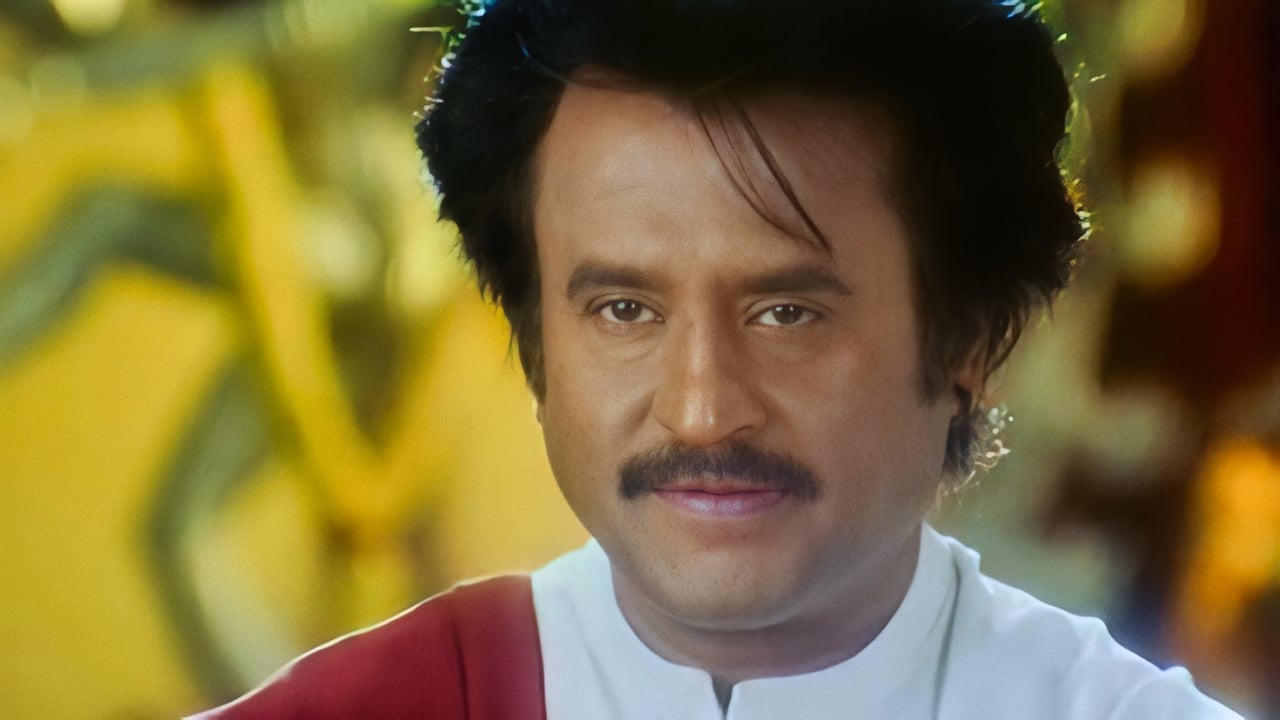
Let's be honest, the plot – a multi-generational family feud fueled by pride, betrayal, and simmering revenge, centered around the principled engineer Padayappa (Rajinikanth) – is pure, uncut South Indian melodrama. But framing it simply like that misses the point entirely. This was director K. S. Ravikumar (who gave us the equally massive Rajini hit Muthu just four years prior) understanding exactly what audiences craved: Rajinikanth operating at peak charisma. Every entrance is an occasion, every dialogue a potential catchphrase, every mannerism (that flick of the hand, that confident stride) amplified to stadium-filling levels. It’s the kind of star power that didn't just fill the screen; it seemed to warp the very fabric of the film around him. You weren’t just watching a character; you were watching ‘Thalaivar’ embody an ideal – righteous, powerful, yet fundamentally decent.
Enter the Ice Queen: Neelambari
But Padayappa has a secret weapon, one that elevates it beyond a standard superstar showcase. Her name is Neelambari, played with ferocious, unforgettable intensity by Ramya Krishnan. Forget damsels in distress; Neelambari is a force of nature, a woman consumed by wounded pride and an obsessive desire for vengeance against Padayappa for rejecting her. Rumour has it, the role was a hot potato few leading actresses wanted to touch, fearing the negative typecasting. But Ramya Krishnan didn't just take the role; she devoured it, crafting one of the most iconic female antagonists in Tamil cinema history. Her chilling stares, her calculating smirk, the sheer venom dripping from her lines – she’s mesmerizing. The dynamic between her simmering fury and Padayappa's almost detached righteousness fuels the film's core conflict, making their confrontations electric. She doesn't just share the screen with Rajinikanth; she often steals it outright.
A Legend's Graceful Bow
Adding incredible weight and pathos is the presence of the legendary thespian Sivaji Ganesan as Padayappa's father. In what was sadly one of his final major screen appearances before his passing in 2001, Ganesan brings an unparalleled dignity and gravitas. Watching him share scenes with Rajinikanth feels like a passing of the torch, a moment of cinematic history. His performance, grounded and emotionally resonant, provides a vital anchor amidst the film's more bombastic elements. You can feel the respect on set just through the screen. There's a palpable sense of legacy whenever he appears, a poignant counterpoint to the film's high drama.
That 90s Spectacle
Running close to three hours, Padayappa is undeniably a product of its time – the pacing leisurely by today's standards, the comedy side-plots sometimes feeling like detours. But it's also packed with spectacle. The action sequences, while perhaps not featuring the intricate choreography we see now, had a certain weight. Remember that famous bull-taming sequence? It wasn't seamless CGI; it relied on clever editing, brave stunt work, and trained animals, giving it a raw, tangible feel that often gets lost today. The fights felt impactful, grounded in a certain physical reality even when logic took a backseat.
And the music! A. R. Rahman, already a global phenomenon after Bombay (1995) and Dil Se.. (1998), delivered a soundtrack that became ubiquitous. From the rousing title track "En Peru Padayappa" to the instantly catchy "Minsara Kanna," the songs weren't just interludes; they were integral parts of the narrative fabric, amplifying the emotion and spectacle. These tunes absolutely dominated the airwaves and cassette players back in '99. The film itself was a juggernaut, reportedly made on a then-colossal budget (somewhere around ₹10-15 crore, which felt astronomical) and smashing box office records, earning multiples of its cost and cementing its place in Kollywood history. It wasn’t just a hit; it was a cultural touchstone.
The Verdict
Padayappa is a quintessential late-90s blockbuster experience. It's grand, melodramatic, occasionally over-the-top, but undeniably entertaining. It boasts career-defining performances from Rajinikanth and especially Ramya Krishnan, features a poignant farewell from a cinematic legend in Sivaji Ganesan, and pulses with the energy of A. R. Rahman's score. It’s a film that wears its heart on its sleeve, delivering exactly the kind of larger-than-life entertainment that made trips to the video store (or the cinema, if you were lucky) so exciting. Sure, some elements feel dated, but the core performances and the sheer conviction behind its epic storytelling remain potent.
Rating: 8.5/10 - The score reflects its massive impact, iconic performances (especially Ramya Krishnan's Neelambari), and status as peak 90s Rajinikanth entertainment, slightly tempered by the lengthy runtime and era-specific melodrama that might test modern patience, but is part of its charm for fans.
Final Take: For a taste of undiluted 90s Kollywood grandeur, where star power felt seismic and villains could be truly terrifying, Padayappa is essential viewing. It's the kind of film that reminds you why certain stars became legends, and why some VHS tapes got played until they practically disintegrated.