Okay, settle in, maybe grab a cup of coffee – or something stronger if the mood strikes. We’re diving into a corner of the late 90s video store shelf that might have seemed… unexpected. Amidst the explosion of digital effects and increasingly talkative blockbusters, finding a brand new silent film felt like discovering a transmission from another time. And yet, there it was: Aki Kaurismäki’s Juha (1999). It wasn’t a forgotten classic unearthed, but a deliberate, starkly beautiful choice made right at the cusp of the new millennium. What possesses a filmmaker, already known for his minimalist style, to strip away dialogue entirely in 1999?
Echoes in Silence
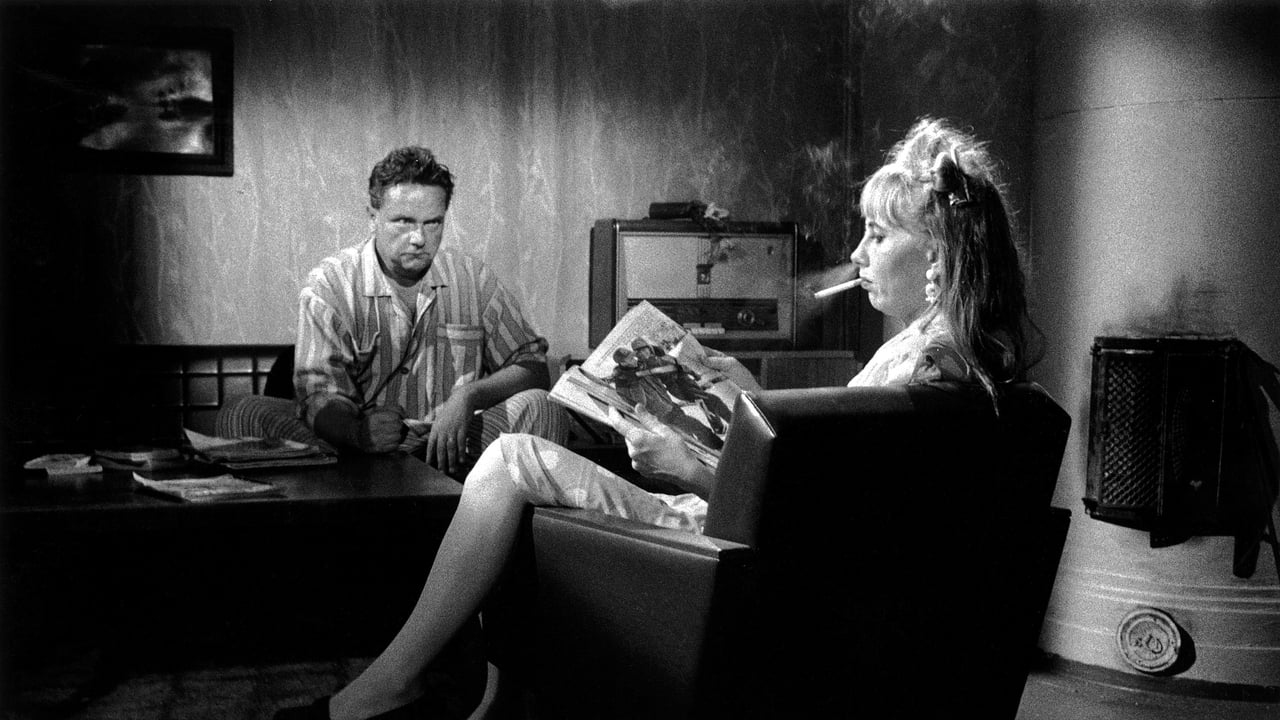
Based on a classic 1911 Finnish novel by Juhani Aho (which had already seen several film adaptations, including a notable 1937 Swedish version), Juha tells a story as old as time: a simple, rural love triangle poisoned by urban corruption. Juha (Sakari Kuosmanen) lives a quiet, contented life on his farm with his younger wife, Marja (Kati Outinen). Their rustic peace is shattered by the arrival of Shemeikka (André Wilms), a slick city charmer whose expensive car breaks down nearby. He seduces Marja with promises of a glamorous life, luring her away to the city, only for her to discover his true, cruel nature as a brothel owner. Juha, heartbroken and eventually enraged, sets out for revenge.
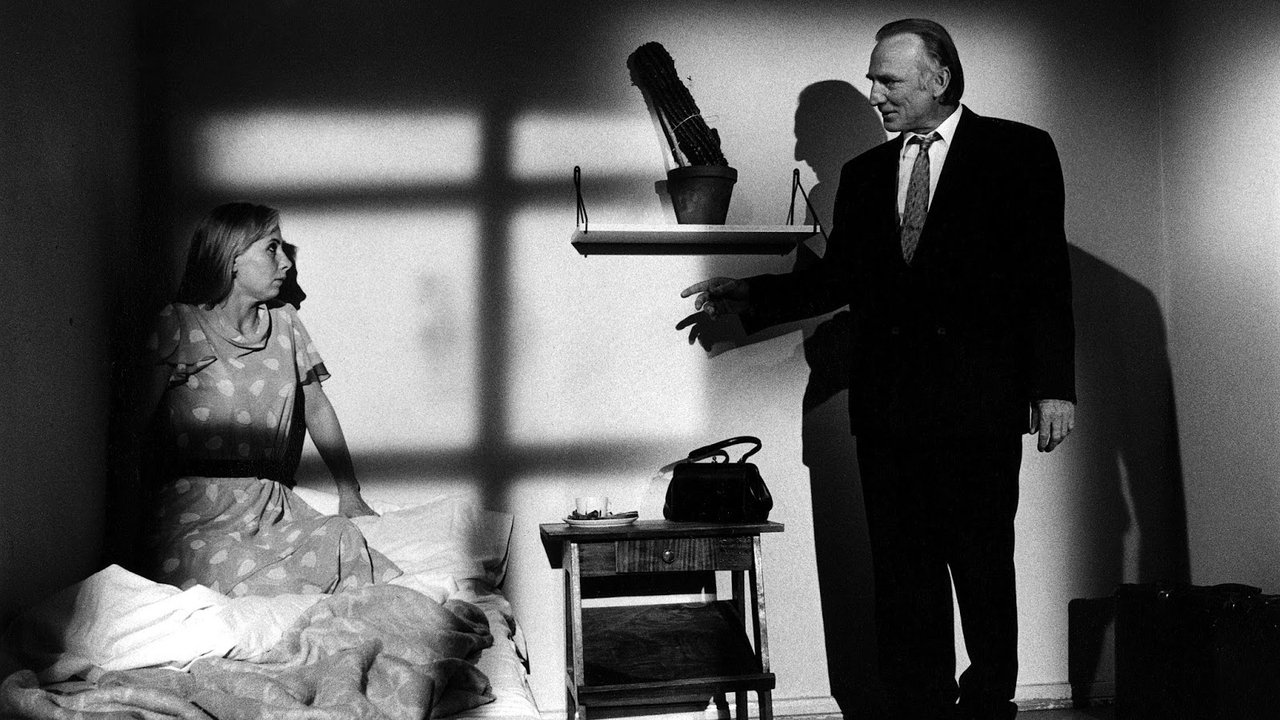
Stripped of dialogue, this primal narrative takes on an almost elemental force. Kaurismäki, a master of deadpan minimalism (think Leningrad Cowboys Go America (1989) or The Match Factory Girl (1990)), uses the silent format not as a gimmick, but as a crucible. It forces us, and the actors, to rely entirely on expression, gesture, and the stark, high-contrast black-and-white cinematography by Timo Salminen. There’s a purity here, a direct line to the characters' raw emotions that dialogue might only obscure.
Faces Telling Tales
The performances are, by necessity, the bedrock of the film. Sakari Kuosmanen, a frequent Kaurismäki collaborator, embodies Juha with a stoic, almost childlike simplicity that makes his eventual heartbreak and quiet fury utterly devastating. His face, often filmed in lingering close-up, becomes a landscape of dawning pain. Kati Outinen, another Kaurismäki regular and one of Finland's finest actresses, is simply luminous as Marja. She conveys innocence, yearning, terrible disillusionment, and quiet resilience often with just a flicker in her eyes or the set of her jaw. Her performance is a masterclass in silent screen acting, evoking the legends of the past while feeling entirely authentic. And André Wilms’ Shemeikka? He’s pure, reptilian menace beneath a thin veneer of sophistication – a classic silent movie villain archetype made chillingly real. Watching them communicate worlds without uttering a word makes you appreciate the sheer power of non-verbal acting. Doesn't it make you reconsider how much we sometimes rely on dialogue as a crutch in modern cinema?
A Deliberate Throwback
Making a silent film in 1999 was certainly a statement. Kaurismäki had reportedly wanted to make a silent film for years, feeling that cinema had lost something essential with the advent of sound. Juha cost roughly FIM 6 million (around €1 million) – a modest budget even then, but used with incredible precision. The choice wasn't merely aesthetic; it felt like a commentary, a deliberate turning away from the noise and flash of contemporary filmmaking to rediscover something fundamental. Remember those late 90s films bombarding us with CGI and rapid-fire quips? Juha felt like stepping into a quiet room after leaving a deafening concert.
The film utilizes intertitles, in the classic silent film style, but sparingly. The story is clear, carried by the visuals and the wonderfully evocative score by Anssi Tikanmäki, which blends folk motifs with dramatic urgency. It’s fascinating how Tikanmäki’s music effectively becomes the film's "voice," guiding our emotional response without ever feeling intrusive. The production design is typically Kaurismäki: minimal, slightly worn, yet deeply evocative of place and character. There’s a timeless quality to the farm, contrasted sharply with the slightly seedy, anonymous feel of Shemeikka’s city haunts.
Why It Lingers
Juha isn’t your typical Friday night rental fodder from the era, that's for sure. I recall seeing the distinctively stark VHS cover art at my local independent video store – a place that always had treasures tucked away – and being intrigued precisely because it was a modern silent film. It felt like a dare, a challenge to readjust my viewing habits. And the experience was profound. It’s a film that demands your attention in a different way. You lean in, you watch faces intently, you feel the narrative beats through the images and music.
It’s a powerful reminder that the core of cinema is visual storytelling. While it might lack the immediate, easy gratification of its contemporaries, Juha offers a deeper, more resonant experience. It’s a film about betrayal, loss, and the devastating consequences of naive desire, told with artistry and a quiet, aching soul. It’s a testament to Kaurismäki's singular vision and his trust in the power of the unadorned image.
Rating: 8.5/10
This score reflects the film's artistic bravery, its masterful execution of the silent film form in a modern context, and the incredibly powerful performances. It successfully strips a classic melodrama down to its emotional core, creating something uniquely haunting and beautiful. It might not be for everyone expecting typical 90s fare, but for those willing to engage with its deliberate quietude, it’s a deeply rewarding experience.
Juha stands as a quiet monument in the noisy landscape of late 90s cinema – a film that proves sometimes, silence speaks volumes, leaving you contemplating the enduring power of purely visual emotion long after the screen goes dark.