Some novels feel inherently unfilmable, their specific voice, structural chaos, and internal monologues resisting the literal translation demanded by cinema. Kurt Vonnegut Jr.'s Breakfast of Champions, that sprawling, satirical, deeply meta examination of American absurdity, surely sits high on that list. Which makes director Alan Rudolph's 1999 attempt to wrestle it onto the screen both incredibly brave and, perhaps inevitably, a fascinating, bewildering spectacle. Seeing this film pop up on the "New Releases" shelf back in the day, especially with Bruce Willis front and center, felt like discovering a strange transmission from another dimension – a feeling that hasn’t entirely faded upon revisiting it.
### Midland City Blues
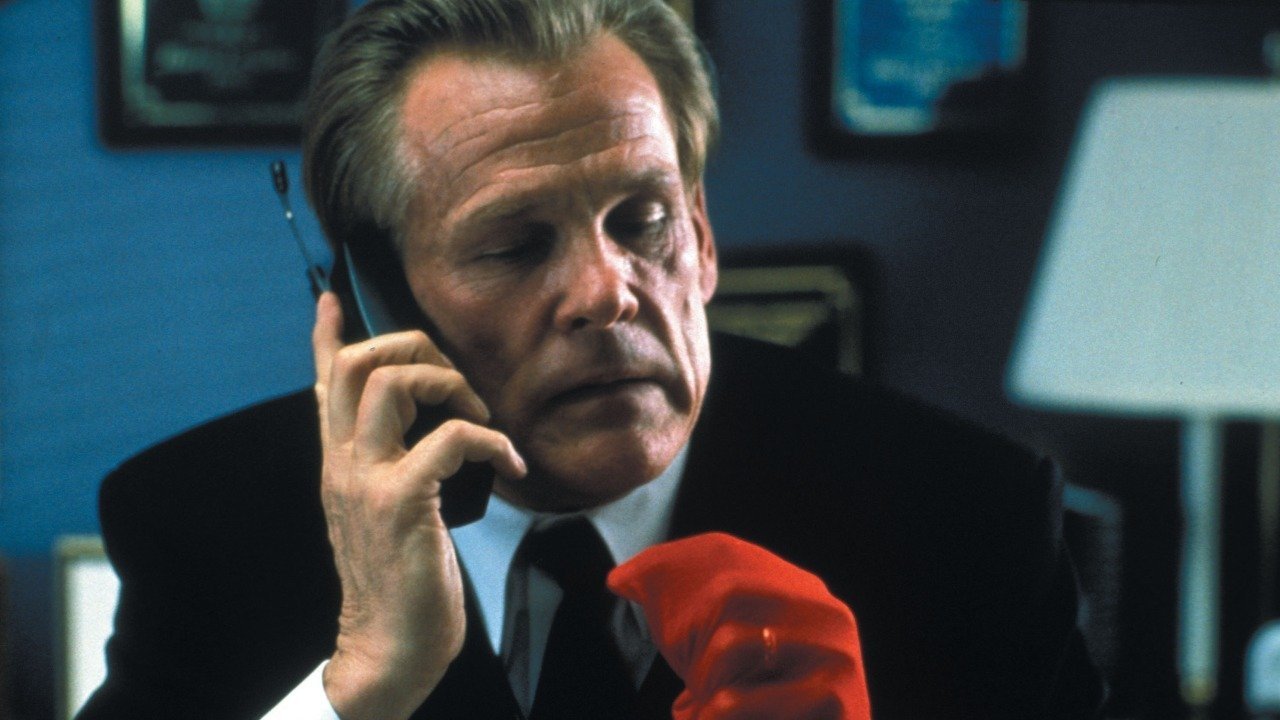
The film plunges us headfirst into the fractured world of Midland City, a place teetering on the brink of... well, something. At its chaotic center is Dwayne Hoover (Bruce Willis), a wealthy Pontiac dealer whose grip on reality is visibly loosening, fueled by bad chemicals and the gnawing meaninglessness of his comfortable life. His trajectory is set to violently collide with that of Kilgore Trout (Albert Finney), a prolific but utterly obscure science fiction writer invited to the local arts festival. Alan Rudolph, known for his Altman-esque ensemble pieces like Trouble in Mind and Choose Me, attempts to orchestrate this collision, weaving together the lives of various eccentric Midland City residents – including Hoover's pill-popping wife Celia (Barbara Hershey) and his conflicted sales manager Harry LeSabre (Nick Nolte), who finds solace in women's lingerie. Rudolph creates a distinct atmosphere, hazy and dreamlike, punctuated by moments of jarring confrontation, mirroring the fractured psyche of its protagonist and the source material's loose narrative structure.
### A Cast Adrift in Vonnegut's World
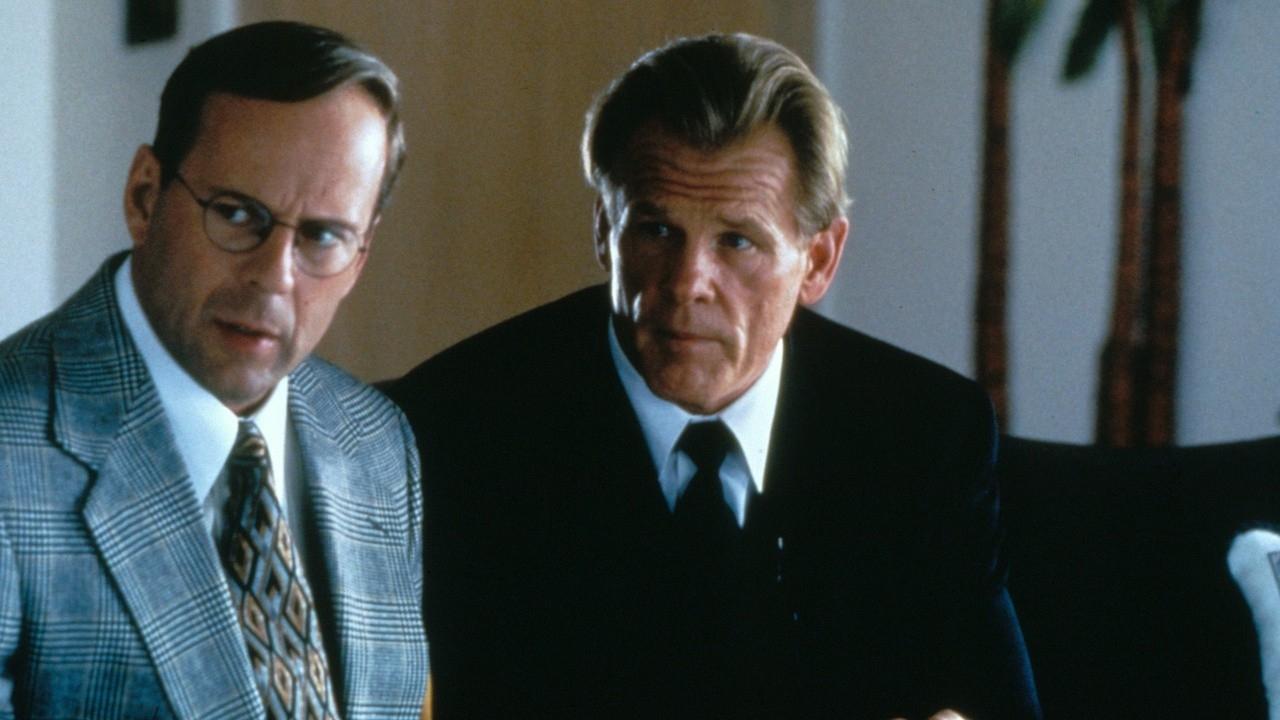
The casting itself is one of the film's most intriguing aspects. Seeing Bruce Willis, then arguably at the peak of his action-hero fame after Armageddon (1998) and The Sixth Sense (released the same year!), tackle the unraveling Dwayne Hoover is initially jarring, then strangely compelling. Willis had apparently championed bringing Breakfast of Champions to the screen for years, a passion project far removed from John McClane. Does he fully capture Hoover's specific brand of insanity, that blend of pathetic entitlement and simmering violence sparked by Trout's ideas about free will? It's debatable. He certainly commits, shedding his usual cool confidence for a wide-eyed, erratic energy. Yet, something feels slightly off, perhaps constrained by the need to remain a "movie star" even while playing a man coming undone. It’s a performance that’s more interesting for the attempt than the execution.
Albert Finney, on the other hand, embodies Kilgore Trout with a weary dignity. He captures the soul of a writer who pours his bizarre visions onto the page for little reward, resigned to his perceived insignificance. Finney's Trout is the melancholic anchor in the film's sea of absurdity, his quiet observations often landing with more weight than the surrounding chaos. And then there’s Nick Nolte as Harry LeSabre. Nolte, never one to shy away from unconventional roles, leans into Harry's vulnerability and secret life with a surprising tenderness beneath the surface anxiety. His scenes, particularly those exploring his fear of judgment, offer some of the film's more grounded emotional moments. The supporting cast, including the always excellent Glenne Headly and Lukas Haas, adds to the tapestry of Midland City's odd inhabitants, though they often feel like satellites orbiting the twin suns of Willis and Finney.
### Wrestling with the Unfilmable ("Retro Fun Facts")
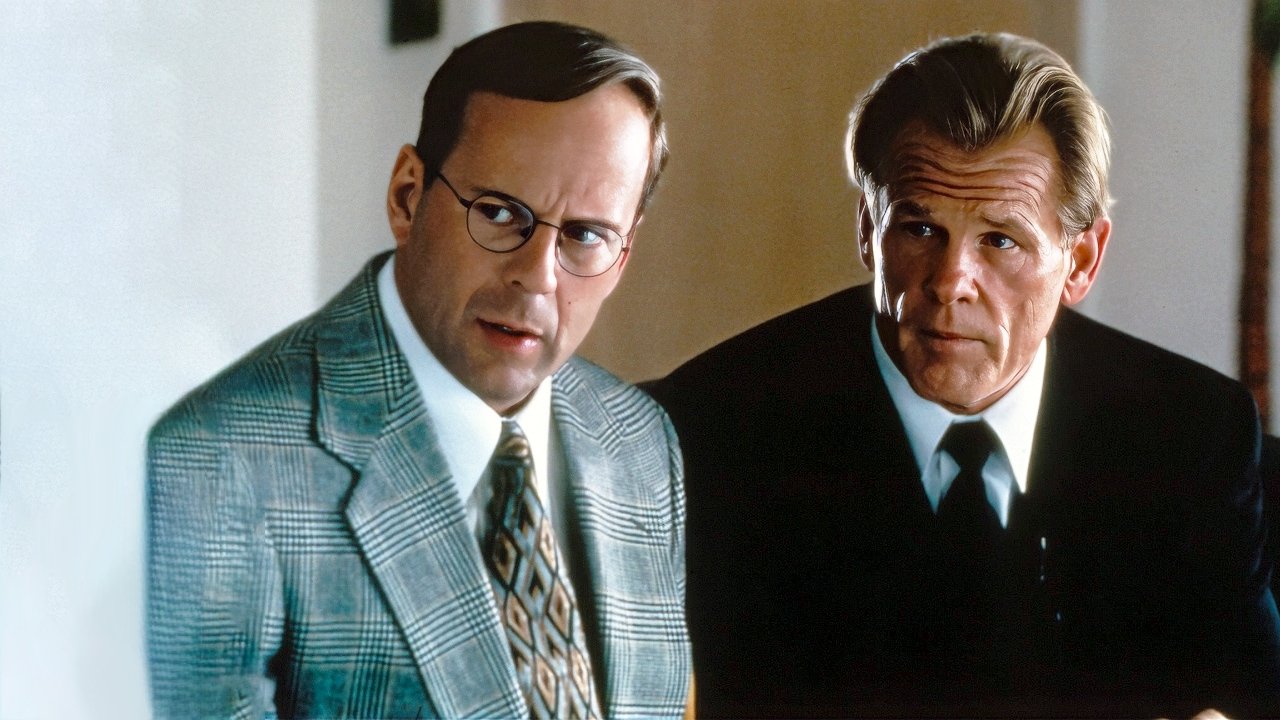

Adapting Vonnegut is a Herculean task. His charm lies in his authorial intrusions, his simple yet profound drawings, his blend of bleakness and humanism. Alan Rudolph tries gamely to incorporate these elements. We see visual representations of Vonnegut's illustrations (like the infamous drawing depicting an "asshole"), and Kurt Vonnegut Jr. himself even makes a brief, almost spectral appearance as a television commercial director. This meta-touch feels both appropriate and slightly awkward, a reminder of the literary voice that the film struggles to fully replicate.
The journey to screen was a long one. Bruce Willis reportedly acquired the rights years earlier, hoping to capture the novel's unique spirit. The production itself, however, seemed plagued by the difficulty of translating Vonnegut's sprawling, non-linear narrative. Made for around $12 million, the film was a commercial catastrophe, grossing less than $200,000 domestically. Critical reception was similarly brutal (it currently holds a single-digit score on Rotten Tomatoes' critic meter). Vonnegut himself allegedly detested the adaptation, feeling it missed the novel's core message and tone – a harsh verdict, but perhaps understandable given the source material's deeply personal nature. Watching it now, one wonders: was the late 90s, an era often defined by irony but perhaps less attuned to Vonnegut's specific brand of satirical despair, the right time for this adaptation?
### Nostalgia for the Strange
For those of us who haunted video stores, Breakfast of Champions represents a specific kind of VHS memory. It wasn't the blockbuster you rented with friends for pizza night. It was the oddity you picked up out of curiosity, drawn by the familiar faces on the cover (Bruce Willis! Albert Finney! Nick Nolte!), only to be confronted with something far stranger and less accessible than expected. It’s the kind of film that likely prompted bewildered post-viewing discussions or simply a shrug and a mental note: "Well, that was weird." There's a certain nostalgia attached to that experience – the discovery of cinematic outliers, the films that didn't fit neatly into genre boxes, the ambitious failures that were perhaps more interesting than safer successes. Watching it again on a modern screen lacks the specific fuzzy glow of a CRT, but the feeling of baffled fascination remains. Doesn't its very strangeness make it a memorable artifact of late 90s filmmaking ambition?
### Lasting Echoes of Absurdity
Does Breakfast of Champions succeed as a film? By conventional metrics, largely no. It’s messy, tonally inconsistent, and struggles to capture the profound satirical bite of Vonnegut's prose. Yet, it’s not entirely dismissible. Alan Rudolph brings his signature dreamlike quality, Albert Finney delivers a soulful performance, and the sheer audacity of the attempt, spearheaded by Bruce Willis stepping far outside his comfort zone, is noteworthy. The film leaves you pondering those big Vonnegut questions about free will, sanity, and the absurdity of human existence in a commercialized world, even if it doesn't quite provide satisfying answers or a cohesive experience. It remains a cinematic curiosity, a testament to the perils and occasional strange rewards of translating literary genius to the screen.
Rating: 4/10
Justification: The rating reflects the film's significant flaws as an adaptation and a piece of narrative cinema – its uneven tone, narrative incoherence, and failure to capture Vonnegut's essence doom it critically. However, points are awarded for the ambition, Albert Finney's strong performance, the interesting casting (Willis's departure, Nolte's commitment), and its undeniable status as a fascinating, if failed, piece of late-90s cult ephemera. It's a film more interesting to discuss than to watch, but its sheer strangeness earns it a place in the annals of ambitious misfires.
Final Thought: Perhaps the ultimate fate of Breakfast of Champions on film is perfectly Vonnegutian – a flawed, slightly sad, yet undeniably human attempt to make sense of beautiful chaos, leaving us mostly bewildered but vaguely moved by the effort.