Okay, pull up a worn armchair, maybe crack open a beverage of your choice, because we're dusting off a peculiar little gem from the late 90s indie shelf today: Tom DiCillo's The Real Blonde (1998). This isn't one you likely rented every other weekend, maybe more like one you picked up on a whim, drawn in by the surprisingly stacked cast (Matthew Modine, Catherine Keener, Maxwell Caulfield, Daryl Hannah, Steve Buscemi!), intrigued by the title. What lingers after watching it again isn't explosive action or gut-busting laughs, but a certain searching quality, a sometimes awkward, sometimes insightful meditation on what it means to be "real" in a world obsessed with surfaces.
Manhattan Maze: Chasing Dreams and Dodging Artifice
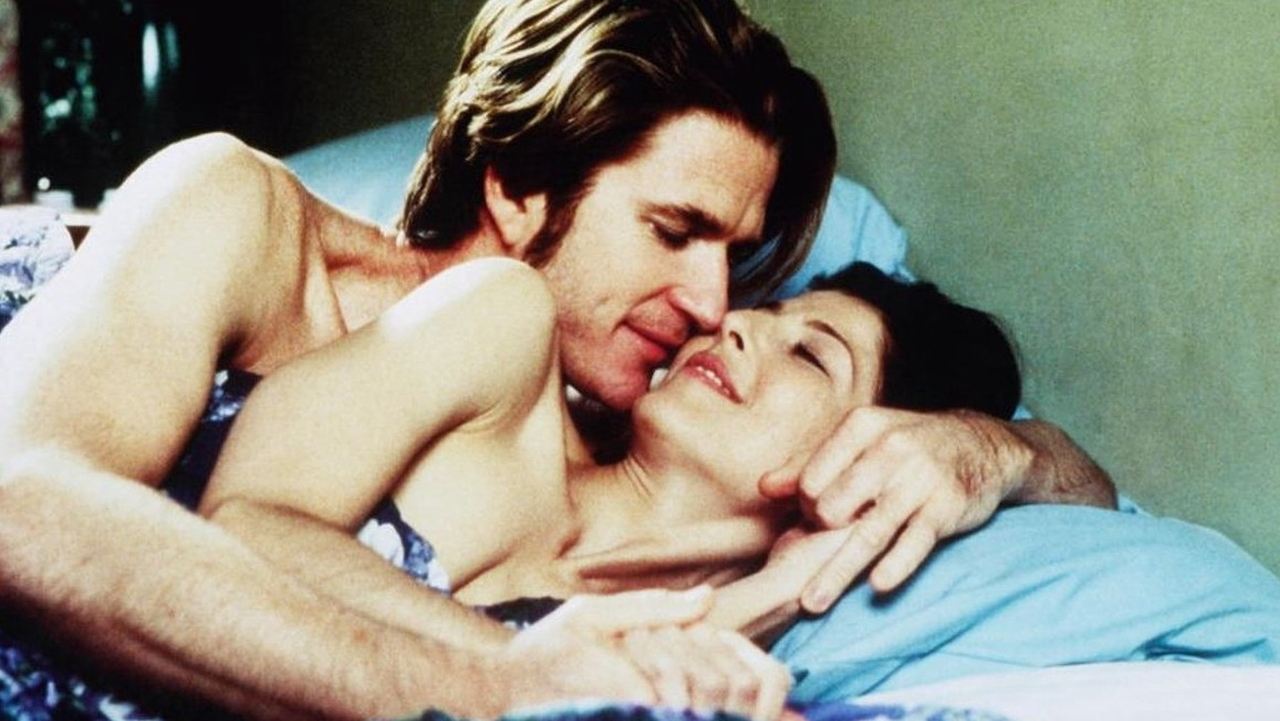
The film drops us into the lives of two New York City couples navigating the choppy waters of careers and relationships. Joe (Matthew Modine, bringing his familiar thoughtful sensitivity) is an aspiring actor whose principles often clash with the humiliating realities of auditions – he refuses roles he deems beneath him, leaving his pragmatic makeup artist girlfriend Mary (Catherine Keener, radiating grounded intelligence) to pay most of the bills. Their friends are the louder, seemingly more successful Bob (Maxwell Caulfield, chewing scenery with relish), a narcissistic soap opera actor, and his girlfriend Sahara (Daryl Hannah), a model grappling with the industry's expiration dates. The narrative weaves through their daily struggles, anxieties, and minor triumphs, painting a portrait of creative striving against the backdrop of a city that both nourishes and devours ambition.
The Quest for Authenticity (and a Decent Gig)

At its core, The Real Blonde wrestles with the theme of authenticity versus artifice. Joe’s almost obsessive fixation on dating only "real blondes" (no dye jobs allowed) serves as a slightly clumsy metaphor for his larger quest for genuineness in a world he perceives as fake – the entertainment industry, the fashion scene, even relationships. Does this search make him noble, or just naive and difficult? The film doesn't offer easy answers. DiCillo, who also penned the script, seems deeply familiar with the specific frustrations and compromises faced by artists, a theme he explored more directly (and perhaps more successfully) in his earlier cult classic Living in Oblivion. Here, the satire feels a bit broader, the targets (vain actors, predatory photographers played with slime by Christopher Lloyd, vapid fashionistas) sometimes obvious, but the underlying insecurity feels honest.
Performances: Finding Truth in the Ensemble
Where the film often finds its footing is in the performances. Catherine Keener is, as she so often is, the standout. Mary feels like the film's anchor, her exasperation with Joe tempered by genuine affection, her quiet professionalism a stark contrast to the louder egos surrounding her. She makes Mary's weariness and resilience completely believable. Modine effectively conveys Joe's blend of idealism and frustration, even if the character sometimes borders on irritatingly passive. And Maxwell Caulfield leans into Bob's preening vanity with gusto; knowing his iconic role in Grease 2 adds a subtle layer of commentary on fleeting fame and constructed personas. The supporting cast is a treat, with memorable turns from Steve Buscemi as Joe's perpetually exasperated commercial director and Elizabeth Berkley in a smaller role as Sahara's rival, navigating her own post-Showgirls career path. It's a fascinating snapshot of indie film casting in the late 90s – a collection of established names and rising talents converging on a character-driven piece.
Retro Fun Facts: An Indie Effort
Pulling together such a recognizable cast for what was clearly a modest independent film speaks volumes about DiCillo's standing after Living in Oblivion. Yet, The Real Blonde didn't quite capture the same critical or audience buzz. Released in early 1998, it struggled at the box office, grossing well under a million dollars domestically. Perhaps its blend of satire, relationship drama, and meandering pace felt unfocused to viewers expecting something sharper or funnier. Watching it now, its critique of image obsession feels almost quaint in the age of social media, yet the core anxieties about selling out versus staying true, or navigating complex adult relationships, still resonate. DiCillo shot the film on location in New York, capturing a specific late-90s energy – pre-Giuliani 'clean-up' in some ways, pre-internet saturation, a time when auditions involved Polaroids and careers felt built on more tangible, face-to-face hustle.
Does It Still Hold Up?
The Real Blonde is undoubtedly a film of its time. Its pacing can feel sluggish, and some of its satirical jabs haven't aged perfectly. Joe's central "real blonde" quest feels like a slightly underdeveloped conceit. Yet, there's an undeniable charm to its ambition and its willingness to sit with its characters' uncertainties. It captures that specific late-90s indie sensibility – talky, character-focused, interested in the messy bits of life rather than neat resolutions. Renting this back in the day from Blockbuster or the local indie video store felt like finding something a little different, a movie aiming for adult conversation rather than spectacle. Does it fully succeed? Maybe not entirely. But does it offer moments of truth, particularly through Keener's performance, and provide a fascinating time capsule of certain anxieties? Absolutely.
***
Rating: 6/10
Justification: The Real Blonde earns points for its strong performances (especially Keener), its earnest exploration of relatable themes like artistic integrity and relationship struggles, and for capturing a specific late-90s New York indie vibe. However, it loses points for uneven pacing, a central metaphor that doesn't quite land, and satire that occasionally feels blunt rather than sharp. It’s an interesting, sometimes insightful, but ultimately flawed piece.
Final Thought: It might not be a forgotten masterpiece, but The Real Blonde remains a worthwhile curiosity from the VHS racks – a thoughtful, if slightly rambling, look at the perennial struggle to find something genuine in a world often rewarding the imitation.