Some films arrive like a whispered confidence, settling into your thoughts long after the screen fades to black. Shohei Imamura's The Eel (Unagi) from 1997 is precisely that kind of film. It doesn't announce itself with explosions or frantic chases, typical fare for many late-90s video store shelves. Instead, it begins with a moment of shocking, almost mundane violence, then retreats into a quietude that's just as unsettling, forcing us to confront the deep, murky waters of guilt, isolation, and the tentative possibility of connection. Finding this gem back in the day, perhaps tucked away in the "World Cinema" section of a well-curated video store, felt like unearthing something truly special – a stark contrast to the usual blockbuster rentals.
A Crime of Passion, A Life in Silence
The film introduces us to Takuro Yamashita (Kōji Yakusho), a salaryman who discovers his wife's infidelity and, in a chillingly calm act, murders her. After serving eight years in prison, he's released on parole, seemingly numb and detached from the world. His only companion is a pet eel he bonded with in prison – a creature as silent and solitary as he aims to be. Yamashita sets up a small barbershop in a remote coastal town, determined to live a life of minimal interaction, his eel swimming placidly in its tank, a constant, silent witness.
Kōji Yakusho delivers a performance of extraordinary restraint. Known perhaps more widely now for roles in films like Shall We Dance? (the original 1996 version) or later works like 13 Assassins, here he embodies Yamashita's profound internal damage. There are no grand emotional outbursts; instead, his trauma manifests in his averted gaze, his clipped responses, his deliberate, almost ritualistic movements as he cuts hair. It’s a masterclass in conveying deep turmoil through subtle physicality. You feel the weight of his past actions in every quiet moment, the self-imposed prison he carries long after leaving the physical one.

An Unlikely Reflection
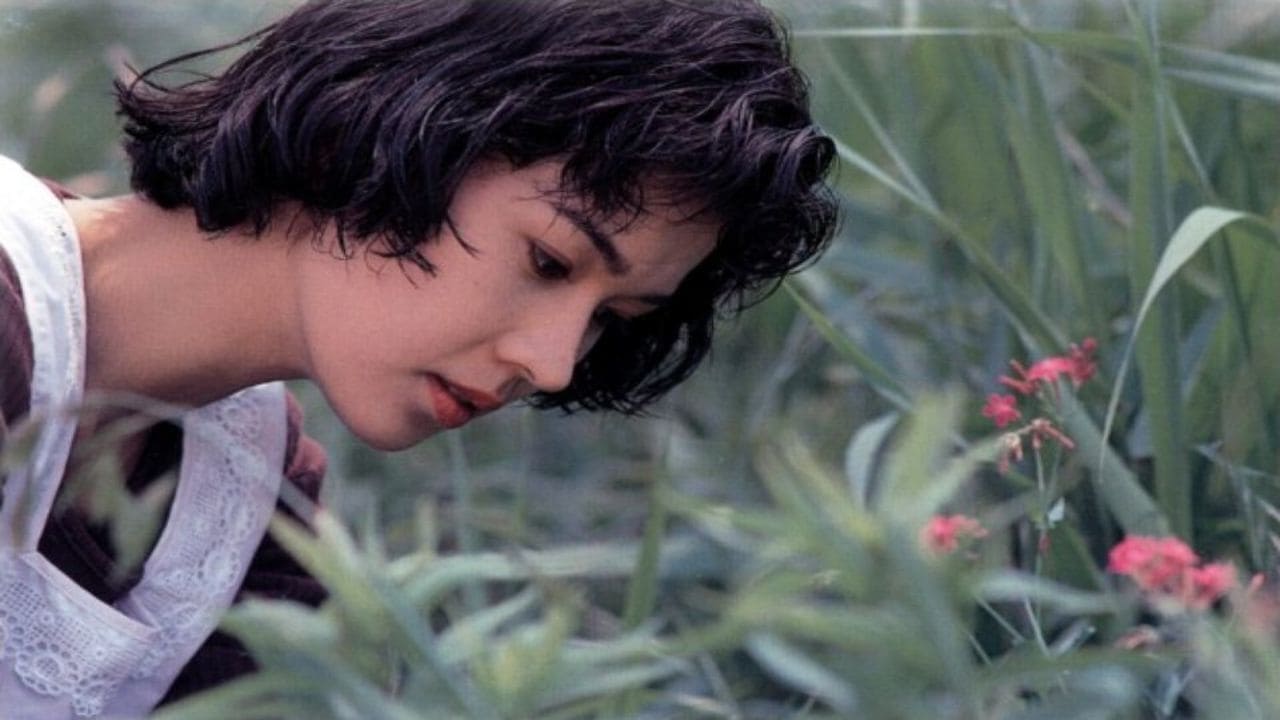
Yamashita's carefully constructed isolation is disrupted by the arrival of Keiko Hattori (Misa Shimizu). He saves her from a suicide attempt – an act that mirrors, in a strange, inverted way, the destructive act that defined his past. Keiko, carrying her own burdens and secrets, begins working at his barbershop. Their relationship develops with excruciating slowness, marked by unspoken understandings and shared loneliness. Misa Shimizu brings a fragile resilience to Keiko, a woman drawn to Yamashita's quietude perhaps because it resonates with her own hidden pain. Their hesitant bond forms the fragile core of the film – can two damaged souls find solace, or even redemption, in each other's company?
Imamura's Unflinching Gaze
Director Shohei Imamura, one of only a handful of directors to win the prestigious Palme d'Or at Cannes twice (first for 1983's The Ballad of Narayama and sharing the prize for The Eel with Abbas Kiarostami's Taste of Cherry in 1997), was never one for easy answers or sentimental portrayals. Known for his anthropological interest in the lower strata and fringes of Japanese society, his style here is observational, almost detached, yet deeply empathetic. He doesn’t judge Yamashita but simply presents his struggle, allowing the quiet rhythms of small-town life and the strange, symbolic presence of the eel to speak volumes.
The eel itself becomes a potent symbol – primitive, resilient, surviving in murky depths, capable of delivering a sudden jolt. Does it represent Yamashita's own buried primal urges, the crime he committed? Or perhaps the possibility of survival, of adapting to a dark environment? Imamura leaves it ambiguous, letting the image resonate.
Retro Fun Facts & Production Notes
- The film is loosely based on the novel On Parole by Akira Yoshimura, but Imamura significantly altered the story, particularly the ending, injecting his own thematic concerns about survival and human connection.
- Winning the Palme d'Or was a remarkable achievement, cementing Imamura's status as a master filmmaker on the world stage late in his career. It brought significant international attention to the film and to Kōji Yakusho.
- Finding funding and support for films with such challenging, non-commercial themes was often difficult, even for established directors like Imamura. The Cannes win undoubtedly helped its distribution and legacy. His health was also beginning to decline around this period, adding another layer to the perseverance required to bring this quiet, powerful story to fruition.
- While not packed with practical effects in the typical 90s sense, the film's power lies in its grounded realism and the naturalistic depiction of the coastal town environment, which feels utterly authentic and lived-in.
The Murky Waters of Redemption
The Eel isn't concerned with easy catharsis. It explores the painstaking, often awkward process of re-entering the world after profound transgression and isolation. Can a man who committed such a final act ever truly reconnect? Can trust be rebuilt, both with others and with oneself? The film is populated by quirky, sometimes intrusive supporting characters – the nosy neighbour, the eccentric priest with UFO obsessions – who provide moments of unexpected humour and underscore the strangeness of the world Yamashita tries to keep at bay. Yet, they also represent the community he must navigate if he is ever to find a semblance of peace.
The pacing is deliberate, mirroring Yamashita's own hesitant steps back into life. It demands patience from the viewer, rewarding it with moments of subtle emotional power and profound psychological depth. It’s a film that trusts its audience to observe, to feel, and to draw their own conclusions about the murky nature of forgiveness and the enduring human need for connection, however flawed or fragile.
Rating and Final Thoughts
The Eel is a quiet masterpiece, a film that lingers precisely because it refuses easy resolutions. Kōji Yakusho's performance is unforgettable, a study in contained grief and tentative hope. Shohei Imamura crafts a film that is both specific to its Japanese setting and universally resonant in its exploration of guilt, isolation, and the difficult path toward potential redemption. It might not have been the tape you rented for a Friday night pizza party, but discovering it felt like uncovering a hidden truth about human nature, rendered with artistry and profound empathy. It’s a haunting, deeply felt piece of cinema.
Rating: 9/10
Justification: The Eel earns its high score through its masterful direction, Yakusho's career-defining performance, its thematic depth, and its unique, lingering atmosphere. It tackles difficult subjects with profound empathy and restraint, making it a standout piece of late 90s world cinema. The deliberate pacing might test some viewers, preventing a perfect score, but its quiet power is undeniable.
What stays with you most after watching The Eel? Is it the weight of Yamashita's silence, the tentative hope offered by Keiko, or the enigmatic presence of the eel itself, swimming in its own contained world? It’s a film that continues to provoke thought, long after the credits roll and the VCR clicks off.