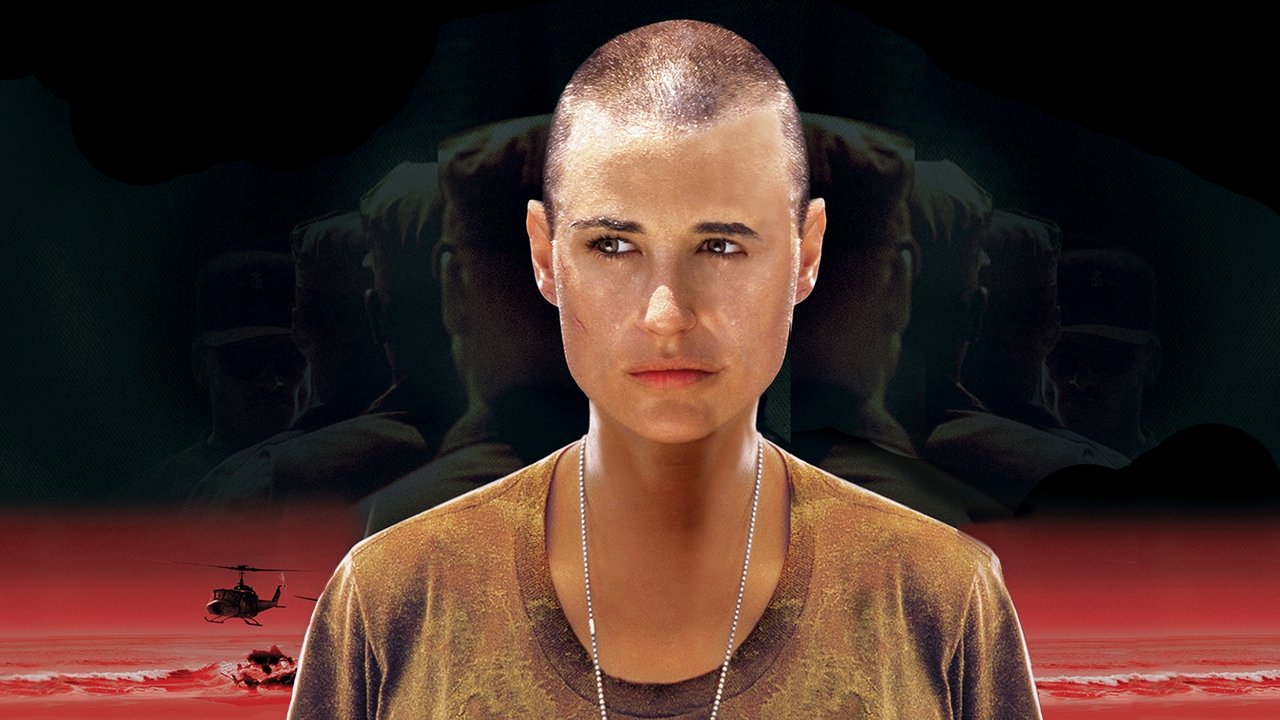
It’s impossible to think of G.I. Jane without immediately picturing Demi Moore, head shaved, glare fixed, embodying a steely resolve that seemed to radiate right off the screen back in 1997. It wasn't just a haircut; it felt like a declaration, both for the character, Lt. Jordan O'Neil, and perhaps for Moore herself, pushing against the Hollywood grain. Watching it again now, decades removed from the initial buzz and controversy, the film settles into a different kind of resonance – a raw, often brutal look at the collision of political ambition and sheer human endurance.

The Political Chessboard
Director Ridley Scott, a filmmaker more readily associated with the rain-slicked streets of Blade Runner (1982) or the terrifying corridors of the Nostromo in Alien (1979), brings a surprising, grounded intensity to this military drama. The premise is straightforward yet loaded: a shrewd, politically ambitious senator, Lillian DeHaven (Anne Bancroft, radiating calculated steel), maneuvers to place the first woman into the notoriously demanding (fictional) U.S. Navy Combined Reconnaissance Team training program – essentially, the Navy SEALs. Her chosen candidate, Lt. Jordan O'Neil (Demi Moore), is initially just a pawn in DeHaven's game to protect military base funding. O'Neil, however, isn't interested in being anyone's token.
The setup deliberately highlights the cynical machinations behind O'Neil's opportunity. Bancroft, a true screen legend even then, imbues Senator DeHaven with a chilling pragmatism. Her motivations aren't about equality; they're about leverage. It adds a layer of bitter reality to O'Neil's struggle – she's not just fighting the physical and mental challenges of the training, but also the political forces that see her as expendable.

Trial by Fire (and Water, and Mud)
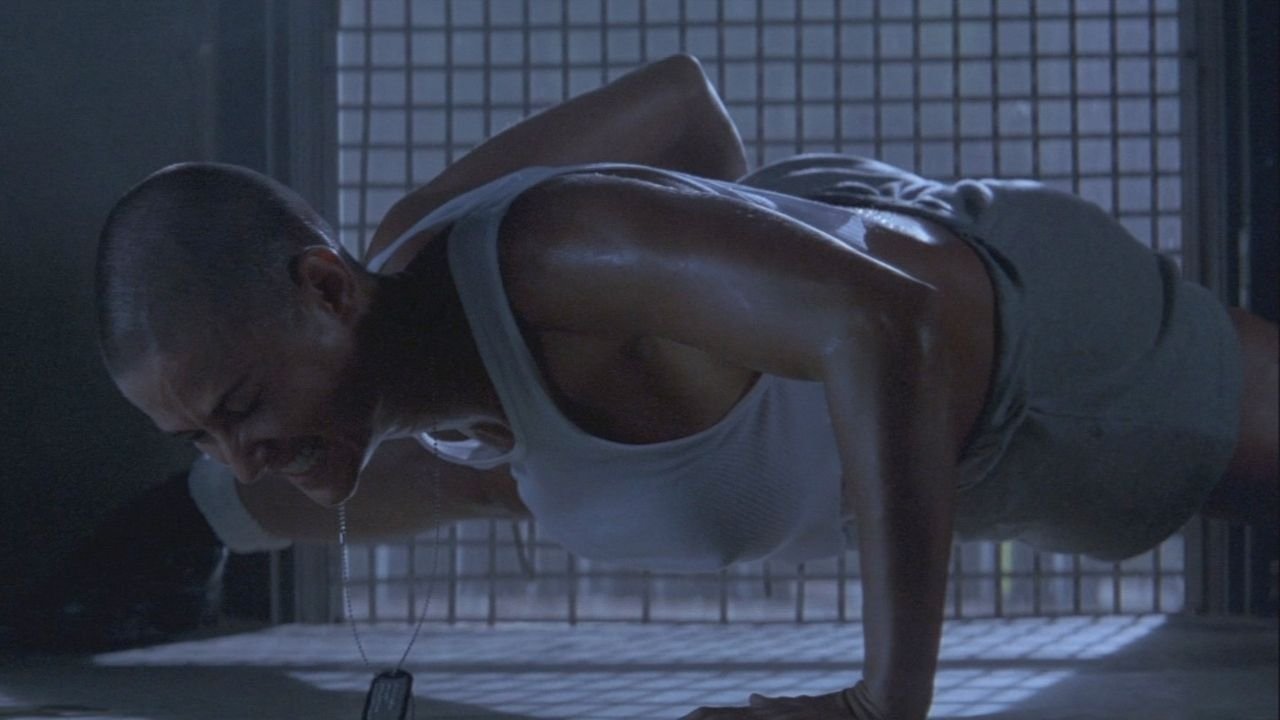
Where G.I. Jane truly digs in is during the grueling BUDS-style training sequences. Scott doesn’t shy away from the sheer brutality. The infamous "Hell Week" feels genuinely exhausting to watch, filled with mud, icy water, relentless physical exertion, and psychological warfare. It’s here that Moore’s commitment becomes undeniable. Knowing she performed many of her own stunts, including the demanding obstacle courses and reportedly those one-armed push-ups, adds a layer of visceral authenticity. You feel the exhaustion, the pain, the bone-deep cold. I remember renting this on VHS, the grainy transfer somehow amplifying the grit on our old CRT television – it felt raw and immediate.
These scenes are less about traditional action and more about the breaking down and rebuilding of the human spirit. Scott’s visual style captures the exhaustion and the grim determination etched on the faces of the trainees. It's punishing, repetitive, and utterly compelling. The film forces us to confront the question: what does it truly take to push past perceived limits?
The Master Chief's Shadow
Standing squarely in O'Neil's path is Command Master Chief John James Urgayle, portrayed with simmering, unforgettable intensity by Viggo Mortensen. Years before he became Aragorn, Mortensen delivered a masterclass in menacing authority here. Urgayle is more than just a drill instructor; he's an embodiment of the hardened, seemingly impenetrable culture O'Neil seeks to enter. His methods are cruel, his pronouncements often cutting, yet beneath the surface, Mortensen hints at a complex code, perhaps even a grudging respect born from shared hardship.
One of the film's most memorable moments comes when Urgayle unexpectedly quotes D.H. Lawrence's poem "Self-Pity." It’s a startling flash of intellect and depth from a character largely defined by his harsh exterior. Reportedly, this was Mortensen's own contribution, a choice that elevates Urgayle beyond a simple antagonist. It adds a layer of philosophical weight to the relentless physical trials. Is his brutality a test, a necessary crucible, or simply sadism? The film leaves that satisfyingly ambiguous.
More Than Just Muscle?
While the physical transformation and training sequences dominate, G.I. Jane attempts to grapple with themes of sexism, sacrifice, and integrity. The resistance O'Neil faces isn't just physical; it's deeply ingrained institutional bias, suspicion from her male counterparts, and sabotage from the political sphere. The film doesn't always handle these themes with the utmost subtlety – some of the dialogue feels a bit on-the-nose by today's standards, particularly the infamous "Suck my dick!" line, which generated considerable debate upon release. Was it an empowering reclamation of aggressive language or a moment that undercut the film's attempt at a nuanced portrayal? Viewers likely fell on different sides then, and perhaps still do.
Despite some script weaknesses, the core message about perseverance against overwhelming odds remains potent. O'Neil isn't just fighting for herself; she represents a challenge to a deeply entrenched status quo. Her struggle resonates beyond the specific military context, touching on broader questions of breaking barriers and proving worth in hostile environments.
Retro Realities
Looking back, G.I. Jane feels very much a product of its time – the mid-90s conversation about women in combat was fervent. Produced on a hefty $50 million budget, its box office performance was somewhat modest domestically ($48 million), though it fared better worldwide ($97 million total). It wasn't a runaway smash, but it certainly made an impact, cementing Moore's image as an actress willing to go to extremes. It’s interesting to note David Twohy, who co-wrote the screenplay with Danielle Alexandra, would later create the lean, mean sci-fi world of Pitch Black (2000) – perhaps some of that survivalist grit was honed here. There were whispers, too, of filmed subplots exploring a deeper connection between O'Neil and Urgayle, thankfully excised by Scott to maintain the focus on O'Neil's solitary journey.
Rating and Final Thoughts
G.I. Jane is a film powered by fierce commitment – from Ridley Scott's unflinching direction to, most significantly, Demi Moore's physically and emotionally demanding central performance and Viggo Mortensen's unforgettable turn. While the script sometimes stumbles into predictable territory and its handling of gender politics can feel dated, the sheer visceral intensity of the training sequences and the core story of individual tenacity remain compelling. It’s a film that sticks with you, perhaps less for its political statements and more for its raw depiction of pushing the human body and spirit to their absolute limits. It earns its stripes through sheer grit.
Rating: 7/10
What endures most, perhaps, isn't the controversy or the politics, but the image of O'Neil, battered but unbroken, facing down Urgayle and the entire system. It's a testament, however imperfectly rendered, to the power of will. Didn't we all feel a surge of adrenaline watching her refuse to quit?