The stark, windswept peaks of the Caucasus dominate the frame, beautiful yet utterly indifferent to the human dramas unfolding beneath them. It’s an image that stays with you long after the VCR whirs to a stop, encapsulating the profound sense of isolation and the harsh realities explored in Sergei Bodrov’s haunting 1996 film, Prisoner of the Mountains (original title: Kavkazskiy plennik). This wasn't your typical rental store find, often tucked away on a shelf far from the explosive action covers that usually drew the eye. Yet, discovering this tape felt like uncovering something vital, a raw and deeply human story emerging from the crucible of the First Chechen War.
In the Shadow of Conflict
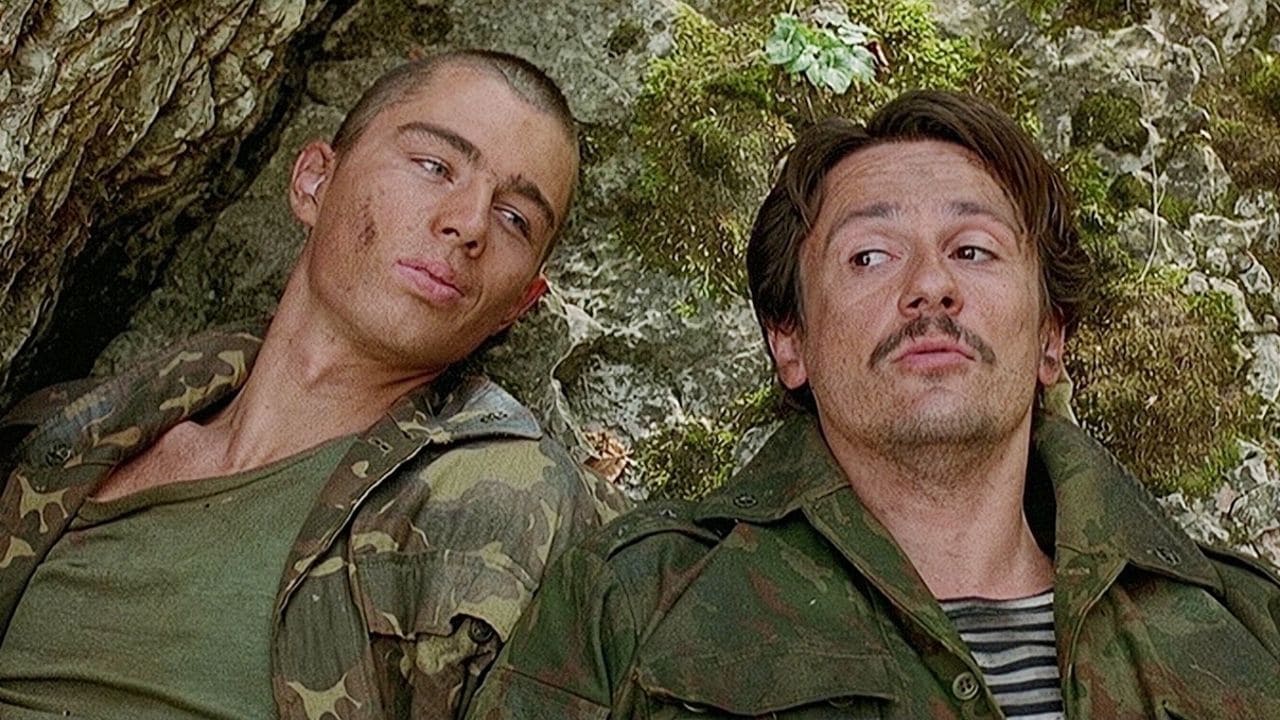
The setup is deceptively simple, echoing Leo Tolstoy's 1872 story "The Prisoner of the Caucasus" which loosely inspired it. Two Russian soldiers – the seasoned, cynical sergeant Sasha (Oleg Menshikov) and the young, green recruit Vanya (Sergei Bodrov Jr.) – survive an ambush only to be captured by villagers in a remote Chechen mountain settlement. The village elder, Abdul-Murat (Jemal Sikharulidze), holds them not out of simple malice, but with a desperate hope: to trade them for his own son, held captive by the Russians. What unfolds is less a traditional war film and more an intimate study of humanity under extreme pressure.
Bodrov Sr., who would later gain international recognition for films like Mongol (2007), crafts a narrative that deliberately avoids easy answers or clear villains. The Chechen villagers aren't monstrous caricatures; they are people bound by tradition, driven by grief, and caught in a conflict that ravages their lives as much as it does the soldiers'. Abdul-Murat, portrayed with immense dignity and sorrow by Sikharulidze, embodies this complexity. His quiet authority and the palpable weight of his personal loss make him far more than a simple antagonist. He is a man trapped by circumstance, mirroring the soldiers' own captivity in many ways.
A Bond Forged in Captivity
At the heart of the film lies the evolving relationship between the two prisoners. Oleg Menshikov, already a respected figure in Russian cinema, delivers a masterful performance as Sasha. His initial weariness and sarcastic defences slowly crack, revealing layers of vulnerability and a grudging protectiveness towards his young comrade. It’s a performance built on subtle shifts in expression, the weight of experience etched onto his face.
Standing beside him, Sergei Bodrov Jr., the director’s own son, is simply unforgettable as Vanya. Making one of his first major screen appearances, he radiates an initial naivete that makes the harshness of their situation even more jarring. We watch him navigate fear, confusion, and eventually, a quiet resilience. His tentative interactions with Abdul-Murat’s daughter, Dina (Susanna Mekhraliyeva), offer fleeting moments of fragile connection across the cultural and conflict divides. Knowing Bodrov Jr.’s subsequent meteoric rise to stardom in Russia with films like Brat (1997) and his tragic, untimely death in an avalanche in 2002 lends a particular poignancy to watching his performance here. There's an untainted quality, a raw potentiality that makes his portrayal deeply affecting in retrospect.
Echoes from the Mountains: Production and Realism
The film's power is significantly amplified by its authenticity. Prisoner of the Mountains was filmed on location in Dagestan, a region bordering Chechnya, during a period of considerable instability. This wasn't a studio backlot; the danger was real, and that palpable tension permeates the film. You feel the cold, see the rough-hewn reality of the village, and hear the wind whistling through the unforgiving landscape. It lends the narrative an almost documentary feel, stripping away any sense of cinematic artifice. It’s worth remembering that getting this kind of nuanced, humanistic portrayal of such a recent and brutal conflict onto screens – and into Western video stores – was no small feat. The film's subsequent Academy Award nomination for Best Foreign Language Film and its FIPRESCI Prize win at the Cannes Film Festival underscore its quiet power and critical resonance, validating the risks taken during its production.
The film doesn't shy away from the brutality inherent in the situation, but its focus remains steadfastly on the human cost. There are no grand heroics, no explosive set pieces designed purely for spectacle. Instead, the drama unfolds in quiet conversations, shared glances, and the simple, arduous tasks of survival. What lingers isn't the violence itself, but the questions it forces us to confront: Can empathy bridge the deepest divides? What does survival truly cost? Is our shared humanity strong enough to overcome the arbitrary lines drawn by conflict?
Finding Truth on Tape
Discovering Prisoner of the Mountains on VHS felt different. It wasn't escapism in the usual sense; it was an invitation to confront something difficult, something real. It reminded us that cinema, even in the familiar format of a rental tape, could offer profound insights into corners of the world and human experiences far removed from our own. It stood as a quiet testament to the power of storytelling to foster understanding, even when depicting situations seemingly defined by misunderstanding and hostility. The film doesn't offer easy resolutions, mirroring the messy, often tragic reality of war itself.
Rating: 9/10
This score reflects the film's exceptional performances, particularly from Menshikov and Bodrov Jr., its courageous and nuanced handling of a complex subject, and its stark, atmospheric realism achieved under challenging conditions. It masterfully transcends the war genre to become a deeply moving meditation on shared humanity, loss, and the glimmers of connection found in the darkest of circumstances. Prisoner of the Mountains is a film that settles in your soul, a quiet masterpiece from the 90s that reminds us of the essential, often heartbreaking, truths that bind us together even when forces seek to tear us apart. What does it truly mean to be captive, and can understanding ever be the key to freedom?