Okay, fellow tape enthusiasts, settle into your favourite armchair. Let's rewind to a time when the battle of the sexes wasn't fought online, but often played out with witty banter and competing perspectives right there on the silver screen – or, more likely for many of us, the glowing embrace of our CRT TVs. Remember stumbling upon those quirky relationship comedies at the video store? The ones with the clever premises? 1991's He Said, She Said fits right into that comfy niche, offering a unique structural twist on the age-old story of boy meets girl, boy annoys girl, girl annoys boy, and... well, you know the drill.
### Two Directors, Two Perspectives
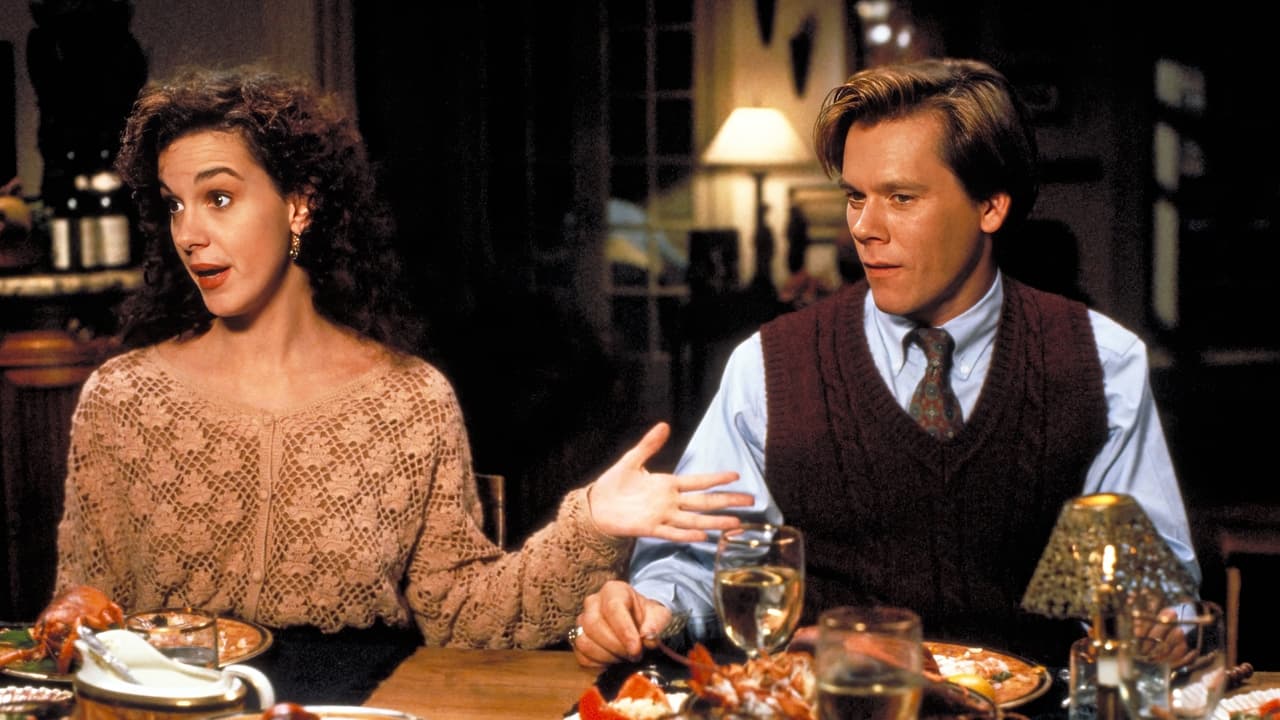
What immediately set He Said, She Said apart, even back on the New Releases shelf, was its central gimmick: the film is literally split down the middle. The first half tells the story of the relationship between sparring Baltimore Sun columnists Dan Hanson and Lorie Bryer from his perspective, directed by Ken Kwapis (who would later give us TV gems like The Office). The second half retells the same events, but this time through her eyes, guided by director Marisa Silver. It’s a narrative device that promises a deeper look into the subjective nature of memory and relationships. Does his recollection match hers? Of course not, and that's where the film finds both its humour and its occasional insight.
It's a fascinating structure, and here's a lovely piece of retro trivia that adds another layer: Kwapis and Silver were partners in real life (and later married). Apparently, Silver was initially attached to direct the whole film, penned by Brian Hohlfeld, but as the project developed, the couple saw the potential to embody the film's theme through their distinct directorial approaches. You have to wonder about the dinner table conversations during production – did their own perspectives ever clash while trying to capture the characters'? It adds a meta-textual charm to the viewing experience, doesn't it? Knowing the directors were navigating their own relationship while crafting this on-screen one gives the whole endeavour a rather sweet, personal underpinning.
### Bacon and Perkins: A Chemistry Experiment
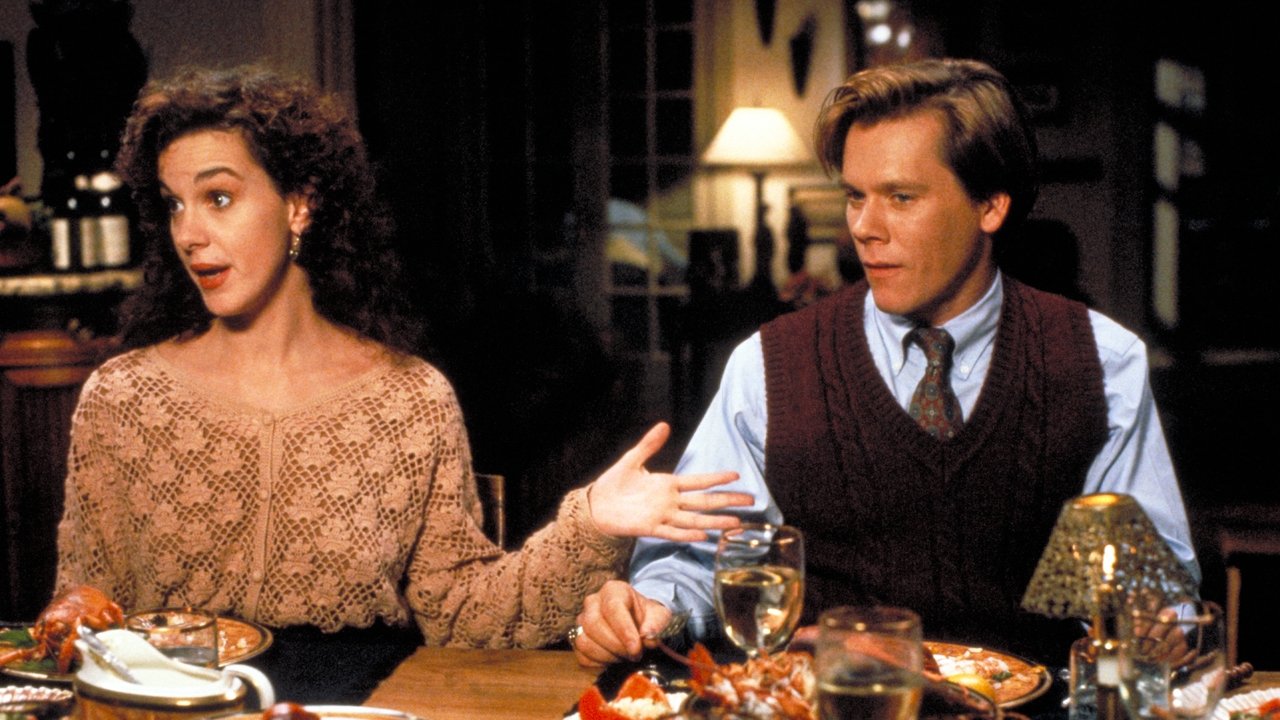
At the heart of this dual narrative are Kevin Bacon as the charmingly chauvinistic Dan and Elizabeth Perkins as the sharp, initially unimpressed Lorie. Bacon, already well-established post-Footloose (1984), leans into Dan's casual confidence and sometimes infuriatingly traditional views. He makes Dan likeable even when you want to throttle him, capturing that specific brand of early 90s 'lovable rogue'. Perkins, who always brought such intelligence and grounding warmth to roles like in Big (1988), is his perfect foil. Her Lorie is smart, driven, and rightly skeptical of Dan's advances.
Their chemistry is undeniable, crackling with the kind of friction that fuels the best rom-coms. You believe their initial antagonism and their eventual, almost reluctant, attraction. Watching them navigate the professional rivalry that bleeds into personal entanglement feels authentic, even within the slightly heightened reality of the genre. The supporting cast, notably Nathan Lane as Dan's best friend Wally, adds some reliable comedic relief, though the focus remains squarely on the central pair and their competing narratives.
### A Tale of Two Halves (Literally)
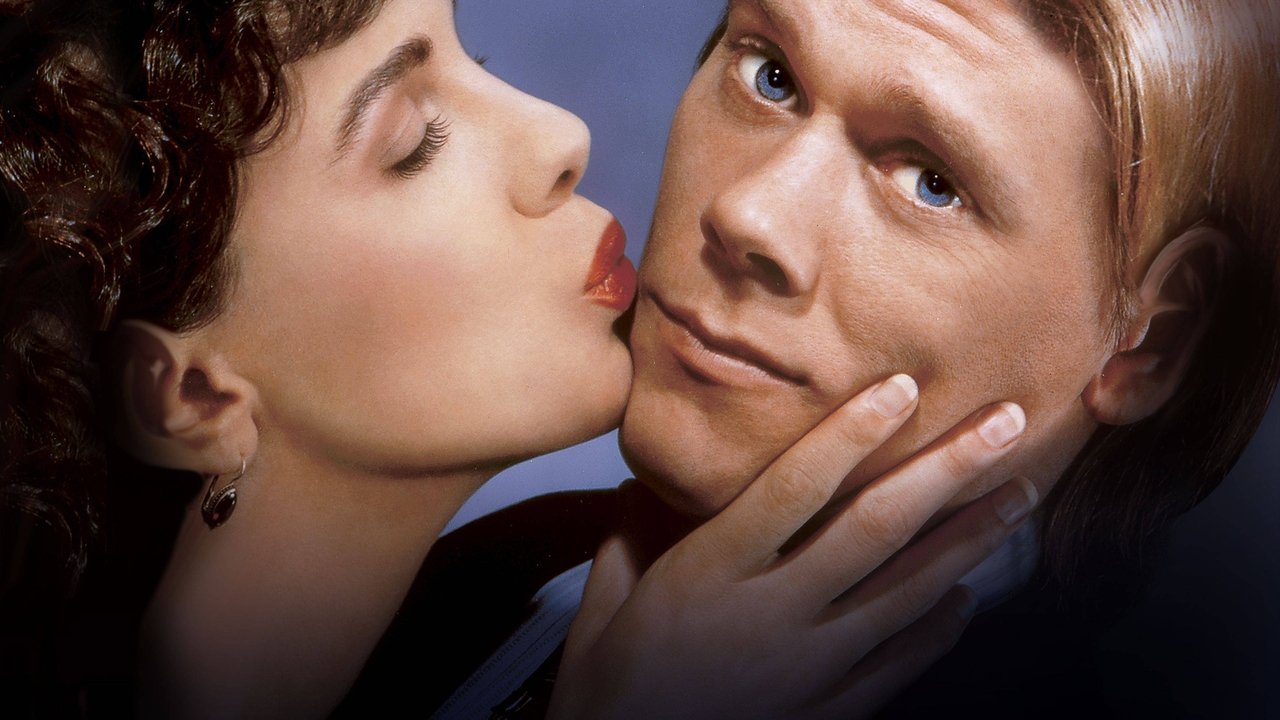
Does the structural experiment fully succeed? Well, it's certainly ambitious. Kwapis's 'He Said' half often feels broader, more focused on the physical comedy and Dan's somewhat self-aggrandizing view of events. Silver's 'She Said' half tends to be more nuanced, delving into the emotional undercurrents and Lorie's internal reactions. The fun lies in spotting the discrepancies – the way a shared glance is interpreted completely differently, or how a seemingly minor incident carries far more weight for one than the other.
However, sometimes the gimmick can feel a little… well, like a gimmick. Re-watching key scenes from a slightly different angle doesn't always reveal profound truths, occasionally just reinforcing what we already suspected. The film adheres fairly closely to rom-com conventions of the era, meaning the destination is never really in doubt, even if the journey is split in two. It doesn't quite achieve the Rashomon-like depth it seems to aim for, but it remains an entertaining exploration of how men and women (at least, as depicted in early 90s cinema) often experience the same reality in fundamentally different ways. Seeing Baltimore, particularly the Sun's offices, used as the backdrop also adds a nice touch of realism often missing from more generic LA/NYC settings.
### The Verdict on This VHS Memory
Revisiting He Said, She Said feels like uncovering a pleasant, slightly dusty time capsule. It’s a snapshot of early 90s romantic comedy sensibilities, complete with shoulder pads, earnest emotions, and that specific brand of gender commentary that feels both familiar and a little quaint now. The dual-director approach, born from a real-life partnership, gives it a unique hook that elevates it above standard fare, even if the execution isn't flawless. Bacon and Perkins are immensely watchable, their chemistry carrying the film through its structural repetitions. It might not have set the box office alight (grossing around $20.4 million against a $15 million budget), but finding this tape felt like a solid weekend rental back in the day.
Rating: 7/10
This score reflects the film's charming performances, its genuinely interesting (if not perfectly executed) structural concept, and its warm nostalgic appeal. It's a solid, enjoyable 90s romantic comedy elevated by its unique directorial setup and the palpable chemistry between Bacon and Perkins. It loses a few points for sometimes letting the gimmick overshadow deeper character work and adhering a bit too closely to genre formula in the end.
Ultimately, He Said, She Said remains a testament to the idea that perspective is everything, especially in love. It’s a film that invites conversation, making you wonder about your own relationships and the different ways shared moments can be remembered. And isn't prompting that kind of reflection, alongside a cozy dose of nostalgia, exactly what makes revisiting these VHS-era gems so worthwhile?