It often feels like the cinematic landscape of the 90s, at least as filtered through my local video rental haunt, was dominated by American blockbusters. Yet, tucked away on those shelves, sometimes hiding behind slightly unfamiliar cover art, were gems from further afield. What happens when cynical mid-life melancholy collides head-on with irrepressible youthful energy? That's the spark at the heart of Carlo Verdone's Iris Blond (original title: Sono pazzo di Iris Blond), a wonderfully warm Italian comedy-drama from 1996 that feels like rediscovering a fondly remembered, slightly faded photograph.
A Tune of Second Chances
We meet Romeo Montini (Carlo Verdone), a session musician whose glory days as a one-hit-wonder pop star are firmly in the rearview mirror. He’s navigating that particularly uncomfortable phase of middle age where disillusionment seems to be the default setting – dumped by his younger girlfriend and unceremoniously booted from his long-time gig playing schmaltzy wedding music. Verdone, a master of portraying the nuances of Italian male insecurity and quiet desperation (often seen in his beloved earlier works like Bianco, rosso e Verdone (1981) or Compagni di scuola (1988)), embodies Romeo's slump with a relatable weariness. His hangdog expression and slumped shoulders speak volumes before he even utters a word of complaint.
Seeking some kind of cosmic guidance, or perhaps just grasping at straws, Romeo consults Marguerite (Andréa Ferréol, bringing a delightful eccentricity to the role), a Belgian fortune teller living in Brussels. Her prediction is specific and intriguing: his life will be transformed by a woman named Iris, a musician herself. It’s a prophecy that hangs over Romeo, coloring his perception when he inevitably crosses paths with the chaotic, vibrant, and significantly younger Iris (Claudia Gerini).
An Explosive Chemistry
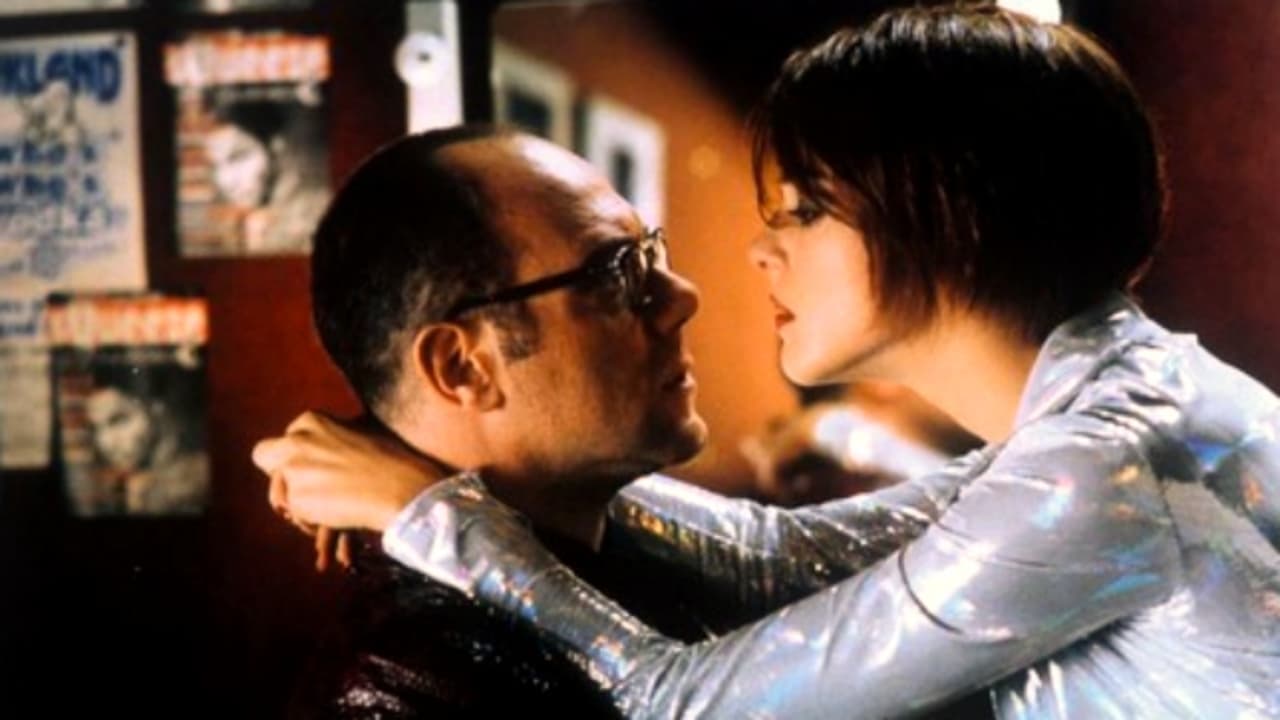
The film truly catches fire the moment Iris enters Romeo's orbit. She’s a force of nature – a struggling waitress with dreams of rock stardom, brimming with raw talent, unfiltered opinions, and a punkish energy that’s the polar opposite of Romeo’s muted existence. The casting here is simply perfect. Claudia Gerini, in what became a career-defining role, is absolutely electric. She doesn't just play Iris; she is Iris – impulsive, passionate, vulnerable, and utterly captivating. It’s a star-making turn, a whirlwind of charisma that practically leaps off the screen. It’s no surprise this performance earned Gerini the prestigious David di Donatello Award (Italy's equivalent of the Oscar) for Best Actress, cementing her arrival as a major talent.
The dynamic between Verdone’s melancholic Romeo and Gerini’s explosive Iris forms the core of the film. Their burgeoning relationship, evolving from reluctant musical collaborators into something more complex and romantic, feels surprisingly authentic despite the significant age gap. Verdone, directing himself, wisely avoids easy sentimentality. The challenges are real – differing life experiences, clashing artistic sensibilities, the sheer generational divide. Yet, there’s a tenderness and mutual respect that grows between them, fueled by their shared love of music and a genuine, albeit complicated, affection. Their musical partnership, mixing Romeo’s melodic sensibilities with Iris’s raw rock edge, becomes a potent metaphor for their relationship itself – a sometimes awkward, sometimes harmonious blend of contrasting styles.
Roman Heart, Universal Themes
Shot largely on location in Rome and Brussels, Iris Blond possesses a tangible sense of place. The Roman settings feel lived-in, avoiding picture-postcard clichés in favor of authentic streets and apartments. Verdone captures a specific mid-90s Italian vibe – a world grappling with modernity while still steeped in tradition, reflected in the characters' own struggles between past regrets and future hopes.
Beneath the romantic comedy framework, the film touches on familiar but resonant themes: the fear of aging and irrelevance, the courage it takes to pursue a dream later in life, and the unpredictable ways human connection can blossom. Does fate play a hand, as Marguerite suggested, or is it simply the choices we make when opportunity, however unconventional, knocks? Iris Blond doesn’t offer easy answers, preferring instead to explore the messy, hopeful, and often humorous realities of trying to find your tune, even when life feels off-key. It's interesting to consider how this May-December romance narrative might be portrayed today; here, it feels handled with a certain sensitivity and focus on character rather than controversy.
One delightful piece of trivia involves the film's title song, "Like Angels," performed by the fictional duo in the movie. Verdone, who often incorporates memorable music into his films, co-wrote the track, adding another layer of personal investment to the project. It became quite popular in Italy, further blurring the lines between the film's fiction and reality.
Finding the Harmony
Iris Blond isn't a film that shouts its merits from the rooftops. It’s quieter, relying on nuanced performances, witty dialogue laced with Verdone’s characteristic melancholy humor, and genuine emotional connection. It’s a character piece dressed up as a romantic comedy, and all the more charming for it. It may not have made huge waves internationally back in the day, making it precisely the kind of film that feels like a special discovery on VHS – a chance to connect with a story and characters that feel real, flawed, and ultimately quite moving.
Rating: 8/10
Justification: The film earns its score through the exceptional, star-making performance by Claudia Gerini, the perfectly pitched melancholic charm of Carlo Verdone, their palpable chemistry, the authentic atmosphere, and the script's witty and sensitive handling of themes like age, ambition, and unexpected love. It’s a beautifully realized character study disguised as a rom-com. While perhaps predictable in some narrative arcs, its emotional honesty and warmth shine through.
Iris Blond leaves you with a gentle warmth, a reminder that sometimes the most meaningful connections arrive in the most unexpected packages, and that maybe, just maybe, there’s always time for one more song. A true delight for fans of character-driven European cinema from the 90s.