Okay, settle in, maybe grab a cup of tea or something stronger depending on your mood. We're digging into a slightly more obscure corner of the rental shelf today, a French offering from the mid-90s that pairs two absolute giants of Gallic cinema: Fantôme avec chauffeur (1996), sometimes known internationally, rather plainly, as Ghost with Driver. It might not have been the tape screaming for attention next to the latest Hollywood blockbuster, but finding gems like this was part of the magic, wasn't it?
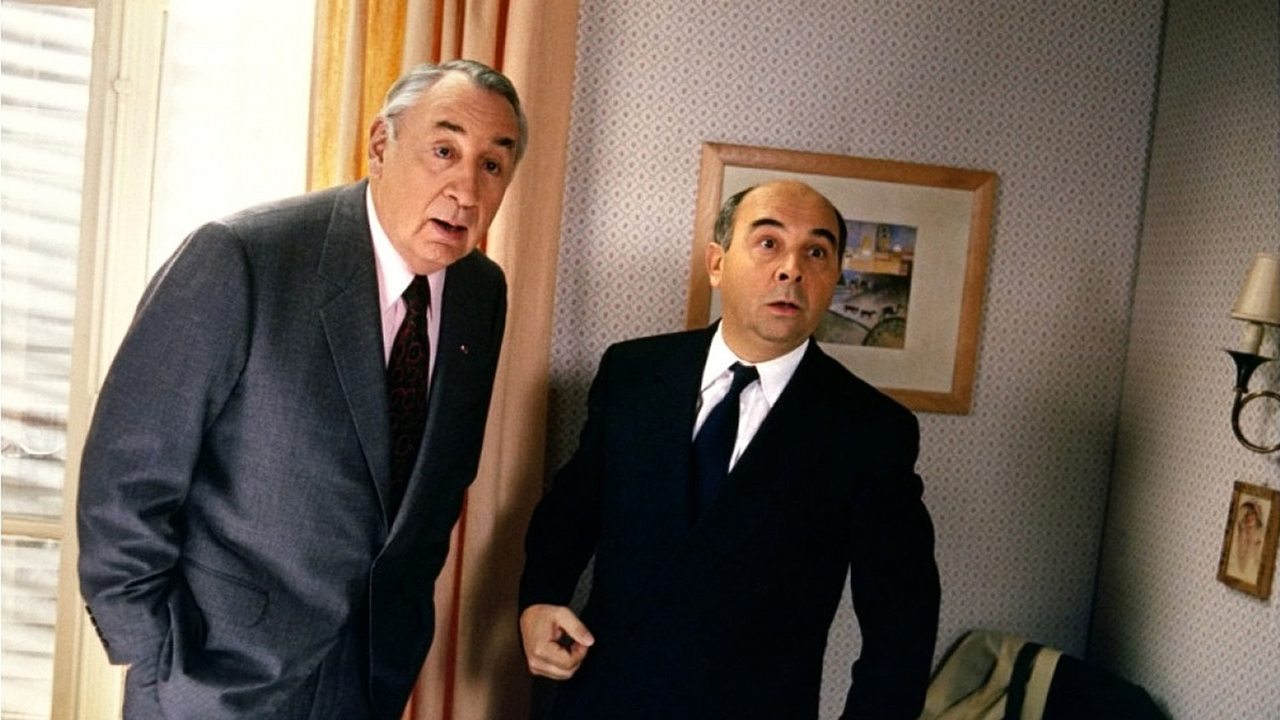
What immediately strikes you isn't explosive action or gut-busting gags, but a certain gentle melancholy wrapped in a comedic premise. Imagine the spectral form of Philippe Noiret, an actor whose very presence conveyed lifetimes of wisdom and weariness, tethered to the perpetually put-upon, everyman charm of Gérard Jugnot. It’s a pairing that promises something more thoughtful than your average high-concept comedy, and thankfully, it largely delivers.
An Unlikely Afterlife Pairing
The setup, penned by director Gérard Oury alongside his daughter Michèle Oury and the legendary screenwriter Francis Veber (the genius behind La Chèvre (1981) and Le Dîner de Cons (1998)), is deceptively simple. Philippe Bruneau-Tessier (Noiret), a powerful, aloof businessman, dies suddenly. Instead of pearly gates or fiery pits, he finds himself an invisible, intangible ghost, permanently stuck in the orbit of his former chauffeur, Georges Morel (Jugnot). Georges, initially bewildered and terrified, is the only person on Earth who can see or hear his late employer. What follows is less a ghostly haunting and more a posthumous odd-couple comedy, as the spectral tycoon attempts to micromanage Georges' life – and his own unfinished business – from beyond the grave.
There’s an inherent charm here, a sort of celestial buddy movie dynamic. Noiret, even as a ghost, commands the screen with that familiar, magnificent presence. Think of his warmth in Cinema Paradiso (1988) or his quiet dignity in Il Postino (1994) – here, he brings a layer of spectral frustration and eventual vulnerability that feels utterly believable. He’s not just playing a ghost; he’s playing a man grappling with the sudden, absolute loss of control, forced into an unwelcome intimacy with someone he barely acknowledged in life. It's a performance that reminds you why Noiret was so revered; he could find profound humanity even in the most fantastical scenarios.
Jugnot, meanwhile, is pitch-perfect as the flustered, good-hearted Georges. A founding member of the iconic comedy troupe Le Splendid and a star in his own right through films like Les Bronzés (1978) and later Les Choristes (2004), Jugnot excels at playing characters caught in extraordinary circumstances. His reactions – the double-takes, the exasperated sighs, the gradual acceptance and even affection for his spectral passenger – ground the film. The comedy often stems not from slapstick, but from Georges trying to navigate everyday life while receiving constant, invisible instructions from a dead millionaire. Can you imagine trying to charm a date or negotiate a business deal with your deceased boss whispering critiques in your ear?
A Filmmaker's Gentle Farewell (Retro Fun Facts)
Knowing the context adds another layer of poignancy. This was the final film directed by the great Gérard Oury, a titan of French comedy whose earlier works like La Grande Vadrouille (1966) and The Mad Adventures of Rabbi Jacob (1973) were monumental successes, drawing staggering audience numbers in France. Fantôme avec chauffeur, by comparison, was a more modest affair, both in tone and box office returns (it certainly didn't match the tens of millions of admissions his 60s and 70s hits achieved). Yet, there's a sense of reflection here, a fittingly gentle sign-off from a director who had brought laughter to generations. Oury even dedicated the film to his wife, the celebrated actress Michèle Morgan.
The visual effects bringing Noiret's ghostly form to life are typical of the mid-90s – primarily compositing and transparency effects. They don't aim for startling realism, but rather serve the story effectively enough. You won't find groundbreaking digital wizardry here, but that almost adds to the charm, doesn't it? It feels tangible, practical, fitting for the era. The focus remains squarely on the interaction between the two leads, filmed against the backdrop of recognizable Parisian streets and the seaside town of Deauville, adding a touch of classic French cinematic elegance. It's also worth noting that Oury and Veber had collaborated before, notably on the script for Le Corniaud (1965), another massive hit, making this reunion a significant event in French cinema history, even if the result was more muted.
More Than Just a Spectral Sitcom
While played with a light touch, the film doesn't shy away from exploring themes of regret, missed connections, and the things we leave unsaid. Noiret's ghost isn't just trying to meddle; he's slowly realizing the shape of his own life, the relationships he neglected, the person he was. Georges, in turn, finds himself unexpectedly empowered, forced to step out of his passive role and take charge, albeit with ghostly assistance. Their evolving dynamic, from employer-employee to reluctant partners, and finally, to something resembling friendship, forms the emotional core. It asks subtle questions: What truly matters in the end? Can we find connection where we least expect it?
It’s not a perfect film. The pacing occasionally drifts, and some comedic setups feel a touch predictable if you're familiar with French comedies of the era. But its heart is undeniably in the right place, carried by the immense talent and chemistry of its two leads. It feels like a film made by seasoned professionals reflecting on life's transitions, albeit through a whimsical, spectral lens.
Rating: 7/10
Justification: Fantôme avec chauffeur earns a solid 7 for its genuinely charming central performances, the delightful chemistry between Noiret and Jugnot, and its gentle blend of comedy and pathos. The direction by Oury is assured, even in this lower key, and the script offers more thoughtfulness than many high-concept comedies. While not a laugh-a-minute riot or a visual effects powerhouse, its warmth, humanity, and the poignancy of seeing these actors (and director) in this particular story make it a rewarding watch. It loses a few points for occasional pacing lags and a certain predictability in its comedic rhythms, but its strengths far outweigh its minor weaknesses.
Final Thought: This is the kind of film that might have quietly gathered dust on the lower shelves of the video store, easily overlooked. But for those who took a chance, it offered a warm, funny, and surprisingly touching experience, anchored by two masters doing what they did best. It's a gentle reminder that sometimes, the most interesting connections happen after the credits roll... or even after the final curtain falls.