There's a peculiar silence that sometimes follows the end credits of a truly unusual film, a quiet hum that isn't just the absence of sound but the presence of lingering questions. Watching Federico Fellini's final cinematic statement, The Voice of the Moon (1990) (La voce della luna), evokes exactly that sensation. It's less a story told and more a dream half-remembered, drifting onto the screen like moonbeams through a dusty window – a fitting farewell, perhaps, from a master of the surreal and the sublime. Finding this on a VHS shelf back in the day, likely tucked away in the 'Foreign Language' section often ignored by browsers seeking the latest action hero, felt like uncovering a secret whispered from another world.

Whispers from the Well
The film, loosely inspired by Ermanno Cavazzoni's novel Il poema dei lunatici (The Poem of the Lunatics), doesn't offer a conventional plot. Instead, it wanders through the Italian countryside, primarily following Ivo Salvini, played with a captivating, wide-eyed innocence by Roberto Benigni. Ivo is a "lunatic" in the old sense – touched by the moon, believing he can hear its voice whispering secrets up from wells. His path intersects with that of Gonnella, a paranoid former prefect portrayed by the legendary Italian comedian Paolo Villaggio (forever known to Italians as the creator and star of the Fantozzi series). Gonnella sees conspiracies everywhere, convinced society is orchestrating a grand plot against him and everyone else. Together, these two figures navigate a landscape populated by beauty pageants, strange nocturnal gatherings, intrusive advertising blimps, and the cacophony of modern life encroaching on ancient rhythms.
Fellini's Fragmented Farewell
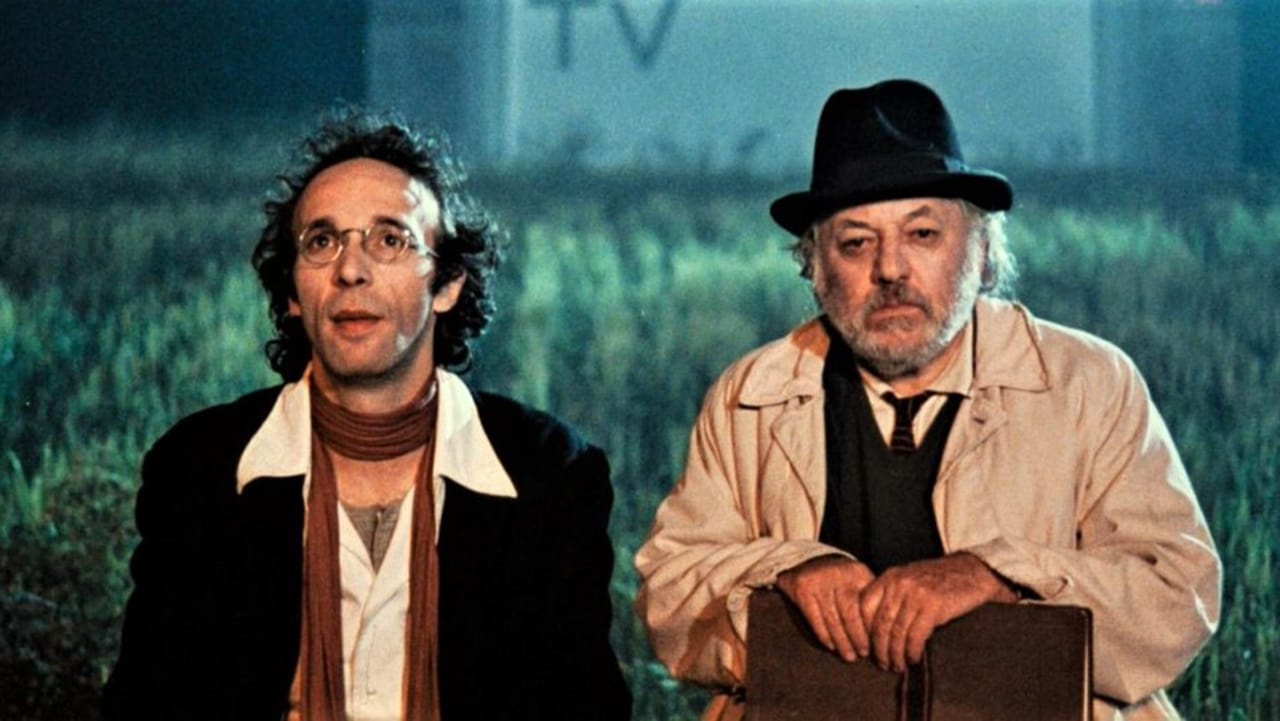
As Fellini's swan song, The Voice of the Moon feels both familiar and strangely elegiac. The Maestro, who gave us cinematic landmarks like 8 1/2 (1963) and La Dolce Vita (1960), returns to his signature blend of carnivalesque absurdity and poignant observation. Yet, there's a weariness here, a sense that the world's noise – the blaring televisions, the vapid consumerism – is overwhelming the quiet poetry Ivo seeks. The film unfolds in vignettes, dreamlike sequences that feel less like a structured narrative and more like fragments of Fellini's own subconscious projected onto the screen. It lacks the driving force of his earlier masterpieces, opting instead for a meandering, almost melancholic exploration of lost connections and the search for meaning in a world increasingly deaf to whispers from the moon, or perhaps, from within ourselves.
It's fascinating to learn that the film was shot primarily at the famous Dinocittà studios, a place steeped in Italian film history, adding another layer of resonance to this final work. Yet, despite Fellini's pedigree and the star power of Benigni (already a huge star in Italy, though international fame with Life is Beautiful was still years away) and Villaggio, The Voice of the Moon was met with a decidedly mixed reception upon its release. It performed poorly at the box office and struggled to find distribution outside of Europe for some time, notably failing to secure a US release initially. Perhaps its gentle, fragmented surrealism was out of step with the brash energy often associated with the turn of the decade.
Echoes in Performance
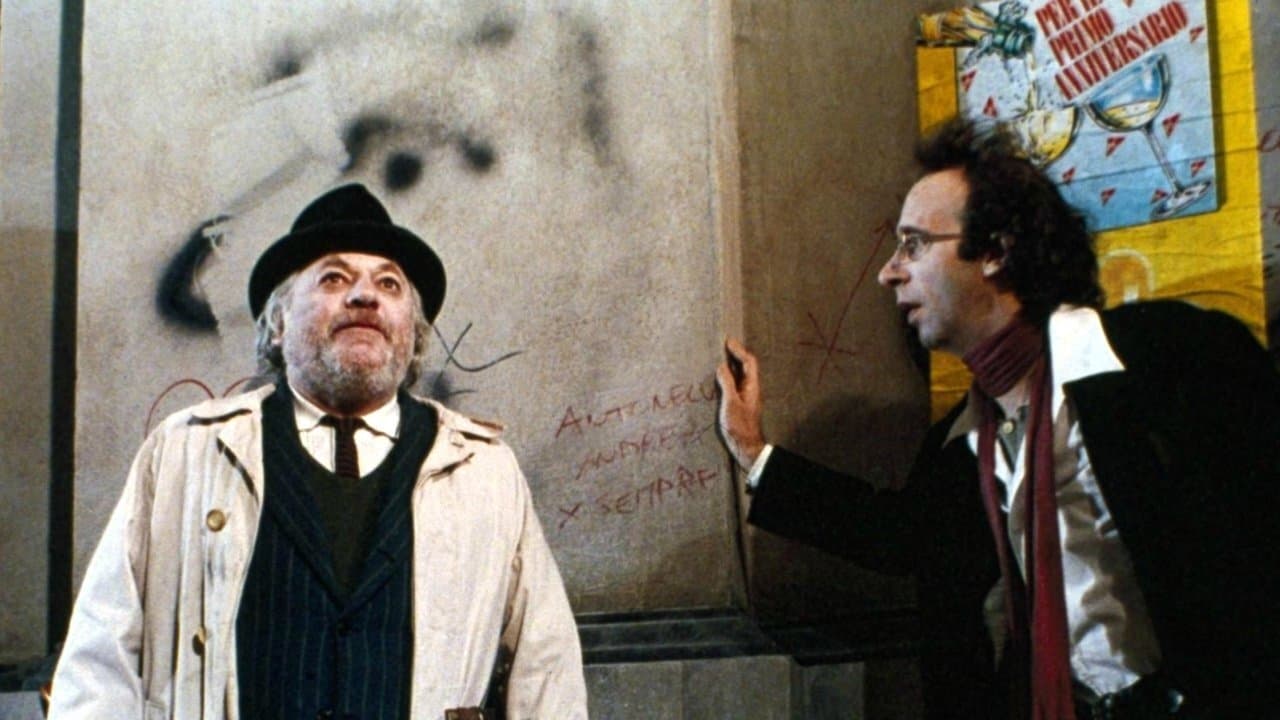
The film hinges on its two central performances. Roberto Benigni is utterly charming as Ivo. He imbues the character with a childlike wonder that is never cloying, managing to convey a deep sensitivity beneath the surface eccentricity. His physicality, that boundless energy he's known for, is here channeled into a sort of ethereal lightness, as if he might float away at any moment. Watching him trying to coax the moon's voice from a well isn't just quirky; it feels like a genuine, heartfelt plea for understanding in a world that refuses to listen.
Counterbalancing this is Paolo Villaggio's Gonnella. While known for broad comedy, Villaggio brings a surprising pathos to the paranoid prefect. His rants about conspiracies and hidden plots are played for absurdity, yes, but there's also a tangible sense of fear and alienation beneath the bluster. He represents a different kind of madness – not the poetic sensitivity of Ivo, but the defensive, fractured sanity of someone overwhelmed by the perceived hostility of modern existence. The interplay between these two, the innocent and the cynic, forms the fragile heart of the film.
Listening to the Silence
What does The Voice of the Moon leave us with? It's not a film that provides easy answers or neat resolutions. It asks us to consider what voices we choose to listen to. In a world saturated with noise – commercial jingles, political rhetoric, the endless chatter of screens – is there still space for the quiet whisper of poetry, of mystery, of the moon? Fellini seems to lament a world losing its capacity for wonder, replacing inner reflection with external distraction. The film itself can feel chaotic, disjointed even, mirroring the very societal noise it critiques. Is this fragmentation intentional, a reflection of a fractured world, or a sign of the aging director's loosening grip? The ambiguity is part of its strange power.
This wasn't the kind of tape you'd rent for a casual Friday night viewing party. It demanded patience, a willingness to drift along with its peculiar currents. Watching it flicker on a CRT, the moonlit scenes perhaps gaining an extra layer of otherworldly glow, felt appropriate. It was a reminder that cinema, even in the age of blockbusters readily available at the local video store, could still be profoundly personal, enigmatic, and deeply unconventional.
Rating: 7/10
The Voice of the Moon is undeniably challenging and certainly not for everyone. Its episodic nature can feel frustrating, and its meaning remains elusive, deliberately ambiguous. However, as Federico Fellini's final cinematic breath, carried by two soulful performances from Roberto Benigni and Paolo Villaggio, it possesses a unique, melancholic beauty. It earns a 7 for its artistic integrity, its willingness to eschew convention, and its haunting evocation of wonder lost in a noisy world. It's a film that doesn't shout, but whispers – and leaves you wondering, long after the screen goes dark, if maybe, just maybe, the moon really does have something to say if only we'd learn how to listen.