What happens when the rose finally blooms? It's an image that stays with you long after the credits roll on Gary Ross's Pleasantville (1998) – a single splash of defiant crimson against a world drained of colour, drained of feeling. It’s more than just a technical marvel, though marvel it was; it’s the film's beating heart, a visual promise of the messy, vibrant, and often difficult reality lurking just beneath the placid surface of manufactured perfection. Watching it again recently, that gentle unfurling felt less like a special effect and more like a memory resurfacing, a reminder of a film that dared to question the very nostalgia it seemed, initially, to embrace.

Beyond the Black and White
The premise, of course, is pure high-concept wish fulfillment, filtered through a distinctly late-90s lens. Cynical teen Jennifer (Reese Witherspoon, radiating restless energy even before her character's transformation) and her quieter, sitcom-obsessed brother David (Tobey Maguire, perfectly cast as the earnest keeper of the show's flame) find themselves magically transported into the idyllic, monochrome world of David’s favourite 1950s TV show, "Pleasantville." Initially, the goal is simple survival: blend in, don't disrupt the narrative loops, find a way home. But this isn't just about navigating predictable plots and gee-whiz dialogue. Pleasantville, it turns out, is too perfect. Books have blank pages, geography ends at the town limits, and firemen exist only to rescue cats from trees because nothing ever actually burns. It’s a world devoid of passion, curiosity, art, and even rain.
Writer-director Gary Ross, who had already shown his talent for blending high concept with genuine heart in scripts like Big (1988) and Dave (1993), crafts a narrative that starts as gentle satire but deepens into something far more profound. David and Jennifer, simply by existing and bringing their messy, modern perspectives, become unintentional catalysts. Their influence – a shared secret, a moment of genuine passion, an introduction to literature beyond the approved texts – begins to crack the facade. And as the residents experience these forbidden fruits of emotion and knowledge, colour literally bleeds into their world.
A Groundbreaking Palette
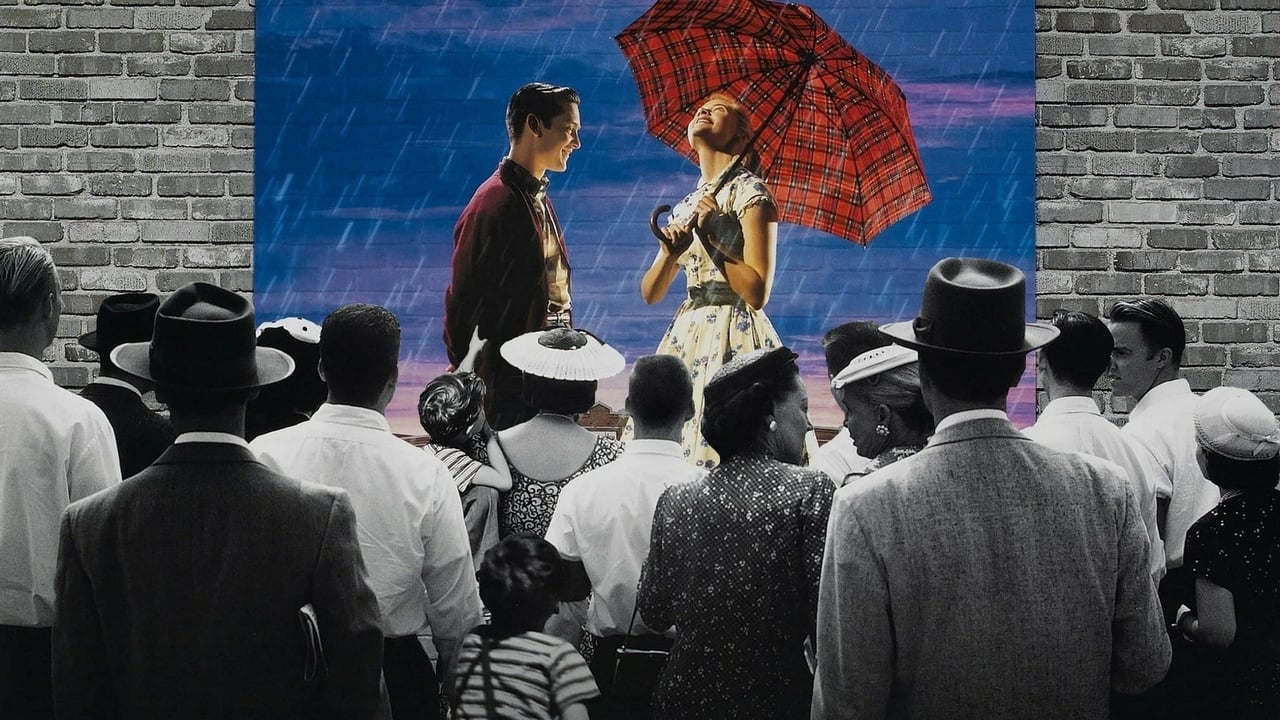
Let's talk about those visuals, because frankly, they were revolutionary. I remember seeing this in the cinema, and later on VHS hooked up to a chunky CRT, and being utterly captivated by the selective colour process. It wasn't just a gimmick; it was the story. Seeing Joan Allen's Betty Parker experience her first blush of self-awareness, manifested as colour creeping onto her face, or the single red rose mentioned earlier – these moments carried immense symbolic weight. This wasn't simple colourisation; it was a painstaking digital process, reportedly involving around 1,700 visual effects shots – an astonishing number for the time, dwarfing many contemporary action blockbusters. New Line Cinema invested heavily, with a budget around $60 million, a significant gamble on such an unconventional story. Achieving that seamless blend, where a character in full colour could hand a monochrome object to a black-and-white character, required innovative techniques developed specifically for the film. It was a technical feat born entirely of narrative necessity, making the impossible feel tangible.
The Colours of Awakening
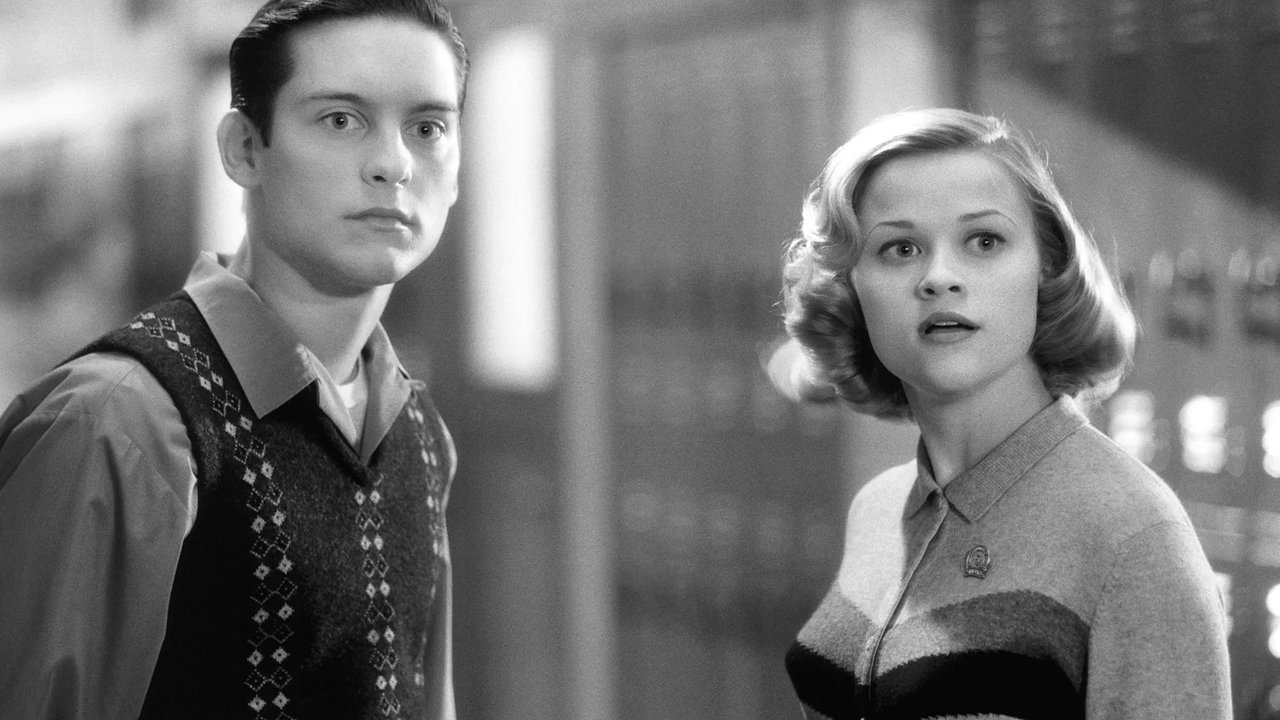

Beyond the technical wizardry, Pleasantville resonates because of its deeply human core. The film uses its fantasy premise to explore potent themes: the dangers of conformity, the fear of change, the beauty of imperfection, and the vital importance of art, knowledge, and emotional honesty. As colour spreads, so does conflict. Those who remain "uncoloured" react with fear and hostility, mirroring historical periods of social upheaval and repression – book burnings, segregation ("No Coloureds Allowed" signs take on a chilling double meaning), and the suppression of anything deemed different or challenging. The film doesn't shy away from the ugliness that can arise when a comfortable status quo is threatened.
The performances are key to selling this delicate balance. Tobey Maguire embodies the initial desire to preserve the simplistic fantasy before realizing its hollowness. Reese Witherspoon charts a surprising arc from vapid annoyance to intellectual curiosity. William H. Macy is heartbreaking as George Parker, clinging desperately to his predictable routine as his world literally changes colour around him. And Jeff Daniels, as the soda shop owner Mr. Johnson who discovers a passion for art, provides a gentle, guiding presence. His quiet scenes with Maguire, discussing the simple power of colour and creation, are among the film's most touching.
But the emotional anchor is unquestionably Joan Allen as Betty Parker. Her transformation from the perfect, unfulfilled housewife to a woman discovering her own desires, intellect, and sensuality is simply stunning. The scene where colour blooms on her face in the bathroom isn't just a visual effect; it's a profound moment of internal awakening, conveyed with incredible subtlety and power by Allen. It’s a performance that lingers, a quiet portrayal of liberation that feels utterly authentic amidst the fantasy. It’s also poignant to see the great J.T. Walsh here as the increasingly authoritarian Big Bob, in one of his final film roles before his untimely death in 1998.
Echoes in the Static
Despite its brilliance, Pleasantville wasn't a box office smash upon release, pulling in just under $50 million worldwide against its hefty budget. Perhaps its blend of fantasy, satire, and drama was hard to market, or maybe audiences weren't quite ready for its layered critique wrapped in accessible packaging. Yet, like so many films we cherish from the VHS era, its reputation has only grown. It feels more relevant than ever in an age grappling with curated online personas, echo chambers, and nostalgia often weaponized to resist progress. Doesn't the fear driving the black-and-white denizens of Pleasantville echo anxieties we still see today? The film gently reminds us that the "good old days" were often only good for some, and that complexity, difficulty, and even pain are part of what makes life, and art, truly meaningful.
It’s a film that rewards revisiting. The technical achievement remains impressive, the performances hold up beautifully, and its central message – that embracing the full spectrum of human experience, colour and all, is essential – feels timeless. It’s a warm, intelligent, and visually inventive piece of filmmaking that managed to be both a charming fantasy and a thoughtful social commentary.
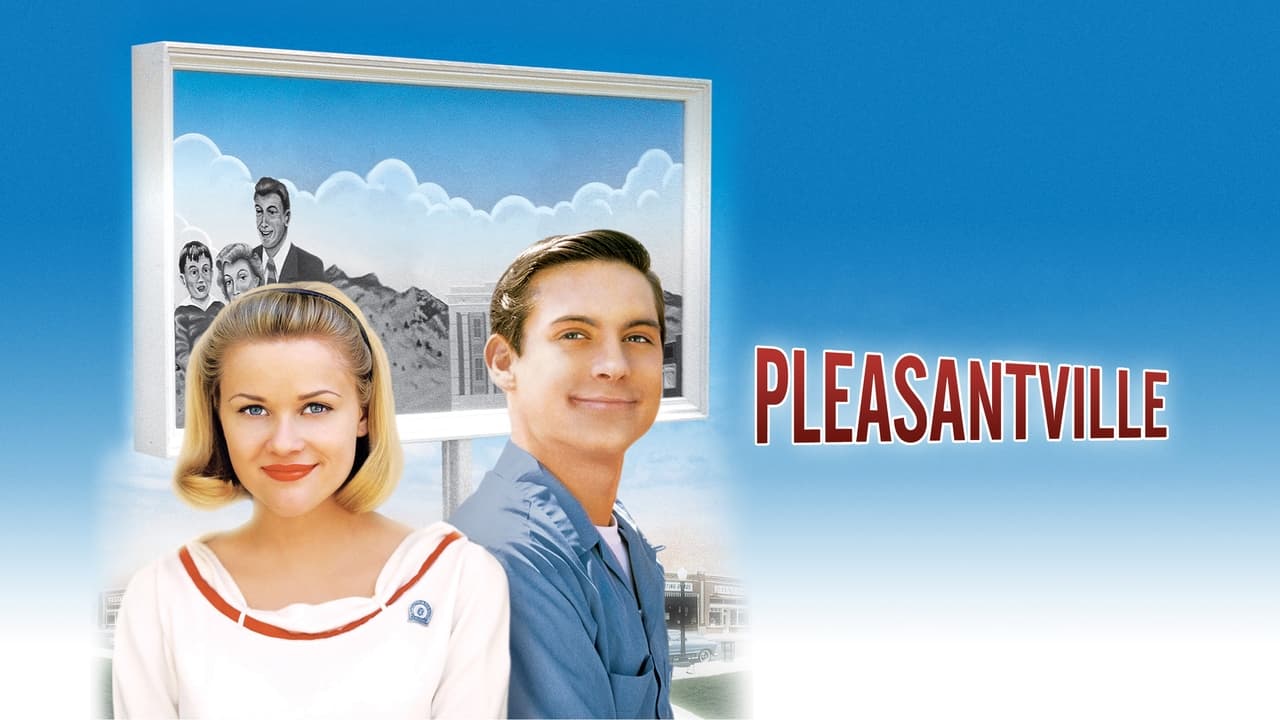
Rating: 9/10
The near-perfect score reflects the film's ambitious concept, groundbreaking (for its time) execution, superb performances (especially Joan Allen's), and resonant themes that transcend its fantasy premise. It skillfully balances satire, drama, and visual poetry. While perhaps not a runaway hit initially, its intelligence and heart have secured its place as a truly special film from the late 90s.
Pleasantville leaves you pondering the nature of perfection and the messy, vibrant beauty found only in embracing the full spectrum of life – a splash of colour in a world too often content with shades of grey.