Okay, fellow travelers on the rewind road, let's settle in for this one. There are films that explode onto the scene, all spectacle and noise, demanding attention. And then there are films like Spike Lee's 1996 drama Get on the Bus, which feel less like an explosion and more like a pressure cooker, slowly building heat and intensity within a confined space until the truths bubble to the surface. This isn't your typical Friday night blockbuster rental, but pulling this tape off the shelf back then often meant preparing for something potent, something that might stick with you long after the VCR clicked off.
The Road to Washington
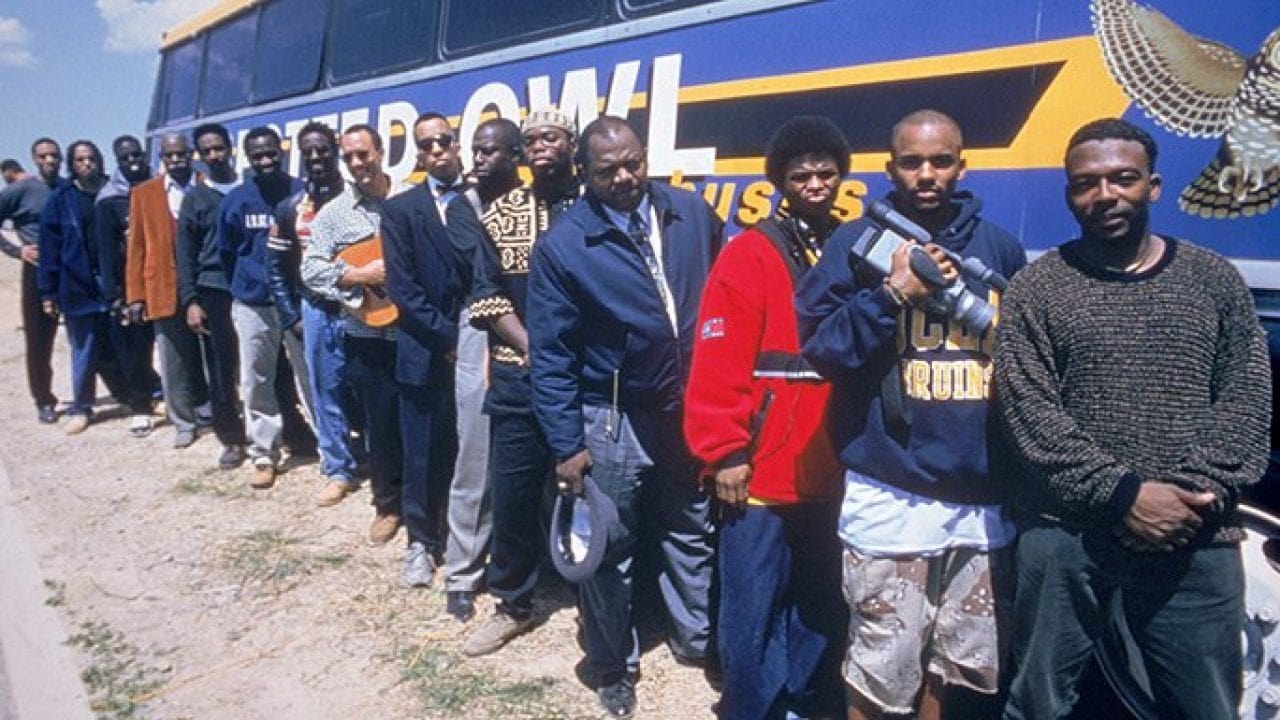
The premise is deceptively simple: a diverse group of African American men boards a chartered bus, "The Spotted Owl," in South Central Los Angeles, bound for the Million Man March in Washington D.C. But this journey, conceived by writer Reggie Rock Bythewood, isn't really about the destination. It's about the passage, the conversations, the confrontations, and the fragile bonds formed and broken within the rolling microcosm of that bus. Lee, already a cinematic force with searing works like Do the Right Thing (1989) and Malcolm X (1992) under his belt, brings his signature urgency and unflinching eye to this intimate story.
What makes Get on the Bus immediately fascinating, especially looking back, is its creation story. This wasn't a studio gamble; it was financed independently by fifteen prominent Black men, including actors like Will Smith, Wesley Snipes, and Danny Glover, who believed in the project's importance. Shot quickly, primarily on Super 16mm film – giving it that slightly grainy, immediate feel that perfectly suits the raw, unfiltered dialogue – there's an energy here, a sense of capturing lightning in a bottle. It feels less like a calculated production and more like an essential document, a snapshot of a specific cultural moment and the complex conversations surrounding it.
Voices in the Wilderness
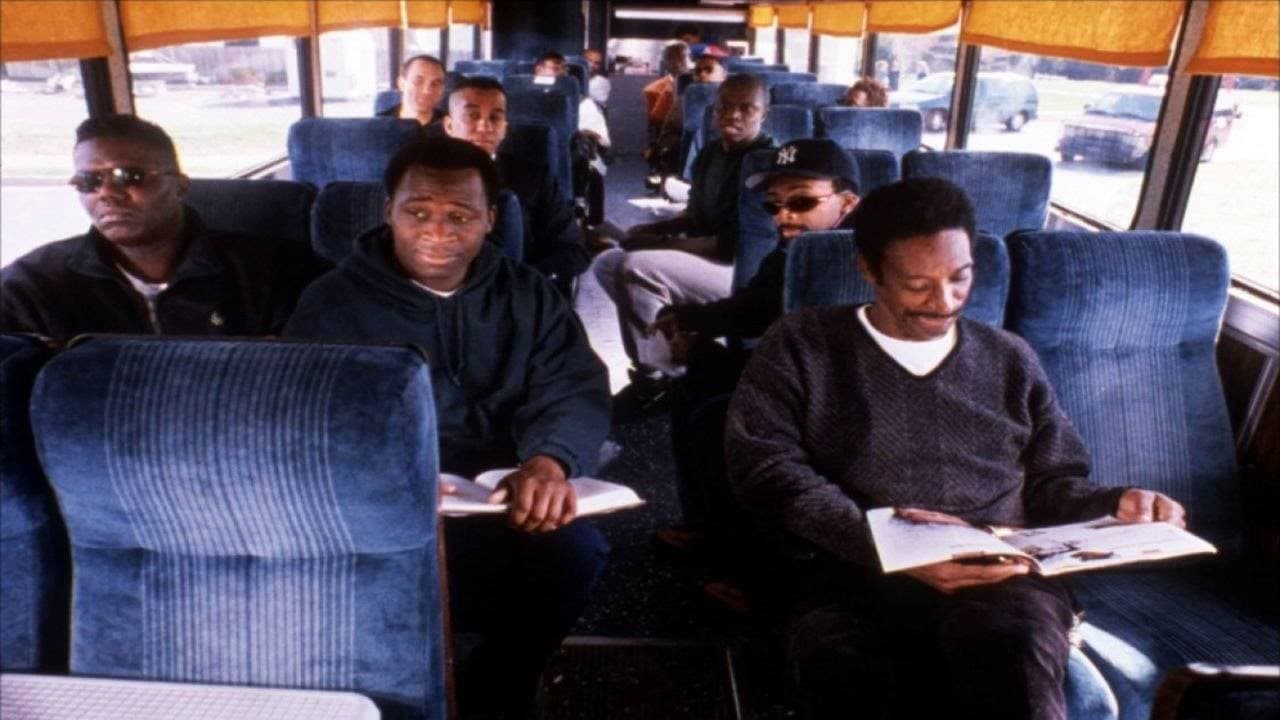
Forget a single protagonist; this is a true ensemble piece, and the bus itself becomes a stage for a remarkable collection of characters, each representing different facets of the Black male experience in America circa 1995. You have George (Charles S. Dutton, radiating weary authority as the driver and trip organizer), the elder statesman Pop (Ossie Davis, lending his immense gravitas and wisdom), the estranged father and son chained together by court order (played with simmering resentment and vulnerability by Thomas Jefferson Byrd and De'aundre Bonds), the aspiring filmmaker documenting the trip (a young Hill Harper), the LAPD officer whose racial identity is complicated by his profession (Roger Guenveur Smith), the former gang member finding faith (Gabriel Casseus), the self-important actor (Andre Braugher, delivering a performance crackling with insecurity and arrogance), and the openly gay couple (portrayed with dignity and strength by Isaiah Washington and Harry Lennix) facing prejudice from within their own community, particularly from a proudly homophobic actor (Bernie Mac, in a role miles away from his later comedic persona). Even Richard Belzer pops up as the lone white bus driver who briefly takes over, adding another layer to the film's social commentary.
The interactions are the heart of the film. Lee lets conversations unfold, arguments ignite, and moments of quiet understanding pass between these men. The dialogue feels authentic, messy, and often uncomfortable. It doesn't shy away from difficult topics: class differences, colorism, crime and redemption, differing political views (represented by the friction between Braugher's Republican character and others), and perhaps most notably for its time, the frank depiction of homophobia within the Black community.

More Than Passengers
What resonates so strongly, watching it again now, is how Lee uses the contained environment. The camera often feels like another passenger, capturing tight close-ups, eavesdropping on whispered confessions, and witnessing explosive confrontations. There are no easy answers offered here. The film presents these men, flaws and all, and asks us to listen. It explores the yearning for unity symbolised by the March, while simultaneously exposing the deep divisions and personal struggles that complicate that very ideal. Doesn't that tension, between the desire for collective identity and the reality of individual difference, still feel incredibly relevant today?
The performances are uniformly excellent, but Ossie Davis is the film's spiritual anchor. His calm presence and weathered wisdom provide moments of grace amidst the turmoil. Charles S. Dutton carries the weight of responsibility with understated power. And Andre Braugher, always a magnetic screen presence, crafts a character who is both infuriating and deeply human. It's a testament to the entire cast that even characters with limited screen time feel fully realised.
The Final Stop
Get on the Bus isn't necessarily an "easy" watch. It demands engagement and reflection. It’s a dialogue-heavy film that trusts its audience to grapple with complex ideas. It doesn't offer neat resolutions but instead presents a powerful, often poignant cross-section of lives intersecting on a journey towards something bigger than themselves. It captures a specific historical moment—the energy and hope surrounding the Million Man March—but its exploration of identity, prejudice, and the search for connection remains potent. The fact that it was made with such passion and independence, outside the usual Hollywood channels, only adds to its significance. It might not have been the tape everyone reached for every weekend, but finding it nestled on the drama shelf at the video store promised a journey worth taking.
Rating: 8.5/10
This score reflects the film's powerful ensemble cast delivering authentic performances, Spike Lee's focused direction within challenging constraints, its brave exploration of complex social issues, and its unique status as an independently financed snapshot of a cultural moment. It's a film that sparks conversation and lingers in the mind, achieving exactly what it sets out to do with intelligence and heart, even if its contained nature might not appeal to all viewers seeking lighter fare.
What stays with you most isn't the arrival, but the honesty of the conversations had along the way – a rolling testament to the fact that the journey truly is the destination.