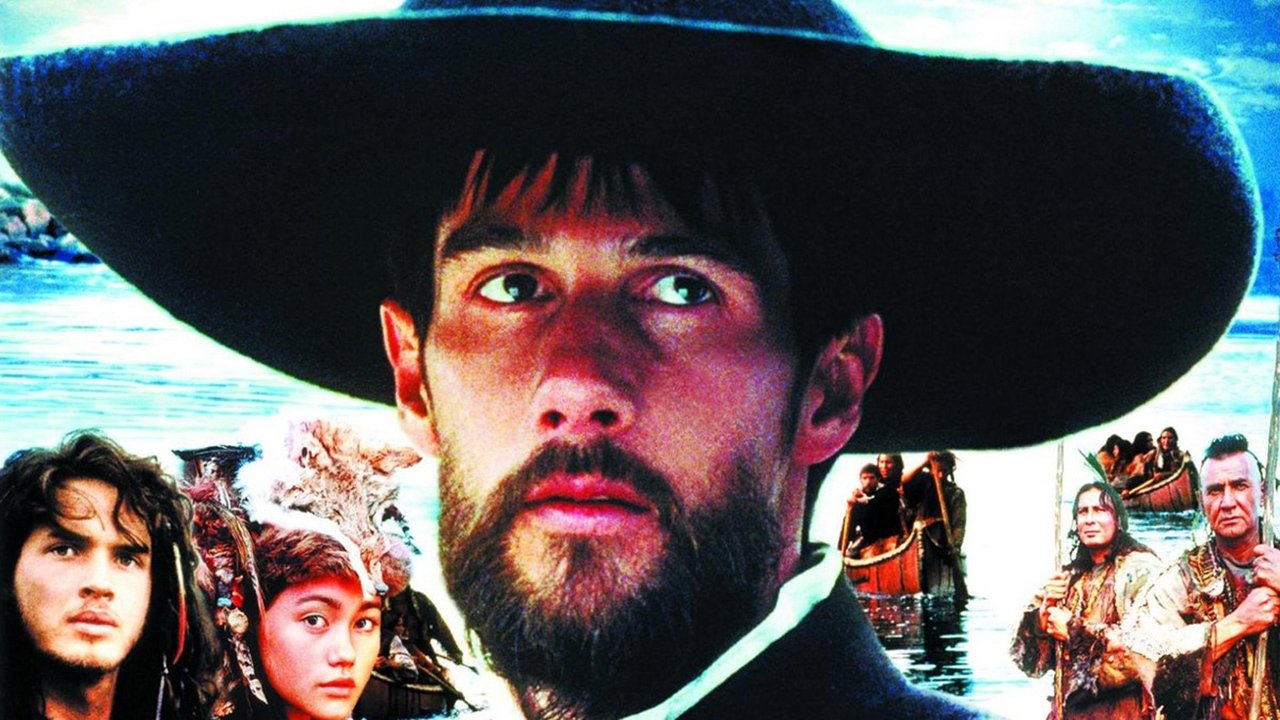
The biting wind almost whips off the screen, doesn't it? There's an immediacy to the cold in Bruce Beresford's Black Robe (1991) that settles deep in your bones, a feeling miles away from the neon glow and explosive bombast often found lining the shelves of the video store back in the day. Based on the acclaimed 1985 novel by Brian Moore (who also penned the screenplay), this isn't a film you easily forget. It’s a stark, often brutal, and profoundly questioning journey into the heart of 17th-century 'New France', now Quebec, where cultures didn't just clash – they ground against each other with devastating force. I recall renting this on VHS, perhaps nestled between an action flick and a comedy, drawn by the austere cover art. What unfolded was something far more challenging and resonant than typical early 90s cinema.
A Journey into the Savage Garden
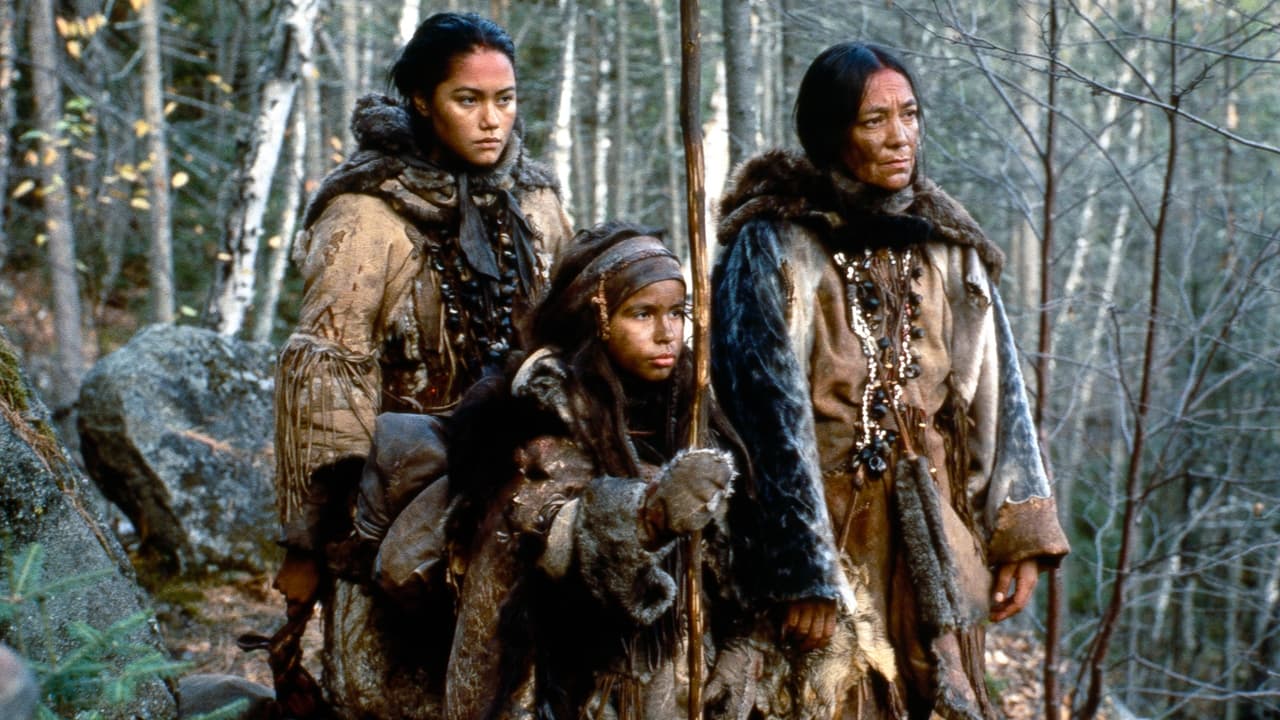
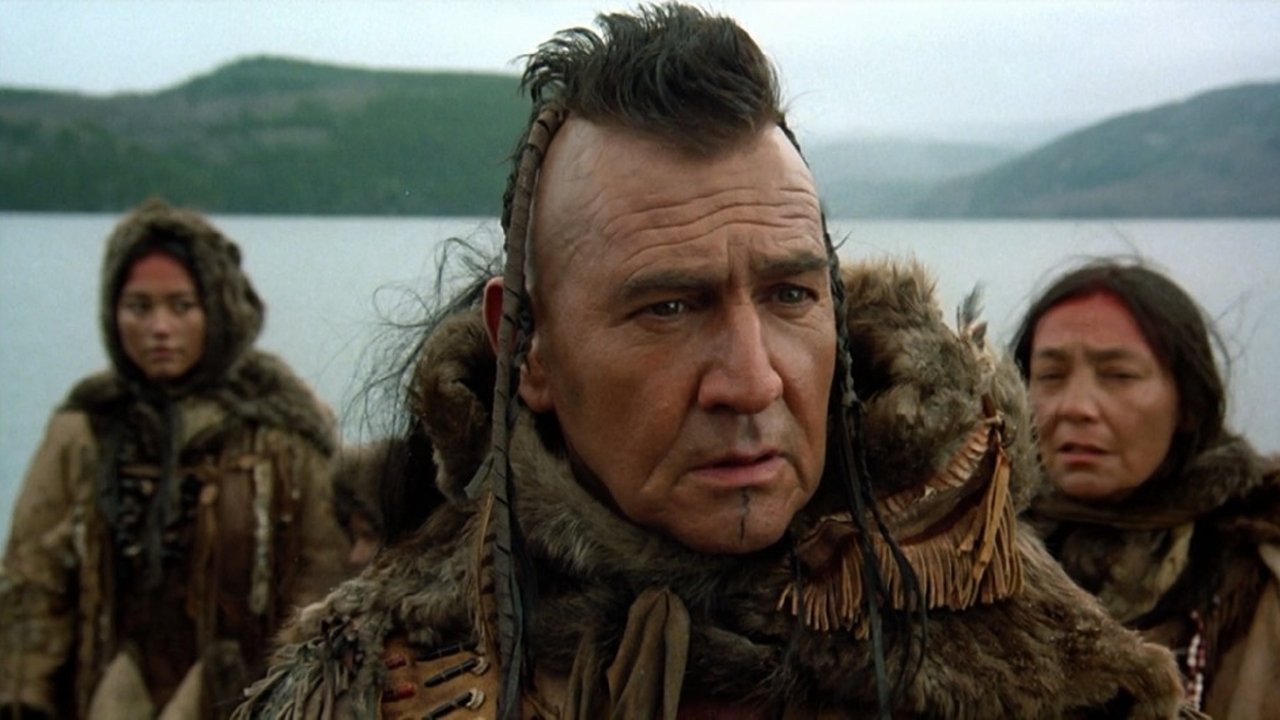
The premise is deceptively simple: Father Laforgue (Lothaire Bluteau), a young, devout Jesuit priest, undertakes a perilous 1500-mile journey up the St. Lawrence River. His mission is to reach a remote Huron mission, bringing God to the 'savages'. He is guided by a group of Algonquin people, including the pragmatic Chomina (August Schellenberg) and his thoughtful daughter Annuka (Sandrine Holt). Accompanying them is Daniel (Aden Young), a young Frenchman enamored with both Annuka and the perceived freedom of Indigenous life, providing a counterpoint to Laforgue's rigid faith.
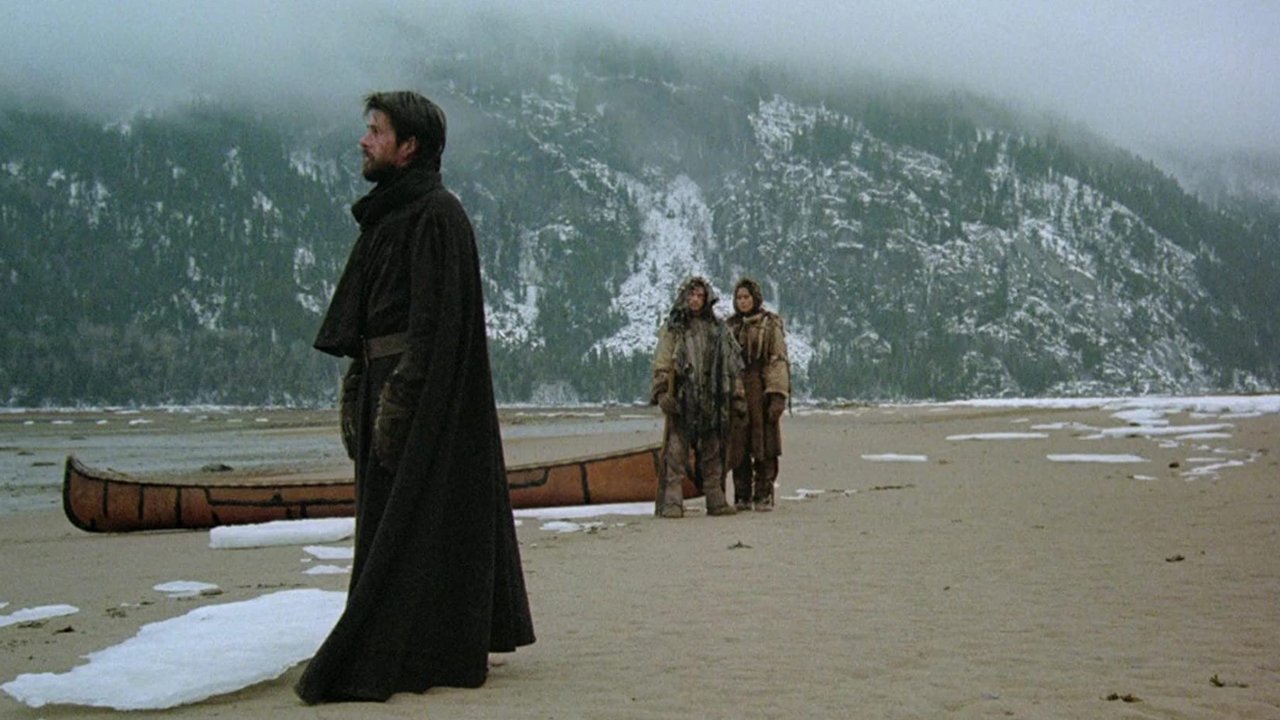
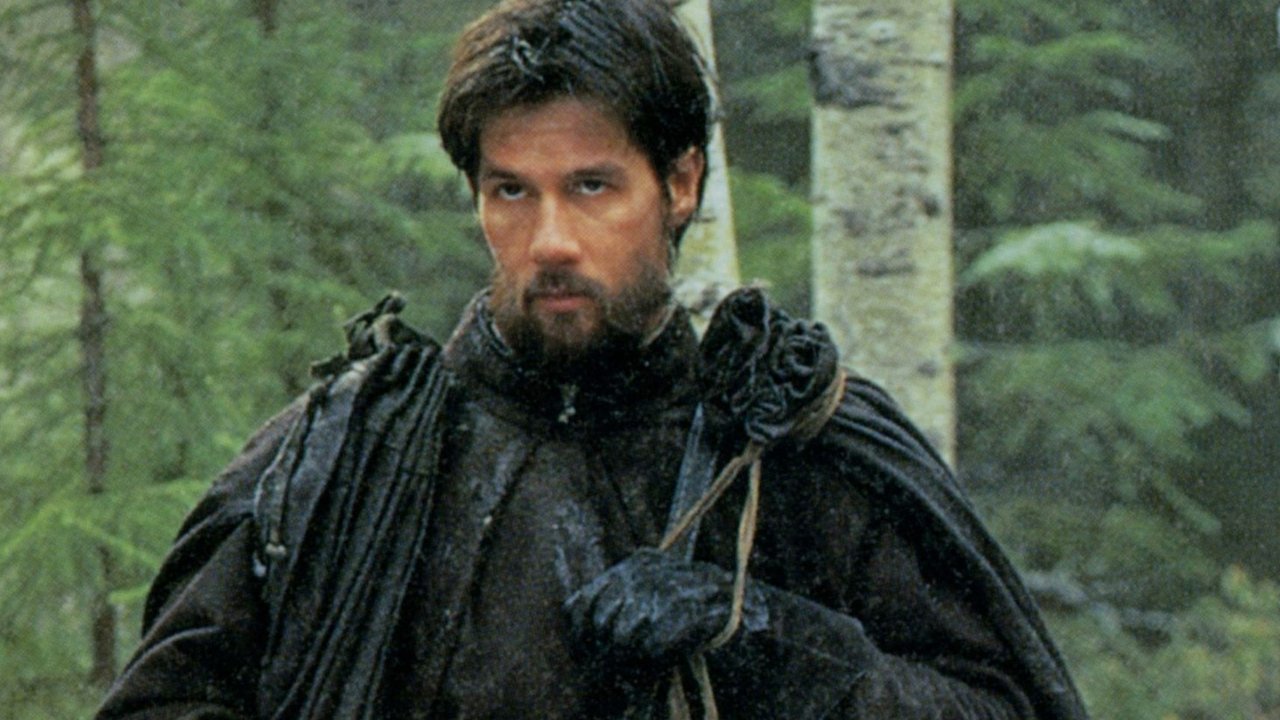
What follows is less an adventure story and more a grueling odyssey. Beresford, who had just come off the massive success of Driving Miss Daisy (1989), plunges the viewer into a world depicted with unflinching realism. This isn't the romanticized wilderness of Hollywood yore; it's a landscape indifferent to human suffering, mirroring the spiritual and cultural wilderness the characters navigate. The film meticulously recreates the period, aided significantly by the direct involvement of Indigenous advisors. Reportedly, considerable effort went into ensuring accuracy in language (much of the dialogue is in Cree, Mohawk, and Algonquin with subtitles), customs, and attire, lending the film an authenticity rarely seen. It was primarily shot on location in Quebec during challenging weather conditions, and that palpable sense of cold, damp, and danger permeates every frame, thanks to Peter James's stunning, naturalistic cinematography.
Worlds in Collision
Black Robe excels in its refusal to simplify the complex encounter between European and Indigenous worldviews. Neither side is presented as wholly virtuous or entirely villainous. The Jesuits, represented by Laforgue, are driven by a faith that seems utterly alien and nonsensical to the Algonquin and Huron, whose own spiritual beliefs are deeply interwoven with the natural world and the realm of dreams. The film doesn't shy away from the brutality present in both cultures – the casual cruelty born of fear and misunderstanding, the torture inflicted by the Iroquois, the devastating impact of European diseases.
One of the most powerful aspects is how it portrays the different conceptions of reality. Laforgue’s unwavering belief in Heaven and Hell clashes with the Indigenous peoples' focus on the tangible world and the significance of dreams. Is Laforgue’s faith any more or less valid than Chomina’s interpretation of the dream world? The film doesn't offer easy answers, forcing us instead to confront the chasm between these perspectives. It’s a conversation starter, prompting questions about belief, colonization, and the very nature of truth that feel surprisingly relevant even today.
The Weight of Belief
The performances are central to the film's impact. Lothaire Bluteau, then perhaps best known for Jesus of Montreal (1989), is utterly compelling as Father Laforgue. He embodies the priest's physical frailty and spiritual intensity, his initial certainty slowly eroded by doubt, suffering, and the sheer incomprehensibility of the world he’s entered. Bluteau makes Laforgue’s internal struggle palpable – you see the conflict in his eyes, the mixture of fear, revulsion, faith, and burgeoning empathy.
Equally vital are the Indigenous actors. August Schellenberg brings quiet dignity and weary wisdom to Chomina, a man caught between worlds, respecting Laforgue even as he fundamentally disagrees with his mission. Sandrine Holt and Aden Young provide a necessary human connection, their burgeoning relationship offering moments of tenderness amidst the harshness, representing a potential bridge between cultures, albeit a fragile one. Veterans like Tantoo Cardinal also lend powerful authenticity in smaller roles. Their performances feel lived-in, resisting stereotype and grounding the historical drama in genuine human experience. It’s worth noting the film swept the Genie Awards (Canada's Oscars) that year, winning Best Picture, Director, Adapted Screenplay, Cinematography, and more, a testament to its perceived quality and importance at the time.
Lingering Echoes
Black Robe wasn't a massive blockbuster – its $8 million budget yielded around $12 million globally – but it carved out a significant space for itself. It stood apart on the video store shelf, a serious, demanding historical drama that treated its subject matter with gravity. It didn't offer the escapism of many contemporaries, but instead provided a challenging, immersive experience. Watching it again now, the film feels remarkably prescient in its exploration of cultural conflict and the devastating consequences of imposing one belief system upon another. The practical effects, primarily the depiction of the harsh environment and moments of violence, hold up precisely because they rely on realism rather than flashy spectacle.
It’s a film that stays with you, prompting reflection long after the credits roll. What is the true cost of faith? How do we bridge divides that seem impossibly wide? Black Robe doesn't offer comfort, but it offers profound questions wrapped in a visually stunning and unflinchingly honest portrayal of a pivotal, brutal moment in history.
Rating: 9/10
This rating reflects the film's exceptional craft, powerful performances, thematic depth, and uncompromising vision. Beresford delivers a masterclass in historical filmmaking that avoids easy moralizing, presenting a complex and harrowing story with authenticity and respect. It’s a challenging but rewarding piece of cinema that felt significant back in the VHS era and remains deeply impactful today.
It’s a heavy watch, no doubt, but one that earns its place as a standout piece of early 90s filmmaking – a stark reminder from the past, found on a plastic tape, that continues to resonate.