Here’s a review for "White Man's Burden" (1995):
***
What if the mirror showed a completely different reflection? Not just visually, but socially, economically, racially? That's the unsettling question posed by Desmond Nakano's ambitious 1995 drama, White Man's Burden, a film that landed on video store shelves with a concept so jarring, so provocative, it demanded attention, even if it didn't always know exactly what to do with it once captured. This wasn't your typical mid-90s rental; it felt like something heavier, something designed to make you shift uncomfortably on the couch long after the tape ejected.
### An America Flipped on Its Head
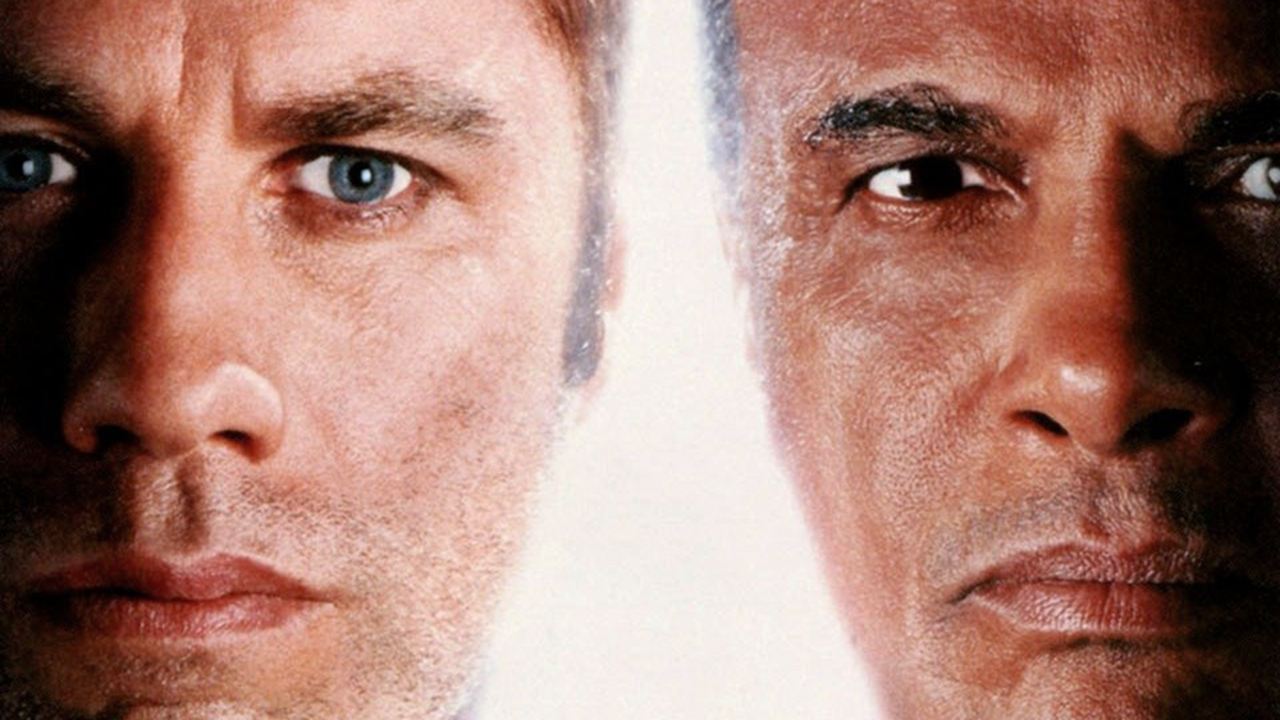
The premise is stark and immediately effective: an alternate United States where the societal roles of Black and White Americans are reversed. Black families live in affluent suburbs, hold positions of power, and embody the cultural majority, while White families inhabit impoverished inner-city neighborhoods, face systemic prejudice, and struggle against economic disadvantage. It’s a world meticulously crafted by writer-director Desmond Nakano to feel disturbingly familiar yet fundamentally alien. Seeing the tropes of racial inequality – the casual condescension, the economic barriers, the fear of law enforcement – applied in reverse carries an immediate, visceral impact.
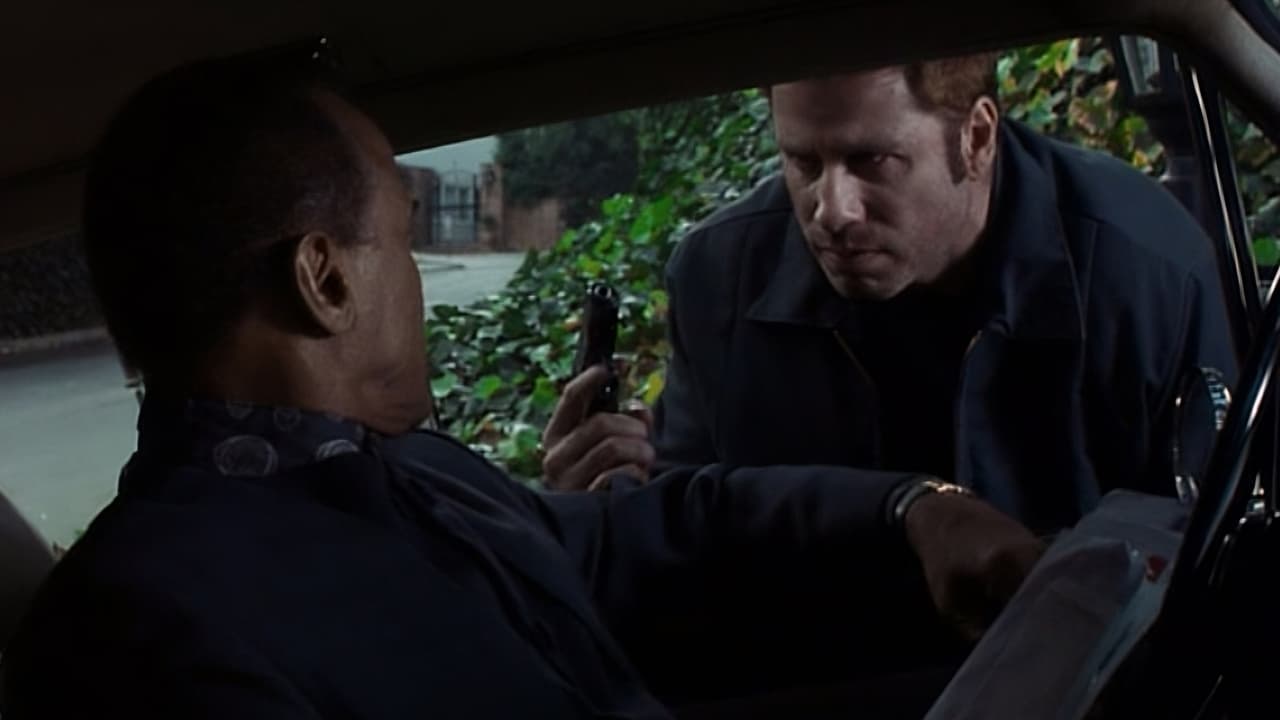
The story centers on Louis Pinnock (John Travolta), a struggling factory worker trying to provide for his family, including his wife Marsha (Kelly Lynch). A simple misunderstanding involving delivering a package to the wealthy home of Thaddeus Thomas (Harry Belafonte), a powerful CEO, costs Pinnock his job. This single incident triggers a spiral of desperation, resentment, and ultimately, violence, forcing Pinnock and Thomas into a confrontation that transcends their individual lives and speaks to the larger, poisoned dynamics of their society.
### The Weight of Performance
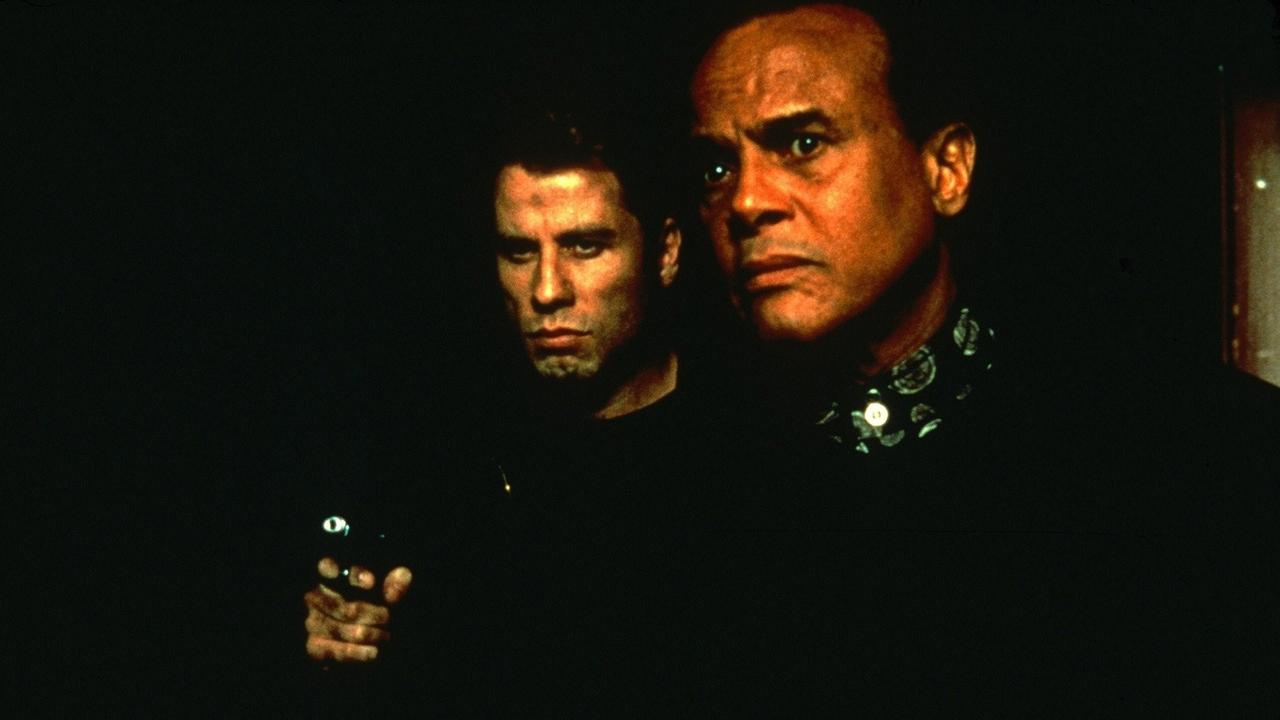
Coming just a year after his explosive career revitalization in Pulp Fiction (1994), John Travolta took a significant and challenging turn here. He embodies Pinnock’s frustration and mounting desperation with raw, palpable energy. It’s a performance rooted in the feeling of being trapped, unheard, and systematically dismissed. You see the weight of his world pressing down on him, the slow erosion of hope replaced by a dangerous, simmering anger. It's not always subtle, but it feels painfully authentic to the character's plight.
Opposite him, the legendary Harry Belafonte is perfectly cast as Thaddeus Thomas. Belafonte, whose own lifelong dedication to civil rights activism informs every frame he occupies, portrays Thomas not as a mustache-twirling villain, but as a man insulated by privilege, accustomed to his position, and initially blind to the humanity of the man whose life he casually disrupts. The power in Belafonte’s performance lies in its restraint, the quiet authority that masks a deep-seated, culturally ingrained prejudice. The scenes between Travolta and Belafonte crackle with tension, a microcosm of the societal conflict raging outside. Kelly Lynch also provides a grounded, affecting portrayal of Marsha, trying to hold her family together against impossible odds.
### A Bold Experiment, Unevenly Executed
Desmond Nakano, pulling double duty as both writer and director, deserves immense credit for the sheer audacity of the concept. Crafting this alternate reality on what was reportedly a modest budget (around $7 million) is impressive. The film successfully creates a specific, often bleak atmosphere. The visual language reinforces the role reversal, from the architecture to the fashion, making the familiar seem subtly 'wrong'. The title itself, White Man's Burden, is a direct, confrontational inversion of the Rudyard Kipling poem, immediately signalling the film's intent to dismantle historical power structures and the justifications used to uphold them.
However, the film isn't without its flaws. At times, the message can feel heavy-handed, the dialogue leaning into exposition to ensure the audience understands the parallels being drawn. The plot, particularly Pinnock’s descent into crime, occasionally strains credulity, potentially simplifying complex issues into a more conventional thriller narrative towards the end. Does the reversal truly foster empathy, or does it merely underline the depressing universality of prejudice, regardless of who wields the power? That’s a question the film forces us to grapple with, even if it doesn't offer easy answers. It struggled to connect with a wider audience upon release, earning less than $4 million at the US box office, perhaps reflecting the difficulty viewers had confronting such an uncomfortable premise head-on in 1995.
### Lasting Questions
White Man's Burden remains a fascinating artifact of 90s cinema – a bold, flawed, and deeply uncomfortable thought experiment. It doesn't shy away from difficult truths, even if its execution sometimes falters. The central performances from Travolta and Belafonte carry immense weight, anchoring the challenging premise in genuine human emotion. It wasn't the kind of film you rented for a lighthearted Friday night, but grabbing that distinctive VHS box often led to conversations and reflections that lingered far longer than the runtime.
Rating: 6/10
Justification: The score reflects the film's commendable ambition, its powerful central performances, and its success in creating a thought-provoking, unsettling atmosphere. However, it's docked points for occasional heavy-handedness in its messaging and a plot that sometimes sacrifices nuance for narrative momentum. It’s a film more valuable for the questions it raises than the answers it provides.
Final Thought: Nearly three decades later, does the uncomfortable reflection White Man's Burden holds up still reveal more about the society we actually live in than we care to admit?