The neon glow reflects wet off the asphalt, a sickly sweet promise in the Tokyo night that quickly sours into desperation. It’s the kind of electric dread that permeates Takashi Ishii’s Gonin (1995), a film that feels less like a heist thriller and more like watching five men slowly drown in the concrete jungle. Forget charming rogues or intricate plans; this is the messy, brutal reality of hitting rock bottom and trying to claw your way out over the bodies of others. If you stumbled across this gem on a grainy VHS back in the day, perhaps tucked away in the "World Cinema" or "Action" section of a particularly adventurous video store, you likely felt that chill – the kind that lingers long after the credits roll and the VCR clicks off.
Five Souls Adrift
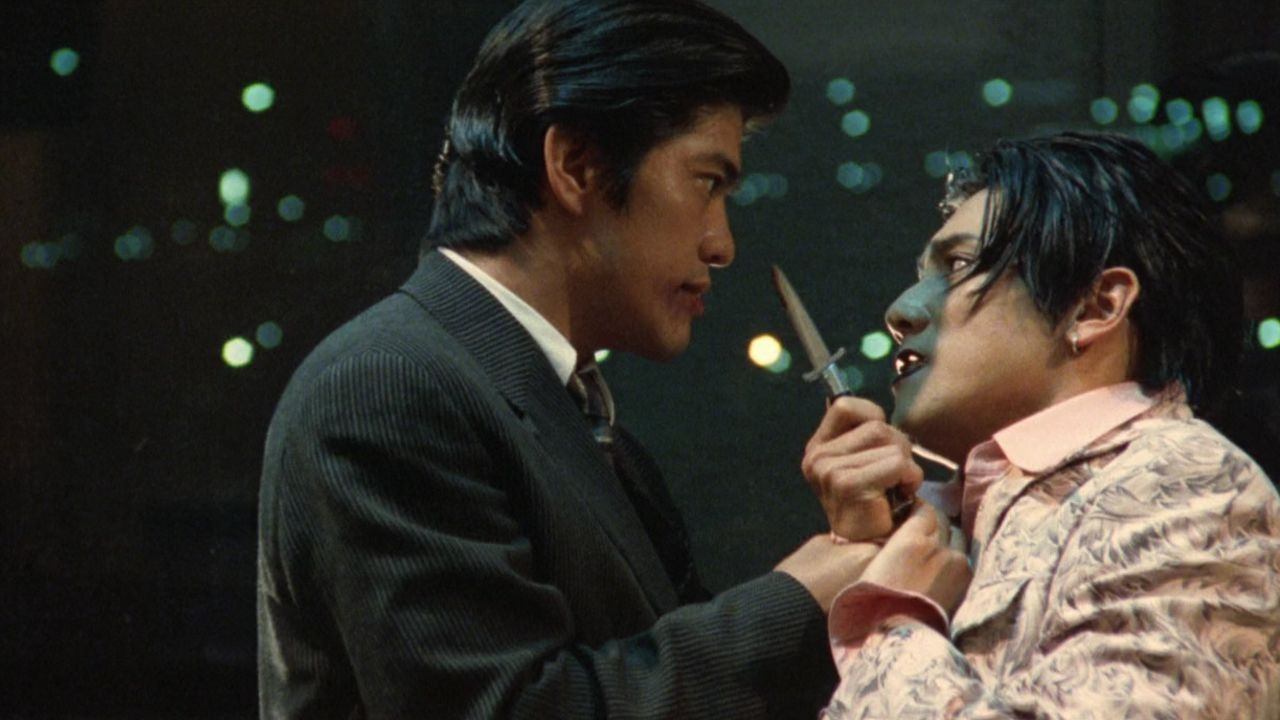
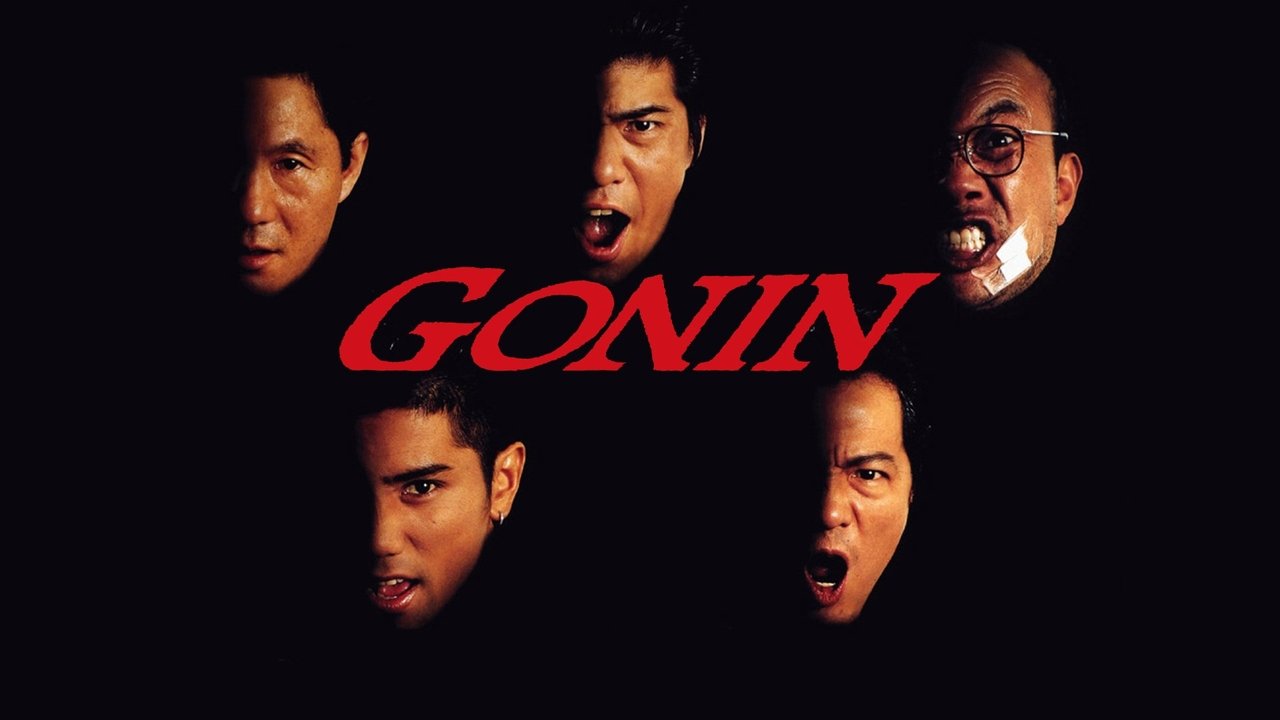
The setup is deceptively simple, classic noir fodder dragged kicking and screaming into the hyper-stylized mid-90s. Bandai (Koichi Sato) owns a disco, the kind clinging precariously to relevance, but he’s drowning in debt to the local Yakuza. His desperation becomes a magnet, pulling in others adrift in their own financial or existential storms: Mitsuya (Masahiro Motoki, in an award-winning performance that absolutely crackles with frantic energy), a handsome young hustler whose debts are rapidly catching up; Hizu (Jinpachi Nezu), a former cop nursing grudges and a simmering rage; Ogiwara (Naoto Takenaka), a seemingly ordinary salaryman pushed to the brink; and Jimmy (Kippei Shiina), a volatile punk providing the unpredictable muscle. Their target: the very Yakuza squeezing Bandai dry. It’s a plan born not of brilliance, but of sheer, suffocating necessity.
Ishii's Concrete Nightmare

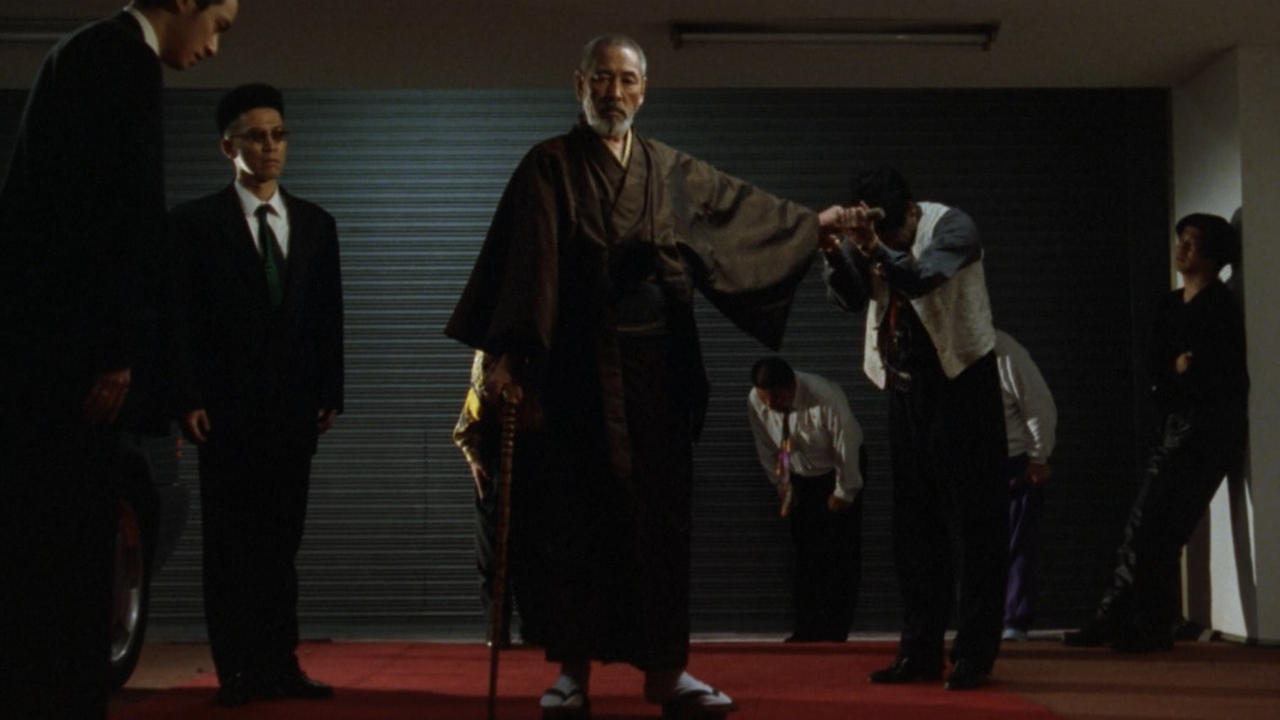
Director Takashi Ishii, who also penned the screenplay based loosely on his own experiences and worldview shaped by his earlier work in manga and the Japanese 'pink film' scene, doesn't shy away from the ugliness. Gonin is drenched in atmosphere – the perpetual rain, the claustrophobic interiors, the lurid neon casting long, distorted shadows. Ishii crafts a vision of Tokyo that’s both alluring and predatory. You can almost smell the stale cigarette smoke and damp concrete. This isn't the gleaming metropolis of postcards; it's a labyrinth where hope goes to die, captured with a raw, kinetic energy that feels distinctly mid-90s Japanese cinema. The violence, when it erupts, is sudden, clumsy, and deeply unpleasant – stripped of glamour, revealing only the desperate panic beneath. There's a grimy authenticity here that practical effects and squibs conveyed so viscerally on those old CRT screens.
The Spectre of Kitano
While the central quintet carries the narrative weight, with Koichi Sato providing a world-weary anchor and Masahiro Motoki delivering a truly star-making turn as the increasingly frayed Mitsuya, the film achieves iconic status with the arrival of its antagonists. Enter Kyoya and Kazuma, a pair of chillingly efficient hitmen dispatched by the enraged Yakuza boss. And playing Kyoya? None other than Takeshi Kitano. Already a towering figure in Japanese cinema for his own directorial efforts like Sonatine (1993) and Violent Cop (1989), Kitano’s presence here is electric. He’s less a character and more a force of nature, an embodiment of the inescapable consequences closing in. His minimalist performance, punctuated by unnerving stillness and sudden bursts of brutality, is terrifying. Reportedly, Ishii specifically sought out Kitano, knowing his unique screen persona would lend an almost mythical sense of dread to the hunters. Doesn't that icy stare still send a shiver down your spine? It’s a masterstroke of casting that elevates Gonin from a solid crime flick to something truly menacing.
A Legacy Forged in Blood and Rain
Gonin wasn't just another crime film; it felt like a statement. Its bleak outlook, stylish execution, and unflinching violence tapped into a particular vein of nihilistic cool that resonated with audiences seeking something harder-edged than Hollywood offerings. It performed well in Japan and slowly built a devoted cult following internationally, precisely because of tapes passed around by enthusiasts, showcasing a different flavour of thriller. The film's success led to a sequel, Gonin 2, released just a year later, though it didn't quite capture the same lightning in a bottle. For many Western viewers, Gonin served as a gateway, alongside films by Kitano himself or contemporaries like Kiyoshi Kurosawa, into the darker, more complex world of modern Japanese genre cinema.
The Verdict
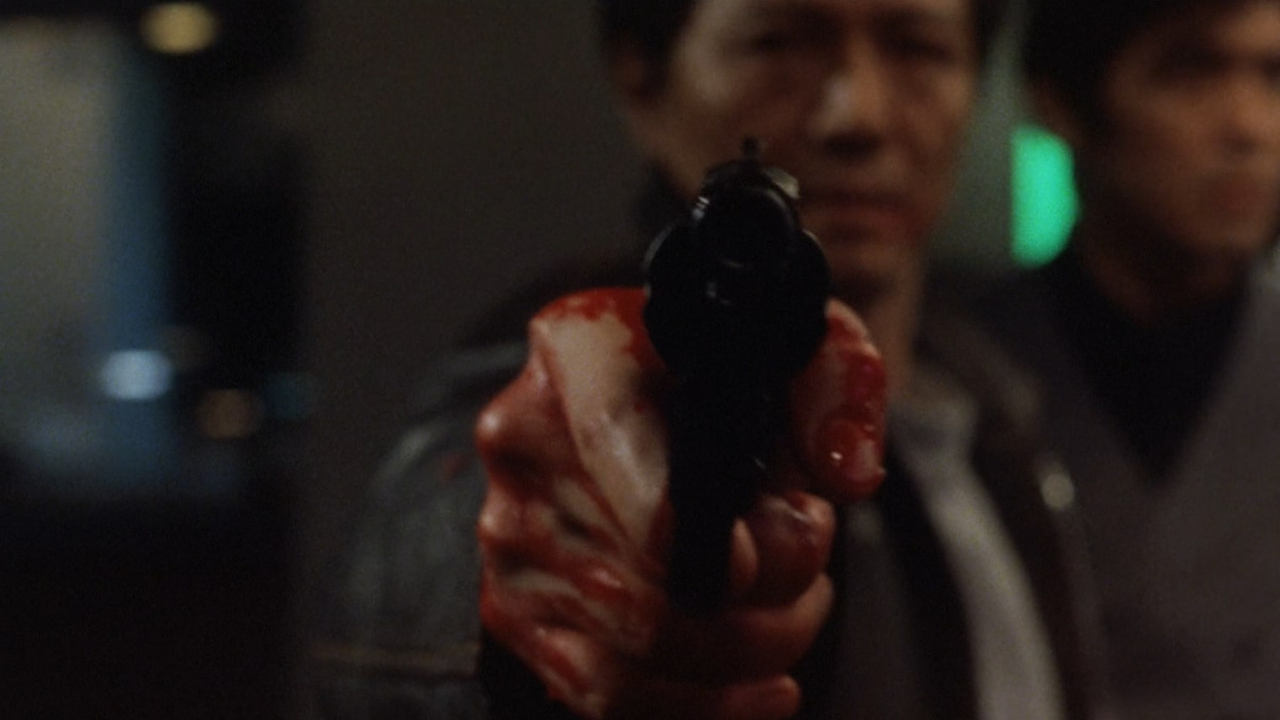
Gonin is a raw nerve of a film. It’s stylish, brutal, and saturated with a sense of impending doom that’s hard to shake. The performances are uniformly strong, particularly from Motoki and the unforgettable Kitano, and Ishii’s direction creates a palpable sense of place and desperation. It might lack the intricate plotting of some heist classics, focusing instead on character disintegration and the messy fallout of violence, but its atmospheric power is undeniable. It’s a perfect late-night watch, the kind that seeps under your skin. Revisiting it now, that bleak 90s aesthetic and gut-punch narrative still hit hard.
Rating: 8.5/10
This isn't just a heist-gone-wrong story; it's a neon-soaked dive into the abyss, expertly crafted and carried by unforgettable performances. Gonin remains a potent piece of 90s Japanese noir, a chilling reminder that sometimes, the only way out is further down.