Some films arrive like a whisper, settling into your consciousness not with explosions or grand pronouncements, but with the quiet hum of complex human emotion. Carrington, which found its way onto discerning video store shelves in 1995, is precisely that kind of experience. It doesn't shout its themes; instead, it invites you into the intricate, unconventional, and ultimately heartbreaking world of the English painter Dora Carrington and her profound, platonic love for the homosexual writer Lytton Strachey. It’s a film that lingers, prompting reflections on the very nature of love, connection, and the compromises we make for both.
A Love Beyond Labels
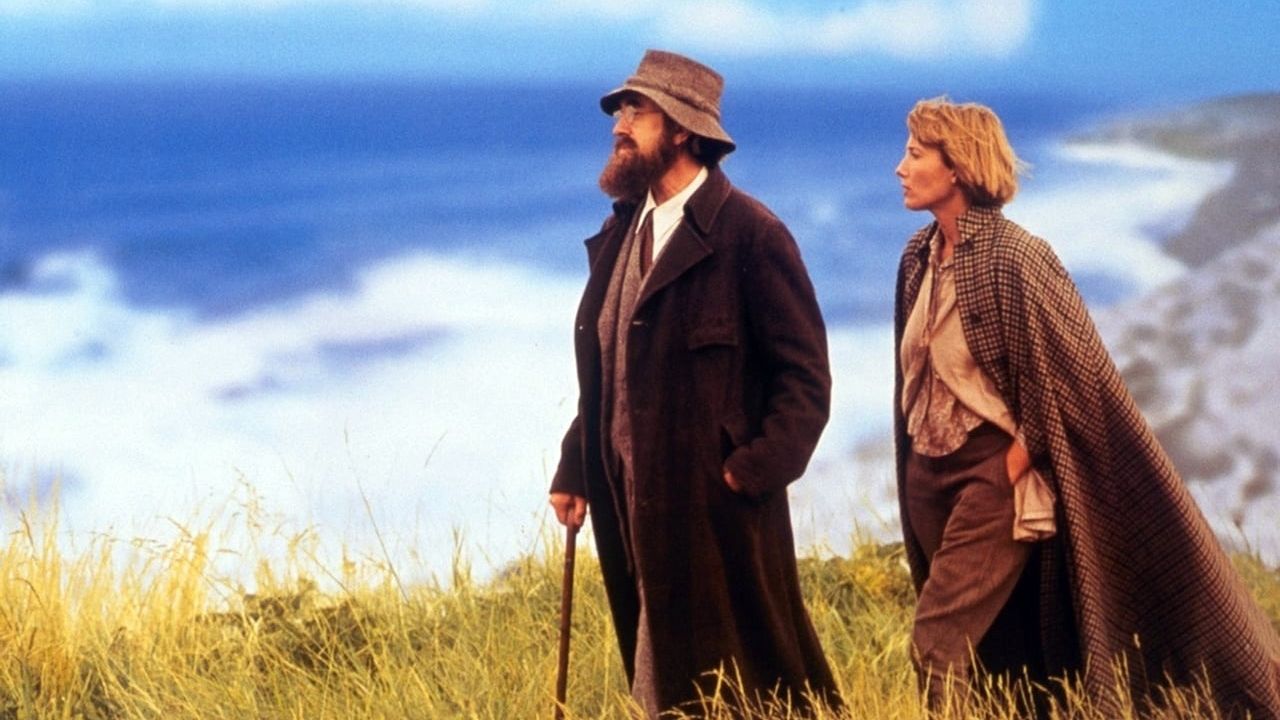
Set against the backdrop of the intellectually vibrant, bohemian Bloomsbury Group in the early 20th century, the film charts the decades-long relationship between Carrington (Emma Thompson) and Strachey (Jonathan Pryce). From their first awkward meeting, where her impulsive act of snipping off his beard (mistaking him for someone else entirely) foreshadows a life less ordinary, their bond deepens into something fierce, essential, and utterly resistant to easy categorization. He is witty, frail, openly gay in a society that barely tolerated it; she is fiercely independent, emotionally intense, and finds herself drawn into his orbit, becoming his companion, caretaker, and deepest confidante, even as she pursues relationships with men like Ralph Partridge (Steven Waddington) and Gerald Brenan (Samuel West).
Watching this unfold, especially perhaps when first encountered on a grainy VHS tape rented from the ‘Drama’ section, felt like stumbling upon a secret history. It wasn’t the typical Hollywood romance. What does it mean, the film implicitly asks, to build a life around a love that defies sexual convention? Can devotion exist purely in the realm of mind and spirit, sustaining two people against the grain of the world?
Brushstrokes of Truth: Thompson and Pryce
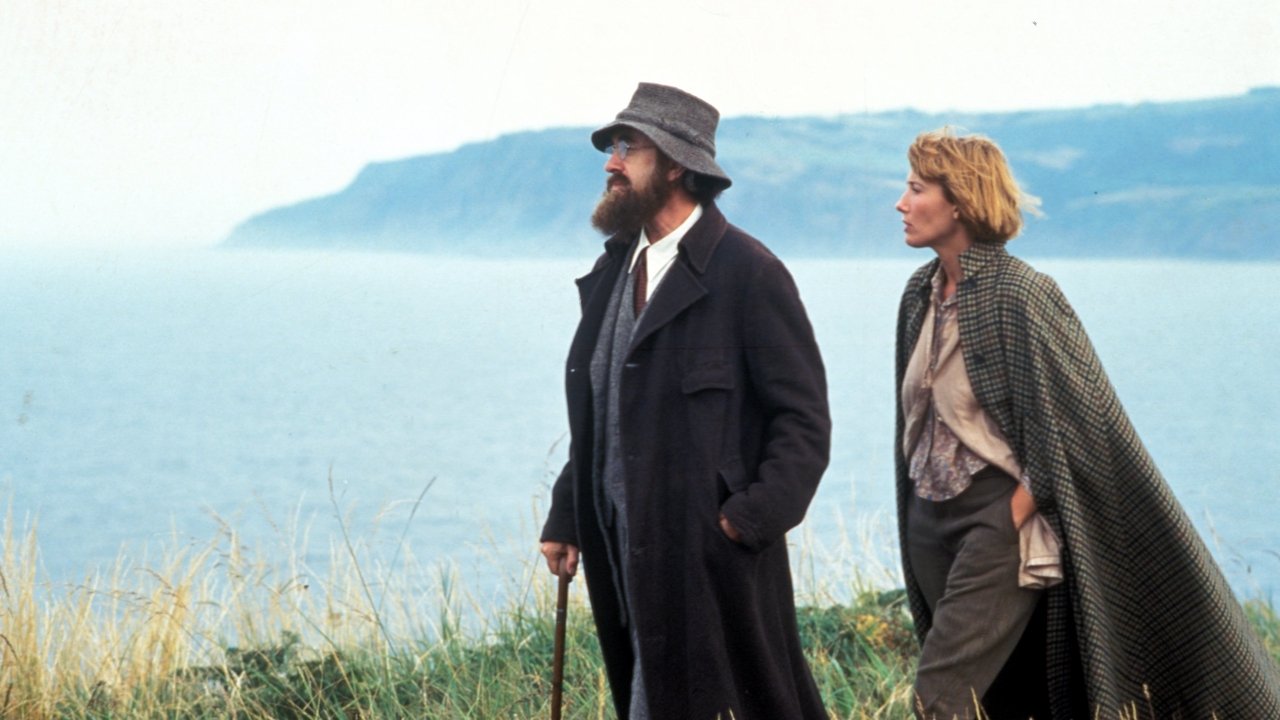
The absolute soul of Carrington resides in the performances of its two leads. Emma Thompson, fresh off her Oscar win for Howards End (1992) and acclaimed work in The Remains of the Day (1993), is simply luminous. She embodies Dora Carrington’s complexities – her artistic sensibility, her passionate nature constrained by circumstance, her almost self-destructive loyalty. Thompson conveys reservoirs of feeling with just a glance or a shift in posture; it’s a performance of raw vulnerability beneath a sometimes brittle surface. I recall being struck then, as now, by how completely she disappears into the role, making Carrington's bewildering choices feel somehow inevitable.
Equally magnificent is Jonathan Pryce as Lytton Strachey. Having already chilled audiences in Brazil (1985) and demonstrated remarkable range elsewhere, Pryce captures Strachey’s physical fragility, his rapier wit, and the surprising tenderness beneath his often-acerbic exterior. His Strachey is simultaneously irritating and endearing, a man fully aware of his own contradictions. The chemistry between Thompson and Pryce is extraordinary – not one of fiery passion, but of deep, immutable understanding. Their shared scenes crackle with unspoken history and shared jokes, forming the undeniable core around which the entire narrative revolves.
Hampton's Measured Hand
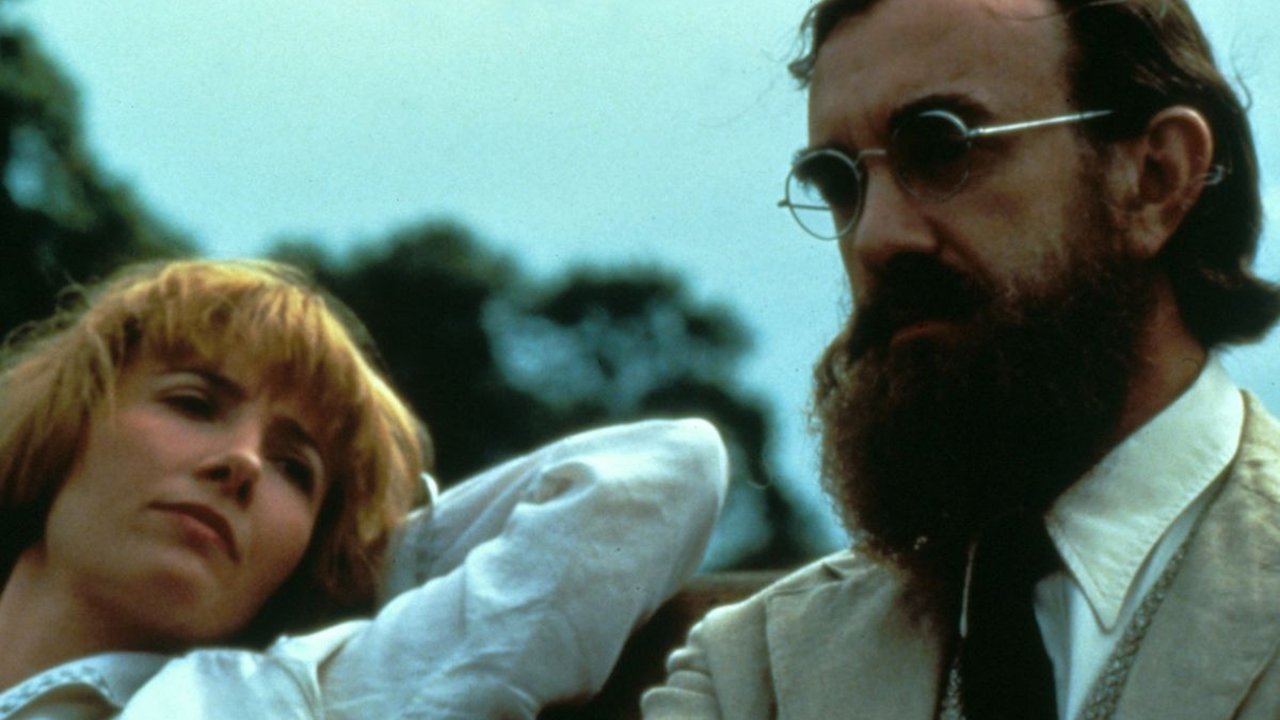
Writer Christopher Hampton, celebrated for his sharp screenplays like Dangerous Liaisons (1988), makes his directorial debut here, adapting Michael Holroyd’s biography Lytton Strachey. It’s a remarkably assured first feature. Hampton resists the urge to sensationalize the Bloomsbury set's tangled lives, opting instead for a measured, observational style. He trusts his actors and his material, allowing the emotional weight to build gradually through carefully composed scenes and nuanced interactions. The pacing is deliberate, mirroring the slow passage of years and the enduring nature of the central relationship.
It’s interesting to note that despite critical acclaim – including Jonathan Pryce winning Best Actor and the film securing the Jury Prize at the 1995 Cannes Film Festival – Carrington wasn't a box office smash, earning back only a fraction of its estimated $11 million budget. Perhaps its quiet intelligence and refusal of easy melodrama made it a tougher sell for mainstream audiences at the time. Yet, for those who sought it out, perhaps drawn by the pedigree of its stars or the allure of period drama, it offered something richer and more lasting. The evocative, sometimes melancholic score by Michael Nyman (composer for The Piano (1993)) perfectly complements the film’s mood, becoming another subtle layer in its artistry.
The Weight of Unconventional Lives
What stays with you long after the credits roll is the film's profound exploration of love's multifaceted nature. It doesn't shy away from the pain and sacrifice inherent in Carrington and Strachey's arrangement, particularly for Dora, whose own desires often seem secondary to Lytton's needs. Is her devotion noble or a form of self-denial? The film offers no easy answers, presenting their bond with honesty and empathy. It forces us to consider the different shapes companionship can take, the ways human hearts connect beyond physical intimacy, and the courage it takes to live authentically, even when that life baffles the outside world.
Carrington feels like a film discovered, rather than one aggressively marketed. Finding it on VHS back in the day felt like uncovering a small treasure – a mature, intelligent drama that trusted its audience to engage with complex characters and challenging themes. It’s a reminder that some of the most powerful stories are whispered, not shouted.
Rating: 8.5/10
This score reflects the film's outstanding central performances, particularly Thompson's transformative work, and Pryce's perfectly pitched portrayal. Hampton's sensitive direction and literate screenplay handle complex emotional territory with grace and intelligence. The production design and Nyman's score beautifully evoke the period and mood. It loses a point perhaps for a pacing that might feel slightly too languid for some, and while Waddington and others are effective, the film is overwhelmingly dominated by the central duo. However, its depth, emotional honesty, and the sheer power of the lead performances make it a truly rewarding and resonant piece of 90s cinema.
Final Thought: Carrington endures not as a grand historical epic, but as an intimate portrait of an extraordinary, perplexing love that asks us to look beyond convention and consider the enduring strength of the human heart's most unconventional bonds.