The air hangs thick and heavy in the Exotica club, doesn't it? Even now, years after the VHS tape has been rewound for the last time, the memory of that specific atmosphere – part tropical humidity, part lonely yearning, all bathed in a synthetic neon glow – remains remarkably vivid. It's the heart of Atom Egoyan's 1994 masterpiece, Exotica, a film that presented itself perhaps as an erotic thriller on the video store shelf but revealed itself to be something far more intricate, melancholic, and deeply human. This wasn't just another moody 90s indie; it was a carefully constructed emotional labyrinth.
More Than Just a Dance
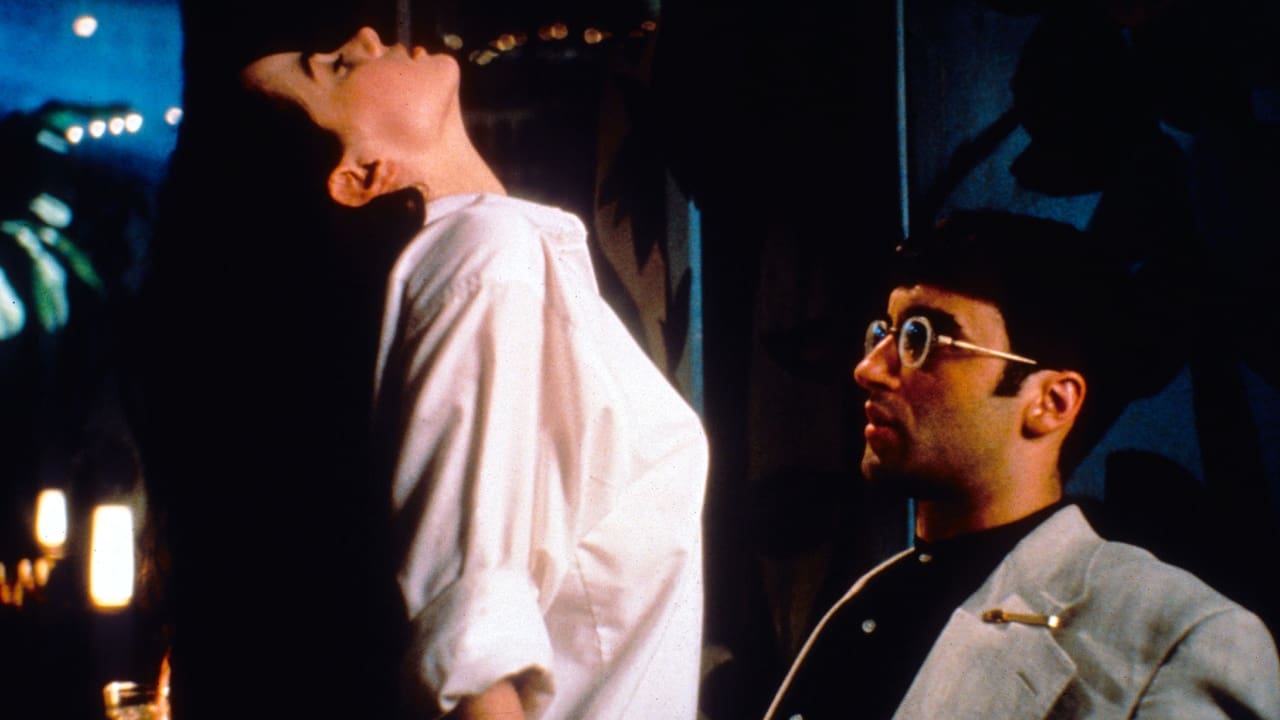
The central setting, the titular Exotica club, feels less like a place of simple titillation and more like a secular temple where rituals of grief and connection play out under the guise of performance. Egoyan, who also penned the insightful script, uses the club not for cheap exploitation, but as a crucible where damaged souls intersect. The dancers are observed, but so are the patrons, each locked in their own private narrative. It’s a space built on looking, but Egoyan constantly forces us to question what we are seeing and why. Remember those private booths? They weren’t just for privacy; they felt like confessionals, observation decks into the human condition. The whole environment, meticulously crafted on a soundstage to Egoyan’s specifications, breathes a specific kind of artificiality that perfectly mirrors the characters' constructed emotional defenses.
Fragments of a Shattered Picture
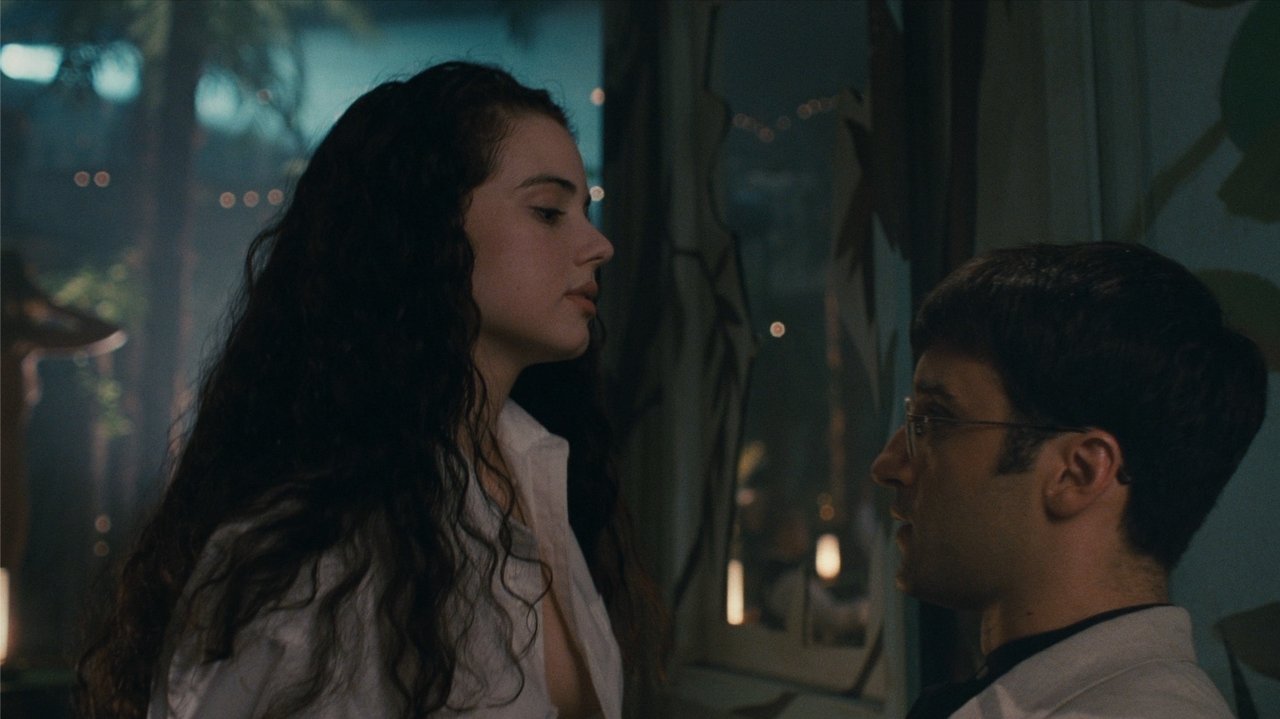
One of the film’s defining features – and perhaps what made it such a challenging, yet rewarding, rental back in the day – is its fractured narrative. Egoyan presents the story like shards of glass, pieces of different lives seemingly disconnected until connections slowly, painstakingly emerge. We follow Francis (Bruce Greenwood), a tax auditor performing a strange, nightly ritual with a young dancer, Christina (Mia Kirshner); Eric (Elias Koteas, instantly recognizable to anyone who haunted video stores in the 90s), the club's haunted DJ nursing his own possessive jealousy; Thomas (Don McKellar, a key figure in Canadian indie cinema), a quiet pet shop owner smuggling protected bird eggs; and Zoe (Arsinée Khanjian, Egoyan's wife and frequent collaborator), the club's pregnant owner navigating her own complex history with Eric.
The film demands patience, asking the viewer to piece together the timeline, the relationships, the devastating event that links several of these characters. It’s a bold move, especially for the time, trusting the audience to stay invested without clear signposts. It felt intellectually stimulating, a stark contrast to the more linear blockbusters dominating the multiplexes and video store shelves. This challenging structure wasn't just a gimmick; it mirrored the way trauma itself fractures memory and experience.
Performances Behind the Veil

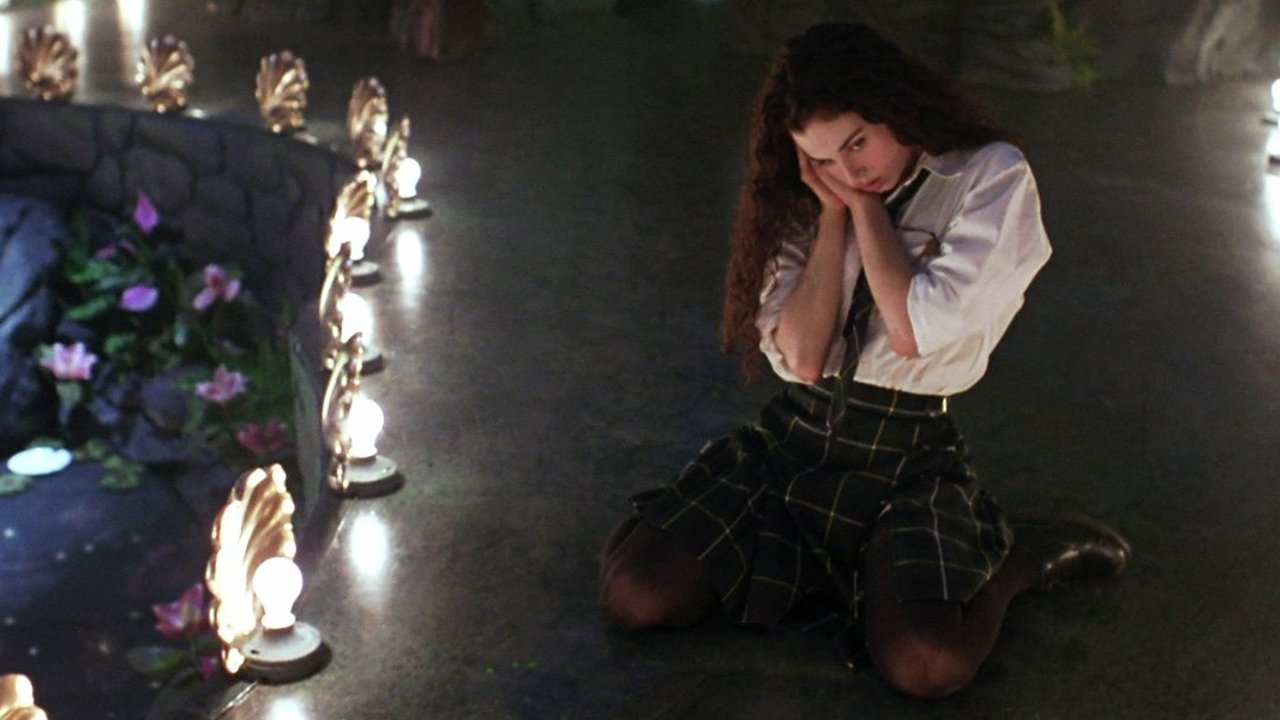
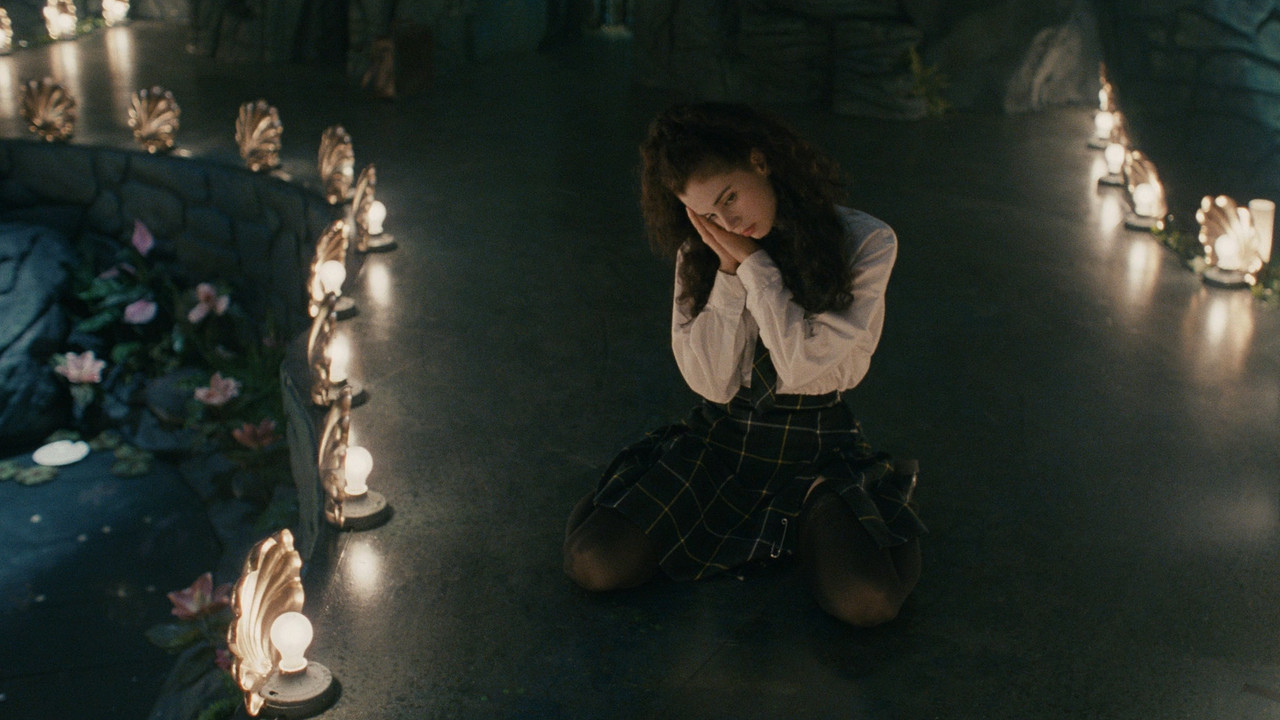
What truly elevates Exotica is the ensemble cast, delivering performances of remarkable restraint and depth. Bruce Greenwood is heartbreaking as Francis, his grief simmering just beneath a tightly controlled surface. His interactions with Christina are suffused with a profound sadness that transcends the surface transaction. You see the weight he carries in the slump of his shoulders, the quiet intensity in his gaze. And Mia Kirshner, just 19 at the time of filming, is mesmerizing as Christina. She navigates the character's assumed persona – the innocent schoolgirl – with a knowing complexity, hinting at a resilience and perhaps a manipulation born from her own past. It’s a performance that feels both vulnerable and unnervingly controlled. Elias Koteas brings a raw, volatile energy to Eric, his possessiveness masking a deeper pain, while Don McKellar provides a crucial counterpoint as the seemingly detached observer who becomes unexpectedly entangled. These aren't showy performances; they are studies in contained emotion, perfectly suited to the film's voyeuristic eye.
Unpacking the Layers
Beneath the intricate plot lies a profound exploration of grief, loss, and the desperate, sometimes destructive, ways people attempt to cope. Ritual becomes a balm, obsession a distraction. The act of watching, central to the club's function, mirrors the characters' inability to truly connect, observing each other across divides of pain and misunderstanding. There's a haunting universality here. Doesn't the way Francis clings to his ritual with Christina speak to how we all sometimes replay moments, seeking solace or control in the face of irreversible loss? The film asks us to consider the masks we wear and the hidden traumas that shape our interactions.
Echoes from the Cutting Room Floor (Retro Fun Facts)
Exotica wasn't just another film; it felt like an event in the indie world. Made for a modest CAD $2 million, its sophisticated structure and thematic depth earned it significant acclaim, including the FIPRESCI Prize at the Cannes Film Festival – a pretty big deal for a Canadian film navigating a landscape often dominated by American productions. Egoyan reportedly wrote the script quickly, inspired by the specific dynamics a place like the Exotica club could foster. The hypnotic, tabla-infused score by Mychael Danna (who would later win an Oscar for Life of Pi) is inseparable from the film's mood, creating an atmosphere that is both seductive and deeply unsettling – it practically became another character. Leonard Cohen's "Everybody Knows," used so pointedly during Christina's dance, perfectly encapsulates the film's weary cynicism and hidden truths. This wasn't a film built on explosive action or easy answers; its power came from its deliberate pace, its intricate design, and its willingness to trust the viewer.
The Lingering Image
Exotica is a film that stays with you, less a straightforward story and more an immersive mood piece punctuated by moments of sharp emotional clarity. It’s a puzzle box that doesn't necessarily offer a neat solution, but invites contemplation long after the credits roll. It stands as a high point in Atom Egoyan's filmography and a unique, enduring gem from the mid-90s indie scene – a reminder that sometimes the most profound stories are found in the quiet spaces, behind the neon glow.
Rating: 9/10
This rating reflects the film's masterful construction, its haunting atmosphere, the superb, nuanced performances, and its intelligent exploration of complex themes. It's a challenging film, and its non-linear structure might not be for everyone, but its artistry and emotional depth are undeniable. It avoids easy categorization, achieving a rare blend of intellectual rigor and visceral feeling that resonates deeply.
Exotica remains a powerful testament to the secrets we keep, the rituals that sustain us, and the haunting beauty found even in the most fractured lives. What hidden connections define your own story?