It begins, not with thunder and judgment, but with the quiet hum of late-night telephone lines and the anonymous transactions of the flesh. There's a certain kind of film that lodges itself in your memory not merely for its story, but for the sheer audacity of its vision and the uncomfortable questions it refuses to let go of. Michael Tolkin's 1991 directorial debut, The Rapture, is precisely that kind of film – a stark, unsettling journey that I distinctly remember pulling from the "New Releases" wall at the local video store, its minimalist cover art offering few clues to the profound, often disturbing, experience contained within the tape. It wasn't the usual fare, and perhaps that’s why it still resonates.
From Swingers to Saints: An Unsettling Transformation
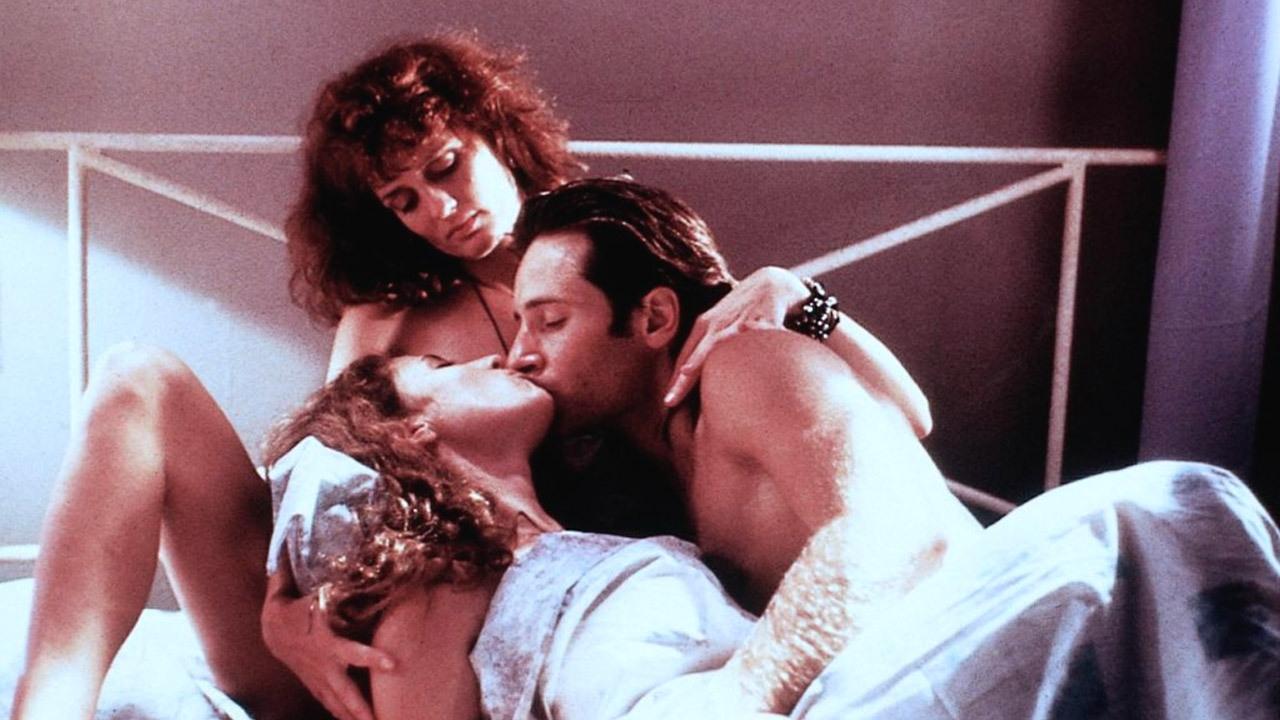
At the heart of the film is Sharon, portrayed with astonishing, raw vulnerability by Mimi Rogers. We first meet her living a life of detached hedonism; she and her partner Vic (Patrick Bauchau) engage in group sex arrangements with strangers, seeking connection, or perhaps just sensation, in the emptiness of modern life. There's a weariness to her searching, a sense that these encounters offer diminishing returns. Tolkin, who also penned the screenplay (having previously written screenplays like Gleaming the Cube (1989) and shortly before adapting his own novel for Robert Altman's brilliant The Player (1992)), doesn't judge Sharon's early life, presenting it matter-of-factly as a symptom of a deeper spiritual void.
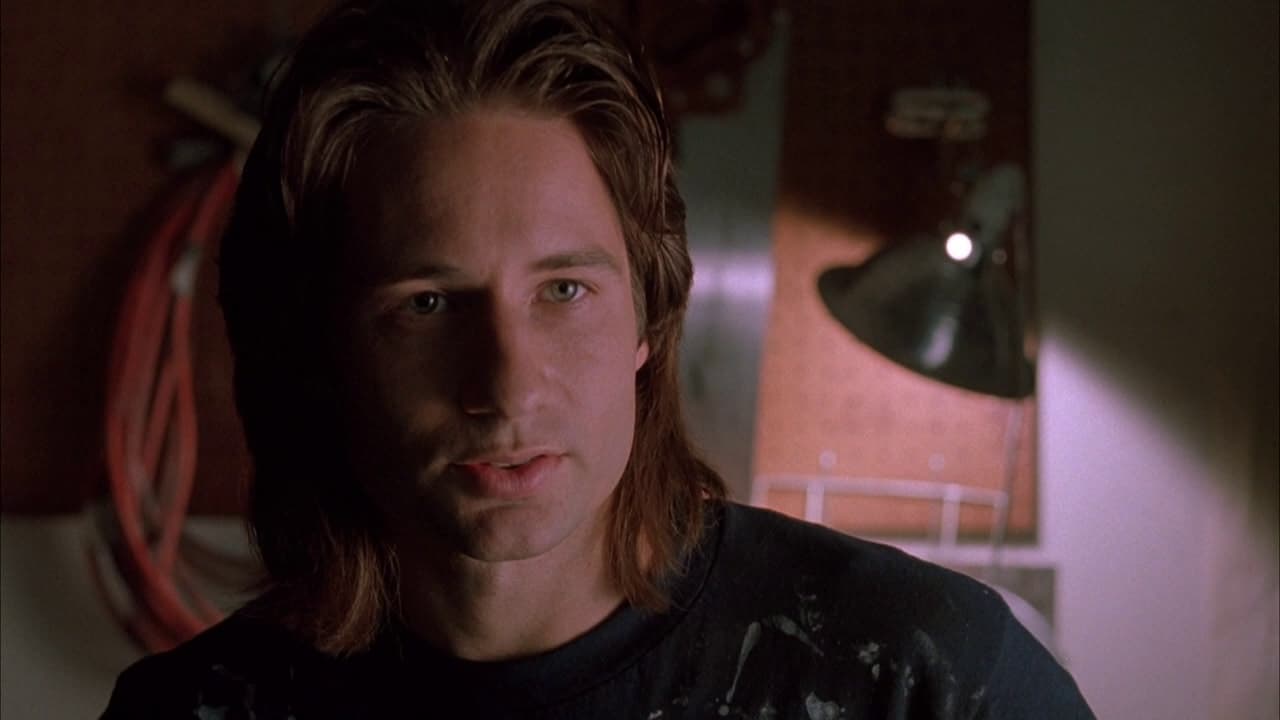
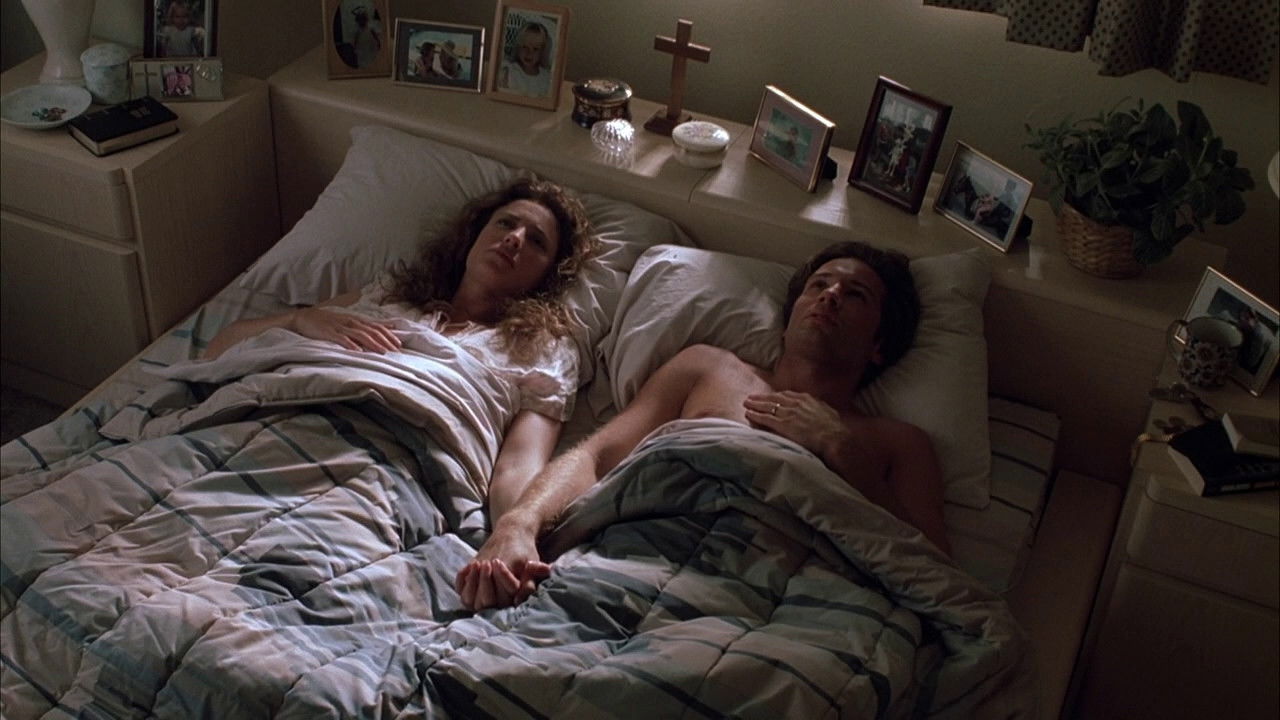
Her conversion experience, prompted by overheard whispers of impending apocalypse, isn't depicted as a comforting balm but as a seismic shift, rearranging the very molecules of her being. Rogers navigates this transition with incredible conviction. The emptiness remains, but now it’s filled with the terrifying certainty of divine judgment. She finds solace, and later love and family, with Randy (David Duchovny, in a notable pre-Mulder role that hinted at his ability to convey quiet intensity), another soul seeking answers. Yet, her newfound faith isn't passive; it's fervent, absolute, and ultimately, terrifyingly demanding.
The Weight of Belief
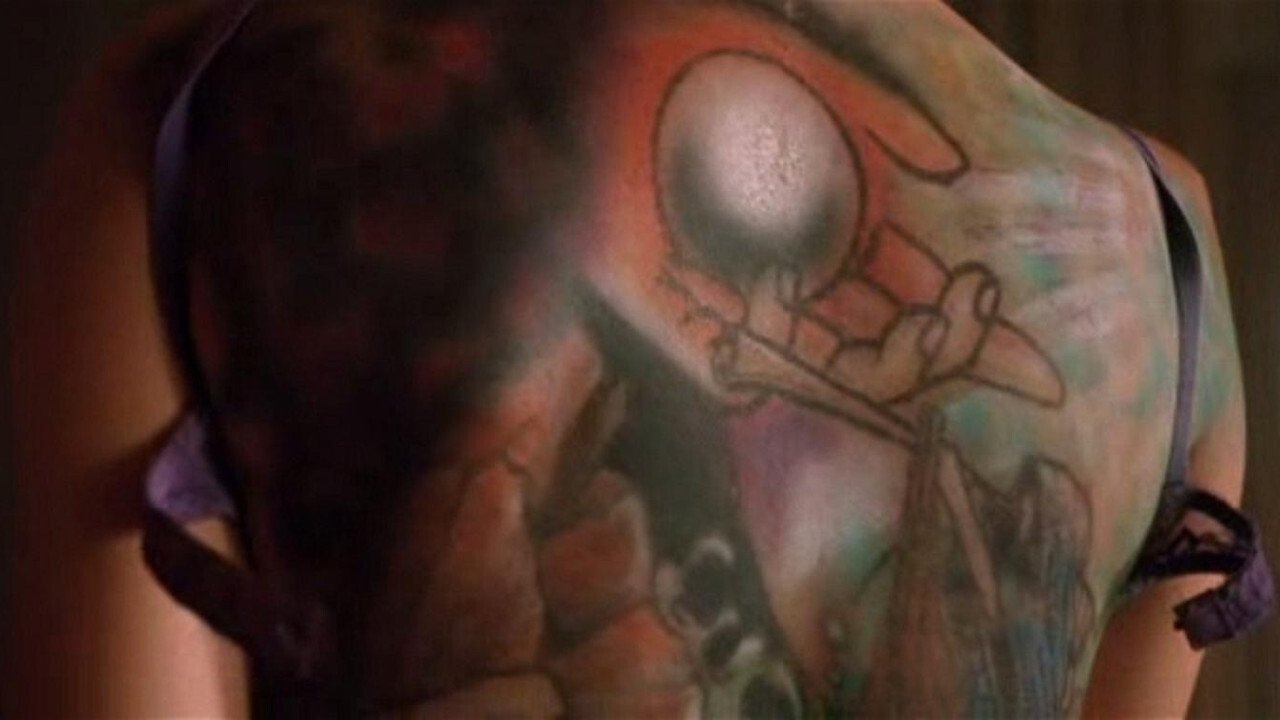
What makes The Rapture so potent, and perhaps so controversial upon its release (it certainly wasn't pulling in blockbuster numbers, earning a modest sum against its estimated $3 million budget), is its refusal to offer easy answers or sentimentalize faith. Tolkin's direction is spare, almost clinical at times, focusing intently on Rogers' face as she wrestles with concepts that dwarf human understanding. He presents the tenets of fundamentalist belief – the literal Rapture, the stark division of saved and damned – without filter or apology. The film asks: what if it is all true? And if so, what are the horrifying implications?
The atmosphere Tolkin creates is one of quiet dread, punctuated by moments of startling beauty and shocking violence. The ordinariness of the settings – suburban homes, highways, deserts – makes the encroaching cosmic drama feel all the more jarring. This isn't a spectacle of heavenly choirs and angelic hosts in the vein of typical religious epics; it’s grounded, intimate, and deeply personal, making the ultimate stakes feel terrifyingly real. We, the viewers accustomed perhaps to more escapist 90s fare, are forced to confront the starkness of Sharon's conviction.
A Towering Performance and Lingering Questions
Mimi Rogers delivers a performance that should have garnered far more awards attention than it did. It's a fearless, complex portrayal of a woman pushed to the absolute edge by her beliefs. Her journey from jaded seeker to devout believer, and the subsequent choices she makes, are rendered with a harrowing authenticity. You see the conflict in her eyes, the desperate hope warring with paralyzing fear. Supporting players like Duchovny provide crucial grounding, representing a more questioning, relatable path of faith, which only highlights the terrifying singularity of Sharon's conviction.
One fascinating tidbit is that Tolkin originally envisioned the film ending differently, perhaps less ambiguously. However, the stark, unforgettable final sequence in the desert, followed by the Purgatory scene, leaves the audience grappling with profound theological and existential questions. It doesn't offer closure; it demands reflection. What does it mean to truly believe? Can faith justify the unthinkable? And in the face of the infinite, what is the value of human love and connection?
( Spoiler Alert! ) The film’s most infamous and deeply disturbing sequence involves Sharon's actions towards her daughter, Mary (Kimberly Cullum), in the desert while awaiting the Rapture. It's a moment of profound horror, born not of malice but of absolute, unwavering faith in a specific interpretation of God's will. It tests the audience's empathy and forces a confrontation with the darkest potential consequences of religious extremism. It’s a scene that, once witnessed, is impossible to forget and remains a focal point of discussion about the film's challenging themes. ( End Spoiler Alert! )
Beyond the Pearly Gates: Legacy and Reflection
The Rapture wasn't a film designed for mass consumption, and its challenging nature likely meant many VHS copies were returned to the rental store with bewildered shrugs, or perhaps heated post-viewing debates. It didn't spawn sequels or become a pop culture touchstone in the way of lighter genre fare from the era. Yet, its power lies in its singularity. It remains a potent, provocative piece of filmmaking that tackles enormous themes with intellectual rigor and emotional honesty. It’s a film that respects its audience enough to present difficult ideas without easy resolution. Watching it again decades later, its questions about faith, doubt, and the search for meaning in a seemingly chaotic world feel startlingly relevant. It stands as a testament to Mimi Rogers' immense talent and Michael Tolkin's bold vision.

Rating: 8/10
This score reflects the film's undeniable power, Mimi Rogers' staggering performance, and its courage in tackling profound, uncomfortable themes head-on. It loses a couple of points simply because its challenging nature and potentially alienating subject matter make it a difficult, rather than purely enjoyable, watch for some. However, its artistic merit and lingering impact are undeniable.
The Rapture isn't comfort food cinema; it's a spiritual and philosophical gauntlet thrown down on celluloid, leaving you questioning long after the static fades from the screen. A truly unforgettable piece of 90s independent filmmaking.