The ferry cuts through the grey Maine water, carrying Jennifer Jason Leigh’s Selena St. George back to a place choked by memory and suspicion. Little Tall Island. Even the name sounds small, insular, a place where secrets fester under watchful eyes. And at the heart of it waits her mother, Dolores. This isn't a nostalgic homecoming; it's a descent into a past shrouded in fog as thick as the coastal air, triggered by the news that Dolores is once again accused of murder. Dolores Claiborne (1995) wasn't the kind of tape you rented for cheap thrills; it was the one you put on late at night, the kind that seeped into your bones and left you pondering the dark complexities of family and survival long after the credits rolled.

An Accident, She Says
The setup is classic Stephen King territory, adapted here with remarkable fidelity and nuance by screenwriter Tony Gilroy (years before his Michael Clayton (2007) directorial debut) and director Taylor Hackford (An Officer and a Gentleman (1982)). Dolores’s wealthy, ailing employer, Vera Donovan, is dead after a fall down the stairs. Detective John Mackey (Christopher Plummer, radiating weary obsession), the same man who investigated the "accidental" death of Dolores’s abusive husband Joe decades earlier, smells blood in the water. He’s convinced Dolores is guilty, this time and the last. Selena, a successful but brittle New York journalist battling her own demons, returns reluctantly, drawn into the vortex of accusation and her mother’s fiercely guarded history. What unfolds isn't just a whodunit, but a harrowing excavation of trauma, abuse, and the desperate measures taken to endure.
Sometimes, Being a Bitch is All a Woman Has
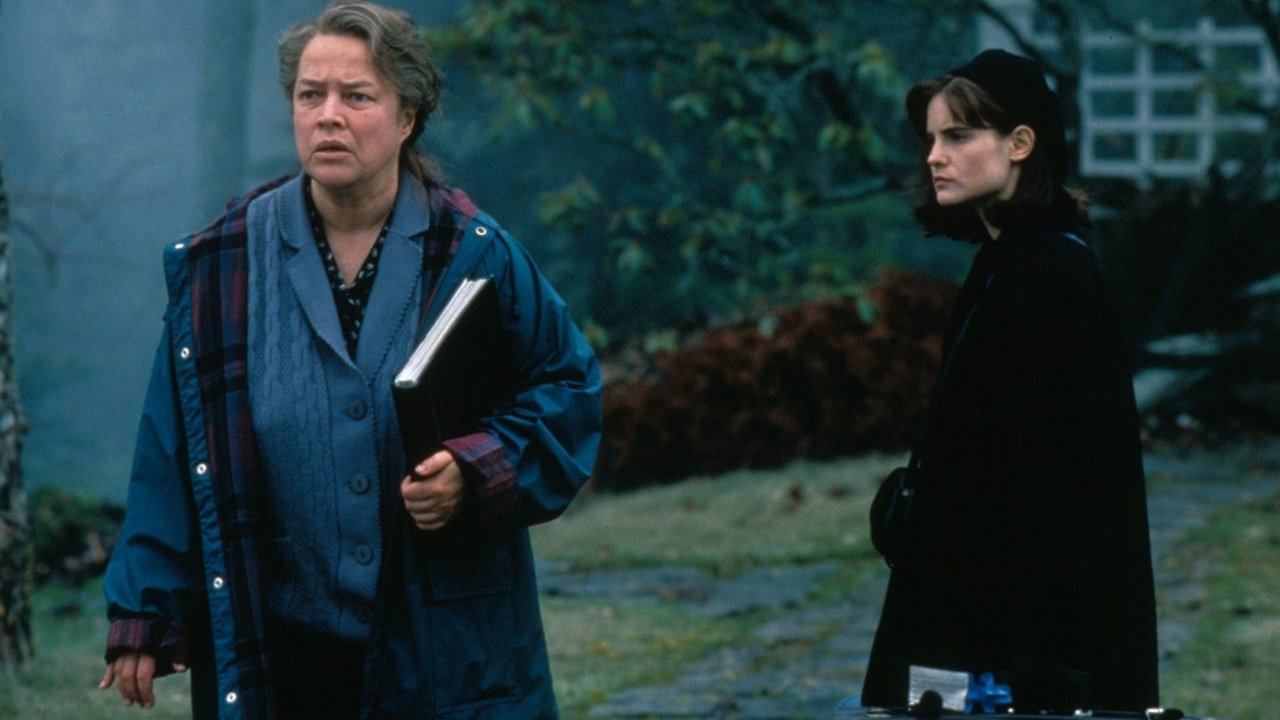
Let's be clear: this film belongs to Kathy Bates. Reuniting with Stephen King material after her Oscar-winning turn in Misery (1990), Bates delivers a performance leagues away from Annie Wilkes, yet equally mesmerizing. Her Dolores is weathered, defiant, sharp-tongued, and deeply wounded. She’s a force of nature sculpted by hardship, her pragmatism bordering on ruthlessness. King himself reportedly felt Bates was the only actress who could embody Dolores, and watching her navigate the character's fierce loyalty and simmering rage, it's impossible to disagree. She makes you understand the quote attributed to Vera, but lived by Dolores: "Sometimes, being a bitch is all a woman has to hold onto." It’s a portrayal devoid of vanity, raw and utterly convincing. I remember watching this on a flickering CRT, utterly captivated by how much strength and pain Bates conveyed with just a glare or the set of her jaw.
Fractured Reflections in a Dusty Mirror
Opposite Bates, Jennifer Jason Leigh as Selena is intentionally abrasive, a tightly wound knot of repressed memories and simmering resentment. Her journey back to the island forces her to confront not just her mother's past, but the fragmented, painful shards of her own childhood. Their scenes together crackle with unresolved tension, a volatile mix of love, guilt, and misunderstanding. It’s a challenging role, and Leigh commits fully to Selena’s brittle facade and underlying vulnerability. The dynamic feels uncomfortably real, capturing the often-fraught terrain of mother-daughter relationships warped by trauma.
Island Gothic and Shifting Hues
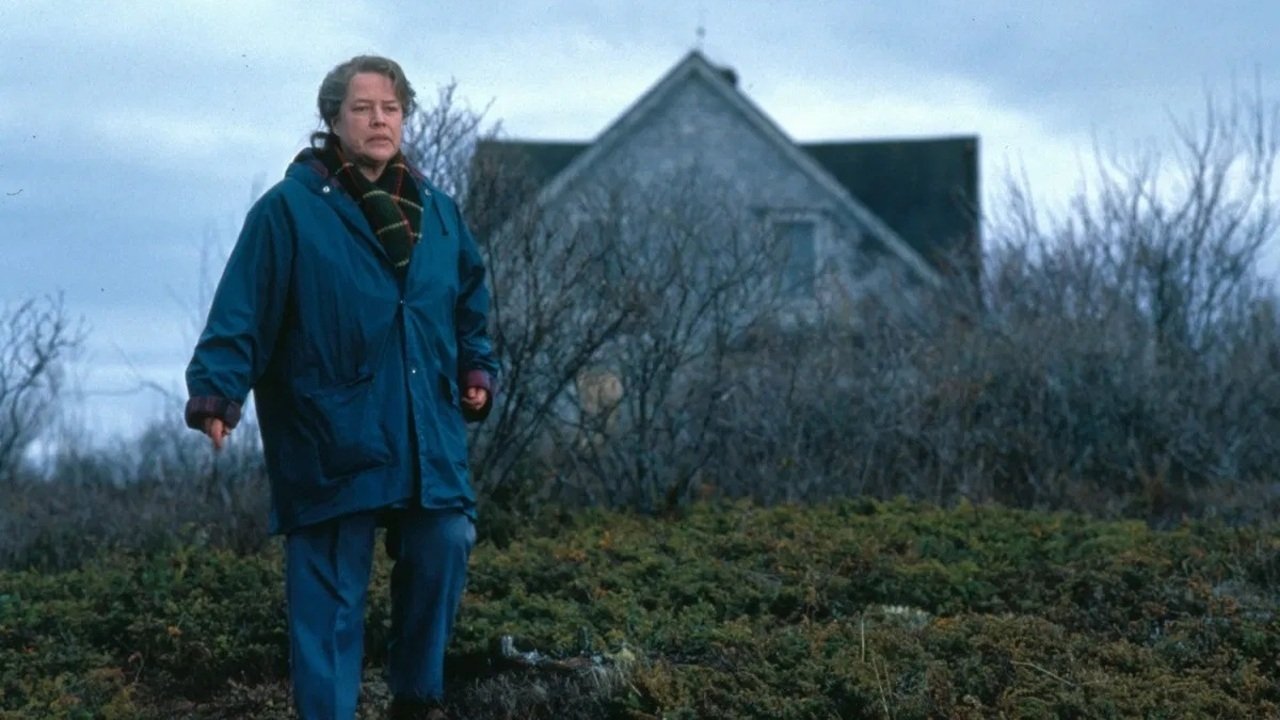
Taylor Hackford masterfully crafts the film's oppressive atmosphere. Little Tall Island (mostly filmed in scenic but suitably isolated Nova Scotia, Canada) feels perpetually damp and shadowed, a character in itself. A key visual choice, reportedly Hackford's own idea, was contrasting the present-day scenes (shot with cooler, desaturated blues and greys) with the flashbacks (rendered in warmer, more vibrant, almost lurid colours). This wasn't just stylistic flair; it visually underscored how the past, however traumatic, could feel more vivid and emotionally charged than the washed-out present. It’s a technique that pulls you into Dolores's recollections, making the horrors she endured feel immediate and deeply unsettling. The score by Danny Elfman is also perfectly pitched, less whimsical than his Burton collaborations, more somber and suspenseful, enhancing the pervasive dread.
From Page to Screen: A King Favorite
Adapting Stephen King's novel, which is told entirely from Dolores's first-person perspective as she gives her statement to the police, was no small feat. Tony Gilroy’s screenplay smartly retains the core narrative and Dolores's voice while structuring it for the screen, using the present-day investigation as a frame for the devastating flashbacks. King, often critical of adaptations of his work, has consistently praised Dolores Claiborne, citing it as one of his personal favorites. It’s easy to see why. The film respects the source material's depth, focusing on character and psychological horror over supernatural elements (though the brief, symbolic darkness of the solar eclipse flashback is chillingly effective). It captures the novel's exploration of female resilience and the grim realities of abuse with unflinching honesty. It’s a testament to the power of the story that it could attract such talent and result in a film that felt prestigious, even earning decent box office returns (around $46 million worldwide on a $20 million budget) despite its dark themes.
The Enduring Chill
Dolores Claiborne isn't an easy watch. It deals with heavy themes – domestic violence, child abuse, murder – without flinching. But it’s precisely this unflinching quality, anchored by Kathy Bates’s monumental performance and Taylor Hackford’s atmospheric direction, that makes it so powerful and memorable. It’s a film that earns its darkness, exploring the suffocating weight of secrets and the brutal choices sometimes necessary for survival. It stands as one of the most mature and compelling Stephen King adaptations, a bleak but potent drama that lingers long after the VCR clicks off. Doesn't that final, hard-won understanding between mother and daughter feel both earned and heartbreakingly fragile?
Rating: 9/10
This score reflects the film's exceptional lead performance, its masterful control of tone and atmosphere, the intelligent script adapting a challenging novel, and its unflinching exploration of difficult themes. It’s a high point for 90s psychological thrillers and one of the absolute best Stephen King screen translations, losing only a point perhaps for moments where the pacing slightly flags or secondary characters feel less developed compared to the towering leads.
Final Thought: More than just a thriller, Dolores Claiborne is a powerful portrait of female endurance against a backdrop of gothic gloom – a VHS tape that held far more dramatic weight than its cover might have suggested.