It starts, often, with the music. Not the pulse-pounding synth that defined so many action flicks littering video store shelves back then, but the aching, soulful voice of Nina Simone. That juxtaposition – the smoky elegance of "Feeling Good" layered over the brutal rebirth of a killer – is perhaps the most potent symbol in John Badham's 1993 thriller, Point of No Return. It hints at a depth, a yearning for transformation, that elevates this Hollywood remake above mere imitation, even if it never quite escapes the shadow of its French predecessor.
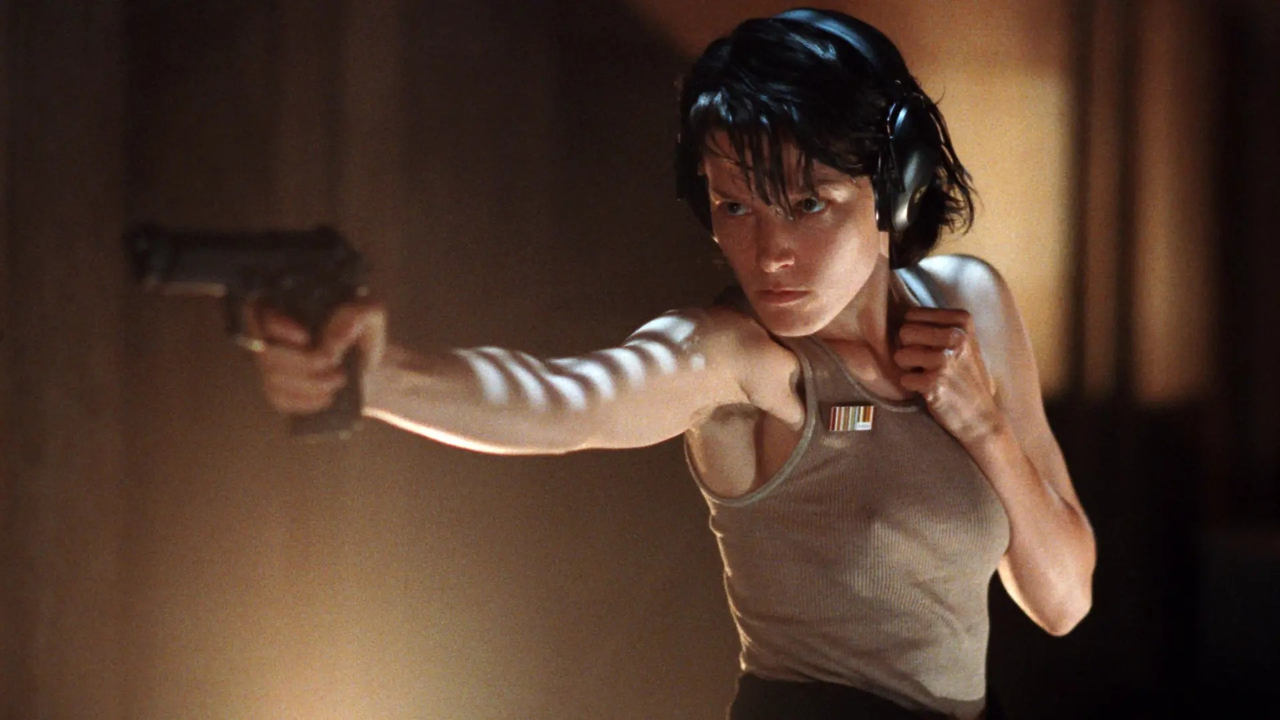
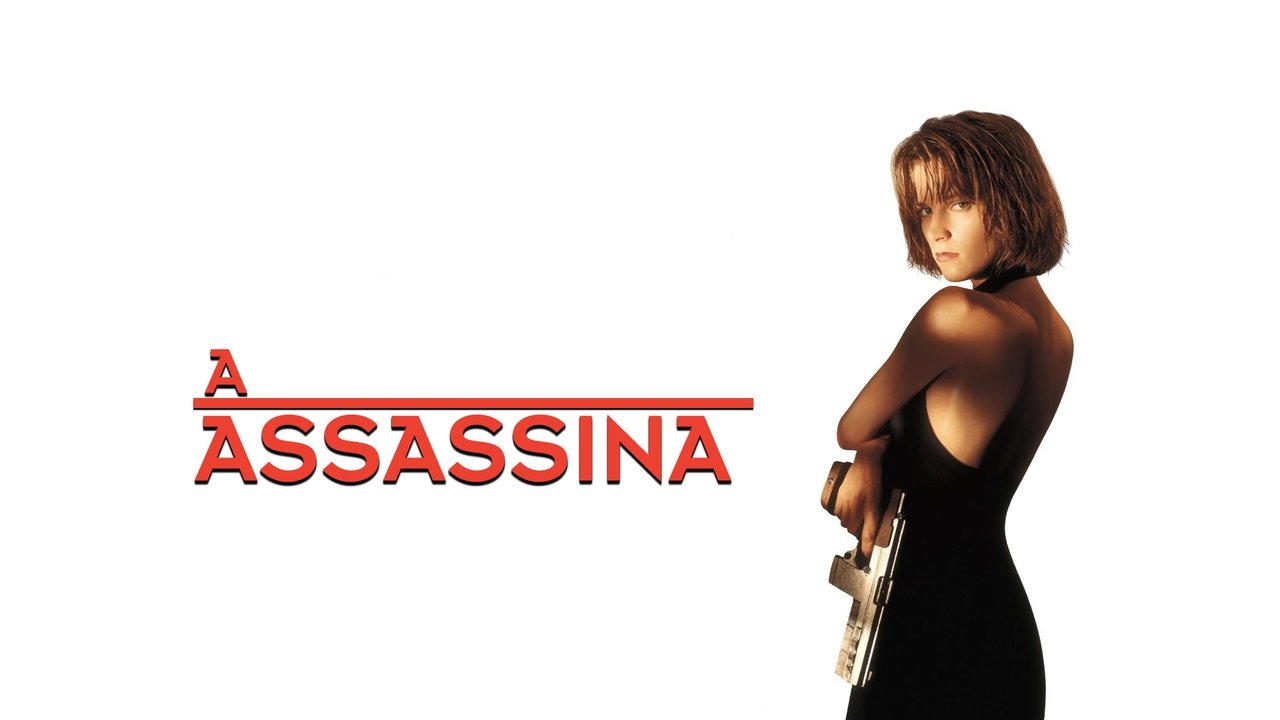
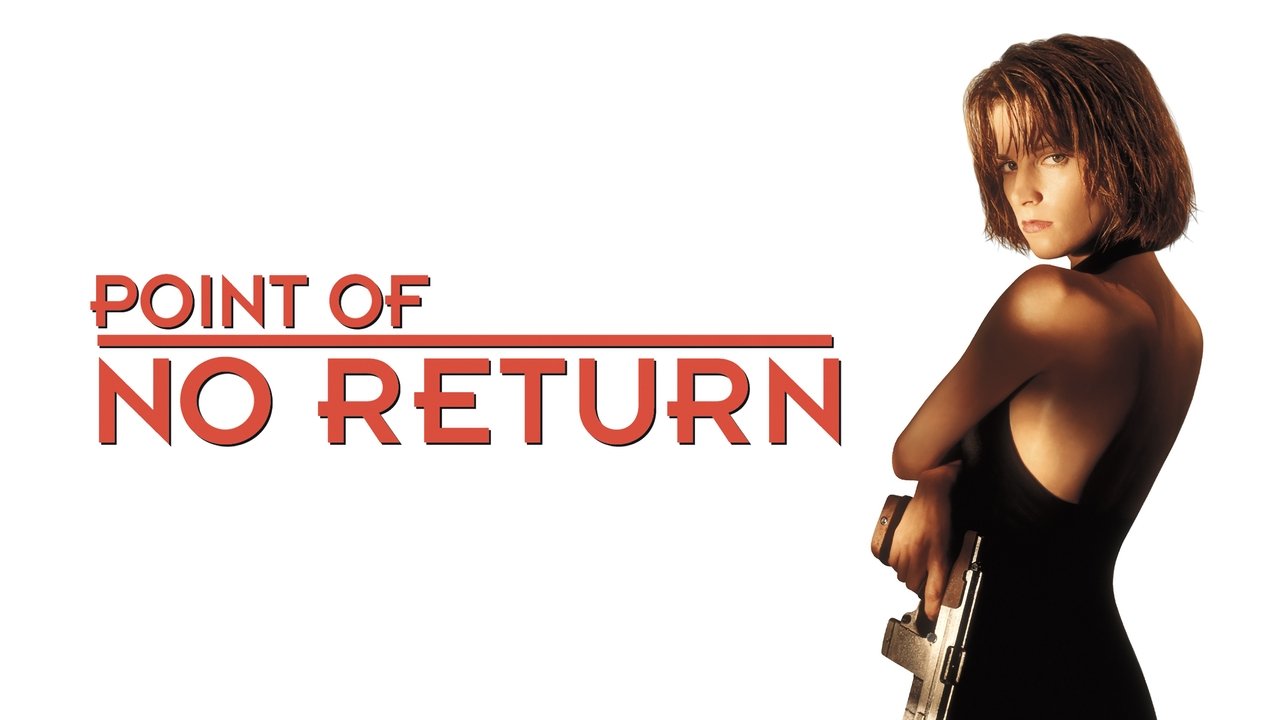
Remember finding this one nestled between the bigger blockbusters? Maybe the stark cover art caught your eye – Bridget Fonda, impossibly chic, holding a very large gun. It promised slick thrills, and it delivered, but watching it again now, something else resonates: the strange, melancholy heart beating beneath the gunfire.
A Phoenix Forged in Gunpowder
The initial premise is stark, almost primal. We meet Maggie Hayward (Bridget Fonda) not as a protagonist, but as a feral creature cornered by society. A drug addict caught in a pharmacy robbery gone fatally wrong, she’s numb, violent, seemingly beyond redemption. Her execution is faked, and she awakens in a sterile, windowless facility – a non-place where she’s offered a chilling ultimatum by the shadowy government agent Bob (Gabriel Byrne): become a highly trained assassin, or face the genuine death penalty she narrowly escaped. What follows is the transformation: the junkie scrubbed clean, taught etiquette by the impeccably refined Amanda (Anne Bancroft, in a role radiating sophisticated authority), and drilled relentlessly in combat and weaponry.
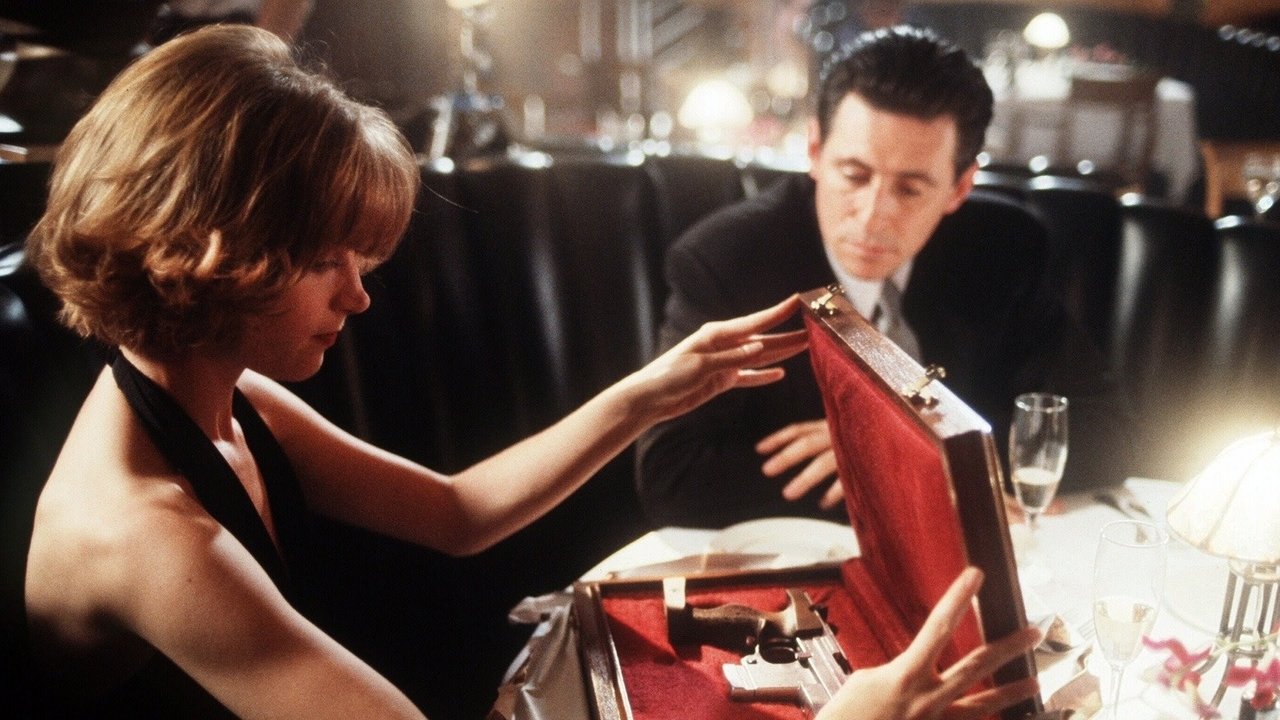
Fonda truly carries the film here. Her transition from snarling captive to polished operative, while perhaps accelerated by Hollywood pacing, feels rooted in a desperate survival instinct. There's a fragility beneath the hardening exterior, a flicker of the lost soul searching for something – even if it's just the approval of her handler. Byrne, perpetually world-weary, plays Bob with a compelling ambiguity. Is he a father figure? A jailer? Or simply another functionary in a dehumanizing system? Their dynamic, charged with unspoken tension, forms the film's core relationship.
Hollywood Gloss on Gallic Grit
Of course, the elephant in the room is Luc Besson's Nikita (1990), the French film upon which Point of No Return is based. Director John Badham, no stranger to kinetic filmmaking (WarGames, Blue Thunder), brings a distinctly American sensibility. The action sequences are slicker, louder, perhaps more conventionally staged than Besson's raw, European style. Think of the chaotic restaurant kitchen shootout – pure Badham energy, expertly choreographed and undeniably exciting, even if it lacks the unsettling intimacy of the original. The Venice Beach canals setting for Maggie's apartment gives the film a sun-drenched, specifically Californian vibe, contrasting sharply with the grittier Parisian backdrop of Nikita.

This difference in tone extends to the score. Where Eric Serra’s music for Nikita was cool and electronic, Hans Zimmer’s score here is more lush, more traditionally Hollywood, already hinting at the epic soundscapes he would become famous for. Yet, it’s the inspired use of Nina Simone – particularly "Here Comes the Sun" during a poignant moment of burgeoning hope with Maggie's unsuspecting boyfriend J.P. (Dermot Mulroney) – that provides the film's most unique and affecting sonic signature. It's a choice that feels less like calculated coolness and more like a genuine attempt to tap into Maggie's fractured psyche.
Echoes in the System
While comparisons to the original often labelled this remake as style over substance, Point of No Return carved its own niche. It found a solid audience on VHS, becoming a rental night staple for many. Bridget Fonda, already established but perhaps hitting peak visibility here, cemented her status as a captivating, slightly unconventional leading lady of the 90s. The film itself, made for around $20 million, pulled in a respectable $30 million domestically (roughly $63 million today), proving profitable even if not a runaway smash.
And then there’s Victor. Harvey Keitel’s appearance as “Victor the Cleaner” is brief, almost a cameo, but utterly unforgettable. His calm, methodical approach to erasing the mess left by a mission gone wrong is chillingly effective. It’s a role that prefigures his iconic turn as Winston Wolfe in Pulp Fiction just a year later, showcasing that same unnerving professionalism in the face of gruesome chaos. Funnily enough, the cleaner character in Nikita was played by Jean Reno, who Besson would later cast as the titular Léon: The Professional, another film exploring the life of an assassin with unexpected emotional depths. It’s a fascinating thread connecting these films.
The Lingering Question of Freedom
Does Point of No Return offer easy answers? Not entirely. Maggie’s relationship with J.P., the kind-hearted photographer who represents a normal life she desperately craves, feels genuine but also fraught with the impossibility of her situation. Can she ever truly escape her past, or the control exerted by Bob and the agency? The ending, while perhaps softer than Nikita's stark ambiguity, still leaves a lingering sense of melancholy. Has she found freedom, or just a different kind of exile? It forces us to consider what 'escape' truly means when your identity has been systematically dismantled and rebuilt by others.
This film was never destined to be lauded as high art, especially living under the shadow of its acclaimed source material. Yet, viewed through the warm glow of nostalgia, filtered through the slight fuzz of a well-worn VHS tape, it holds up remarkably well. It's a stylish, engaging 90s action thriller with a surprisingly resonant emotional core, anchored by a compelling central performance and moments of genuine directorial flair. It asks questions about identity and agency that still prickle, long after the credits roll and the VCR clicks off.
Rating: 7/10
Justification: While undeniably a remake that smooths some of the original's rougher edges, Point of No Return succeeds on its own terms as a slick, entertaining, and surprisingly soulful 90s thriller. Bridget Fonda's performance is captivating, the action is well-executed by John Badham, and the supporting cast, particularly Byrne, Bancroft, and the memorable Keitel, add significant weight. The inspired use of Nina Simone's music elevates key scenes, giving the film a unique emotional signature. It may not be groundbreaking, but it's a well-crafted piece of genre filmmaking that remains highly watchable and evokes that specific 90s video store era effectively.
Final Thought: It’s a film that reminds us that even within the constraints of a Hollywood remake, sometimes a flicker of genuine soul can shine through, leaving you pondering the price of a second chance long after the screen goes dark.