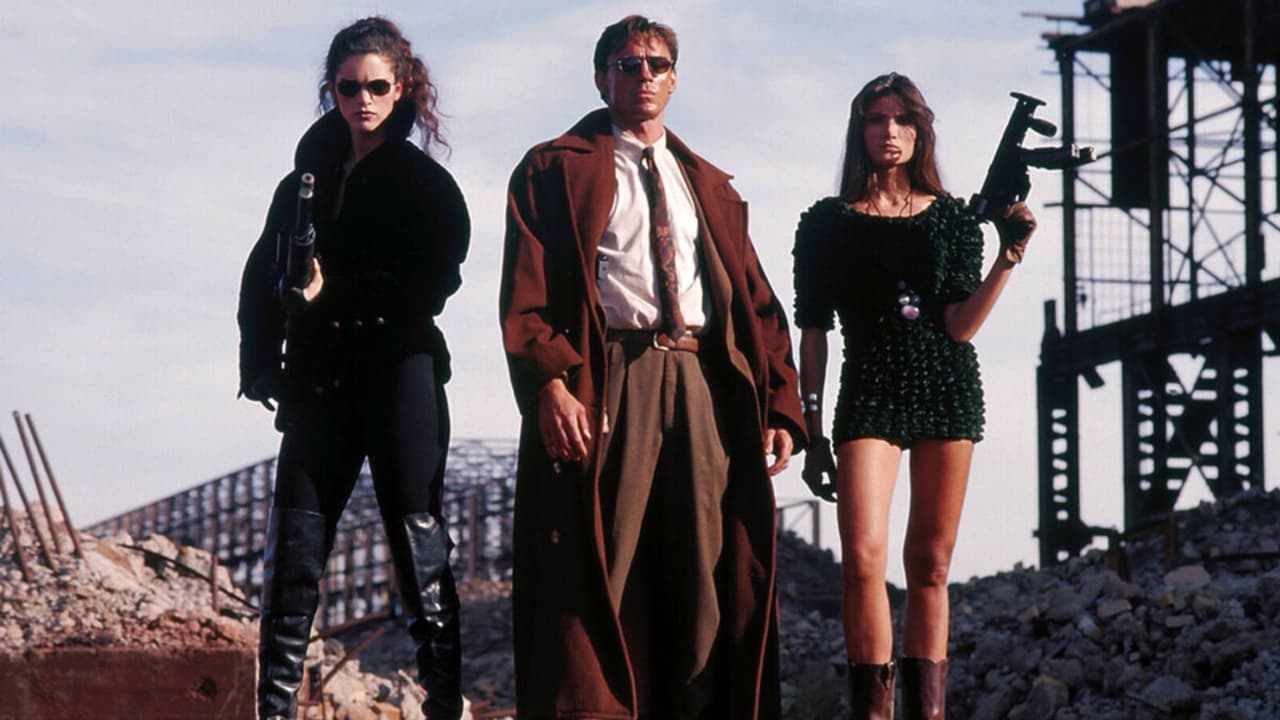
The flickering static clears, revealing rain-slicked concrete under perpetual neon twilight. A lone figure, trench coat collar turned up against more than just the weather, walks into frame. That opening image of Nemesis (1992) instantly plunges you into a specific kind of late-night, VCR-fueled dread – a world weary, wired, and relentlessly hostile. It’s the sort of grime-coated future that felt unsettlingly plausible back then, seen through the grainy lens of a well-worn tape.
Future Tense, Present Grit
We're dropped into Los Angeles, 2027. Information is the ultimate currency, and cybernetic enhancement is rapidly blurring the line between man and machine, cop and criminal. Caught in this techno-maelstrom is Alex Rain, played with stoic physicality by former French Commando and kickboxing world champion Olivier Gruner. Rain is an LAPD cop, battered and augmented after too many run-ins with cyborg terrorists, desperately trying to leave the life behind. But, as these stories always go, the past isn’t done with him. Pulled back for one last job by his imposing former boss Farnsworth (Tim Thomerson, forever etched in our minds from the Trancers series), Rain finds himself hunting a rogue cyborg operative who might hold the key to humanity's future... or its extinction.
Director Albert Pyun, a true maestro of ambitious, stylish sci-fi and action on often restrictive budgets (think Cyborg (1989) or Captain America (1990)), throws everything at the screen here. Nemesis feels like a collision of influences – a dash of Blade Runner's weary detective noir, a generous helping of The Terminator's relentless pursuit, and a whole lot of explosive, bullet-riddled chaos uniquely Pyun's own. Reportedly conceived initially as more of a hard-boiled detective story, the final product leans heavily into its action spectacle, a choice perhaps cemented when Jean-Claude Van Damme passed on the lead, paving the way for Gruner.

Steel, Sweat, and Squibs
What immediately grabs you about Nemesis, especially watching it now, is its commitment to practical grit. The cyberpunk aesthetic isn't achieved through slick CGI (which was still nascent and expensive), but through clever location scouting – much of it filmed in the industrial landscapes and urban sprawl of Mexico City – and tangible effects. The cyborg modifications look genuinely painful, all exposed wiring, hydraulics, and riveted metal plates grafted onto flesh. It’s crude by today’s standards, perhaps, but possesses a visceral weight that digital creations often lack. Remember that sequence where Rain blasts his way through multiple floors? The sheer destructive impact felt incredibly real, a testament to old-school stunt coordination and pyrotechnics.
Gruner, in one of his defining roles, embodies this physicality. His background wasn't just marketing fluff; he brought a believable toughness and acrobatic prowess to the countless shootouts and chases. There’s a legend that Pyun pushed his actors hard, demanding intense physical commitment, and Gruner certainly delivered, performing many of his own demanding stunts. This wasn't just acting; it was endurance. He might not have the quippy charisma of some action heroes of the era, but his weary determination anchors the film's relentless pace. Supporting players like the aforementioned Thomerson and the always menacing Cary-Hiroyuki Tagawa (just a few years before his iconic Shang Tsung in Mortal Kombat) add familiar genre flavour, chewing the scenery with appropriate gusto.


Narrative Labyrinth
Let's be honest, the plot, penned by Rebecca Charles, can feel like navigating a maze blindfolded after downing three espressos. The narrative twists, turns, backtracks, and throws double-crosses at you with dizzying frequency. Who's human? Who's machine? Who's secretly working for whom? Keeping track requires focus, and sometimes it feels like even the film isn't entirely sure. Yet, strangely, this complexity almost works in its favour. It mirrors the paranoia inherent in the cyberpunk genre – the destabilizing fear that reality itself is unreliable, that identities are fluid and programmable. Did that final reveal genuinely surprise you back in the day, or did you see it coming through the bullet-riddled haze?
The sheer density of action sometimes overshadows the deeper themes Pyun seems to be reaching for about identity and obsolescence. Working with a reported budget of around $2 million – pocket change even then for such an ambitious sci-fi actioner – meant compromises were inevitable. Yet, Nemesis overcomes many limitations through sheer kinetic energy and visual invention. It’s a film that moves, constantly propelling the audience forward through explosions, gunfire, and elaborate set pieces.
Legacy of Augmentation
Nemesis wasn't a mainstream blockbuster, but it carved out a significant niche on video store shelves and in the hearts of genre fans. It felt like a glimpse into a grittier, more dangerous future than many bigger films dared to show. Its success, particularly on home video, spawned several sequels (of varying quality, stretching well beyond the VHS era), cementing Alex Rain as a minor cult action icon. While perhaps overshadowed by its bigger-budget brethren, this 90s sci-fi gem still delivers a potent shot of cyberpunk adrenaline. The relentless action, Gruner's physical performance, and Pyun's distinct visual style make it a standout piece of its time.

VHS Heaven Rating: 7/10
The score reflects the film's undeniable energy, impressive practical effects and stunt work for its budget, and Gruner's committed lead performance. It captures a specific early 90s cyberpunk vibe perfectly. Points are deducted for the often convoluted plot and occasional moments where the budget constraints show through. However, the sheer audacity and stylish execution elevate it above standard direct-to-video fare.
Nemesis remains a fascinating artefact – a testament to Albert Pyun’s ability to conjure visceral, visually striking worlds on limited resources, and a reminder of a time when cyberpunk felt less like a retro aesthetic and more like a chillingly possible tomorrow glimpsed on a flickering CRT screen. It’s a ride that’s still exhilaratingly bumpy.