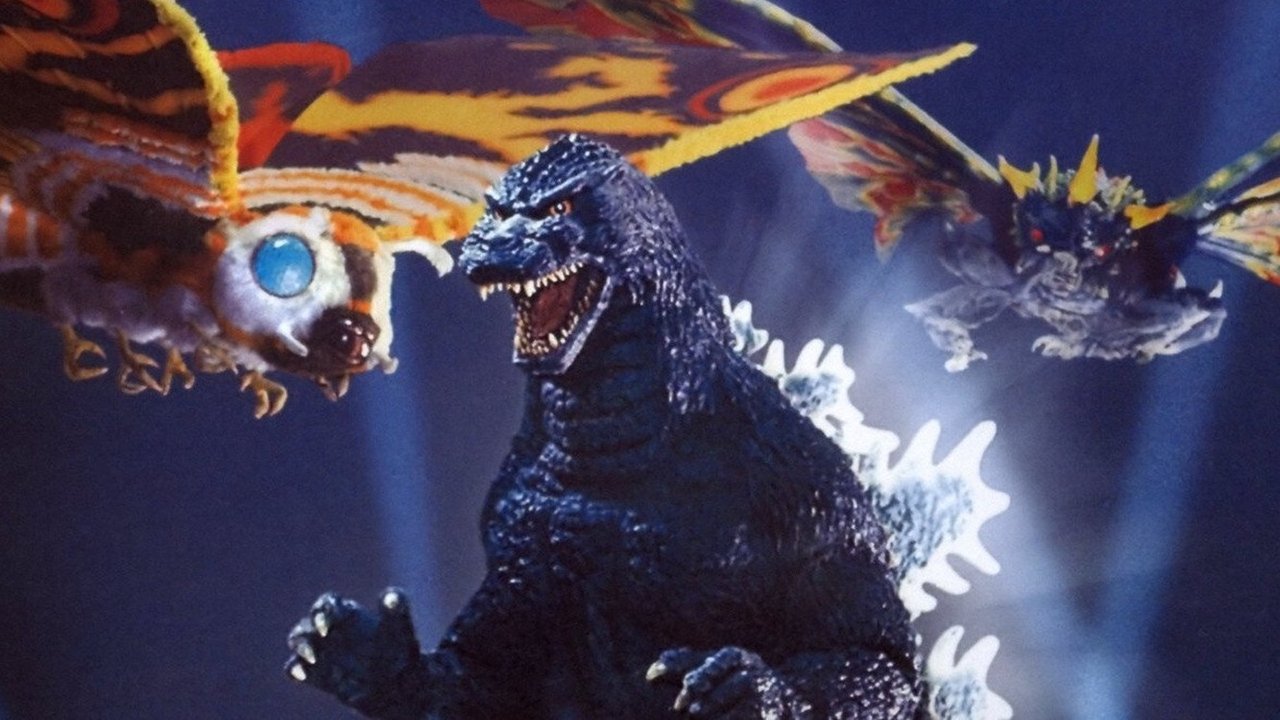
Okay, fellow tape-heads, dim the lights, maybe grab some microwave popcorn, and let’s rewind to a time when giant monsters ruled the box office with glorious, city-stomping aplomb. I distinctly remember the buzz around this one hitting the rental shelves – the vibrant cover art promising an epic clash. We’re talking about 1992’s Godzilla vs. Mothra (ゴジラvsモスラ, Gojira tai Mosura), a film that didn't just revisit a classic rivalry but became a titan of the Japanese box office and a jewel in Godzilla's Heisei era crown.
### An Egg, An Adventure, and Ancient Prophecies
Forget subtle beginnings. Director Takao Okawara, helming his first Godzilla film (he’d later give us Godzilla vs. Destoroyah), throws us right into the deep end. A meteor strike awakens not only our favorite radioactive behemoth but also disturbs the slumber of Battra, a sort of dark, destructive counterpart to Mothra. Meanwhile, a typhoon washes a colossal, beautifully patterned egg onto the shores of Infant Island. Enter Takuya Fujita (Tetsuya Bessho), a charmingly roguish treasure hunter clearly cut from the Indiana Jones cloth, his archaeologist ex-wife Masako Tezuka (Satomi Kobayashi), and Kenji Andoh (Takehiro Murata), a smarmy corporate type representing the Marutomo Corporation, which naturally wants to exploit the egg. This trio’s journey to the island and their encounter with the tiny, telepathic priestesses known as the Cosmos sets the stage for a truly spectacular monster mash.
Written by Kazuki Ōmori, who had directed the previous two entries (Godzilla vs. Biollante and Godzilla vs. King Ghidorah), the script leans heavily into fantasy and adventure, feeling almost like a Showa-era throwback wrapped in slicker, early-90s production values. The environmental message, a recurring theme in the Heisei series, is front and center here, positioning Mothra as the benevolent guardian of Earth, Battra as its wrathful protector gone rogue, and Godzilla… well, Godzilla is the force of nature caught in the middle, ready to trash anything that gets in his way.
### Kaiju Spectacle Done Right
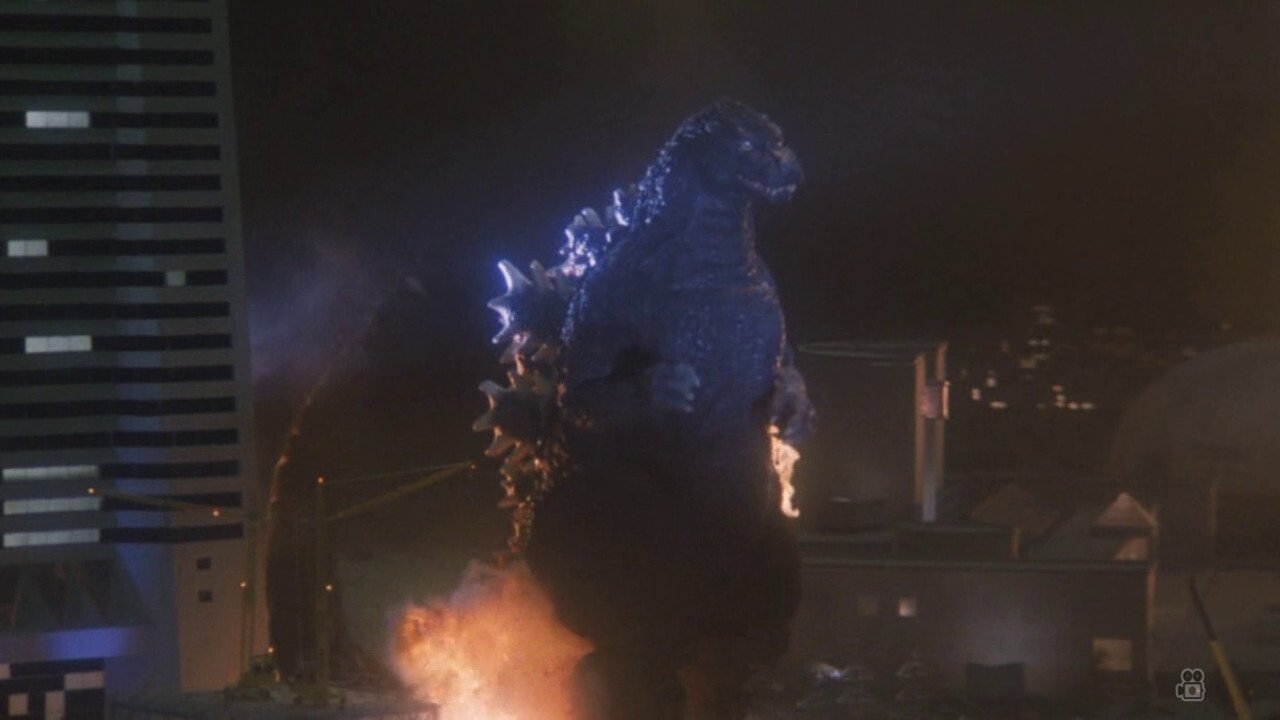
Let's be honest, we came for the monsters, and Godzilla vs. Mothra delivers in spades. The suitmation work, while perhaps showing its seams more clearly on today's HD screens than blurry CRT memories, possesses a tangible weight and personality that CGI often lacks. Godzilla himself, the 'BatoGoji' suit design, looks suitably menacing. But the real stars are the divine moths. Mothra’s larval stage munching its way through Tokyo is classic kaiju fun, and her transformation into the majestic imago form, complete with those enormous, colourful wings, is pure cinematic magic.
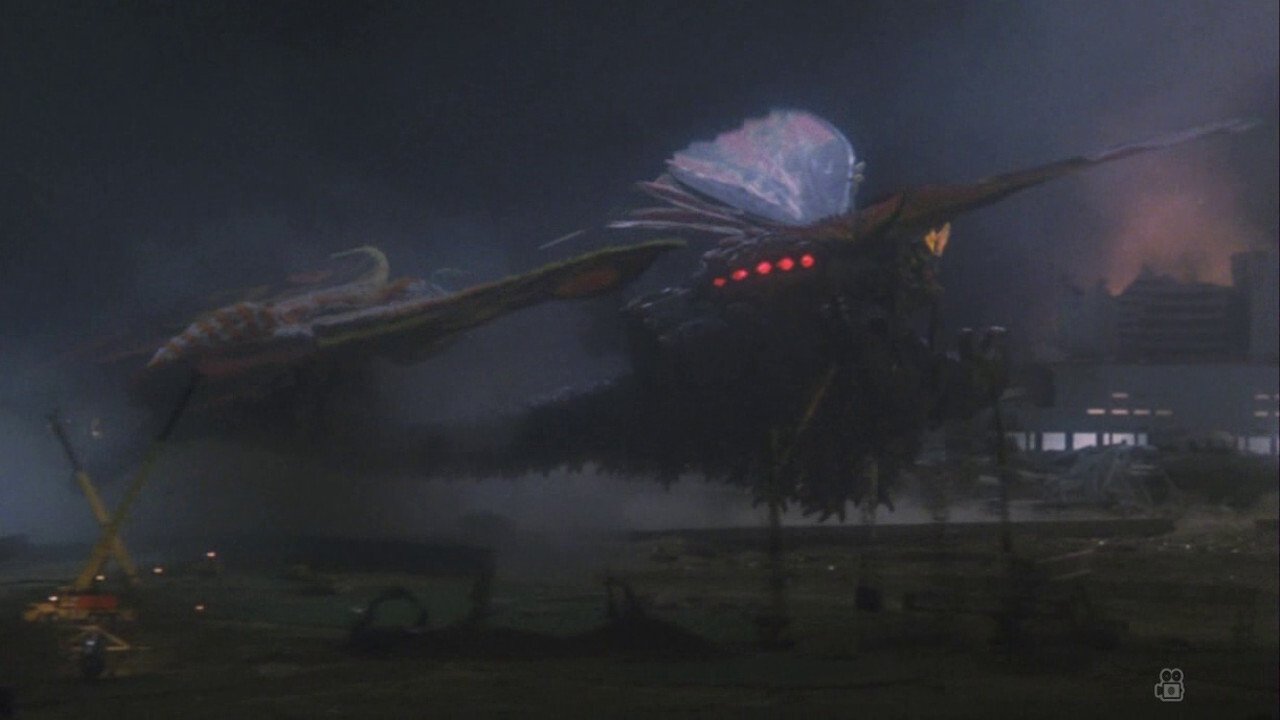
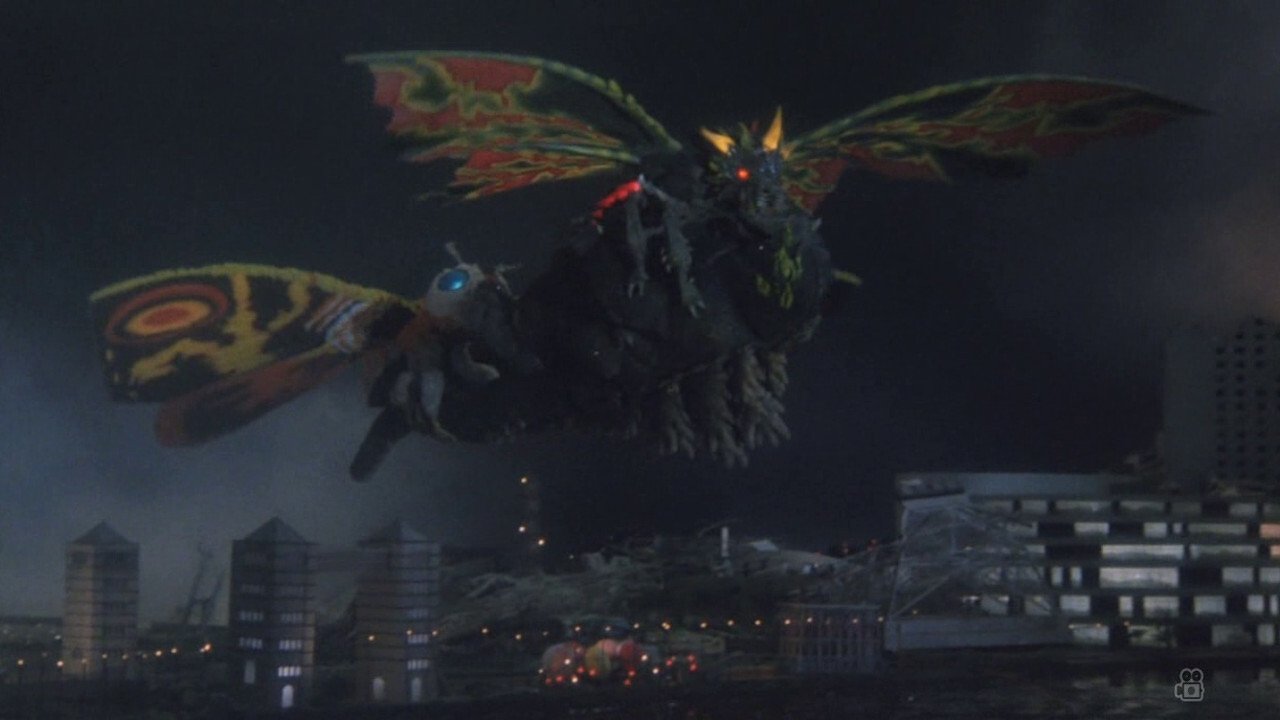
Then there’s Battra. Initially conceived as ‘Gigamoth’, an evil twin for Mothra, Battra evolved into this spiky, beam-spamming larval nightmare and later, a formidable winged adversary. The three-way battle over the skies and streets of Yokohama is the film's absolute centerpiece. Watching Mothra and Battra temporarily team up against Godzilla feels like witnessing a heavyweight tag-team championship for the fate of the planet. The miniature sets are intricately detailed, and the pyrotechnics explode with satisfying gusto. You can almost feel the heat radiating from the screen as Godzilla unleashes his atomic breath. This was peak Heisei-era practical effects wizardry.

Retro Fun Facts: This film wasn't just a hit; it was a phenomenon in Japan. Grossing ¥2.22 billion (around $18 million USD back then, but think closer to $35-40 million today adjusted for inflation and exchange rates!), it became the highest-grossing domestic film of 1992 and, at the time, the most financially successful Godzilla movie ever produced by Toho, revitalizing the franchise's box office clout significantly. The decision to bring back Mothra, a fan favorite, clearly paid off. Also, listen closely to the score by the legendary Akira Ifukube – he masterfully weaves in classic Mothra themes alongside Godzilla's iconic roar and march, creating a soundscape that’s both nostalgic and thrillingly new.
### More Than Just Monsters?
While the human drama isn't exactly Shakespeare, the characters serve their purpose well enough. Tetsuya Bessho brings a likable energy to Takuya, even if his primary motivation seems to be getting rich quick (until his conscience kicks in, naturally). Satomi Kobayashi provides a more grounded counterpoint, and their bickering adds a touch of lightheartedness. The Cosmos, played by Keiko Imamura and Sayaka Osawa, are suitably ethereal, delivering exposition about ancient prophecies and the balance of nature with serene conviction. Their iconic Mothra song is, of course, present and just as catchy as ever.
The film doesn't shy away from its environmental message, warning against corporate greed and humanity's disruption of the natural order. It’s presented simply, perhaps unsubtly by today's standards, but it adds a layer of thematic weight that elevates it slightly above pure monster-on-monster action. It taps into that early 90s burgeoning environmental consciousness quite effectively.
### The Final Verdict
Godzilla vs. Mothra is pure, unadulterated kaiju comfort food. It balances spectacular monster action with a sense of wonder and a touch of earnest messaging. The practical effects are a joy to behold, representing a high point for the Heisei era’s suitmation and miniature work. While the human plot is functional rather than groundbreaking, the charismatic leads and the sheer spectacle of seeing Godzilla, Mothra, and Battra duke it out make this an incredibly entertaining watch. It captured imaginations back then, becoming a monster hit for Toho, and remains a brightly coloured, explosive highlight in the King of the Monsters' long reign. It might not be the deepest entry, but it perfectly understood the assignment: deliver awesome kaiju action.
Rating: 8/10
This score reflects the film's massive entertainment value, stunning practical effects for its time, the successful revival of Mothra, and its sheer energy. It loses a couple of points for the sometimes-simplistic human plot and character motivations, but the kaiju action more than compensates.
It’s a film that reminds you why these giant monster clashes became such beloved staples – pure, unadulterated spectacle with a surprising amount of heart, perfect for a nostalgic trip back to when titans walked the Earth (and smashed up meticulously crafted miniature cities). An absolute must-watch for any Heisei-era Godzilla fan.