Okay, rewind your mind, past the streaming queues and digital libraries, back to the comforting heft of a well-loved VHS cassette. Remember the thrill of bringing home a movie wrapped in colourful cardboard, promising adventure beyond your wildest dreams? For many of us who haunted the aisles of video stores in the late 80s, one particular tape held the promise of cosmic battles and muscle-bound heroes: Gary Goddard's ambitious, slightly chaotic, and undeniably memorable Masters of the Universe (1987). This wasn't just another rental; it was a portal to Eternia, albeit one strangely rerouted through suburban California.
Cannon Films, the studio notorious for its action-packed B-movies (think Chuck Norris and Charles Bronson vehicles), swung for the fences with this one. They poured a hefty $22 million – serious money back then – into adapting Mattel’s globally dominant toy line, clearly dreaming of launching their own Star Wars. What emerged was... well, not quite Star Wars, but something uniquely fascinating in its own right. It’s a film caught between epic space opera aspirations and the budget constraints that famously plagued Cannon, resulting in a charmingly uneven adventure that has earned a special place in the hearts of many 80s kids.
### By the Power of Grayskull... and California?
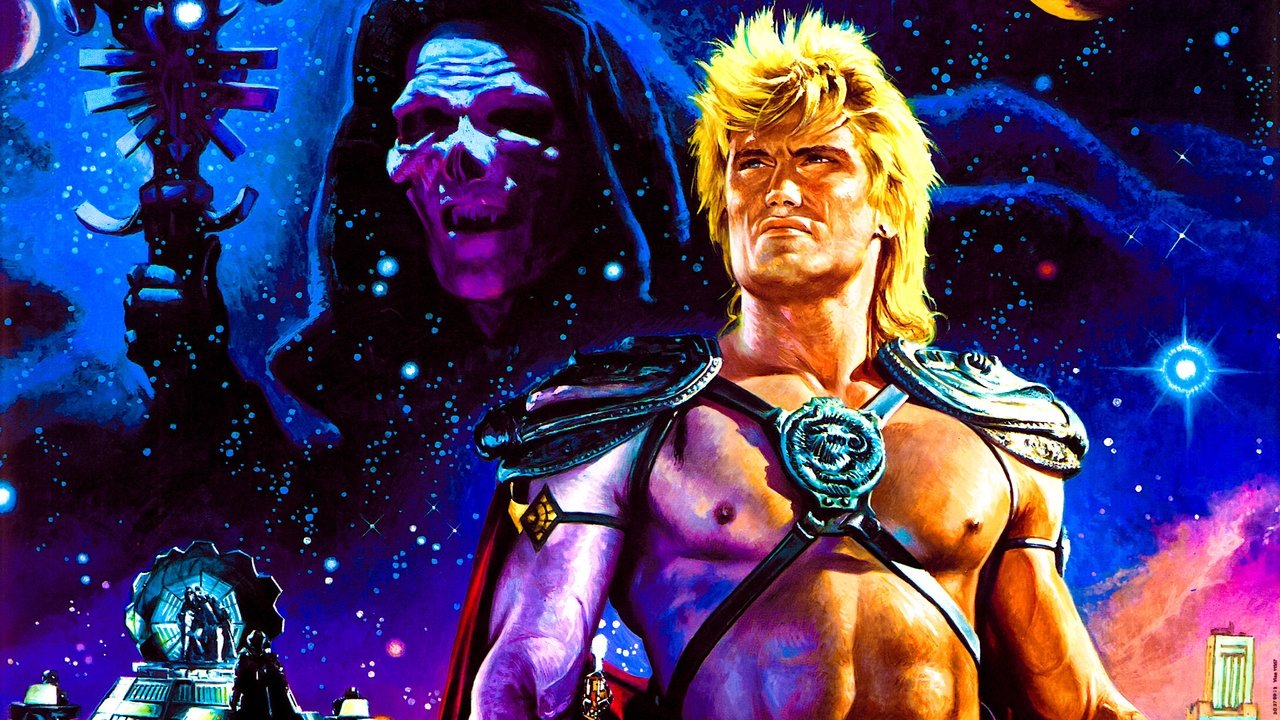
The story kicks off on the distant planet Eternia, a world vividly realized with impressive (if sometimes slightly rubbery) production design, heavily influenced by the legendary French artist Moebius, who contributed concept art. We meet He-Man, embodied with imposing physicality by Dolph Lundgren in one of his earliest starring roles after his breakout as Ivan Drago in Rocky IV (1985). Lundgren certainly looked the part, even if his grasp of English at the time led to a somewhat stoic delivery (rumour has it much of his dialogue required significant ADR work). He’s pitted against the forces of the tyrannical Skeletor, who has finally seized Castle Grayskull.

And what a Skeletor! Frank Langella, a respected stage and screen actor (later nominated for an Oscar for Frost/Nixon), famously took the role because his young son was a huge fan of the toys. Thank goodness he did. Langella doesn't just play Skeletor; he devours the role, delivering every line with operatic grandeur behind striking, skull-like makeup. His booming pronouncements ("I MUST POSSESS ALL, OR I POSSESS NOTHING!") elevate the entire film, transforming a potentially goofy villain into a genuinely menacing and captivating presence. Alongside him, Meg Foster is perfectly cast as the cold, calculating Evil-Lyn, her famously pale eyes adding an extra layer of chilling intensity.
Due to those pesky budget limitations – original screenwriter David Odell (who also penned the script for the considerably more fantastical The Dark Crystal) had envisioned much more time on Eternia – He-Man, Man-At-Arms (Jon Cypher), and Teela (Chelsea Field), along with the quirky inventor Gwildor (Billy Barty, replacing the planned Orko), accidentally transport themselves to Earth using the Cosmic Key. Much of the film then unfolds in a bewildered California town, centering around two teenage protagonists: Julie Winston, played by a pre-Friends Courteney Cox, and her musician boyfriend Kevin Corrigan (Robert Duncan McNeill, later Tom Paris in Star Trek: Voyager). This Earth-bound setting was a classic cost-saving measure, but it also provides some amusing fish-out-of-water moments and grounds the cosmic conflict in relatable suburbia – for better or worse.
### Cosmic Keys and Cannon Dreams
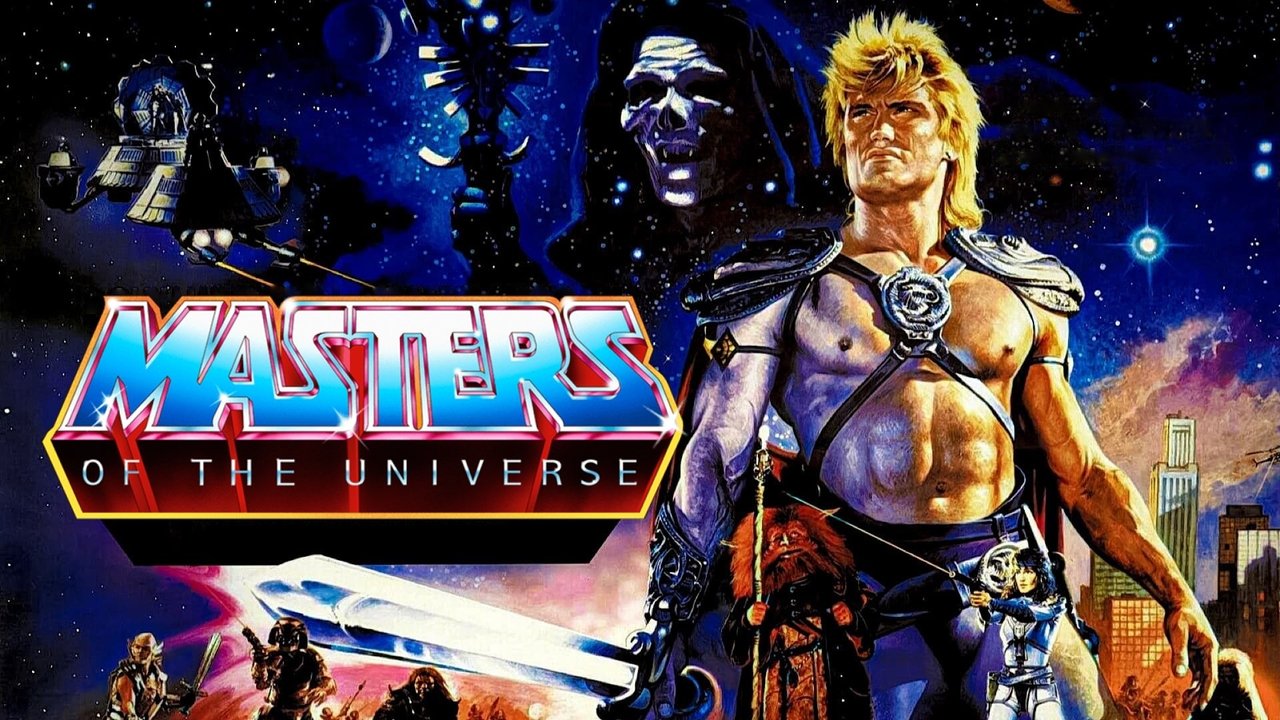

Watching Masters of the Universe today is an exercise in appreciating its ambition and forgiving its flaws. The practical effects, while occasionally showing their seams, have a tangible quality often missing in modern CGI epics. The creature designs for characters like Beastman and Saurod feel ripped straight from the toy line, imbued with a certain handcrafted charm. Bill Conti’s soaring, heroic musical score is genuinely fantastic – a rousing theme that deserved a bigger franchise. It perfectly captures the epic feel the film strives for, even when the script falters.
Retro Fun Fact: That Cosmic Key, the film's central MacGuffin? Its distinctive synthesizer-like design wasn't just a random choice. It was reportedly based on contemporary Casio synthesizers and Japanese toys, grounding its fantastical function in a recognizably 80s aesthetic. Another tidbit: the film ends with a post-credit stinger hinting at Skeletor's return, a clear setup for a sequel that sadly never materialized due to the film's disappointing box office performance (grossing only around $17.3 million domestically against its $22 million budget) and Cannon Films' mounting financial troubles.
The clash between the Eternian warriors and Skeletor's pursuing forces (including the scene-stealing Karg, played by Robert Towers) in everyday locations like a music store and a high school gym creates a unique blend of sci-fi fantasy and 80s teen movie energy. Does it always work? Not quite. The plot can feel disjointed, and the Earthbound characters sometimes feel shoehorned in. Yet, there's an undeniable earnestness to the proceedings. Director Gary Goddard, making his feature debut, clearly aimed for something grand, delivering some visually striking sequences, particularly Skeletor's dramatic arrival in the commandeered throne room and the final confrontation.
### Legacy of a Flawed Gem
Despite being critically panned upon release (it sits at a lowly 19% on Rotten Tomatoes today) and failing to ignite the blockbuster franchise Cannon hoped for, Masters of the Universe endured. It became a staple of video rental stores and cable TV, finding its audience among kids captivated by the colourful characters, Langella’s performance, and the sheer spectacle of it all. For many, it wasn't a disappointment; it was the He-Man movie, a tangible piece of that beloved universe brought to life. It perfectly captures that specific brand of 80s fantasy filmmaking – slightly goofy, utterly sincere, and packed with practical effects magic.
It represents a fascinating moment in pop culture history: a studio betting big on a toy property, the collision of high fantasy with suburban reality, and the creation of a cult classic cherished more for its heart and nostalgic charm than its narrative perfection. Does it fully capture the magic of the cartoon or the breadth of the toy line? Perhaps not. But does it offer a unique, entertaining, and fondly remembered slice of 80s cinematic adventure? By the power of Grayskull, yes!
VHS Heaven Rating: 6/10
The rating reflects a film brimming with nostalgic charm, boasting an iconic villain performance from Frank Langella, a killer score, and ambitious (if dated) practical effects. However, it's held back by a budget-constrained script that sidelines Eternia for Earth, some uneven performances, and a generally choppy narrative flow. It’s flawed, yes, but undeniably fun for those who grew up with it.
So, dust off that imaginary VCR in your mind. Masters of the Universe might not be high art, but it’s a gloriously earnest piece of 80s pop-culture ephemera – a cosmic adventure fueled by big hair, bigger shoulder pads, and the unforgettable power of Frank Langella demanding you KNEEL!