There's a chill that settles deep in the bones long after the credits roll on Eyes Wide Shut, a lingering unease that speaks volumes about the secrets we keep, even from ourselves. Released in the summer of 1999, mere months after the sudden passing of its legendary director, Stanley Kubrick, the film arrived shrouded in mystery and immense expectation. Was it the erotic thriller the initial marketing hinted at? A profound statement on marriage? Or something else entirely, operating on a frequency only Kubrick could tune into? Watching it again now, decades removed from the initial buzz and controversy, its power feels less diminished and perhaps even more potent, a complex dream woven from anxieties as old as time.
A Christmas Tale Turned Nightmare
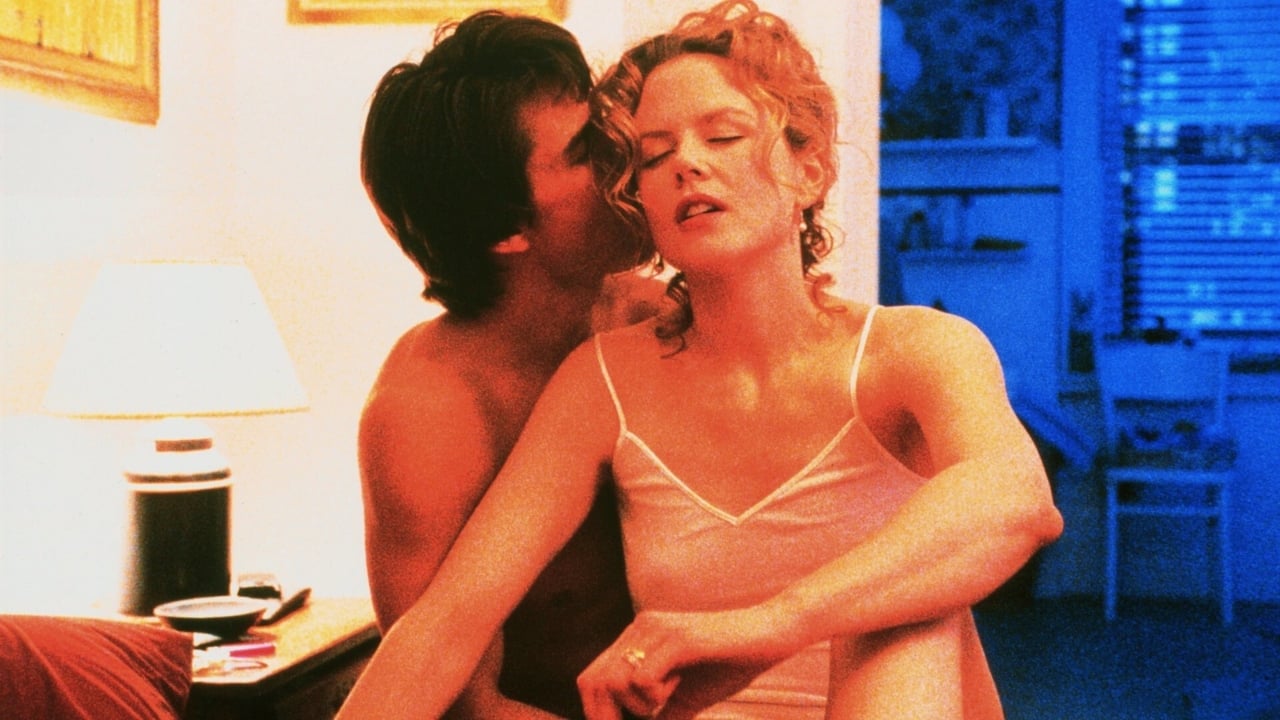
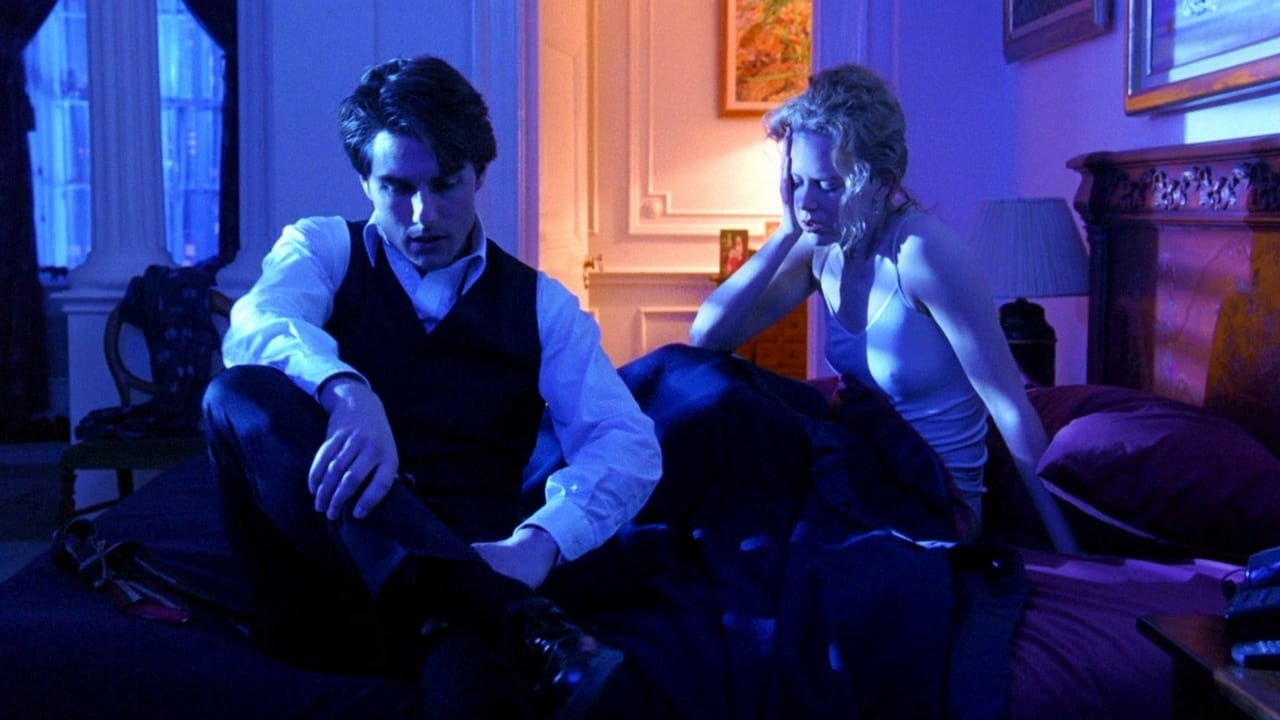
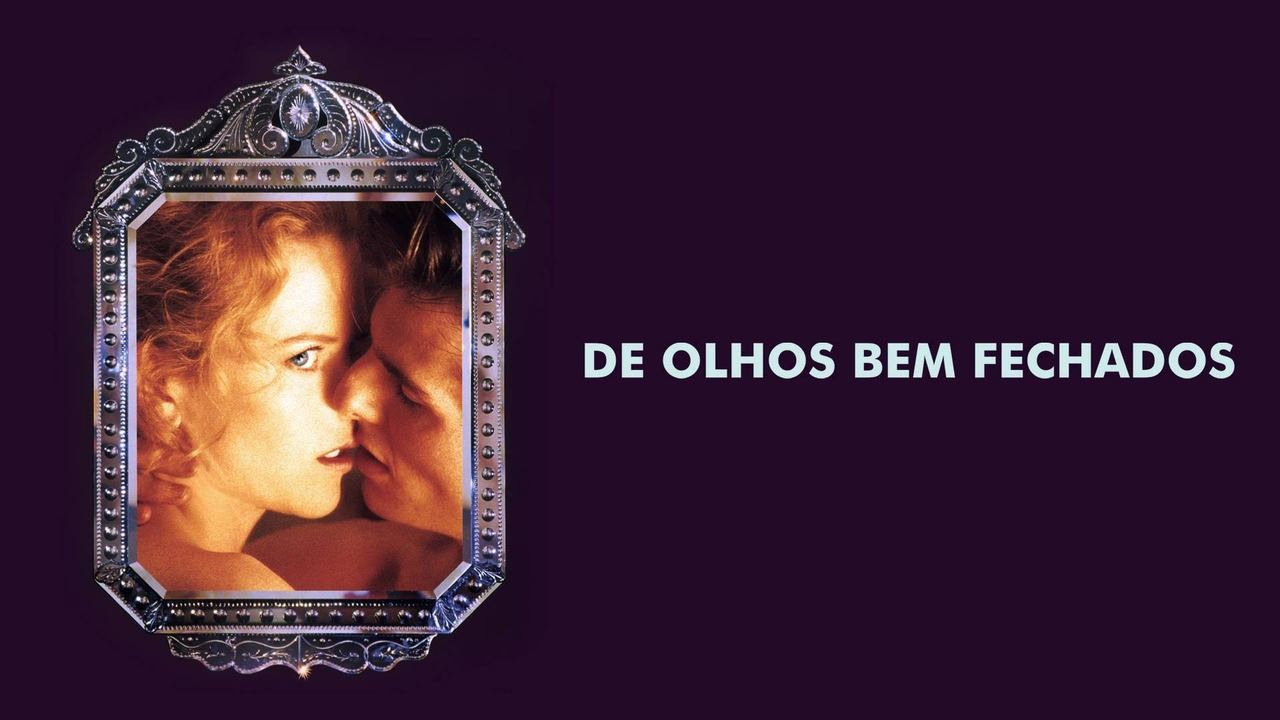
The film ostensibly follows Dr. Bill Harford, played with a fascinating blend of privilege and simmering panic by Tom Cruise, then arguably at the peak of his global stardom. Set against the backdrop of a hyper-real, almost hallucinatory New York City Christmas season – famously recreated with obsessive detail largely within the confines of Pinewood Studios near London – Bill's seemingly perfect life unravels. The catalyst? A marijuana-fueled confession from his wife, Alice (Nicole Kidman, in a performance crackling with raw honesty and vulnerability), revealing a fleeting, unconsummated desire for another man. This crack in the façade of their marriage sends Bill spiraling into a nocturnal odyssey through a hidden, often dangerous, sexual underworld.
Kubrick, who’d nursed the idea of adapting Arthur Schnitzler's 1926 novella Traumnovelle for decades, masterfully transplants its Viennese anxieties to late-90s Manhattan. The result is less a straightforward narrative and more a descent into a subconscious landscape. The city itself becomes a character – alluring, cold, and filled with shadows where desires and dangers intertwine. Remember those ubiquitous Christmas lights? They twinkle relentlessly, creating an unsettling contrast to the darkness Bill navigates, suggesting a manufactured cheer barely concealing something far more complex beneath the surface.
Beneath the Mask
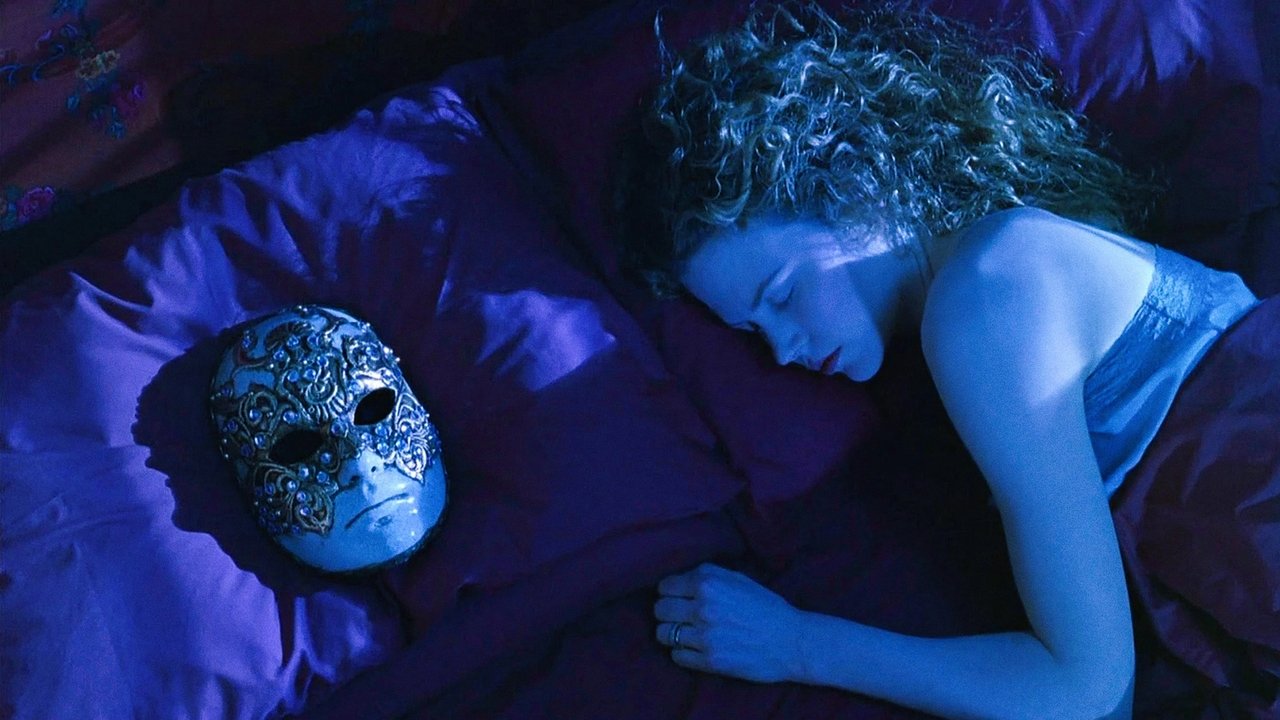
The performances are central to the film's hypnotic pull. Cruise delivers a remarkably controlled portrayal of a man whose certainty is eroding with every strange encounter. We see the confident doctor slowly replaced by a man adrift, haunted by images both real and imagined. His journey is passive, almost voyeuristic, reflecting perhaps our own fascination with the forbidden. And Kidman? Her monologue detailing Alice's fantasy is a showstopper – fearless, unsettling, and utterly believable. The fact that Cruise and Kidman were a real-life couple at the time adds an undeniable, almost uncomfortable layer of voyeurism for the audience, though it’s their skill as actors that truly sells the marital tension. Sydney Pollack, the acclaimed director (Tootsie (1982), Out of Africa (1985)) stepping in front of the camera, is also superb as Victor Ziegler, the smooth, powerful figure who seems to hold the keys to the secret world Bill glimpses. His final confrontation with Bill is a masterclass in veiled threats and chilling pragmatism.
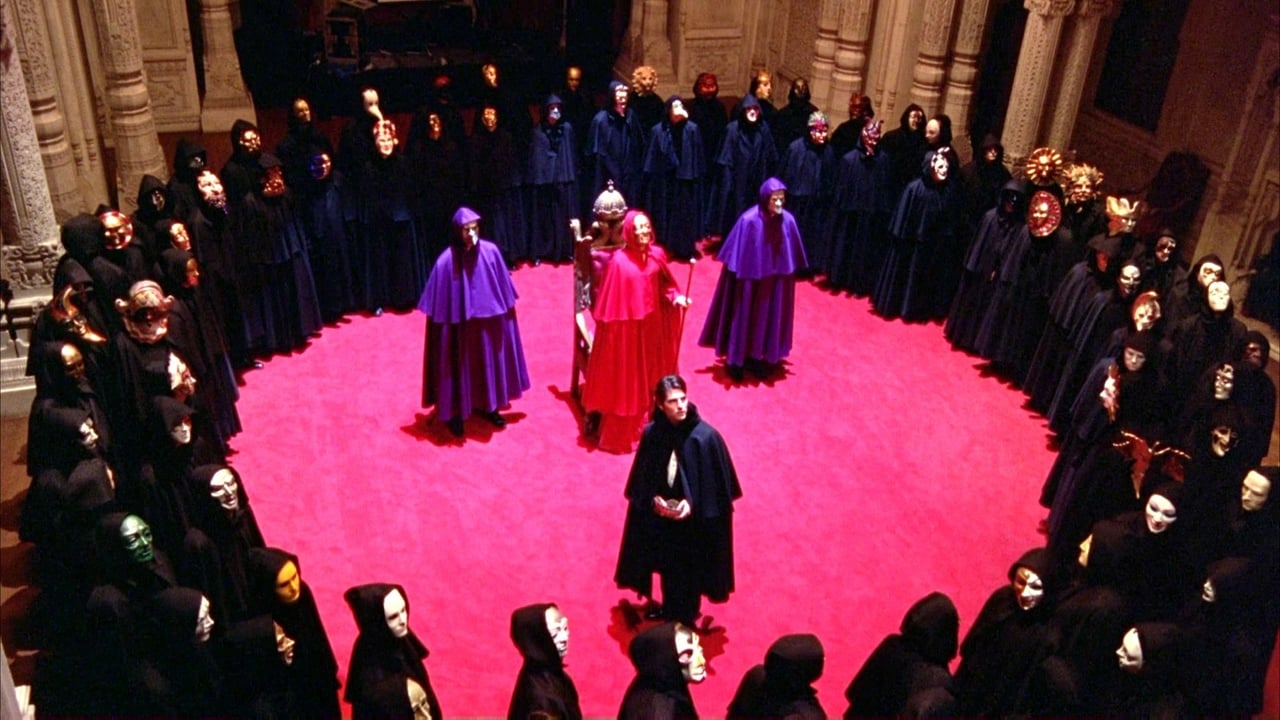
One simply cannot discuss Eyes Wide Shut without mentioning its infamous centerpiece: the masked orgy at Somerton, the secluded mansion. Kubrick films this sequence with a ritualistic detachment. The opulent setting, the haunting, dissonant score (featuring György Ligeti, a Kubrick favourite), and the anonymity afforded by the Venetian masks create an atmosphere thick with eroticism, power dynamics, and palpable dread. It’s less about titillation and more about the chilling reality of a hidden society operating by its own rules, far removed from conventional morality. It feels less like a party and more like a ceremony with deeply unsettling undertones.
The Kubrick Touch and Enduring Questions
Of course, this being a Stanley Kubrick film, the production itself became legendary. The shoot famously stretched for over 400 days, earning a spot in the Guinness World Records for the longest continuous film shoot. This relentless pursuit of perfection is visible in every frame – the meticulous compositions, the deliberate pacing, the long, fluid Steadicam shots that pull you into Bill's perspective. It’s a testament to Kubrick’s uncompromising vision, though one can only imagine the immense pressure on the cast and crew. Kubrick sadly passed away just six days after delivering his final cut to Warner Bros., leaving the film as his final, enigmatic statement.
Does Eyes Wide Shut offer easy answers? Absolutely not. Its ambiguity is part of its enduring fascination. Was Bill’s journey real, or a fever dream fueled by jealousy and paranoia? What really happened at Somerton? The film refuses to clarify, leaving the interpretation hovering tantalizingly out of reach. It forces us to confront uncomfortable questions about fidelity, the nature of desire, the secrets simmering beneath the surface of even the most seemingly stable relationships, and the often-unbridgeable gap between perception and reality. Doesn't this tension between the seen and unseen, the spoken and unspoken, still resonate deeply in our own lives?
Final Reflection
Watching Eyes Wide Shut feels like stepping into a meticulously crafted, unsettling dream. It's a film that rewards patience, inviting contemplation rather than providing simple resolution. The late-90s setting feels both specific and timeless, capturing anxieties about wealth, secrecy, and marital discontent that haven't faded. It might not be the easiest Kubrick film to embrace, lacking the immediate genre hooks of The Shining (1980) or 2001: A Space Odyssey (1968), but its psychological depth and haunting atmosphere linger long after the final, stark conversation between Bill and Alice.
Rating: 9/10
This score reflects the film's masterful direction, its atmospheric power, the strength of its central performances, and its profound thematic explorations. Kubrick's meticulous craft creates an immersive, unsettling experience that perfectly captures the anxieties of its source material. While its deliberate pace and ambiguity might challenge some viewers, these qualities are integral to its lasting impact. It’s a film that burrows under your skin, demanding reflection.
Eyes Wide Shut remains a complex, haunting final testament from a cinematic giant, leaving us with more questions than answers, and the unsettling feeling that perhaps we never truly know what goes on behind closed doors – or closed eyelids.