What happens when the road movie collides head-on with existential dread and a fever dream? You might get something like Bertrand Blier's Merci la vie (Thank You, Life), a film that landed in 1991 not with a comforting embrace, but with a provocative, disorienting jolt. This isn't your standard early 90s rental fare; finding this on the shelf back then, perhaps nestled between a Schwarzenegger flick and a romantic comedy, felt like discovering a transmission from another, far more chaotic dimension. It’s a film that doesn't just ask for your attention, it demands you grapple with its fragmented reality.
A Journey into Chaos
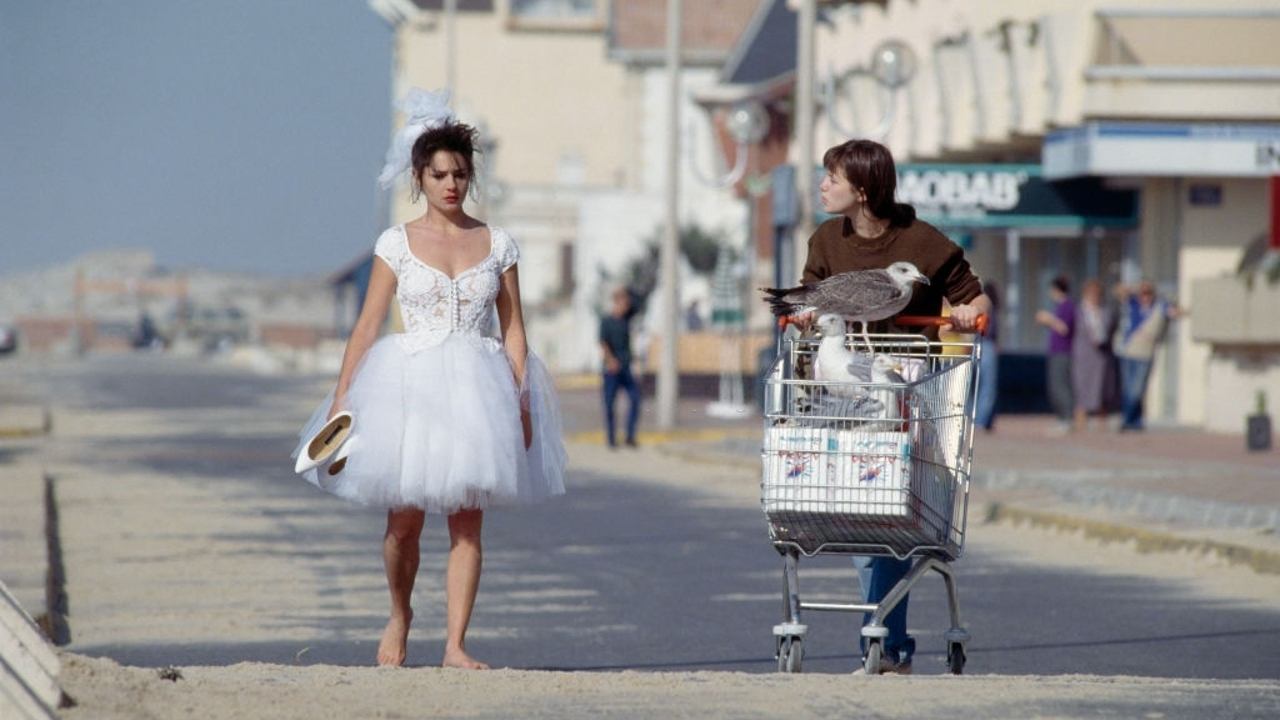
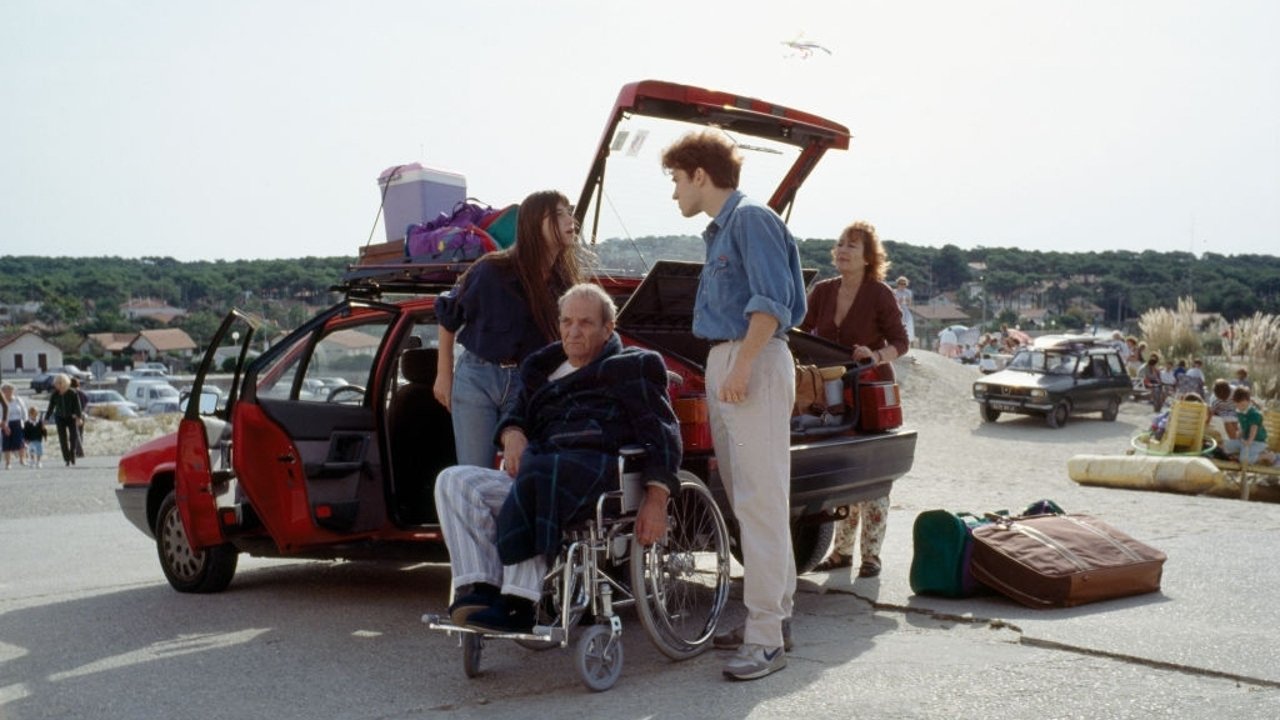
At its core, Merci la vie follows two young women, the naive Camille (Charlotte Gainsbourg) and the impulsive, more world-weary Joëlle (Anouk Grinberg), as they embark on a seemingly aimless journey through a France teetering on the edge of... something. It’s hard to say exactly what. Their travels are episodic, surreal, veering wildly between moments of bleak humor, sudden violence, and unexpected tenderness. They encounter a procession of strange characters, most notably a perpetually exasperated doctor played by Blier regular Gérard Depardieu, who seems both entangled in their fate and utterly baffled by it. The narrative shatters linearity, jumping between timelines, perspectives, and even cinematic styles – shifting jarringly from stark black and white to bursts of colour, reflecting the characters' fractured states and the unstable world they inhabit.
Blier's Uncompromising Vision
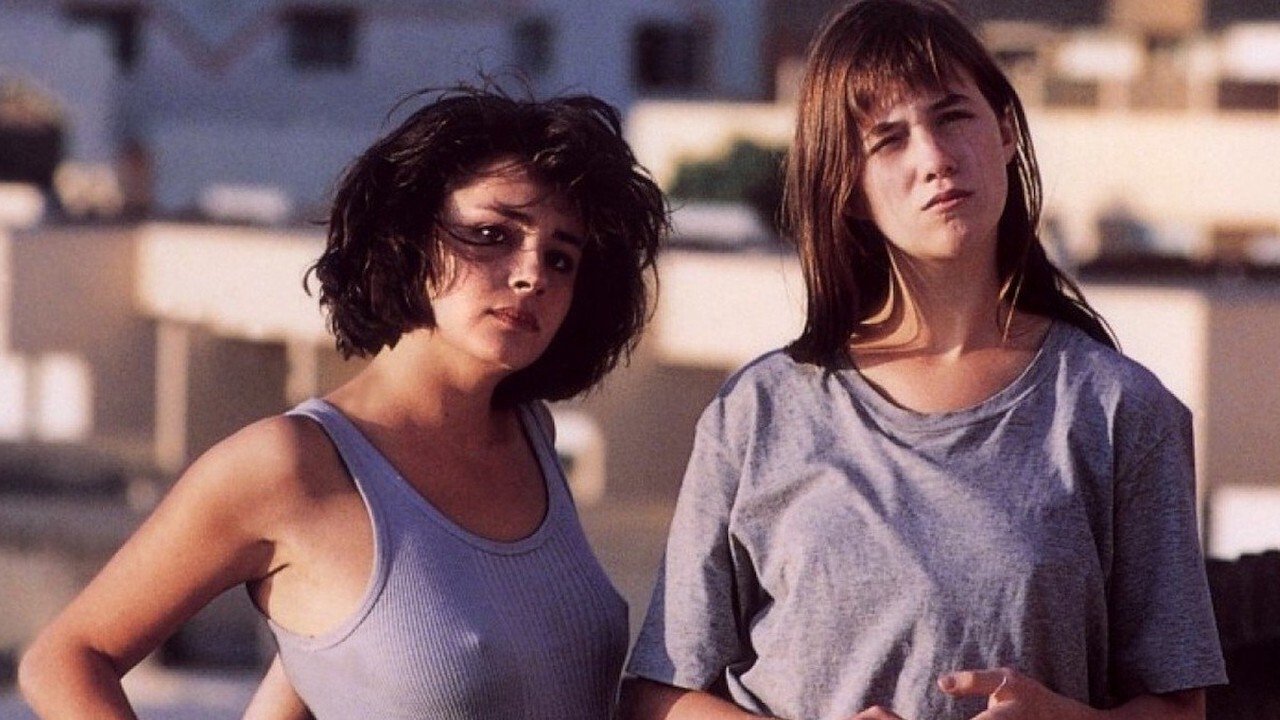
Anyone familiar with Bertrand Blier's work, particularly his earlier provocations like Les Valseuses (Going Places, 1974) or the icy absurdity of Buffet Froid (1979), will recognise his fingerprints all over Merci la vie. He delights in dismantling conventions, directly addressing the audience, and plunging into uncomfortable territory without apology. Here, the spectre of AIDS hangs heavy in the air, an unnamed dread that shapes the encounters and anxieties of Camille and Joëlle. Blier uses their journey not just to explore female camaraderie and rebellion, but as a lens through which to view societal decay, fear, and the desperate search for meaning (or escape) in a world seemingly devoid of it. It’s confrontational cinema, designed to provoke rather than soothe. Reportedly, Blier conceived the film during a period of personal turmoil, pouring raw emotion and frustration onto the page, which certainly translates to the screen's volatile energy.
Raw, Fearless Performances
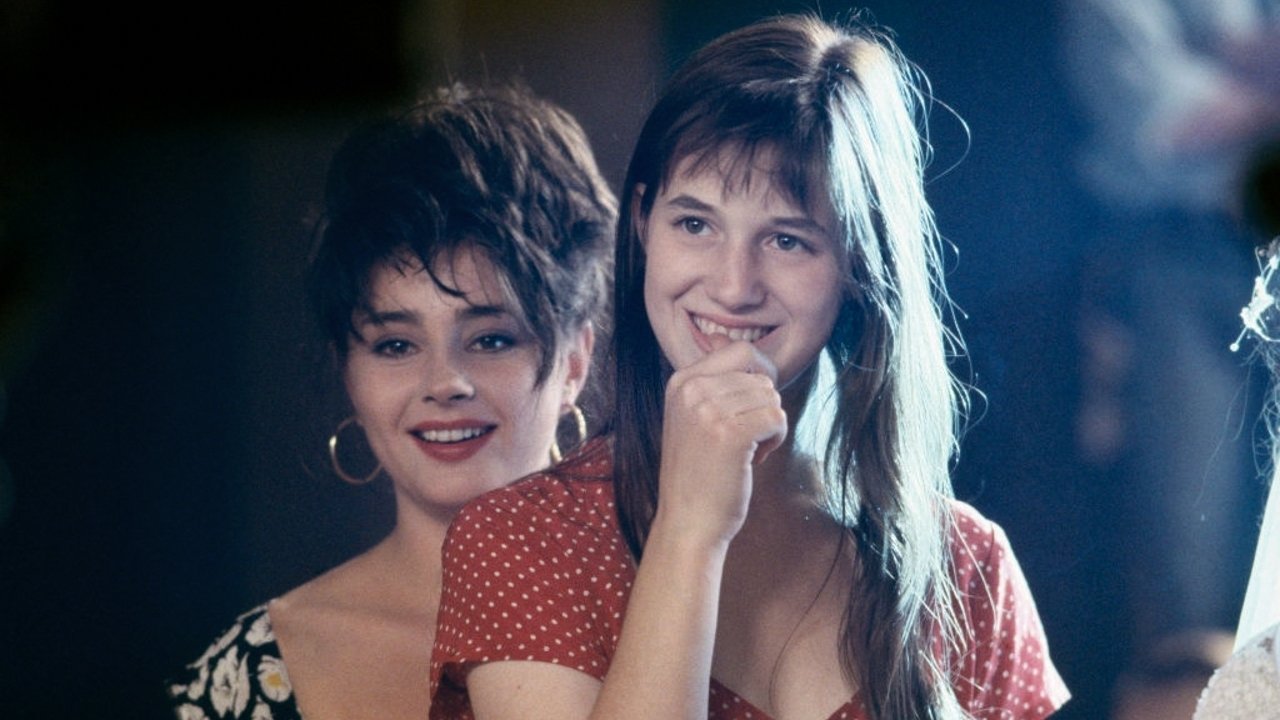
What anchors this whirlwind is the utterly fearless work of the two leads. Charlotte Gainsbourg, already establishing herself as a compelling screen presence beyond her famous parentage, brings a fragile intensity to Camille. She’s the observer, often swept along by Joëlle’s recklessness, her wide eyes registering the escalating madness with a mix of terror and fascination. Anouk Grinberg, perhaps less known internationally at the time but a force of nature here, is simply astonishing as Joëlle. She’s a whirlwind of contradictions – fiercely independent yet desperately seeking connection, abrasive yet vulnerable. Her energy is manic, almost dangerous, and the chemistry between her and Gainsbourg is electric, a chaotic dance of dependence and defiance. Their performances aren't just good; they feel ripped from the soul, utterly committed to the film's abrasive honesty. Gérard Depardieu, reuniting with Blier yet again, provides a weary counterpoint. His doctor character, often breaking the fourth wall to lament the narrative's absurdity or his own powerlessness, becomes a sort of reluctant guide through the film's thematic minefield, embodying a world-weariness that contrasts sharply with the girls' desperate vitality.
A Difficult Beauty
Make no mistake, Merci la vie is not an easy watch. Its deliberate fragmentation, bleak undercurrents, and Blier's confrontational style can be alienating. The tonal shifts are whiplash-inducing, and the film offers few easy answers or resolutions. Yet, there's a strange, disturbing beauty to it. The cinematography captures both the grime and the occasional lyricism of their journey. The very rawness that makes it challenging also makes it unforgettable. Blier’s script, while chaotic, crackles with moments of dark wit and surprisingly poignant observation. It’s a film that burrows under your skin. It was France's official submission for the Best Foreign Language Film at the 64th Academy Awards, though it ultimately wasn't nominated – perhaps unsurprising given its challenging nature for mainstream tastes, but indicative of its artistic ambition. The film cost around ₣70 million (roughly $13 million USD in 1991, which translates to about $29 million today), a significant budget for a French film, suggesting the faith placed in Blier's singular vision.
Lasting Echoes
Watching Merci la vie today, perhaps decades after a first encounter on a worn-out VHS tape, feels like revisiting a particularly potent, unsettling dream. It hasn't softened with age; if anything, its anxieties about disease, societal breakdown, and the search for authentic connection feel startlingly relevant. It’s a testament to Blier’s uncompromising artistry and the searing performances, particularly from Gainsbourg and Grinberg. This isn't comfort viewing, and it certainly wasn't your typical blockbuster rental, but for those willing to brave its challenging currents, it offers a cinematic experience unlike any other from that era – raw, bewildering, and strangely powerful.
Rating: 8/10 - This score reflects the film's artistic audacity, phenomenal lead performances, and Blier's unique, if challenging, directorial vision. It's not a film for everyone, its abrasive nature and fragmented narrative being significant hurdles, but its power and originality are undeniable. It achieves exactly what it sets out to do, even if that goal is to unsettle and provoke.
Merci la vie lingers long after the credits roll, less a story remembered and more a feeling absorbed – a chaotic, sometimes brutal, but undeniably vital scream into the void. What does freedom truly look like when pursued to its most terrifying extremes?