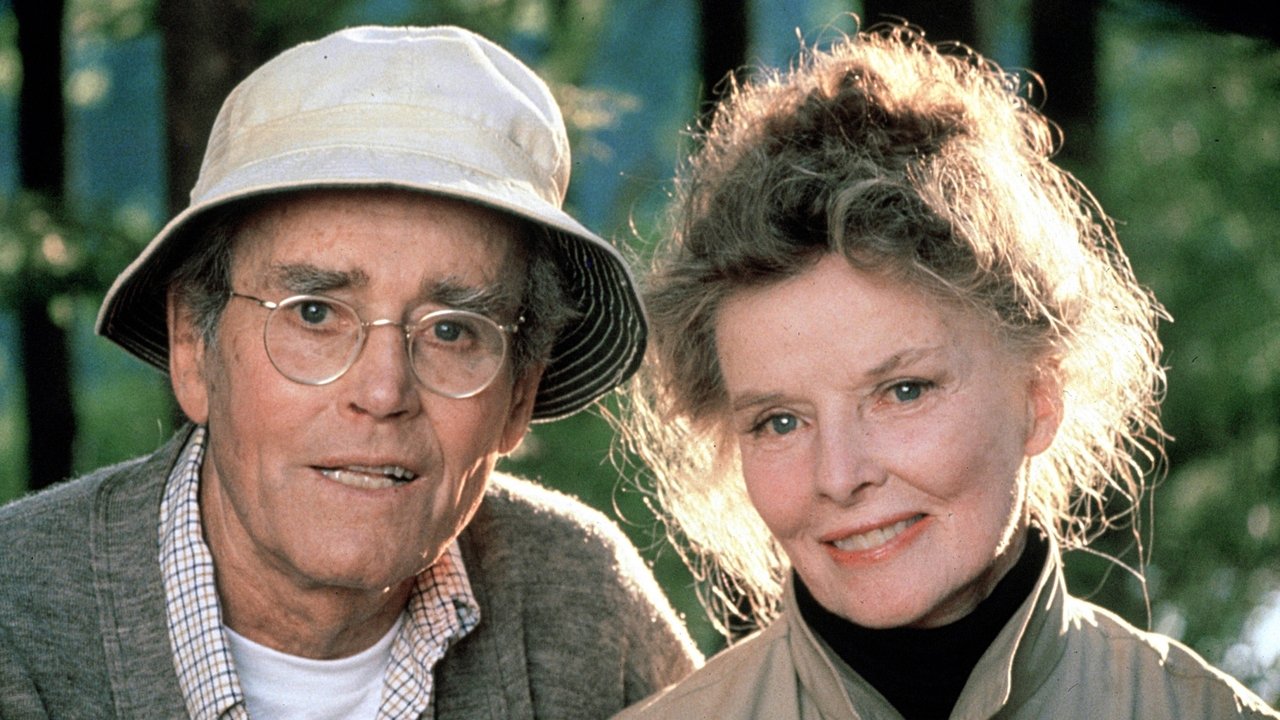
There's a certain quietude that settles over you when watching On Golden Pond. It’s like the stillness of the lake itself, reflecting the late summer sky while hiding the deep, sometimes turbulent currents beneath. Released in 1981, this wasn't a film driven by spectacle or high concept, the usual draws that had us browsing the packed shelves of the local video store. Instead, it offered something rarer, something that felt intensely personal yet universally resonant: a poignant look at the complex ecosystem of family, aging, and the slow, often difficult path towards understanding. Pulling that tape off the shelf, you knew you were settling in for something substantial, something that might just stay with you long after the VCR whirred to a stop.
Return to the Lake
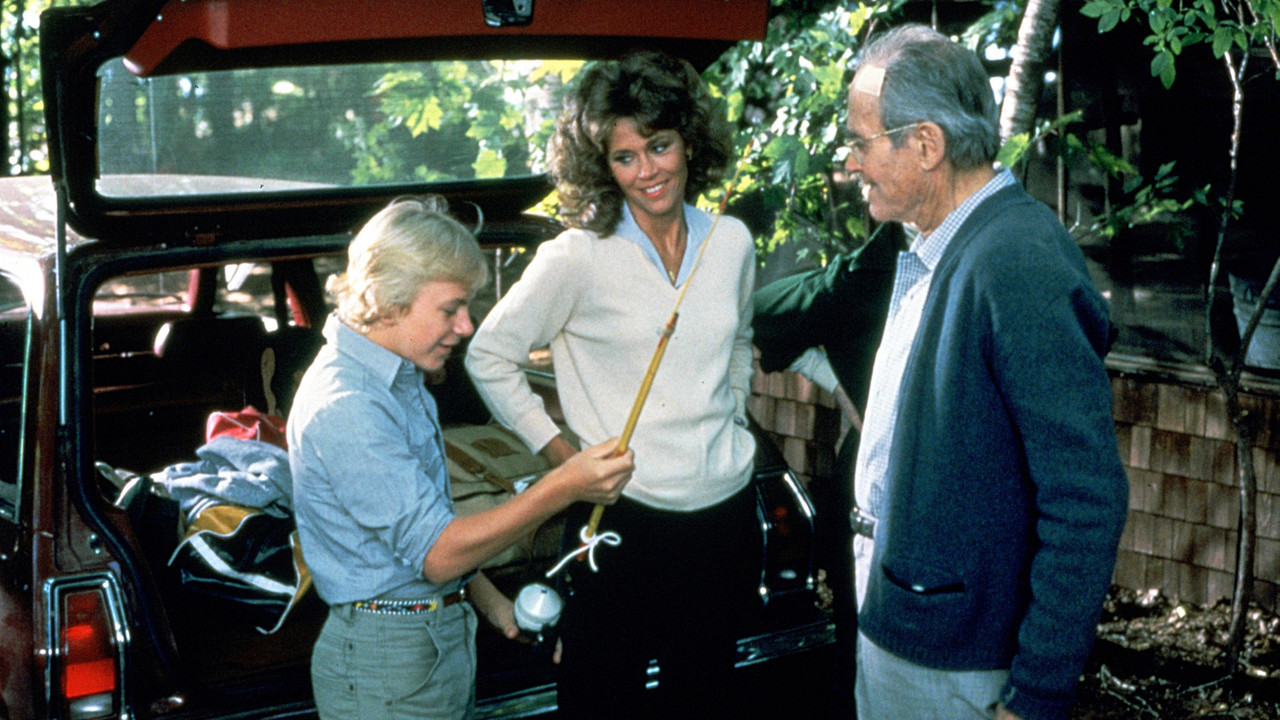
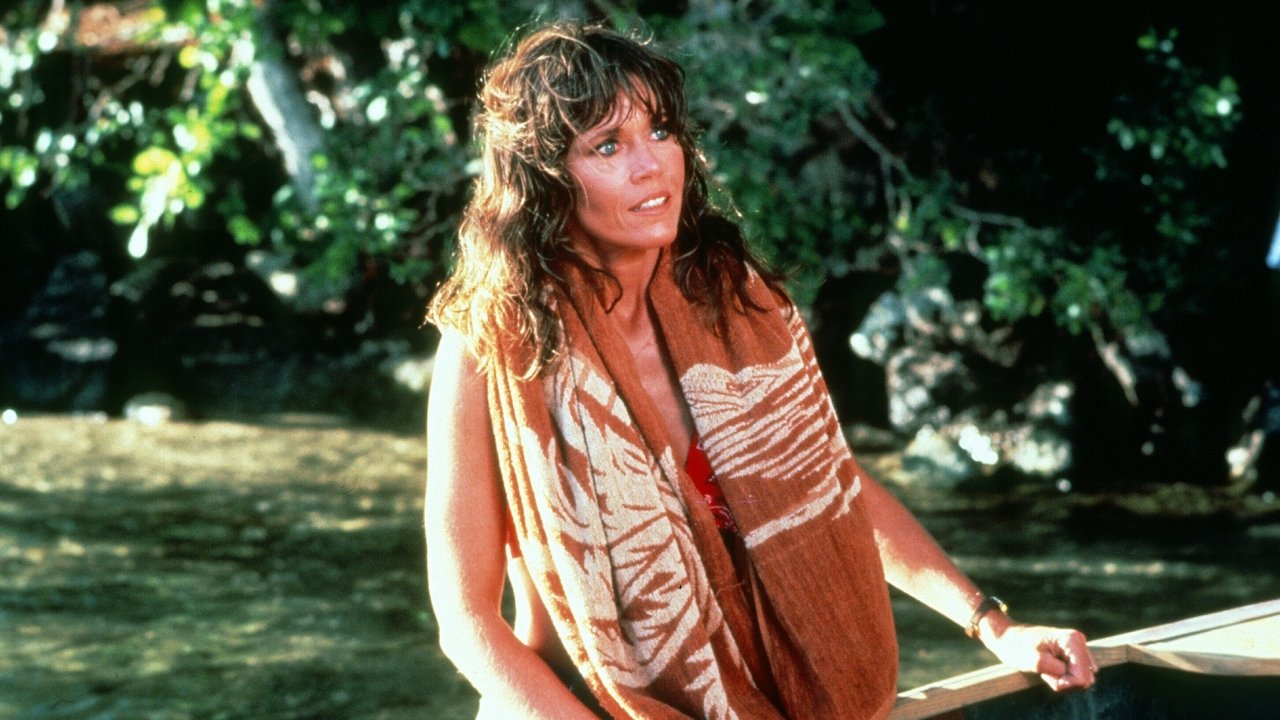
The premise, adapted by Ernest Thompson from his own successful play, is deceptively simple. Ethel and Norman Thayer (Katharine Hepburn and Henry Fonda, respectively) arrive at their beloved summer cottage on Golden Pond for perhaps one last season. Norman, cantankerous and acutely aware of his encroaching eighties and failing memory, spars verbally with the ever-optimistic, life-affirming Ethel. Their familiar routine is disrupted by the arrival of their estranged daughter, Chelsea (Jane Fonda), her fiancé Bill (Dabney Coleman), and his young son, Billy Ray (Doug McKeon). Chelsea hopes to finally bridge the gap with her difficult father, leaving Billy Ray in the care of the elderly couple while she and Bill head to Europe. What unfolds is a gentle, character-driven exploration of frayed bonds, generational differences, and the possibility of late-life reconciliation.
Titans on Screen, Truth on Film
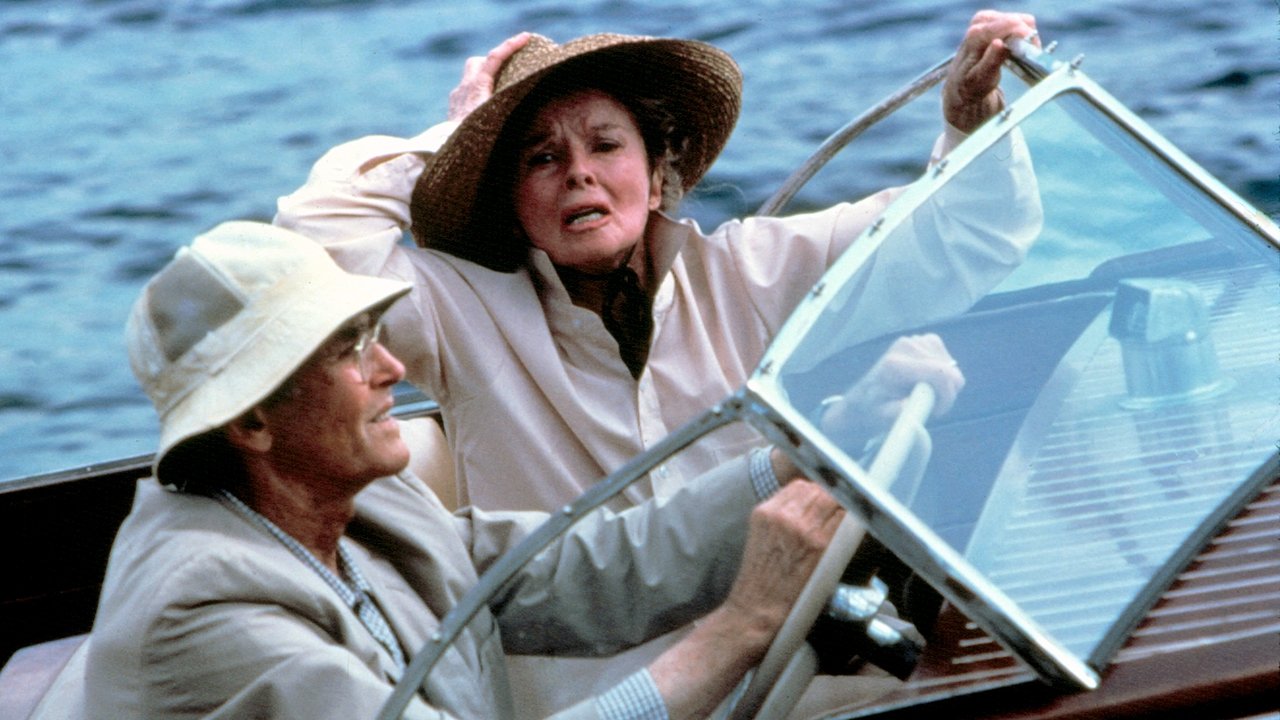
Let's be frank: the magnetic pull of On Golden Pond resides firmly with its legendary leads. Watching Katharine Hepburn and Henry Fonda together is witnessing cinematic alchemy. Hepburn, winning her record fourth Best Actress Oscar, embodies Ethel's warmth and resilience with effortless grace. She’s the anchor, the emotional translator for Norman’s gruffness, her love for him palpable in every glance, every gentle correction. There's a moment where she takes a daring dive into the cold lake – a stunt Hepburn, then in her 70s, insisted on performing herself – that perfectly encapsulates Ethel's enduring vitality.
And then there's Henry Fonda. In what would tragically be his final theatrical film role, he delivers a performance of staggering vulnerability and power as Norman Thayer. The character's fear of mortality, his sharp wit often used as a defense mechanism, his buried affection – Fonda lays it all bare. Knowing his own health was failing during production adds an almost unbearable layer of poignancy. He reportedly cried when he read the script, seeing so much of himself in Norman. It wasn't just acting; it felt like bearing witness. His Best Actor Oscar, accepted on his behalf by daughter Jane, felt like a lifetime achievement award and a perfect, heartbreaking capstone to an unparalleled career. It’s said Hepburn acquired the rights specifically with Fonda in mind, a gift that resulted in cinematic history.
The dynamic between Henry Fonda and Jane Fonda adds another layer of meta-textual weight. Their real-life strained relationship famously mirrored the fictional one between Norman and Chelsea. Jane Fonda purchased the film rights to the play as a means to facilitate this on-screen, and perhaps off-screen, reconciliation. Those scenes crackle with decades of unspoken history, lending a raw, uncomfortable authenticity that elevates the drama beyond mere performance. Chelsea's desperate need for her father's approval, Norman's inability to easily express affection – it feels achingly real because, in many ways, it was.
Echoes Across the Water
Director Mark Rydell (The Rose) wisely lets his actors command the screen, trusting the material and their immense talent. He uses the serene beauty of Squam Lake, New Hampshire (standing in for Golden Pond) not just as a backdrop, but almost as another character. The shimmering water, the mournful call of the loons (a recurring motif symbolizing Norman and Ethel), the changing light – all contribute to the film's contemplative atmosphere, beautifully captured by cinematographer Billy Williams (Gandhi). Dave Grusin’s gentle, evocative score further enhances the mood without ever becoming intrusive.
The film wasn't just a critical darling; it resonated deeply with audiences, becoming a significant box office success (grossing over $119 million domestically against a budget likely around $15 million – a massive hit for a character drama). Why did it connect so strongly? Perhaps because it dared to confront universal anxieties about getting older, about mending fences before it's too late, about the enduring, if sometimes difficult, power of family ties. It asks questions that linger: Can we truly change as we age? Is forgiveness always possible? What does it mean to leave a legacy, not of accomplishments, but of connection?
Retro Fun Facts Weave-In: Ernest Thompson wrote the play while working odd jobs in New Hampshire, channeling his own family dynamics. The hat Henry Fonda wore became so iconic that Katharine Hepburn apparently gifted it to him after filming wrapped – a symbol of their shared experience. The Thayer cottage wasn't a set; it was a real home on Squam Lake, chosen for its authentic feel, adding to the film's lived-in quality. Young Doug McKeon holds his own remarkably well amidst the screen legends, his bond with Norman providing much of the film's warmth and pathway to Norman’s eventual softening.
The Lasting Resonance
On Golden Pond isn't flashy. It doesn't rely on twists or turns. Its power lies in its quiet observation, its emotional honesty, and the unforgettable performances of two screen giants giving their all, one for the very last time. Watching it again now, perhaps on a format far removed from that original VHS tape, the film feels less like a relic of the early 80s and more like a timeless meditation on the cycles of life and love. It’s a film that earns its tears, not through manipulation, but through profound, heartfelt truth.

Rating: 9/10
Justification: The near-perfect performances from Hepburn and Fonda alone make this essential viewing. Coupled with a sensitive script, beautiful direction, and timeless themes handled with grace and authenticity, On Golden Pond achieves a rare emotional depth. While some might find the pacing deliberate, it perfectly suits the contemplative subject matter.
Final Thought: It leaves you thinking about the people tied to your own 'Golden Ponds,' and the quiet urgency of making sure the waters between you are clear before the seasons change for good.