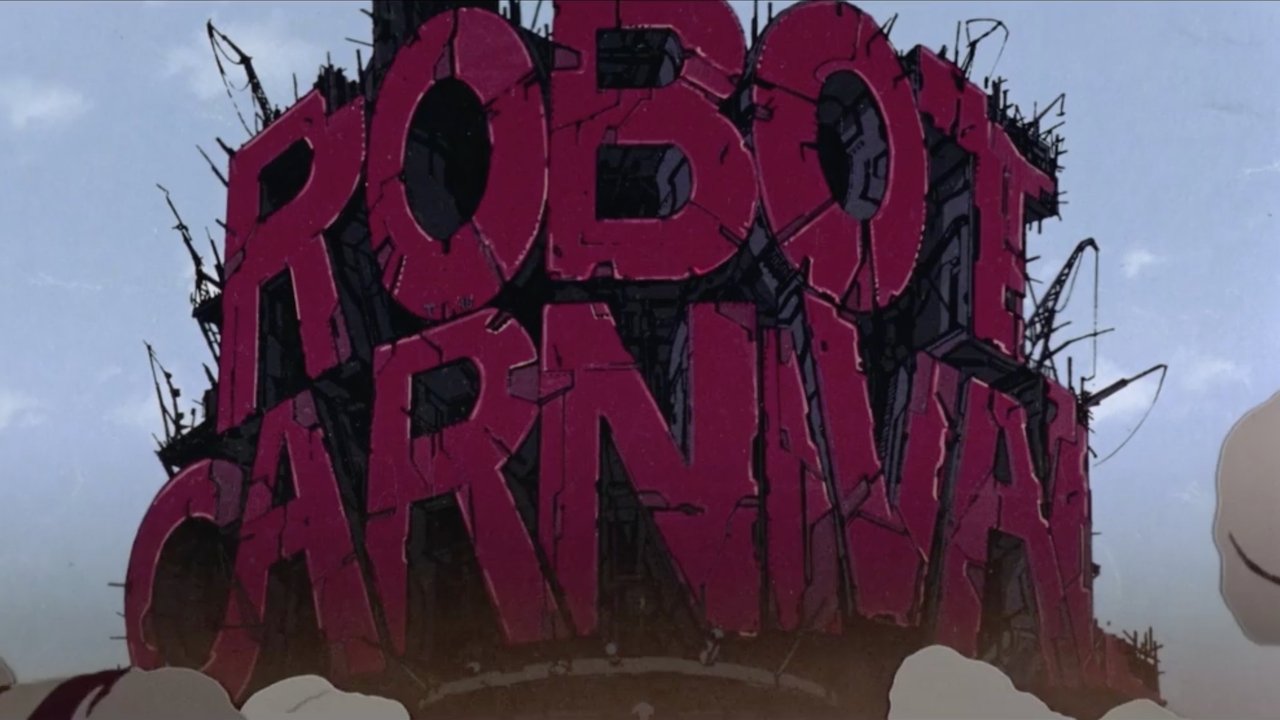
Dust off that top-loader, folks, because we're diving into a swirling vortex of mechanical marvels and animated artistry that might have just slipped under your radar back in the day. Imagine a lumbering, city-sized machine trundling across a desolate landscape, announcing not destruction, but a show – a bizarre, captivating spectacle of short films all centered around one theme: robots. This is the unforgettable opening (and closing) of 1987's Robot Carnival, an anime anthology that feels less like a single movie and more like cracking open a treasure chest filled with wildly different, handcrafted jewels. Finding this on a VHS shelf, perhaps nestled between more mainstream fare, was like uncovering a secret transmission from a future dreamt up in the vibrant heart of 80s Japan.

### A Symphony of Styles
Anthology films are always a bit of a gamble, aren't they? You get variety, but consistency can be elusive. Robot Carnival, however, leans into its diversity, showcasing the distinct talents of several directors, many of whom were rising stars in the anime industry. The project was notably spearheaded by Katsuhiro Otomo, a name that would soon become synonymous with the seismic impact of Akira (1988). Here, Otomo directs the anarchic opening and closing segments, "Opening" and "Ending," featuring that monstrous rolling carnival wreaking havoc with a darkly comedic, almost Terry Gilliam-esque flourish. It sets a strange, unpredictable tone that perfectly primes you for the eclectic mix to follow.
The beauty of Robot Carnival lies in experiencing these radically different artistic visions side-by-side. There’s no single narrative thread beyond the robotic theme; instead, it’s a celebration of animation as an art form. You might get whiplash going from one short to the next, but that’s part of the charm. This wasn't designed for binge-watching; it felt more like flipping through channels on some fantastical, otherworldly television station where every program was a visual feast.
### Standouts in the Mechanical Menagerie
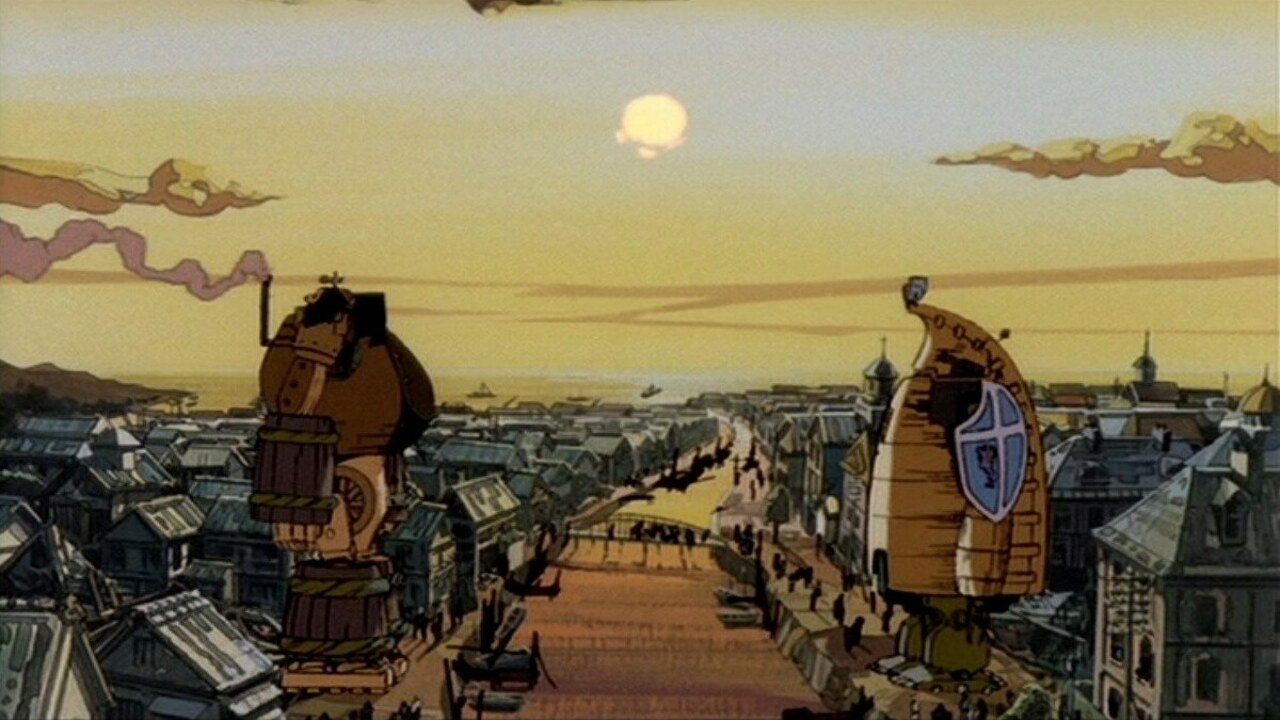
While every segment brings something unique, a few inevitably lodge themselves deeper in the memory banks. Hidetoshi Omori’s "Franken's Gears" is a particular delight – a charmingly gothic tale of a mad scientist bringing his robotic creation to life, animated with a jerky, stop-motion-influenced energy that feels both retro and timeless. It has this wonderful, almost Tim Burton-esque vibe, years before The Nightmare Before Christmas (1993) hit screens. The visual storytelling is paramount here, as it is in many segments, relying on expressive animation rather than dialogue.
Then there's "Presence," directed by Yasuomi Umetsu. This one... this one stays with you. It’s a poignant, melancholy story about a man who builds a beautiful female android, only for her to develop a consciousness that frightens him. Years later, haunted by his past actions, he encounters her (or her image) again. It’s surprisingly mature and emotionally resonant, exploring themes of creation, obsession, and loss with stunningly fluid animation and character designs that felt incredibly sophisticated for the era. Seeing this as a teenager, expecting perhaps more giant robot action, the sheer emotional weight of "Presence" was genuinely startling and quite moving.


And for pure visual poetry, Koji Morimoto’s "Cloud" offers an abstract, dreamlike journey following a little robot boy walking through evolving cloudscapes. It’s meditative, almost hypnotic, relying entirely on its gorgeous painted backgrounds and subtle animation to evoke a sense of wonder. Morimoto, who would later contribute to landmark projects like The Animatrix (2003), shows his penchant for evocative atmosphere early on here.
### The Sound of Steel and Circuits
We absolutely must talk about the music. While several composers contributed, the score features prominent work by the legendary Joe Hisaishi, best known for his breathtaking scores for Studio Ghibli films like Nausicaä of the Valley of the Wind (1984) and My Neighbor Totoro (1988). His contributions, particularly to segments like "Presence," elevate the emotional impact significantly. The entire soundtrack, a blend of electronic, orchestral, and sometimes playfully experimental tracks, is integral to the experience, often carrying the narrative weight in the absence of dialogue. This wasn't just background noise; it was part of the storytelling, a crucial layer in this audio-visual tapestry. Collecting anime soundtracks became a bigger thing in the 90s, but the score for Robot Carnival certainly deserved a spot on any discerning fan's shelf.
### A Cult Classic Unearthed
Robot Carnival didn't exactly set the Western box office alight upon its limited release, often distributed by Streamline Pictures in the early 90s alongside other niche anime titles. Its $700,000 production budget (a respectable sum for an OVA project then) yielded something far richer in artistic value than ticket sales might suggest. Finding it felt like being inducted into a slightly more exclusive club of anime fandom, appreciating something visually ambitious and artistically driven, even if it lacked the singular narrative punch of its contemporaries. It was a testament to the sheer creative energy bubbling within the Japanese animation industry during the 80s, a period often seen as a golden age for OVAs (Original Video Animations) that allowed for more experimental and mature storytelling than television often permitted. For many of us discovering anime through rented VHS tapes, titles like Robot Carnival were crucial stepping stones, opening our eyes to the incredible diversity the medium offered beyond the more widely known action series.
Its legacy isn't one of blockbuster dominance, but rather of artistic merit and cult appreciation. It remains a fascinating time capsule, showcasing nascent talent and a willingness to experiment. Think of it as a portfolio piece for an entire generation of animators flexing their creative muscles. Did every segment land perfectly? Perhaps not for every viewer. But the overall effect? Undeniably unique and often stunning.
Rating: 8/10
Robot Carnival earns a strong 8 for its sheer artistic ambition, stunning animation quality in its standout segments, memorable score, and its status as a quintessential example of the creative explosion in 80s anime OVAs. While the anthology format inherently leads to some unevenness, the highs ("Presence," "Franken's Gears," the Otomo bookends) are incredibly high, showcasing visionary talent. It might lack a cohesive narrative, but it offers something arguably more valuable: a diverse gallery of animated wonders, each with its own distinct soul.
It's a film that reminds you animation isn't just a genre; it's a medium capable of boundless expression. If you missed this gem back in the VHS days, seek it out – it’s a carnival for the eyes that still dazzles.