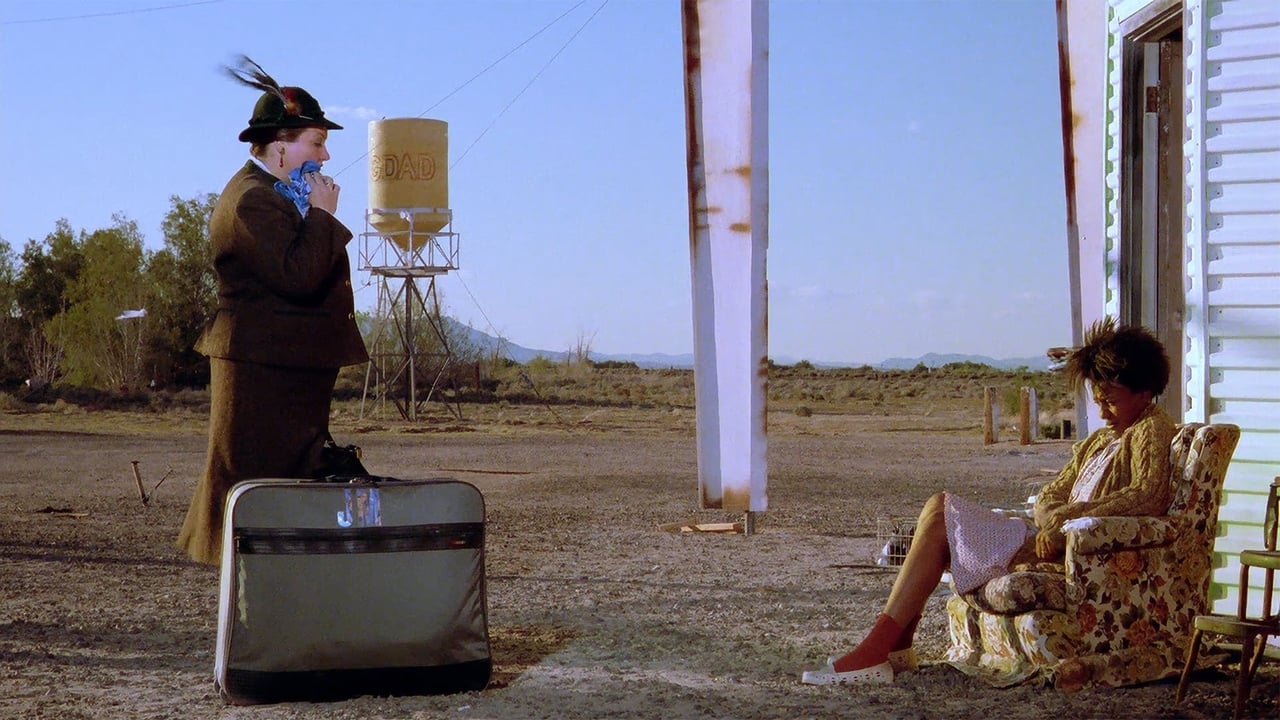
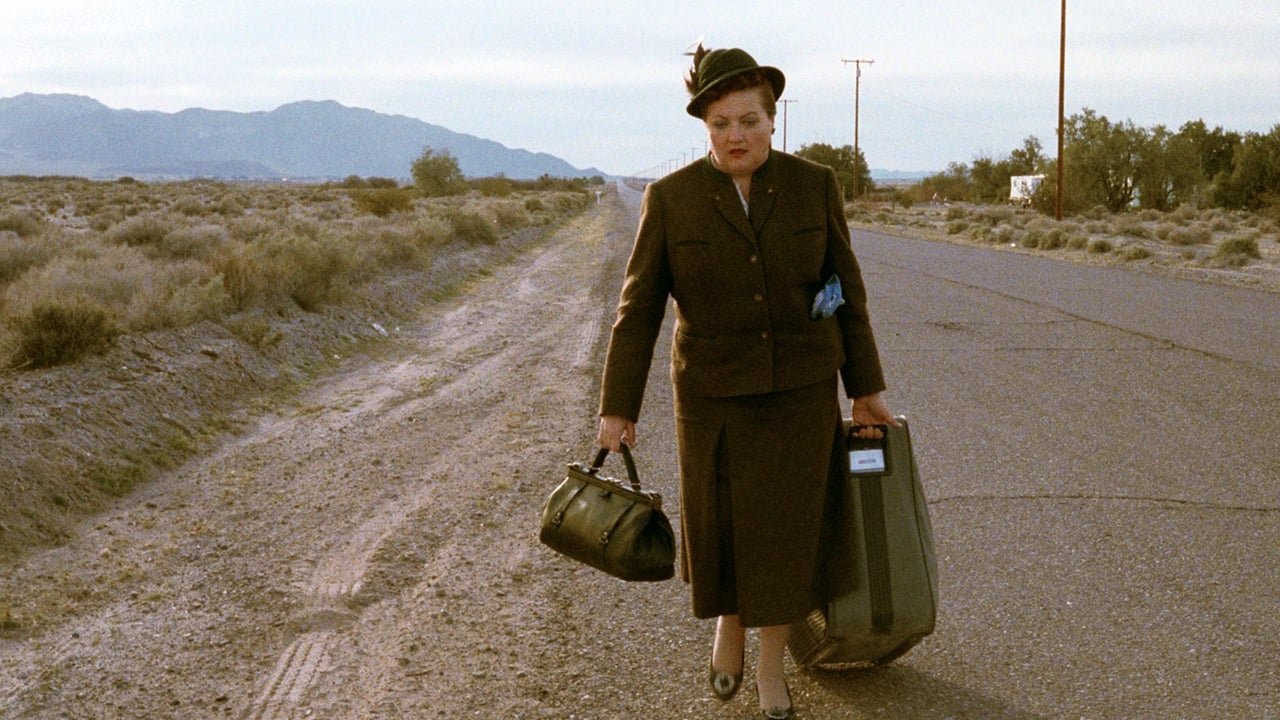
The heat shimmers off the asphalt, distorting the already surreal landscape of the Mojave Desert. Into this desolate beauty, a stout woman in traditional Bavarian Loden clothing appears, pulling a suitcase. This striking, almost dreamlike image is our entry point into Percy Adlon's wonderfully offbeat Bagdad Cafe (originally titled Out of Rosenheim in its native Germany), a film that feels less like a story watched and more like a strange, warm memory resurfacing. Finding this gem on the video store shelf back in the late 80s, perhaps nestled between louder, brasher action flicks, felt like uncovering a secret – a quiet miracle glowing amidst the usual fare.
An Oasis of Oddity
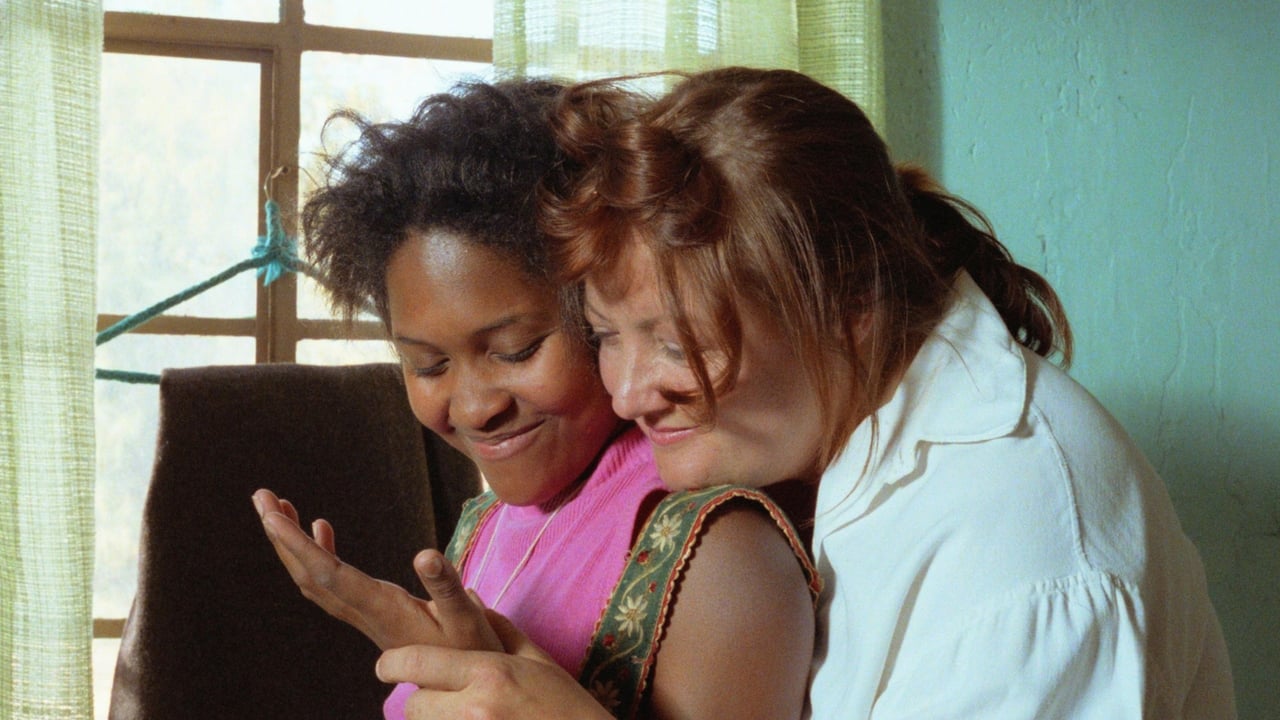
The premise is deceptively simple: Jasmin Münchgstettner (Marianne Sägebrecht), abandoned by her husband during a disastrous American road trip, finds herself stranded at the dusty, dilapidated Bagdad Cafe and Motel. It’s run by the perpetually stressed and sharp-tongued Brenda (CCH Pounder), who presides over a chaotic domain populated by her listless teenage son, a virtuoso piano-playing grandson, a philosophical counter-help, a mysterious tattoo artist (Jack Palance), and the occasional bewildered trucker. The clash is immediate – Jasmin’s meticulous German orderliness versus Brenda’s weary, defensive disarray.
What unfolds isn't driven by explosive plot twists but by the slow, tentative blossoming of understanding and connection between these two women from vastly different worlds. It's a testament to the power of simply seeing another person, of finding common ground in the most unlikely circumstances. Adlon, co-writing with his wife Eleonore Adlon and Christopher Doherty, allows the narrative to breathe, focusing on small gestures, shared glances, and the gradual accumulation of trust. The film luxuriates in its own pace, mirroring the desert's unhurried rhythm, demanding patience but rewarding it tenfold.
Worlds Collide, Magic Ignites
The magic, when it arrives, isn't supernatural fireworks but something gentler, more human. Jasmin, initially just trying to bring order by cleaning Brenda’s perpetually cluttered office (a hilarious sequence fueled by misunderstanding), eventually reveals a hidden talent for close-up magic. These simple tricks become a catalyst, transforming the languishing cafe into a vibrant, quirky hub of community entertainment. It's a beautiful metaphor for Jasmin's own effect on the place and its inhabitants – she doesn’t impose change violently, but rather coaxes out the latent potential and joy already present, just buried under layers of dust and disappointment.
This transformation wouldn't work without the powerhouse performances at its core. Marianne Sägebrecht is simply luminous as Jasmin. Her initial bewilderment gives way to a quiet strength and an infectious, almost childlike wonder. She communicates volumes with subtle shifts in expression, embodying resilience and an innate goodness that slowly melts the defenses of everyone she meets. It’s a performance built on presence and empathy.
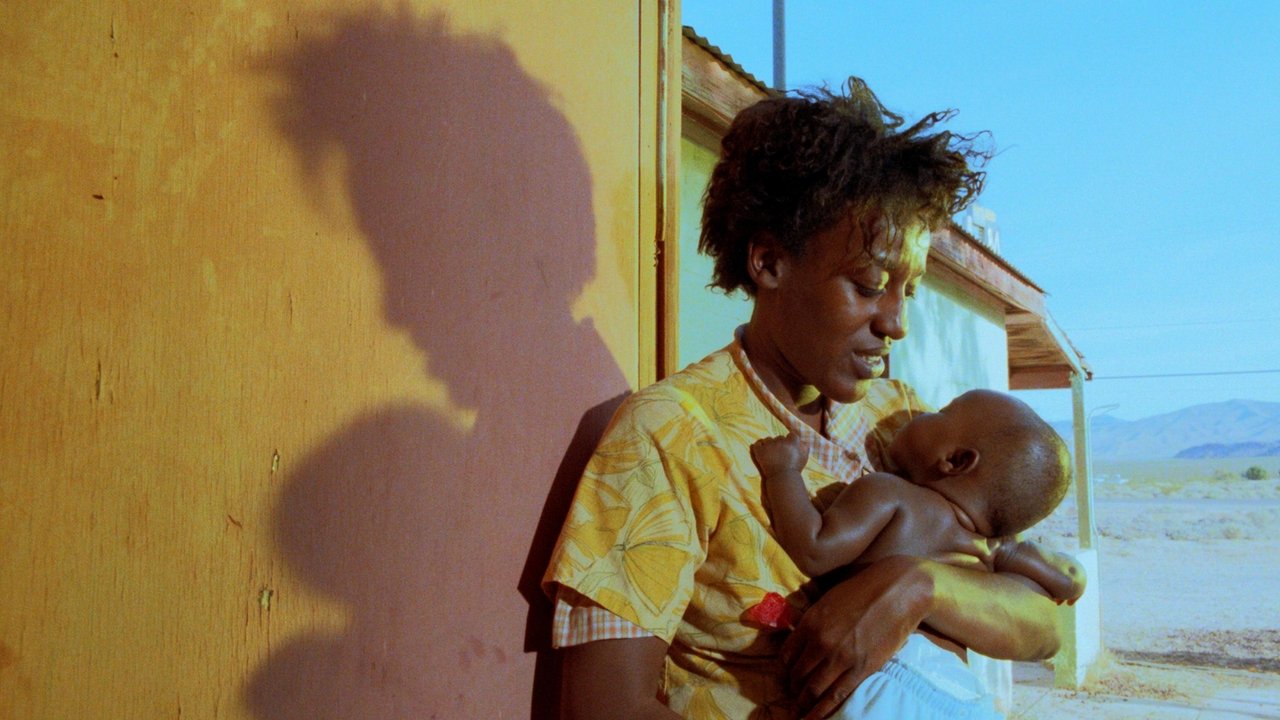
Opposite her, CCH Pounder delivers a career-defining turn as Brenda. She masterfully portrays the frustration and exhaustion of a woman struggling to keep her life and business afloat. Her initial hostility towards Jasmin feels utterly earned, stemming from weariness and suspicion. Watching that suspicion slowly dissolve into fierce loyalty and deep affection is one of the film's greatest rewards. The chemistry between Sägebrecht and Pounder is the beating heart of Bagdad Cafe, an unlikely friendship that feels profoundly authentic.
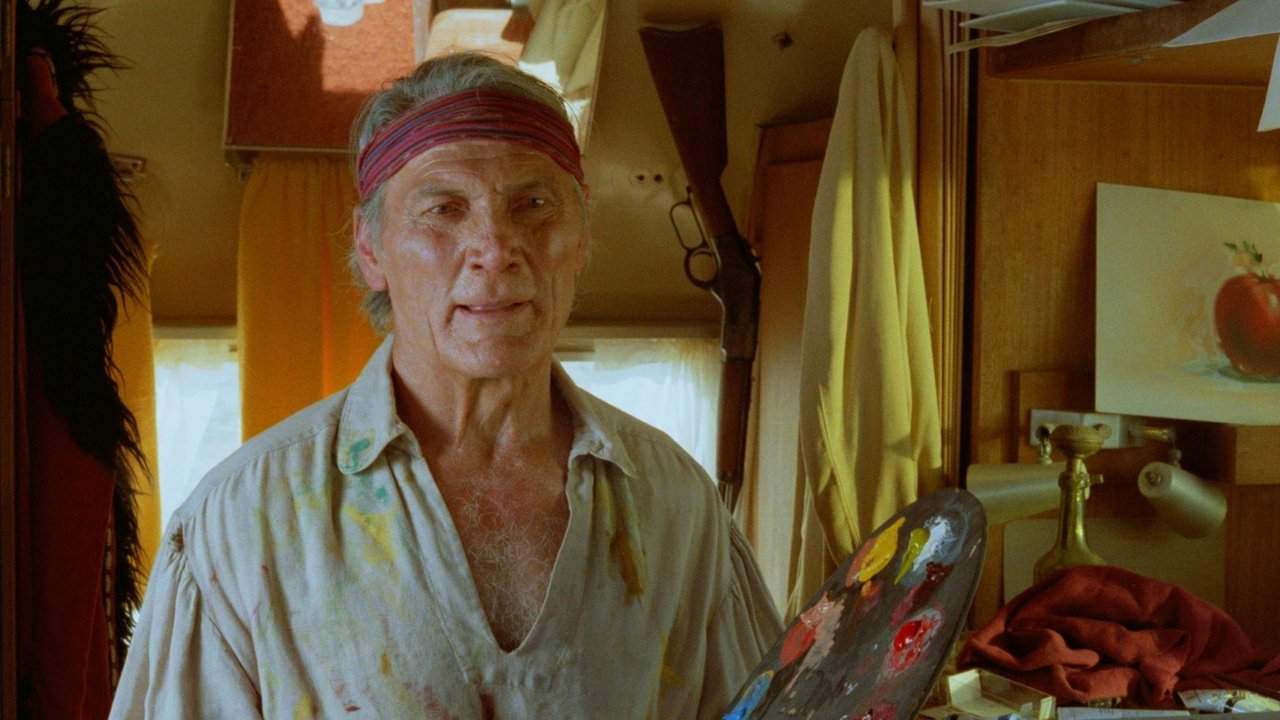
And then there's Jack Palance. In a role seemingly tailor-made for his unique screen presence, he plays Rudi Cox, the eccentric former Hollywood set painter who becomes utterly captivated by Jasmin, sketching her endlessly. Fresh off a career lull before his Oscar win for City Slickers (1991) would bring him back into the mainstream spotlight, Palance here is magnetic – quirky, romantic, and surprisingly tender beneath his weathered exterior. His gentle pursuit of Jasmin adds another layer of warmth and off-kilter charm.
Behind the Desert Sun
Bagdad Cafe was something of an anomaly in 1987 – a German-directed film shot in English, on location near Barstow, California, capturing an outsider's romanticized yet insightful view of American fringe culture. Director Percy Adlon, known more in Europe at the time, brought a distinct visual style, using filters and careful composition to enhance the dreamlike, sun-bleached aesthetic. The film became a significant international art-house hit, grossing over $3.5 million in the US (around $8.5 million today) against a modest budget, largely driven by word-of-mouth and critical acclaim, particularly for its performances and its haunting theme song.
Ah, the song! "Calling You," performed by Jevetta Steele, isn't just background music; it’s the film's soul manifested in melody. Its melancholic, yearning notes perfectly capture the sense of searching, displacement, and eventual connection that defines the narrative. How many times did that cassette single play on repeat after discovering the film? It’s inseparable from the movie’s emotional landscape. Interestingly, Bob Telson, who wrote the song, was initially hesitant about its placement, but it became an Oscar-nominated phenomenon, forever linked to Jasmin's journey.
The Lingering Warmth
What makes Bagdad Cafe endure isn't just nostalgia for its quirky charm or its iconic song. It’s the film's deep-seated humanism, its gentle insistence on finding magic in the mundane and connection across divides. It reminds us that sometimes the most profound transformations happen quietly, in forgotten places, sparked by unexpected encounters. Doesn't that resonate with the hope that even in desolate times, community and understanding can bloom? It asks us to look past surfaces, to appreciate the eccentricities that make us unique, and to believe in the possibility of finding home where we least expect it.
It’s a film that might have felt slow or strange to some encountering it amidst the high-octane offerings of the era, but for those who connected with its wavelength, it was pure cinematic comfort food – a warm, slightly dusty embrace that lingered long after the tape stopped rolling.
Rating: 9/10
This score reflects the film's exceptional heart, unforgettable performances (especially from Sägebrecht and Pounder), unique atmosphere, and enduring emotional resonance. Its deliberate pacing might test some viewers, but for those willing to settle into its rhythm, Bagdad Cafe offers a profoundly moving and utterly charming experience that exemplifies the magic of finding extraordinary connections in ordinary places. It remains a standout piece of 80s indie filmmaking, a testament to finding light and laughter under the desert sun.