It’s funny how some films lodge themselves in your memory not with explosions or dramatic plot twists, but with the quiet murmur of conversation under fluorescent lights. Diner (1982) is one such film. It doesn't shout; it talks. And in its talk, set against the backdrop of late 1959 Baltimore, it captures something profoundly true about that uncertain threshold between youth and whatever comes next. Watching it again now, decades after first sliding that tape into the VCR, feels less like revisiting a movie and more like eavesdropping on ghosts of friendships past.

Sanctuary Under the Neon Glow
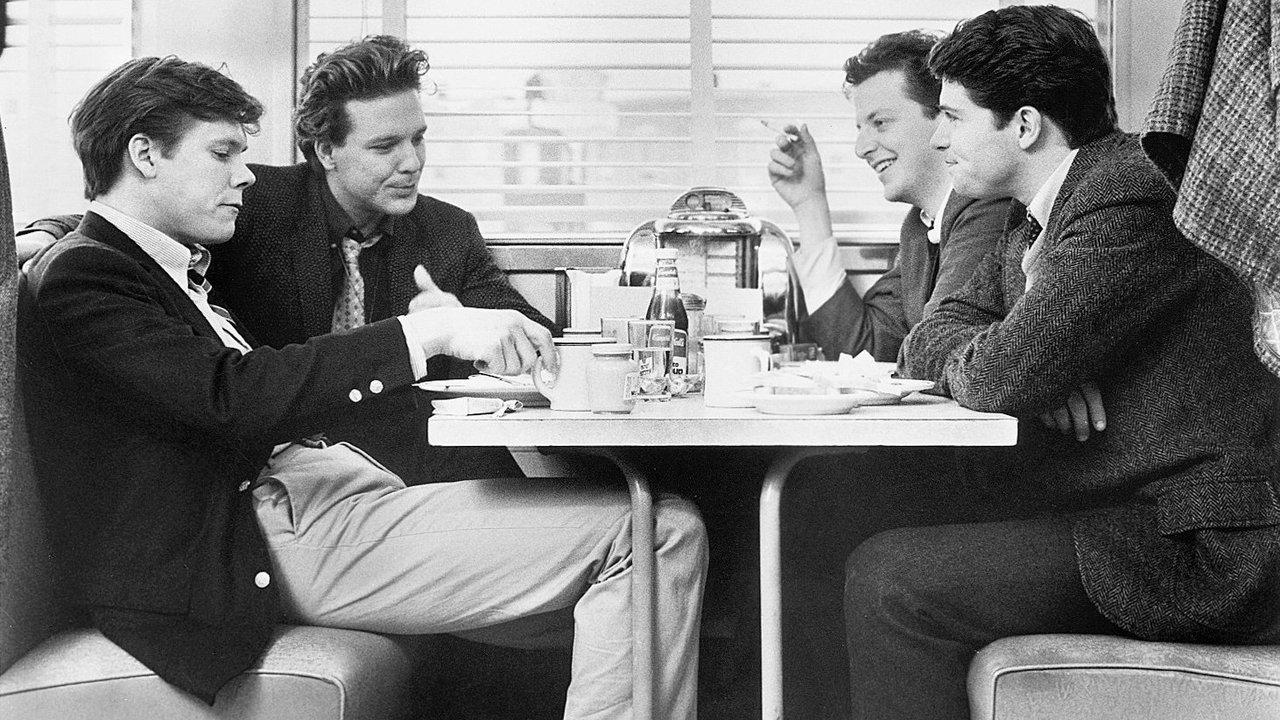
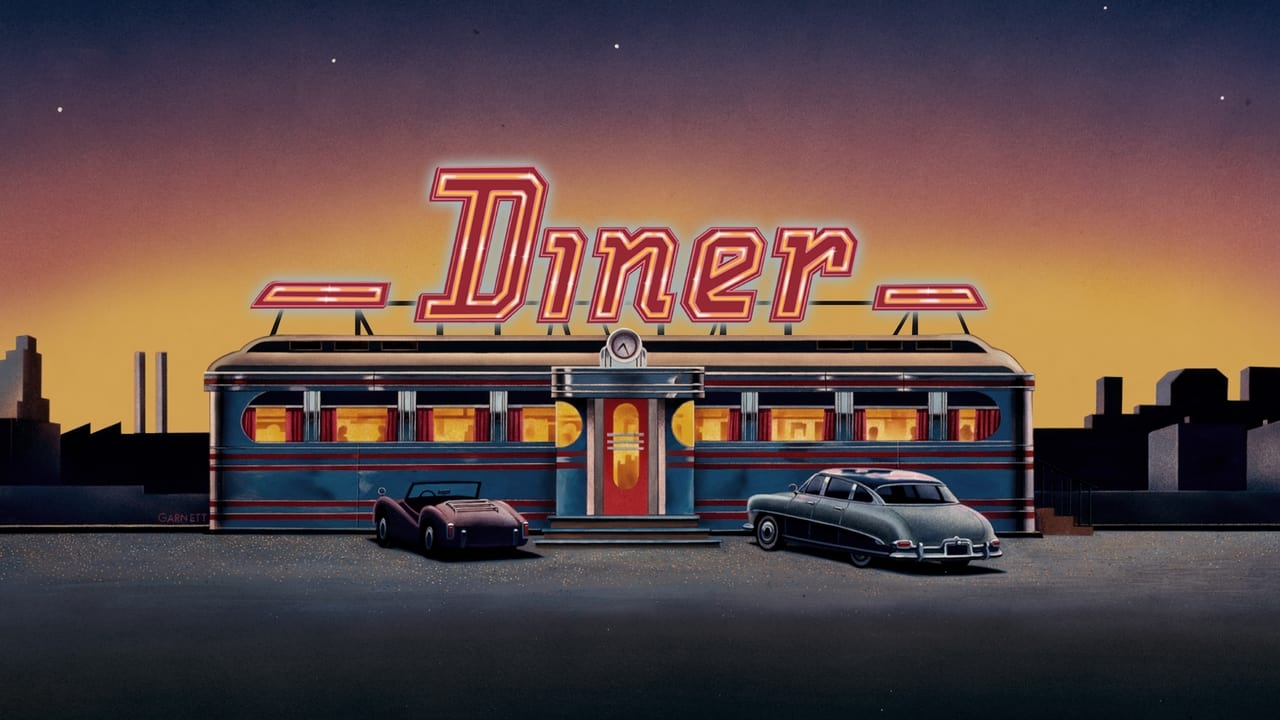
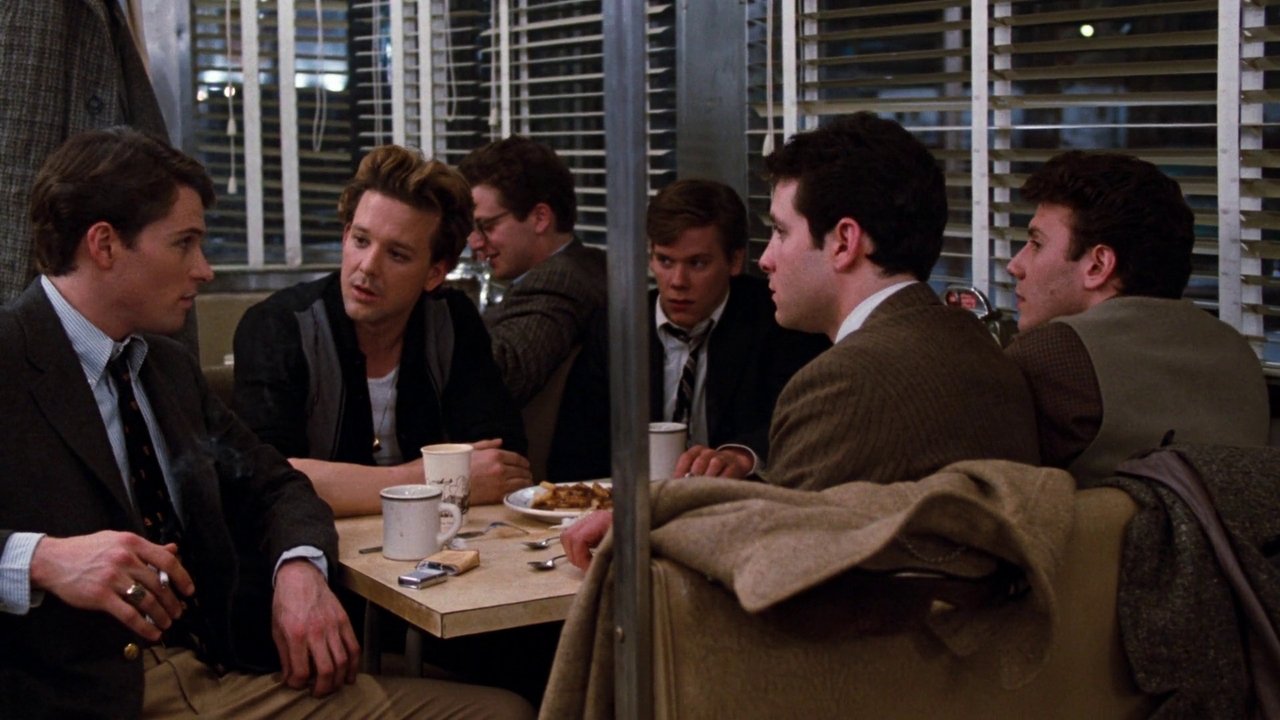
The Fells Point Diner isn't just a location in this film; it's practically a character, a womb-like refuge where a group of friends navigate the anxieties of impending adulthood. Eddie (a wonderfully earnest Steve Guttenberg) is getting married, but only if his fiancée passes an impossibly obscure Baltimore Colts trivia quiz. Shrevie (Daniel Stern) is already married but baffled by the complexities of life beyond shared record collections with his wife, Beth (Ellen Barkin, in a key early role). Boogie (Mickey Rourke, radiating effortless cool and simmering desperation) drifts through life fueled by smooth talk, charm, and a mounting gambling debt. Fenwick (Kevin Bacon, showcasing that restless energy he’d soon perfect) wields sarcasm and alcohol like shields against family expectations. Billy (Timothy Daly) has returned home with news of his own impending marriage and fatherhood, while Modell (Paul Reiser, making his film debut) just... really doesn't like sharing his french fries.
Their interactions, seemingly mundane – arguing about roast beef sandwiches, debating Frank Sinatra versus Johnny Mathis – are the film's lifeblood. It’s through these rambling, overlapping, often hilarious, and sometimes uncomfortable conversations that writer-director Barry Levinson paints a rich portrait of male camaraderie, insecurity, and the subtle shifts that signal the end of an era, both for the characters and for the 1950s America they inhabit.
Lightning in a Bottle Performances
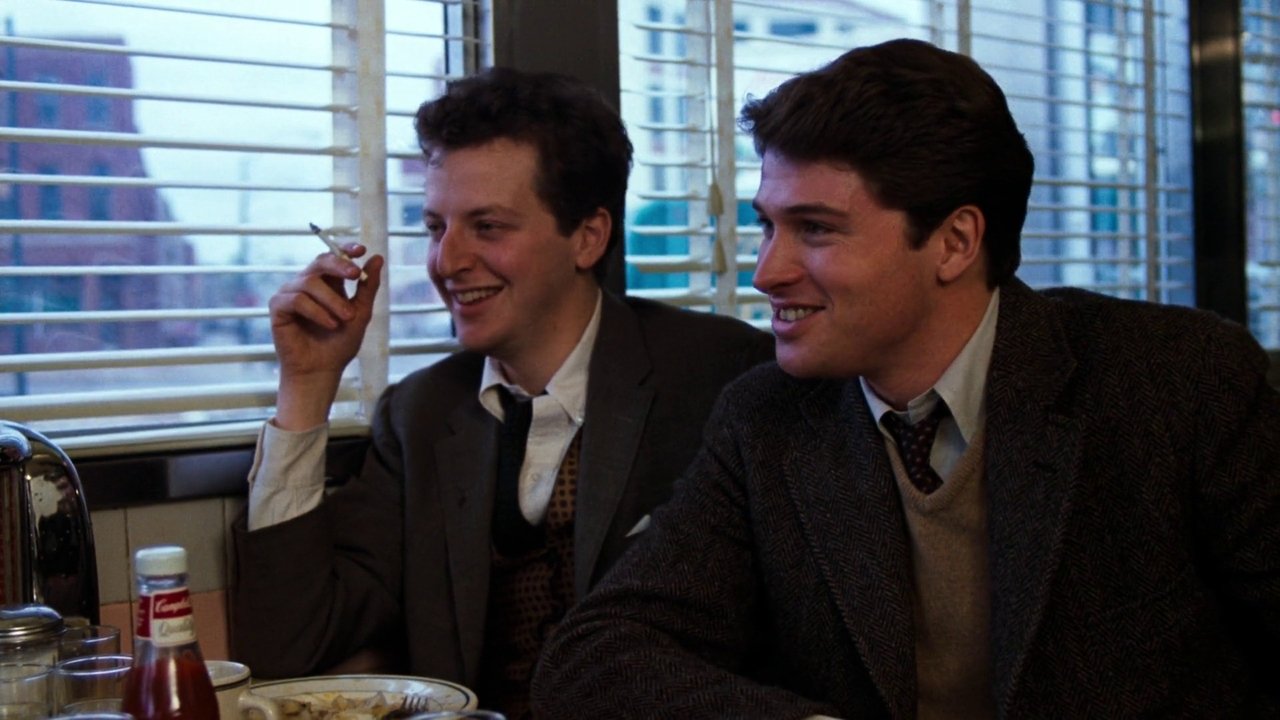
What truly elevates Diner is the ensemble cast, a murderer's row of young actors on the cusp of stardom. Levinson, drawing heavily from his own experiences growing up in Baltimore (the film is deeply semi-autobiographical), encouraged improvisation, letting the actors find the natural rhythms of their characters' relationships. The result is remarkable authenticity. Mickey Rourke is magnetic as Boogie, his charm masking a deep well of self-destruction. You see the charisma, but also the danger. Kevin Bacon’s Fenwick is a whirlwind of witty defiance and underlying pain, a performance hinting at the versatility to come. Steve Guttenberg perfectly captures Eddie’s endearing naivety, while Daniel Stern grounds the film with Shrevie's relatable marital confusion.
These aren't polished heroes; they're flawed, sometimes frustratingly so. Their views on women, particularly Eddie's infamous football quiz, are undeniably dated and often cringe-worthy by today's standards. Yet, the film doesn't necessarily endorse these views; it presents them as part of the characters' arrested development, their inability to communicate or truly understand the women in their lives adding another layer to their anxieties about growing up. Beth’s quiet frustration with Shrevie feels particularly potent.
The Levinson Touch and a Film Nearly Lost
Barry Levinson, who would go on to direct major hits like Rain Man (1988) and Good Morning, Vietnam (1987), established his signature style here: nuanced character work, naturalistic dialogue, and a keen sense of time and place. He lets scenes breathe, trusting his actors and his sharply observed script. It's hard to believe now, given its classic status, but MGM/UA executives initially had so little faith in Diner they barely released it, shelving it for months after completion. It was only after influential critic Pauline Kael saw it and championed it with a glowing review in The New Yorker that the studio gave it a proper push. Made for around $5 million, it became a critical darling and a modest box office success ($14 million), proving there was an audience hungry for character-driven stories. A short-lived 1983 TV pilot attempt, with Paul Reiser as the only returning cast member, unsurprisingly failed to recapture the magic.
Echoes in the Booth
Rewatching Diner evokes a specific kind of nostalgia – not just for the late 50s setting, but for the early 80s discovery of this kind of filmmaking. It felt different then, less reliant on formula, more interested in just letting us hang out with these guys. Its influence can be felt in countless dialogue-heavy independent films and television shows that followed, from Reservoir Dogs (1992) (though much darker!) to Seinfeld. There's a timeless quality to the themes: the fear of commitment, the struggle to communicate honestly, the comfort of long-held friendships, and the bittersweet realization that things can never stay exactly the same. Does the comfort of the familiar prevent us from truly growing up? It's a question the film leaves lingering long after the credits roll.
Rating: 9/10
Diner earns this high score for its impeccable ensemble cast delivering career-making performances, Barry Levinson's beautifully observed script and direction, and its authentic capture of a specific time, place, and emotional state. Its naturalistic dialogue and focus on character over plot felt revolutionary in 1982 and remain deeply resonant. While some attitudes haven't aged well, they serve the film's honest portrayal of flawed characters navigating a transition. It's a masterclass in understated storytelling.
It's a film that reminds you that sometimes the most significant moments aren't the loudest, but the ones shared over late-night coffee and fries, grappling with the quiet anxieties of becoming who you're meant to be.