It arrives like a memory etched onto celluloid – the stark, flat landscape of rural Indiana, autumn air holding a chill that promises winter, and a lone car carrying a man with a past shrouded in shadow. Hoosiers (1986) doesn't just tell a story; it evokes a feeling, a specific time and place where basketball wasn't just a game, but the very pulse of a small town clinging to its identity. Watching it again now, decades removed from those fuzzy VHS viewings, its power feels undiminished, perhaps even deepened by the passage of time.
A Coach's Last Stand
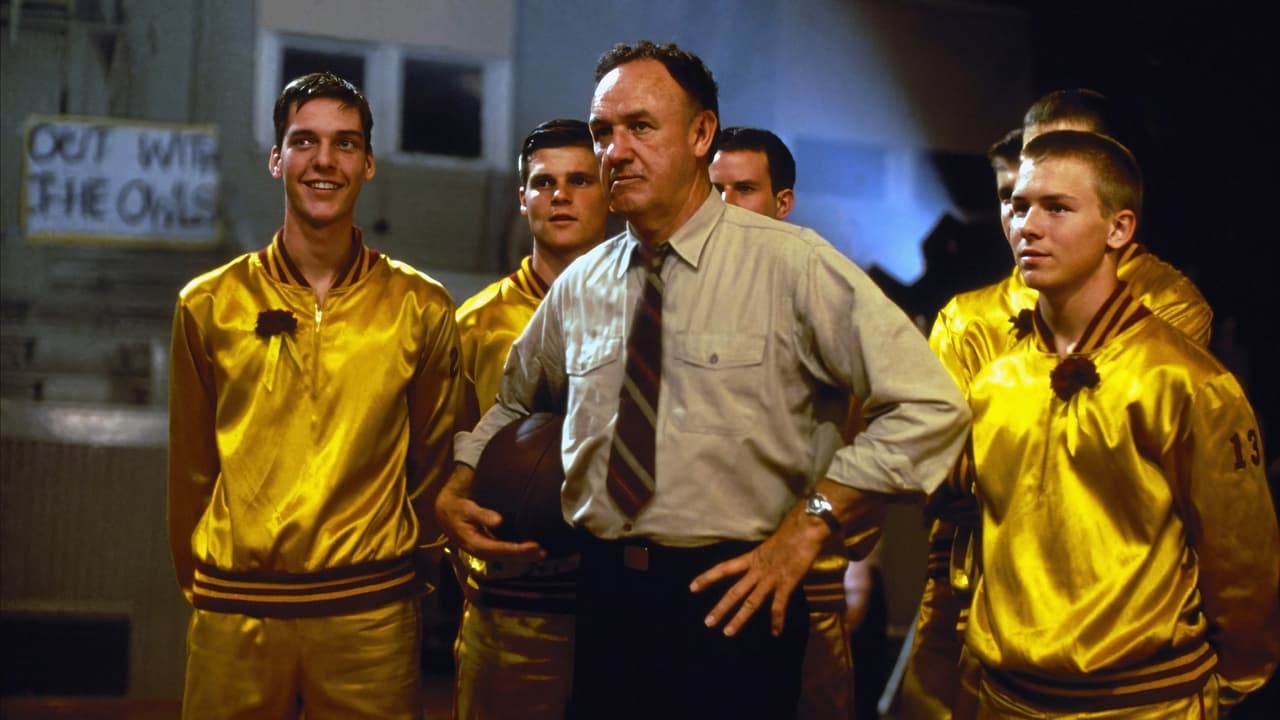
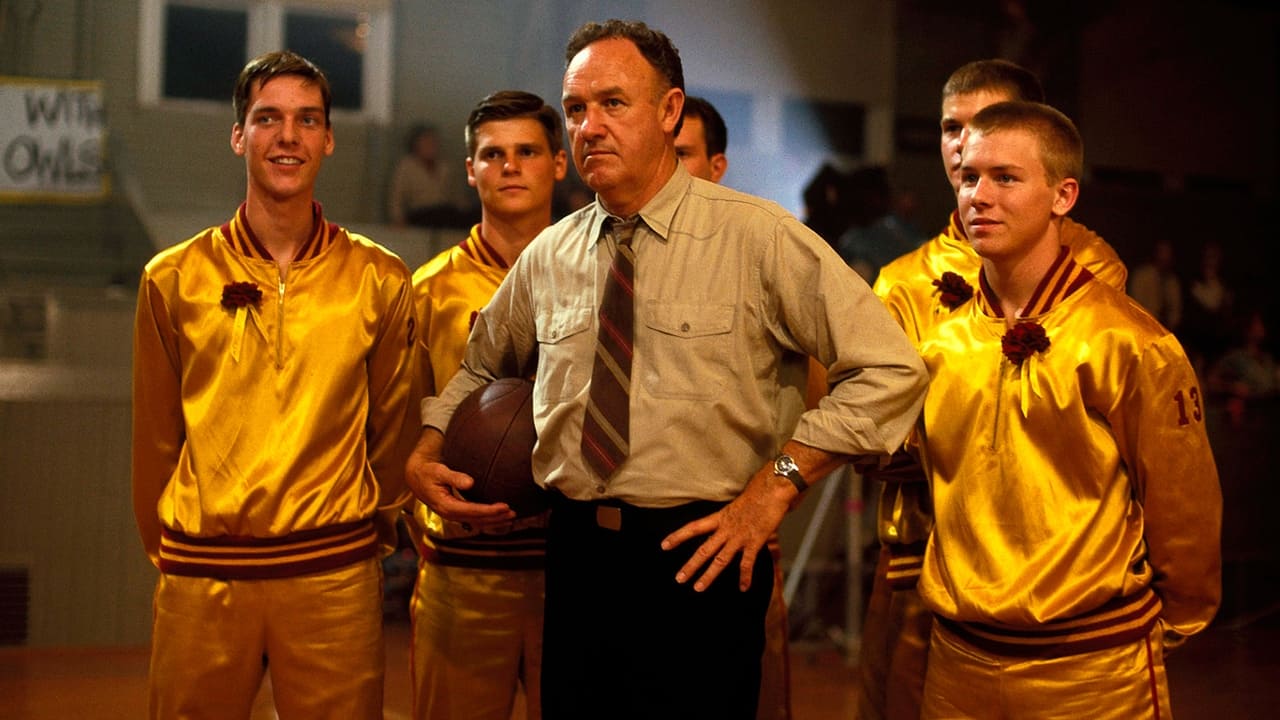
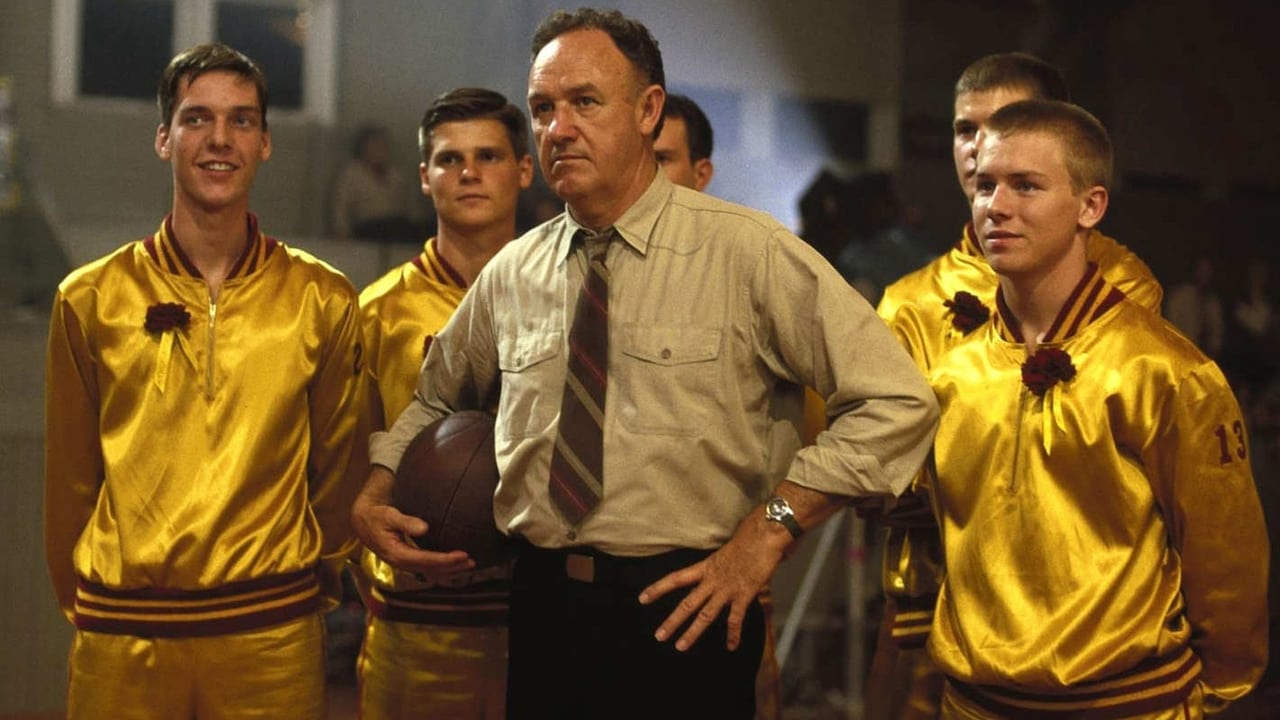
At the heart of it is Norman Dale, played with magnificent restraint and simmering intensity by Gene Hackman. Dale is a man seeking not just a job, but redemption, arriving in tiny Hickory, Indiana, to coach the high school basketball team. He’s guarded, authoritative, and carries the weight of past mistakes like an ill-fitting coat. The town, wary and fiercely protective of its team, watches his every move. Hackman, an actor who could convey worlds with a glance, makes Dale utterly compelling – flawed, stubborn, but undeniably driven. We sense the ghost of whatever drove him from his last position, adding a layer of mystery that fuels his guarded interactions. It’s a performance that feels less like acting and more like witnessing a man wrestle with his own nature. Interestingly, while it's hard to imagine anyone else in the role now, Jack Nicholson was reportedly considered; a fascinating 'what if' that highlights just how perfectly Hackman embodied Dale's weary gravitas.
More Than Just a Game
Director David Anspaugh and writer Angelo Pizzo, both Indiana University alumni bringing a deep understanding of the region's passion for the sport, wisely understood that Hoosiers needed to be about more than just winning games. It's about the soul of a community, the pressure cooker environment where every resident feels ownership of the team. The film captures this beautifully, from the barbershop debates to the tense town meetings. This wasn't just fiction; the story is famously inspired by the improbable journey of the 1954 Milan High School team, a tiny school that defied all odds to win the Indiana state championship. Knowing this real-life underdog story resonates beneath the fictional narrative adds a layer of authenticity that many sports films lack. The film cost a relatively modest $6 million to make, a constraint that likely contributed to its grounded, unflashy feel, ultimately becoming a box office success story itself, earning over $28 million.
Into this mix steps Myra Fleener (Barbara Hershey), a fellow teacher wary of Dale's methods and protective of the town's star player, Jimmy Chitwood. Hershey provides a crucial counterpoint, challenging Dale and representing a different kind of strength – one rooted in intellectualism and concern for the boys' futures beyond the court. Her dynamic with Hackman is charged with unspoken tension and grudging respect.
Shooter's Shot at Redemption
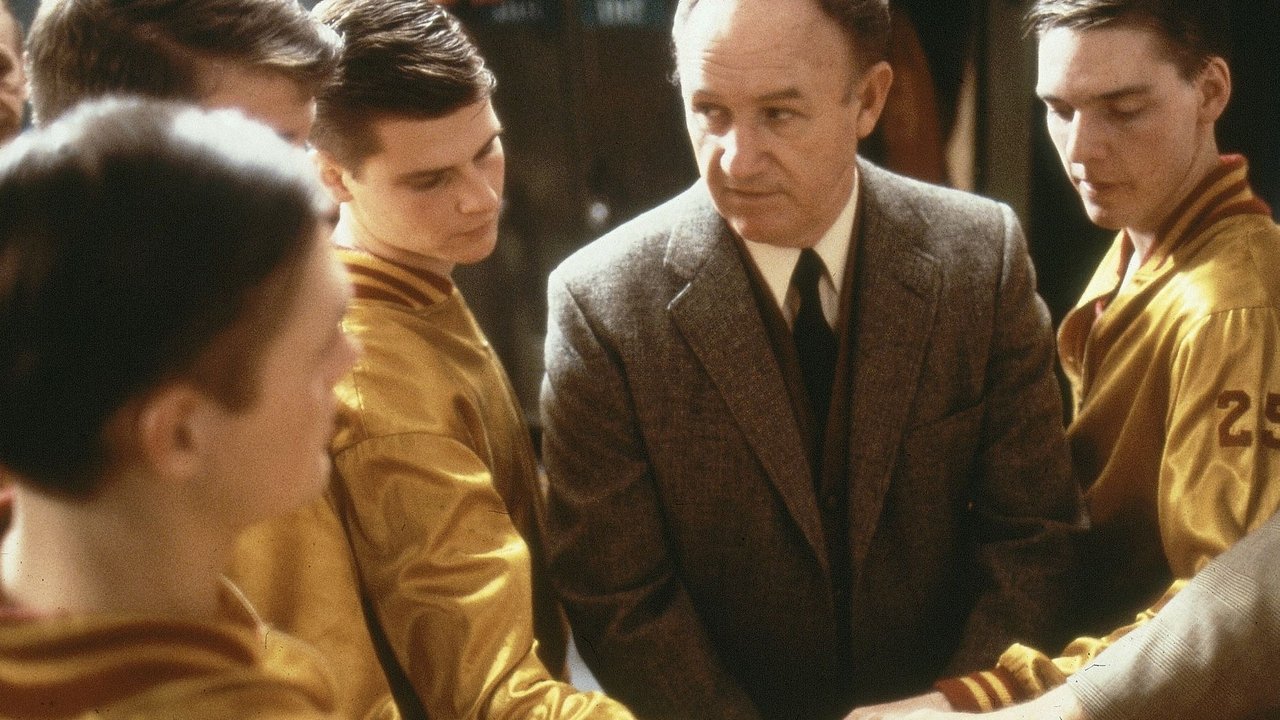
And then there's Shooter. Dennis Hopper, in a performance that rightfully earned him an Academy Award nomination and marked a significant career resurgence, is simply unforgettable as Wilbur "Shooter" Flatch, the town drunk and estranged father of one of the players. Shooter is a basketball savant whose life has been derailed by alcoholism. Dale, seeing both the wreck and the brilliance, offers him a lifeline – a role as an assistant coach, contingent on sobriety. Hopper plays Shooter with a heartbreaking vulnerability beneath the haze of alcohol. His struggle is palpable, his knowledge of the game undeniable. The scenes where Dale tests Shooter's basketball acumen, or the agonizing tension of whether he’ll stay sober for a crucial game, are among the film's most powerful. It’s a testament to Hopper’s talent that Shooter never becomes a caricature, but a deeply human figure yearning for dignity.
The Roar of the Crowd, The Squeak of Sneakers
Anspaugh masterfully films the basketball sequences. They feel real, kinetic, and emotionally charged. He avoids flashy, unbelievable plays, focusing instead on the fundamentals Dale drills into his team: crisp passes, disciplined defense, teamwork over individual glory. The progression from a skeptical, fractured group to a cohesive unit is the film’s emotional engine. You feel the mounting pressure, the growing belief, the sheer will driving this small team against bigger, seemingly insurmountable opponents. The climactic scenes in the vast Hinkle Fieldhouse in Indianapolis (where the actual 1954 championship game was played) are pure cinematic magic, amplified by Jerry Goldsmith's iconic, soaring score – a piece of music so perfectly wedded to the film's spirit it practically is Hoosiers. I remember rewinding the tape just to feel that swell of music and emotion again during the final game sequence.
Why It Endures
Hoosiers isn't just a great sports movie; it's a great American film. It taps into timeless themes: the search for second chances, the power of community (both supportive and suffocating), the underdog spirit, and the idea that redemption can be found in unexpected places. The performances are uniformly excellent, grounded in a realism that makes the eventual triumph feel earned, not manufactured. There’s a quiet integrity to the filmmaking, a refusal to indulge in cheap sentimentality, that allows the genuine emotion to land with greater impact. It’s a film that feels handcrafted, imbued with the personality of its creators and the spirit of the place it depicts. It reminds us, perhaps, of a time when stories felt simpler, yet resonated just as deeply, if not more so. Doesn't that quiet authenticity feel particularly resonant today?
---
Rating: 9.5/10
Justification: Hoosiers earns this near-perfect score through its masterful blend of character-driven drama and exhilarating sports action. Hackman and Hopper deliver career-highlight performances, the direction is pitch-perfect in capturing both the small-town atmosphere and the on-court tension, and the story resonates with timeless themes of redemption and teamwork. Jerry Goldsmith's score elevates it further. It avoids genre clichés, feeling authentic and emotionally honest throughout. It's a film that stays with you long after the credits roll.
Final Thought: More than just a tale of victory, Hoosiers is a enduring reminder that sometimes the biggest wins happen off the court, in the quiet moments of forgiveness and second chances. A true VHS treasure.