It’s a curious thing, isn't it, how certain films lodge themselves in the memory not necessarily for their brilliance, but for their sheer, earnest conviction? Hanover Street is one such picture for me. Released in 1979, it feels like a film caught slightly out of time – a throwback melodrama arriving just as the cynical 70s were giving way to the blockbuster 80s. Seeing Harrison Ford, then riding the supernova success of Star Wars, swap his blaster for the controls of a B-25 Mitchell bomber in a sweeping wartime romance... well, it felt like an unexpected detour, even back then. Renting this on VHS, perhaps nestled between sci-fi epics and gritty thrillers, always felt like unearthing something slightly different, something with a heart worn perhaps a little too openly on its sleeve.
### Love and War in Blitzed London
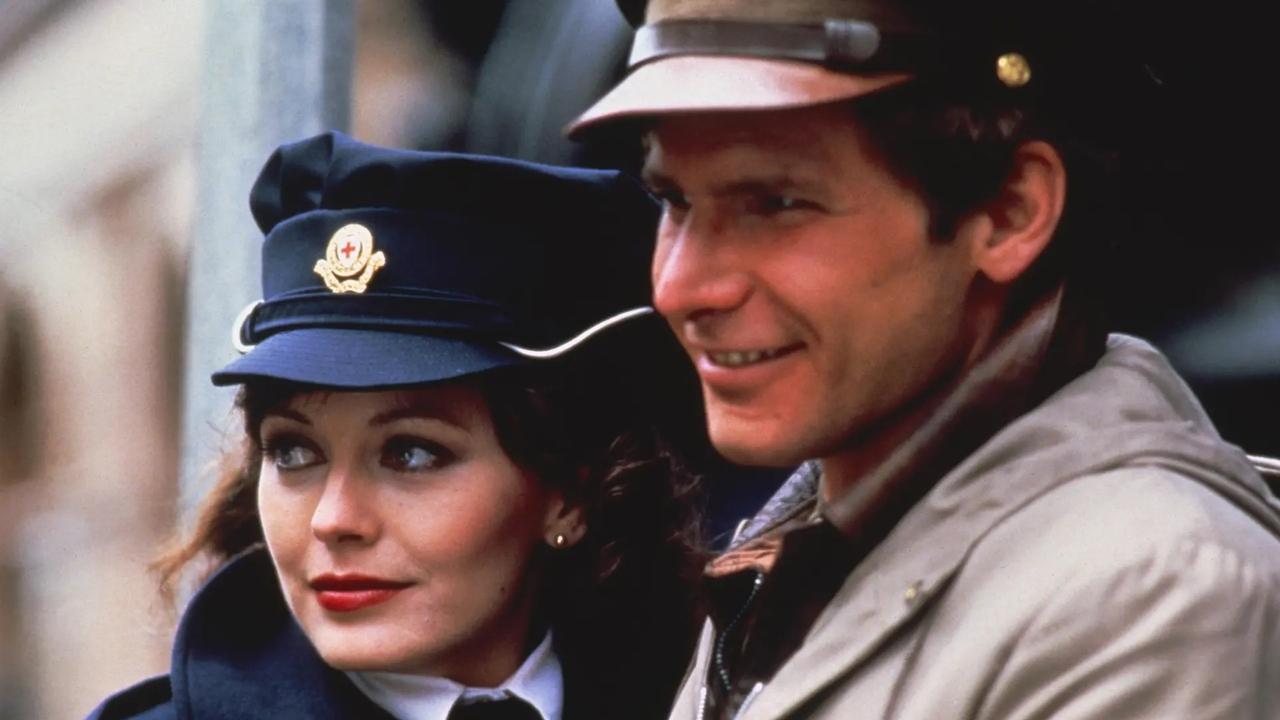
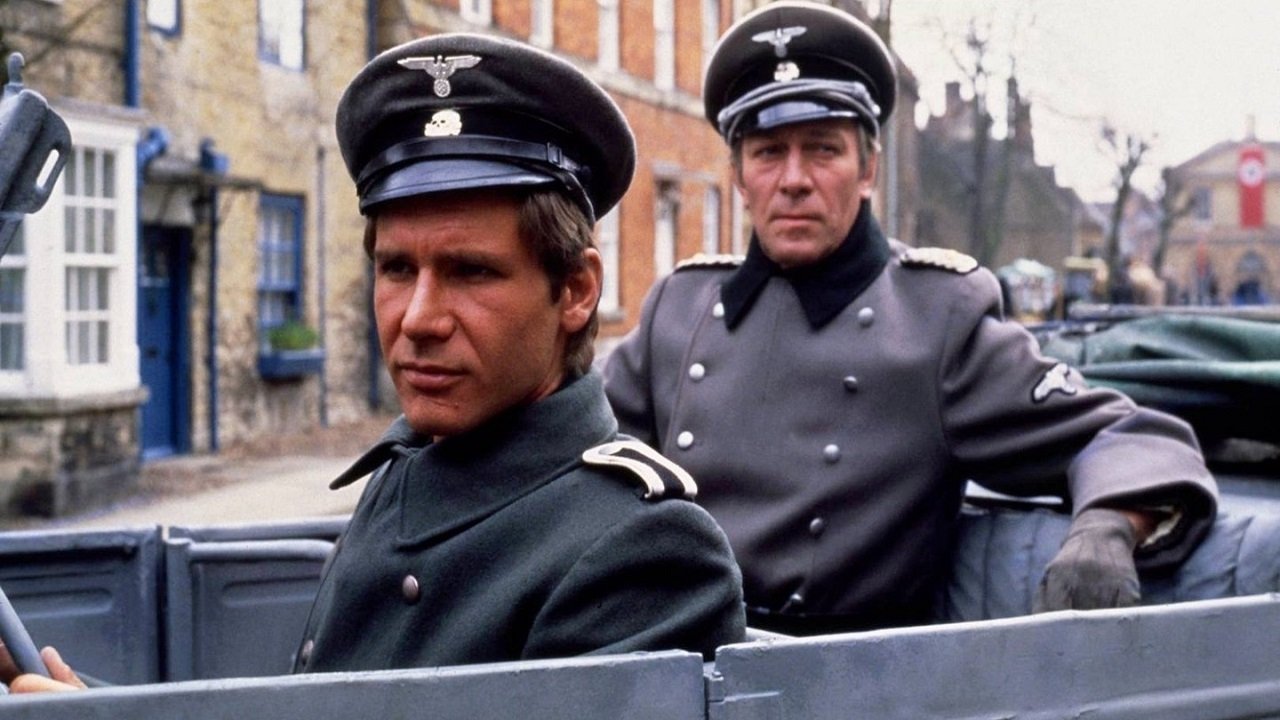
The premise, penned and directed by Peter Hyams (who'd later give us genre staples like Outland and 2010), is pure classic Hollywood. Lieutenant David Halloran (Harrison Ford) is a devil-may-care American bomber pilot stationed in England during the darkest days of World War II. A chance meeting during an air raid introduces him to Margaret Sellinger (Lesley-Anne Down), a married English nurse. An intense, forbidden affair blossoms against the backdrop of blackouts, rationing, and the constant threat of German bombs. The twist? Margaret's husband, Paul (Christopher Plummer), is a high-ranking British intelligence officer, tasked with overseeing the very type of dangerous missions Halloran flies. You can see the dramatic potential practically shimmering off the rain-slicked London streets Hyams captures.
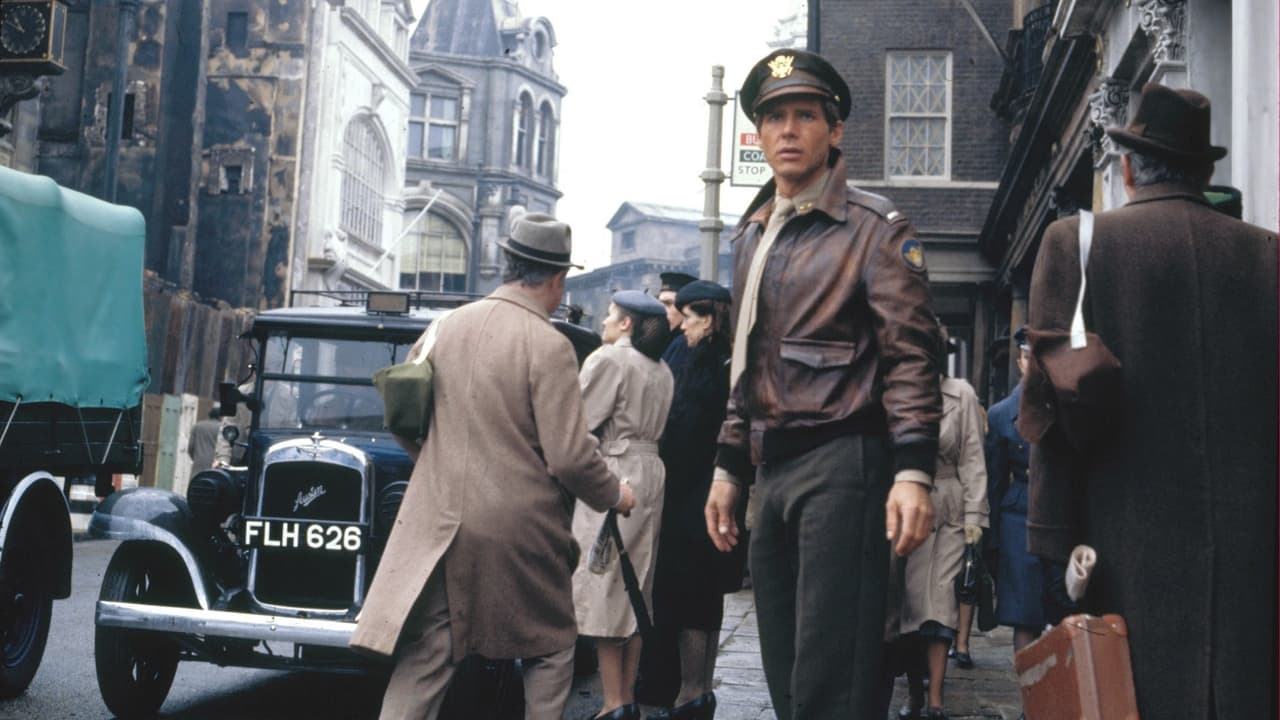
Hyams, unusually serving as his own cinematographer here (a role he often took on), certainly crafts a specific mood. There's a tangible sense of wartime London – the cramped pubs, the fog, the sudden terror of the Blitz. He doesn't shy away from the danger, both in the air and on the ground, giving the romance a genuine sense of stakes. It’s this atmosphere, thick and evocative, that sticks with you long after the credits roll.
### A Star Finding His Footing
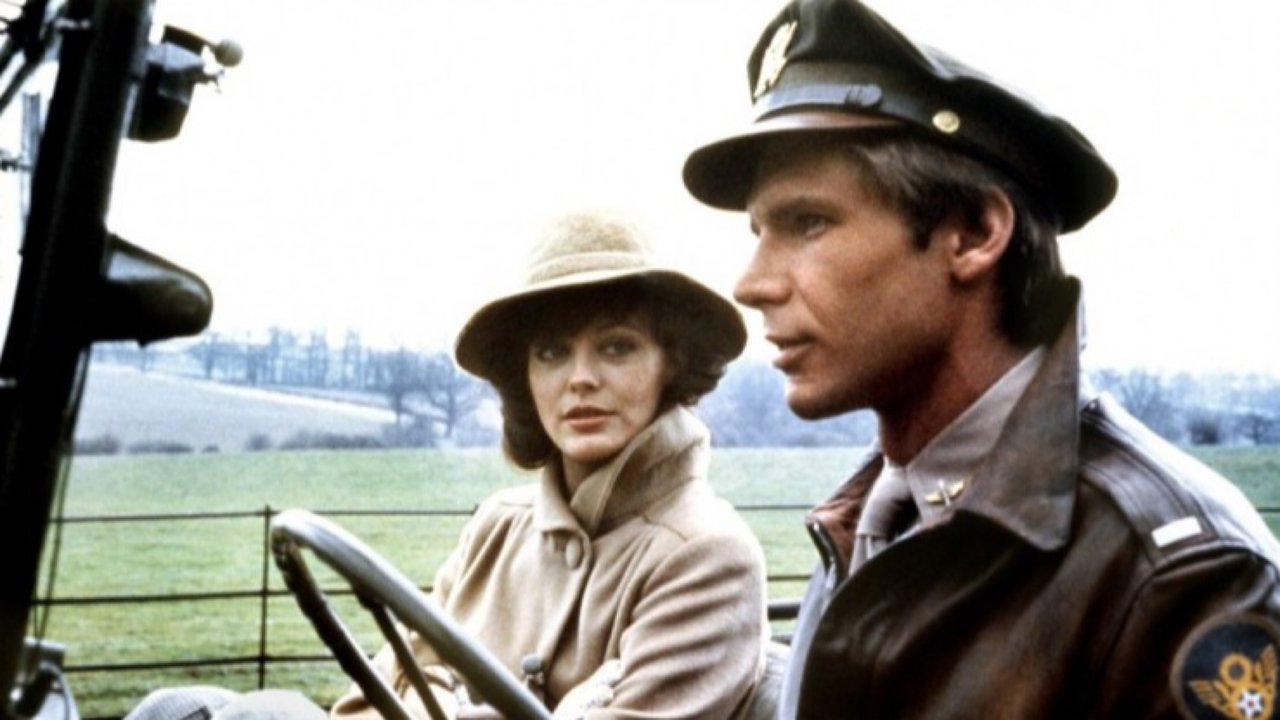
Watching Harrison Ford here is fascinating. This was filmed between Star Wars and The Empire Strikes Back, a moment when his stardom was exploding, but the iconic silhouette of Indiana Jones hadn't yet fully formed. He brings his signature reluctant heroism and undeniable charisma to Halloran, making the pilot's swagger believable. Yet, you can also see him wrestling with the demands of a straightforward romantic lead. There are moments where the earnest dialogue feels a little less comfortable for him than, say, navigating an asteroid field. It’s not a fault of his performance – which is committed and engaging – but rather highlights the slightly unusual casting against the grain of his established persona at that point. It’s a glimpse of the dramatic actor Ford might have become in an alternate timeline, before action-adventure claimed him so completely.
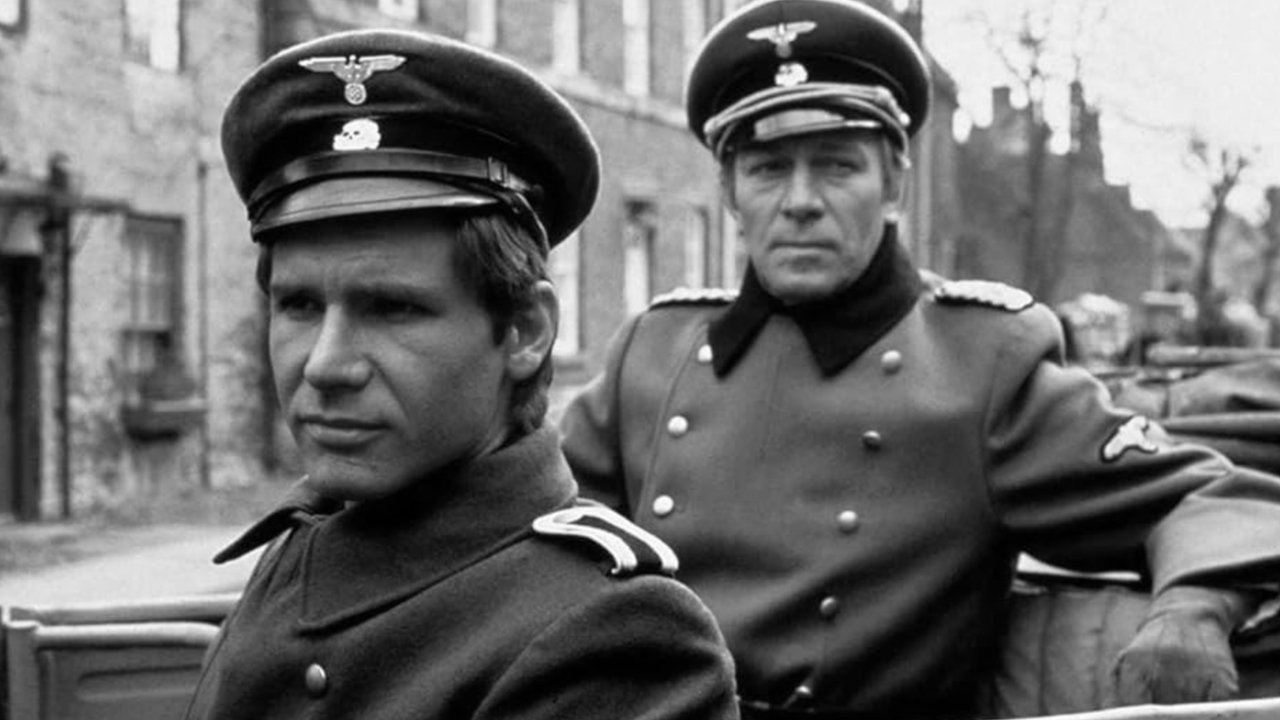
Lesley-Anne Down, fresh off projects like Upstairs, Downstairs and The Great Train Robbery (1978), embodies Margaret's conflicted emotions with grace and sensitivity. She makes you believe in the impossible situation she’s trapped in, torn between duty, love, and the overwhelming pressures of war. And then there's Christopher Plummer. As Paul Sellinger, he radiates quiet intelligence and weary dignity. Plummer could elevate almost any material, and here he provides the crucial emotional anchor, ensuring the central love triangle feels less like a contrived plot device and more like a genuine human tragedy unfolding.
### Bringing History (and Bombers) to Life
One area where Hanover Street truly shines, especially for fans of practical filmmaking, is its aerial sequences. Peter Hyams managed to secure five authentic, airworthy B-25 Mitchell bombers for the production – a significant undertaking in 1979. Seeing those magnificent warbirds actually flying, captured with Hyams' keen directorial eye, lends the film a gritty authenticity that CGI often struggles to replicate. Reportedly, Ford even took some flight lessons, though obviously stunt pilots handled the heavy lifting. There's a weight and reality to these scenes, reminding us of the very real peril faced by bomber crews. This commitment to practical effects feels very much of its era – a tangible quality we often miss today.
The film wasn't a smash hit, earning back its estimated $9 million budget but failing to set the box office alight (that budget translates to roughly $38 million today). Critical reception at the time was decidedly mixed, with many finding the plot overly reliant on coincidence and the melodrama a bit thick. And it's true, the narrative does require some suspension of disbelief, particularly in its later acts where the romantic triangle and the espionage plot collide head-on in a way that strains credulity. Yet, somehow, the film's sheer sincerity, coupled with John Barry's lush, romantic score (a genuine highlight, evoking his legendary Bond work), manages to carry it through. Barry’s music elevates the emotion, adding a layer of tragic grandeur that the script sometimes struggles to earn on its own.
### Does It Hold Up?
Revisiting Hanover Street now, decades removed from its original release, is an interesting experience. The earnestness that perhaps felt slightly old-fashioned even in '79 now feels almost poignant. It’s a film utterly committed to its romantic ideals, even amidst the horrors of war. Does the central relationship fully convince? Perhaps not always. Do the plot mechanics occasionally creak? Absolutely. But there’s an undeniable charm to its ambition, its performances, and its visual craft. It captures a specific flavour of late-70s studio filmmaking attempting old-school Hollywood glamour. My well-worn tape might be long gone, but the memory of Ford navigating both flak-filled skies and tangled affairs remains vivid.
Rating: 6/10
Justification: Hanover Street earns a 6 for its strong lead performances (especially Plummer), Peter Hyams' evocative direction and cinematography, John Barry's magnificent score, and the impressive practical effects work with the B-25s. It captures the wartime atmosphere effectively. However, it's held back by a script that leans heavily on melodrama and coincidence, sometimes undermining the emotional impact and preventing it from reaching true classic status. Ford feels slightly miscast in a purely romantic sense, even if his star power is undeniable.
Final Thought: It may not be the first film that springs to mind when thinking of Harrison Ford's iconic roles, but Hanover Street remains a fascinating, beautifully scored, and earnestly crafted wartime romance – a curious blend of star power and old-fashioned storytelling from the cusp of a new cinematic decade. Worth seeking out, if only to see Han Solo navigate the complexities of the heart.