There's a peculiar quietness that sometimes settles over certain low-budget films from the 80s, an unsettling stillness born perhaps from necessity, but often resulting in a distinct and lingering atmosphere. Watching Andrew Silver's 1985 film Return feels a bit like unearthing a faded photograph from a dusty box – the faces are recognizable, yet shrouded in a haze of ambiguity and unspoken history. It’s not a film that shouts; it whispers, drawing you into its central mystery with a persistent, almost dreamlike pull. This wasn't a tape screaming for attention from the New Releases wall at Blockbuster; it was more likely found tucked away in the Drama section, its simple cover art hinting at something more introspective than explosive.
### A Homecoming Shrouded in Fog
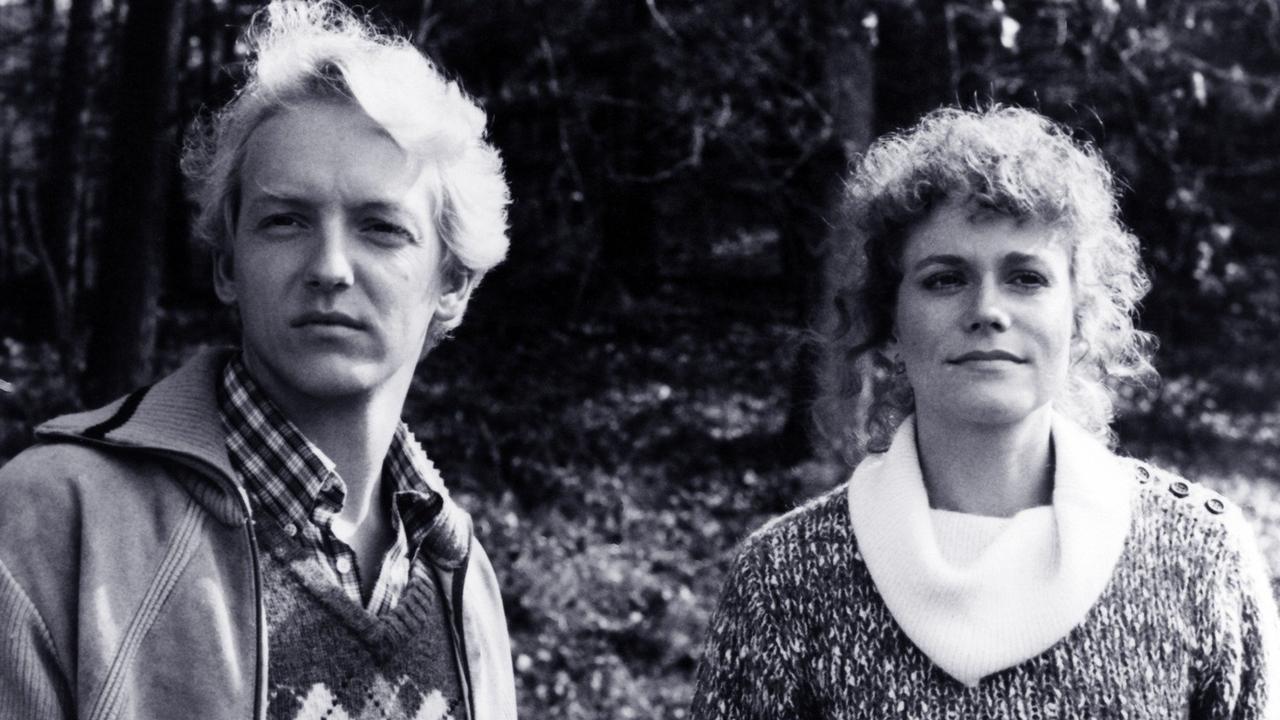
Return centers on Diana Stoving (Karlene Crockett), a young woman who arrives back in her small, nondescript hometown after a two-year absence – an absence shrouded in fragmented memories and the implication of a serious psychological break. She attempts to reconnect with her former life, particularly with her patient, somewhat bewildered boyfriend, Day Whittaker (John Walcutt), and navigate the strained relationship with her mother, Elizabeth (Lisa Richards). But the past isn't just forgotten; it feels actively erased, replaced by unsettling gaps and a growing sense that the reality she perceives might be fragile, perhaps even illusory. Was there an accident? A deliberate departure? The film deliberately keeps the specifics veiled, forcing us to piece together Diana's story alongside her.
What makes Return compelling, despite its deliberate pacing and modest production values, is its commitment to this central ambiguity. Director Andrew Silver, who also co-wrote the screenplay with Daniel Goldin, crafts a mood piece rather than a straightforward narrative. The film often feels like we're experiencing the world through Diana's fractured perspective. Scenes drift, conversations hang unfinished, and the flat, almost stark cinematography enhances the feeling of emotional detachment and disorientation. It’s a film less about what happened and more about the struggle to reclaim a sense of self when memory proves unreliable.
### The Weight of Unspoken Things
The performances are key to anchoring this atmospheric drift. Karlene Crockett, known to many from her time on the TV series Dallas, carries the film with a performance that relies heavily on subtlety. Her Diana is watchful, hesitant, her eyes constantly searching for clues in familiar faces that now seem subtly altered. There’s a vulnerability there, but also a flicker of guarded intensity, suggesting a deep internal struggle. It’s a performance that avoids histrionics, opting instead for a contained portrayal of profound confusion and quiet desperation. Does she truly not remember, or is she afraid of what remembering might uncover? Crockett makes that uncertainty palpable.
John Walcutt, as Day, provides a necessary counterpoint – the seemingly stable figure trying to bridge the gap between the woman he knew and the stranger who returned. His patience feels genuine, but tinged with an undercurrent of frustration and perhaps fear. Lisa Richards as the mother offers another layer of complexity; her concern often manifests as a kind of brittle control, hinting at shared histories and possibly shared traumas that remain unspoken. The dynamic between these three characters forms the emotional core, a triangle of tentative affection, unspoken anxieties, and the suffocating weight of the unknown.
### An Artifact of Indie Sensibility
Filmed largely in Massachusetts, Return possesses that distinct feel of regional, independent filmmaking from the era. There are no flashy effects, no elaborate set pieces. Its power lies in its mood and the questions it raises about identity and the subjective nature of reality. It’s the kind of film that might have easily slipped through the cracks, lacking the commercial hooks of mainstream Hollywood fare. Finding a copy on VHS back in the day likely felt like discovering a hidden track on a favorite cassette – something quieter, more personal, perhaps a little rough around the edges, but resonant in its own way.
Its obscurity is, in itself, a point of interest. This wasn't a studio picture with a big marketing push; it was a smaller, more intimate project. Andrew Silver, while not a household name, had previously directed the intriguing 1977 sci-fi/horror indie The Disappearance of the Finbar (aka Survival Run). Return continues his exploration of psychological themes within a low-budget framework. The constraints likely influenced the film's minimalist aesthetic, forcing a reliance on performance and atmosphere over spectacle – a choice that ultimately serves the story well. It asks the viewer to lean in, to listen closely to the silences between the words.
Does the deliberately slow pace and lack of clear resolution frustrate? Perhaps for some. But for those receptive to its wavelength, Return offers a thoughtful, haunting exploration of memory's fragility. It doesn't provide easy answers, leaving the viewer, much like Diana herself, suspended in a state of lingering uncertainty. What truly defines us if our past becomes a locked room?
Rating: 6/10
Return earns its score through its compelling central performance from Karlene Crockett, its effectively sustained atmosphere of psychological unease, and its commitment to ambiguity. It’s undeniably a product of its low-budget origins, with a deliberate pace that won't appeal to everyone, and it lacks the narrative drive of more conventional dramas. However, as a slice of 80s independent filmmaking and a moody exploration of memory and identity, it holds a quiet power.
It’s a film that lingers, not because of shocking twists, but because of the unsettling questions it leaves echoing long after the static hiss of the rewinding tape.