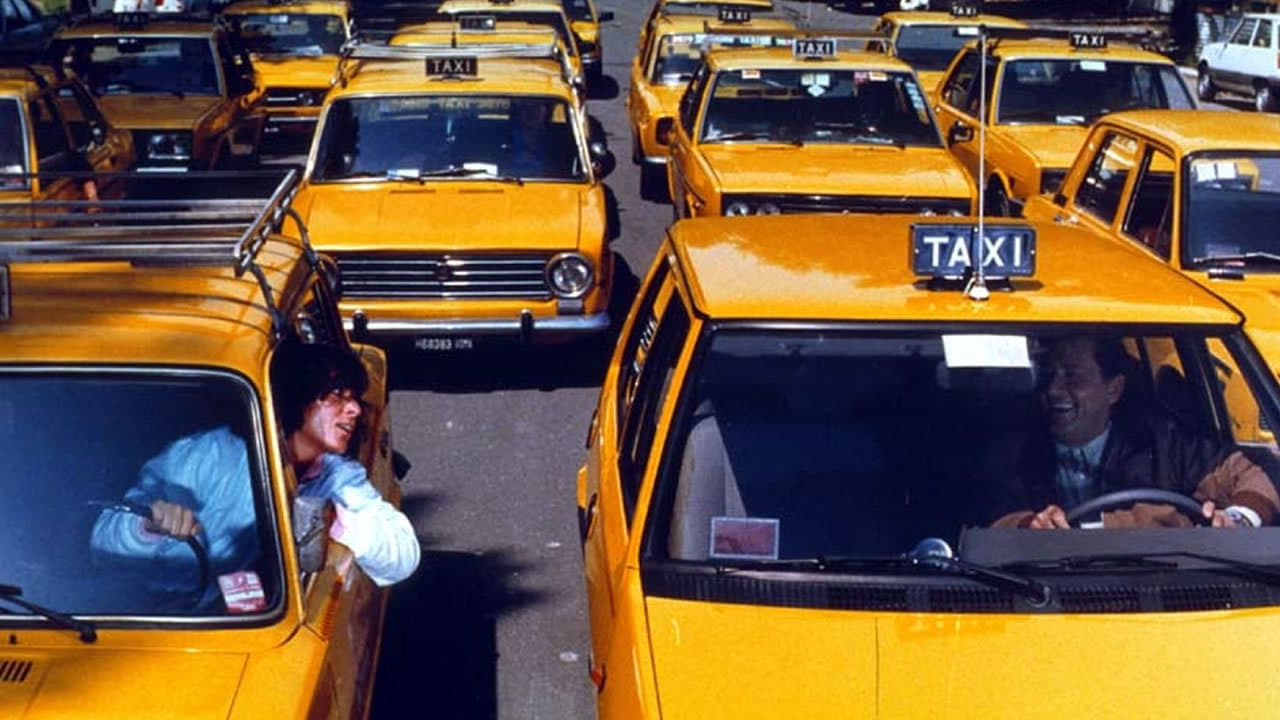
It’s curious how some films act like time capsules, not just of an era's fashion or music, but of its everyday conversations, its anxieties, its particular rhythm of life. Watching Alberto Sordi's Il Tassinaro (often known simply as The Taxi Driver outside Italy, though bearing no relation to Scorsese's masterpiece) from 1983 feels precisely like stepping into such a capsule, specifically one navigating the bustling, complex streets of Rome during the early 80s. The opening doesn't grab you with explosions or intrigue, but rather with the familiar rumble of an engine and the face of a man who feels instantly recognisable, even if you've never met him.
A Rolling Confessional Booth
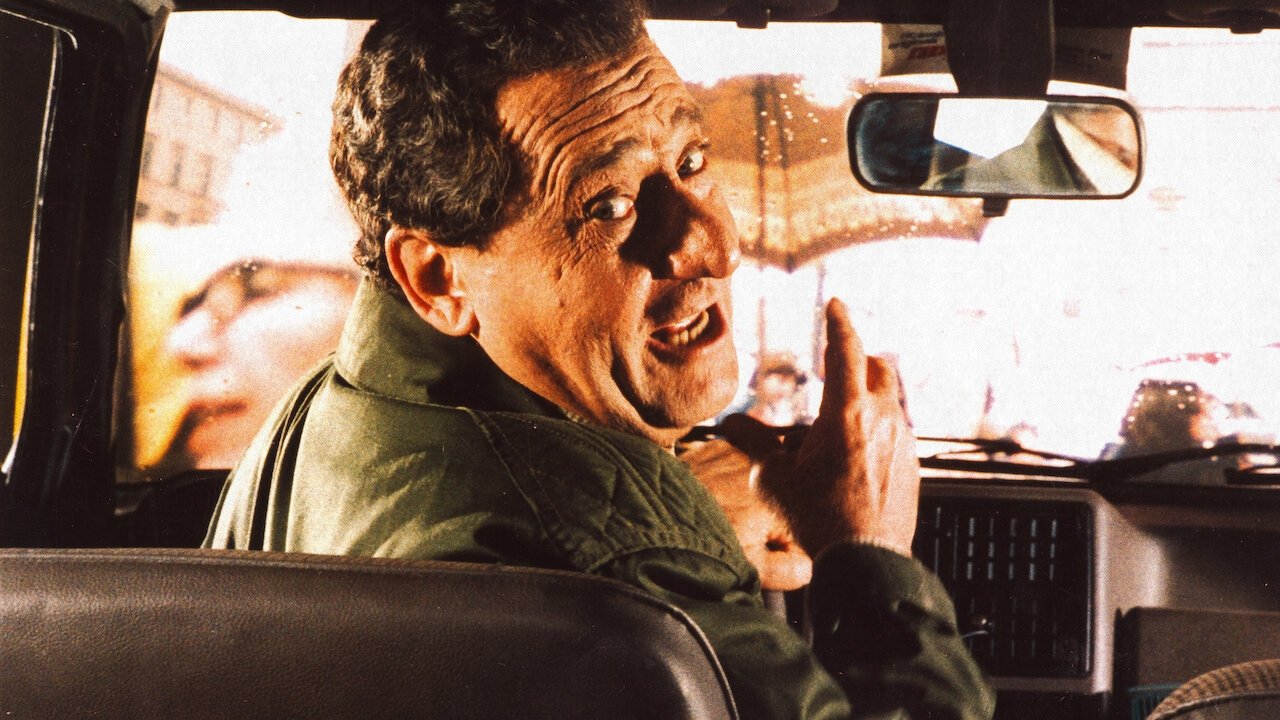
The premise is deceptively simple: we follow Pietro Marchetti (Alberto Sordi), a veteran Roman taxi driver, through a series of fares over the course of a day and night. His cab becomes a mobile stage, a microcosm of society where paths cross fleetingly, secrets are half-whispered, opinions loudly proclaimed, and the mundane rubs shoulders with the extraordinary. Sordi, who also directed and co-wrote the screenplay with the legendary duo Age & Furio Scarpelli (masters of the Commedia all'italiana), doesn't just play Pietro; he is Pietro. This isn't acting in the transformative sense, but rather an embodiment, a distillation of the working-class Roman – opinionated, pragmatic, world-weary yet capable of surprising warmth and insight.
Sordi had built an incredible career playing variations on this theme, holding a mirror up to Italian society with characters that were often flawed, sometimes buffoonish, but almost always deeply human. Here, as Pietro, he listens more than he lectures, his reactions – a raised eyebrow, a weary sigh, a sudden burst of indignation – guiding our own response to the parade of passengers. There's a gentle rhythm to these encounters, a sense of eavesdropping on genuine conversations, even when they veer into the slightly absurd.
Cameos and Commentary
What truly sets Il Tassinaro apart, especially for those familiar with Italian culture of the period, is its remarkable series of cameos. Pietro's fares aren't just random citizens; they include real-life luminaries playing themselves. Imagine picking up legendary film director Federico Fellini, who proceeds to discuss his dreams and cinematic visions with his cabbie. Or finding yourself chauffeuring Giulio Andreotti, one of Italy's most powerful and enigmatic politicians (serving multiple terms as Prime Minister), engaging in a surprisingly candid conversation. These moments aren't mere gimmicks; they ground the film in a specific time and place, blurring the line between fiction and reality. It’s said Sordi leveraged his considerable clout and personal connections to secure these appearances, adding a layer of meta-commentary on fame, power, and the everyday lives they intersect with.
These interactions, alongside those with less famous but equally memorable characters – like the aging diva played with poignant charm by Silvana Pampanini, or the various everyday folk with their anxieties and aspirations – allow Sordi to subtly weave in social commentary. Through Pietro's conversations and observations, the film touches upon politics, cinema, generational clashes, and the changing face of Rome itself. It’s done without preaching, emerging naturally from the dialogues. Does Pietro truly understand the complexities of Fellini's dreamscape or Andreotti's political maneuvering? Perhaps not fully, but his grounded perspective offers a relatable counterpoint.
The View from the Driver's Seat
The film isn't driven by plot in the conventional sense. There's no ticking clock, no central mystery to solve. Its momentum comes purely from the characters and the cumulative effect of their stories. This episodic structure might feel meandering to some viewers accustomed to more tightly plotted narratives, but it’s precisely the point. Life, as seen from Pietro's taxi, isn't a neat three-act structure; it's a series of overlapping vignettes, some funny, some melancholic, some utterly unremarkable yet collectively painting a rich portrait of a city and its people.
For many of us discovering foreign films on those cherished VHS tapes, perhaps tucked away in a special section of the rental store, films like Il Tassinaro were a window into another world. They lacked the high-octane thrills of Hollywood blockbusters but offered something else: a sense of place, a connection to characters who felt real, and a glimpse into different cultural conversations. Watching it now evokes that same feeling – a gentle, observational experience that feels increasingly rare. It reminds me of settling down to watch something on a Saturday afternoon, maybe something channel-surfed into, that unexpectedly holds your attention through its sheer authenticity.
The technical aspects are functional rather than flashy. Sordi the director serves Sordi the actor and the story's conversational nature. The focus remains squarely on the performances and the dialogue. Rome itself is captured authentically, not as a tourist postcard but as a living, breathing city navigated by Pietro's trusty yellow cab.
Rating and Final Reflection
Il Tassinaro isn't aiming for universal gut-laughs or edge-of-your-seat tension. It's a character study, a social snapshot, and a vehicle (pun intended) for its beloved star. Sordi is magnificent, embodying the heart and soul of the film. The cameos are a unique delight, and the gentle blend of humor and melancholy feels honest. Its episodic nature means it might not grip everyone equally throughout, but its charm lies in its quiet observations and authentic portrayal of human interaction.
Rating: 7/10
Justified by: The strength of Sordi's central performance, the unique and effective use of real-life cameos offering a fascinating time capsule element, the authentic Roman atmosphere, and its gentle, observational charm as a character piece. Points deducted for the meandering pace which might test some viewers and the perhaps limited appeal outside those interested in Italian cinema or Sordi specifically.
What lingers after the credits roll isn't a specific plot point, but the feeling of having spent a day riding shotgun with Pietro, listening in on the pulse of a city. It leaves you wondering: how many fascinating stories unfold unnoticed in the backseats of taxis every single day?