Okay, fellow tapeheads, dim the lights, maybe pour yourself something strong, and let’s talk about a film that probably sat mysteriously on the ‘World Cinema’ shelf of your local video store, radiating a weird kind of energy. I’m talking about Luigi Comencini's 1979 sprawling, messy, and utterly unforgettable L'ingorgo - Una storia impossibile, known to many of us simply as Traffic Jam. Finding this one on VHS felt less like renting a movie and more like uncovering a strange, sun-baked artifact from a slightly skewed dimension.

Forget your typical Hollywood disaster flick. This isn't about heroes saving the day from the gridlock. No, Traffic Jam throws a truly staggering ensemble of characters – think a who's who of European cinema at the time – onto a choked Italian motorway leading out of Rome and simply... leaves them there. For hours. Then days. It's less a plot-driven narrative and more a pressure cooker of human behaviour stripped bare under the relentless sun and exhaust fumes.
An Asphalt Canvas of Humanity
What immediately hits you, especially watching it now, is the sheer scale of the thing. Comencini, a director more often associated with classic Italian comedies (Bread, Love and Dreams) but also capable of biting social commentary, somehow wrangled hundreds of cars and actors onto what feels like miles of real highway. This wasn't CGI, folks. This was logistical grit, coordinating real vehicles, real people, creating a believable purgatory on pavement. You can almost smell the fumes and feel the sticky vinyl seats. Remember how real these large-scale practical set pieces felt back then? There's a tangible weight to it that modern digital crowds often lack.
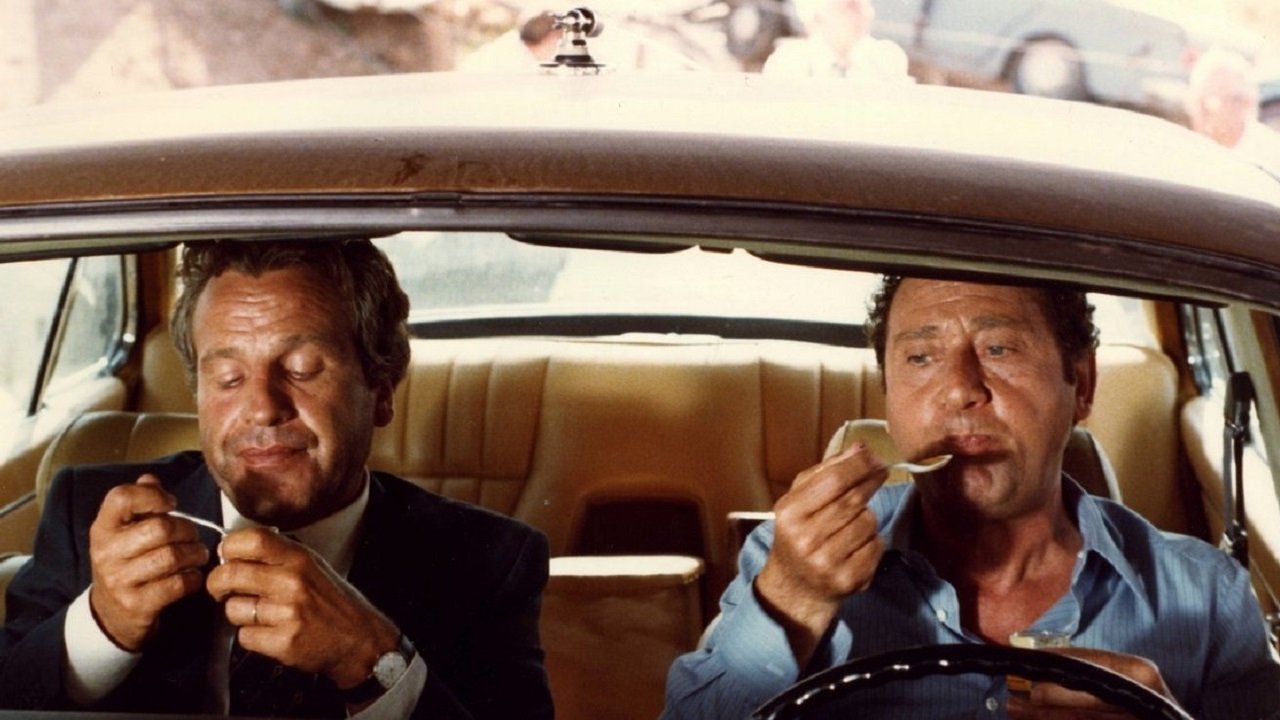
The film unfolds as a series of vignettes, dipping into the simmering frustrations and desires of the trapped motorists. We get the pompous industrialist played with typical gusto by the legendary Alberto Sordi, convinced his importance should somehow magically clear the road. There’s a desperate Ugo Tognazzi trying to get his critically ill daughter to a hospital, his anxiety becoming almost unbearable. We see tense family dynamics, simmering class resentment, opportunistic predators, fleeting moments of connection, and sudden bursts of shocking violence. It’s a microcosm of society, stalled and stewing in its own juices.
Stars Stuck in the Slow Lane
The cast list alone is worth the rental fee back in the day. Beyond the Italian titans Sordi and Tognazzi, you've got Annie Girardot, Fernando Rey, Miou-Miou, a brooding Patrick Dewaere, and even Omar Sharif popping up. It's almost dizzying. Apparently, the script by Comencini and the powerhouse writing duo Agenore Incrocci & Furio Scarpelli (who penned countless Italian classics like The Good, the Bad and the Ugly and Big Deal on Madonna Street) was so compelling it drew this incredible international talent pool, all willing to bake inside period-appropriate cars for our viewing displeasure... and fascination. Each actor brings a specific flavour, contributing to the film's mosaic feel. There isn't really a 'main' character; the traffic jam itself is the star, and the humans are its chaotic, unpredictable symptoms.
More Than Just Road Rage
Don't go into Traffic Jam expecting easy resolutions or feel-good moments. It’s often cynical, sometimes bleak, reflecting the anxieties of the late 70s – pollution, social breakdown, the widening gap between rich and poor, the thin veneer of civilization. The 'action' here isn't explosive car chases (though there are moments of sudden, desperate movement), but the raw, uncomfortable human action. It’s the confrontation, the negotiation, the violation, the fleeting kindnesses – all amplified by the claustrophobia of the situation. The film unflinchingly portrays humanity at its best and, more frequently, its worst. Some scenes, particularly involving a group of predatory youths, are genuinely disturbing and hard to watch, a stark reminder that European cinema in this era often refused to look away from ugliness.
It wasn't a massive hit everywhere, perhaps too episodic and downbeat for some markets, but Traffic Jam remains a potent, if sprawling, piece of social satire. Watching it today, maybe on a slightly fuzzy transfer that mimics that old VHS feel, adds another layer. It feels like a dispatch from a different time, capturing a specific cultural malaise with a kind of audacious, messy ambition you rarely see anymore. It’s the sort of film that sparks conversation, makes you squirm, and sticks with you long after the tape clicks off. My friends and I definitely spent ages dissecting its weirdness after renting it one bizarre Saturday night.
Rating: 7/10
Traffic Jam earns a solid 7. It’s undeniably flawed – the episodic structure can feel disjointed, and its relentless cynicism can be wearying. However, the sheer ambition of the production, the stellar ensemble cast giving their all in often uncomfortable scenarios, and its power as a biting, allegorical snapshot of societal breakdown make it a fascinating and essential slice of late 70s European cinema. It’s a challenging watch, but a rewarding one for those willing to sit through the gridlock.
Final Thought: This isn't your polished Hollywood spectacle; it's a gritty, grimy, sometimes shocking pile-up of humanity that feels disturbingly relevant, a potent reminder from the VHS vaults that the most intense action often happens when everything grinds to a halt. A true Euro-cult traffic stopper.