Silence. That's the first thing that strikes you about Duke Togo, the man they call Golgo 13. Not a profound silence, but a chilling void. It hangs around him like a shroud, punctuated only by the sharp crack of his custom M16 or the soft thud of a silenced pistol. Watching Golgo 13: The Professional (1983) again, decades after first encountering it on a worn-out VHS tape likely rented from a dusty corner shelf, that silence still feels unnervingly potent. This wasn't Saturday morning cartoon fare; this was something else entirely – colder, sharper, and aimed squarely at adults.
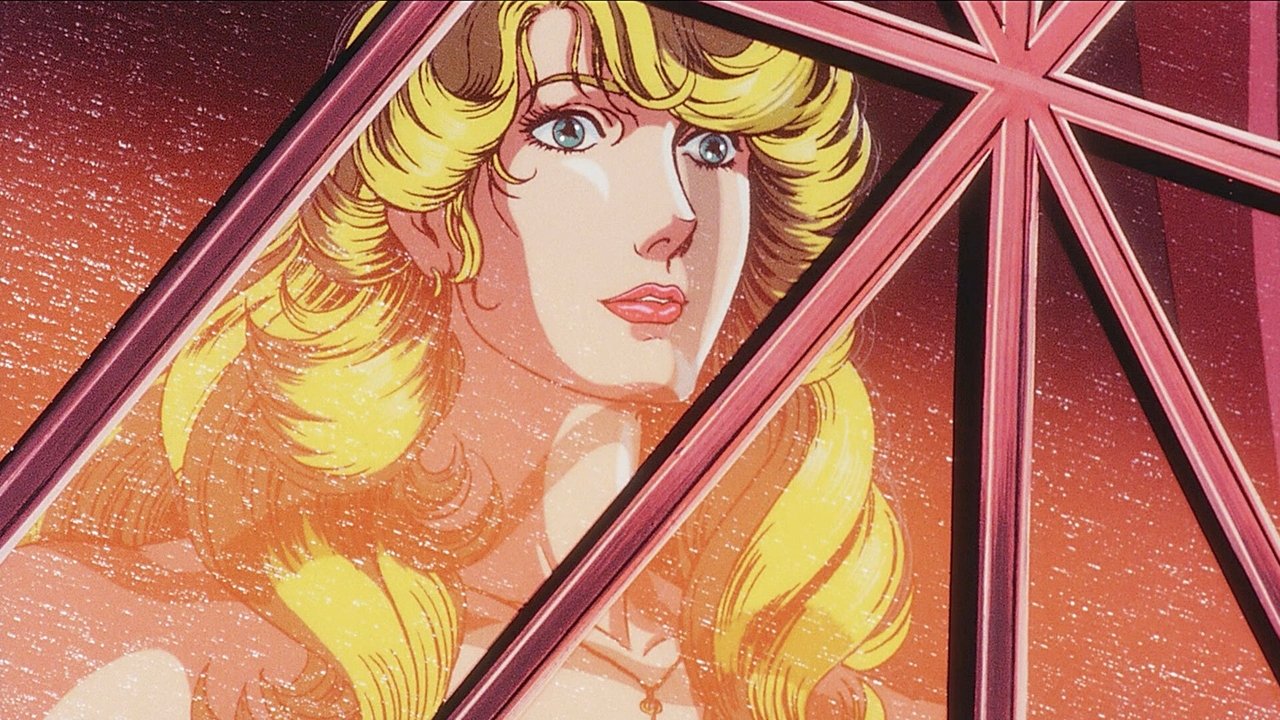
An Assassin's Shadow
The premise is brutally simple, as befits its protagonist. Golgo 13, the world's deadliest assassin, becomes the target himself after eliminating the heir of Leonard Dawson, a ruthless oil tycoon consumed by grief and vengeance. Dawson throws impossible resources – military forces, psychotic killers, anything money can buy – at the seemingly emotionless sniper. What unfolds is less a traditional narrative and more a relentless procession of stylized violence and existential dread, as Golgo navigates a world of betrayal, high-tech weaponry, and primal urges, all while remaining an absolute cipher. Voiced with icy detachment by Tetsurō Sagawa, Golgo 13 is less a character and more a force of nature, an unblinking embodiment of lethal precision.
Dezaki's Deadly Canvas
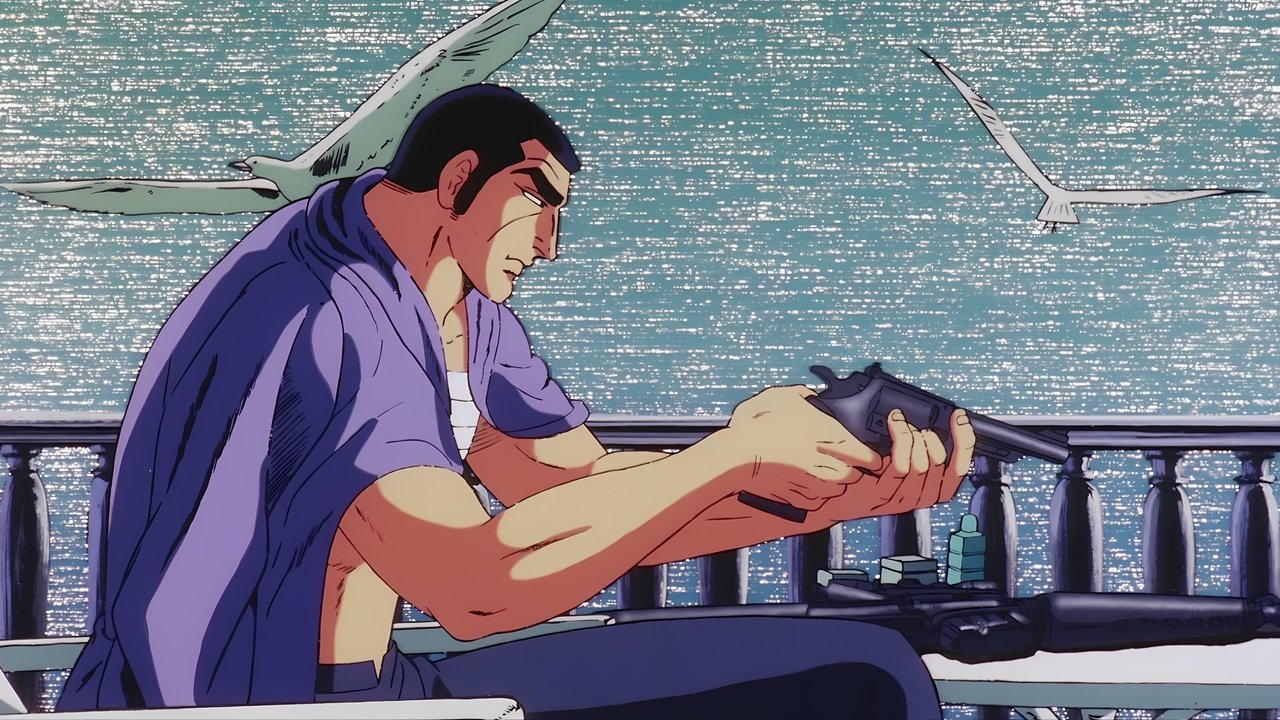
This film bleeds the signature style of director Osamu Dezaki, a legend known for his work on Ashita no Joe and Space Cobra. You see it everywhere: the dramatic split screens, the harsh lighting emphasizing sharp angles and deep shadows, and especially his famous "postcard memories" – those beautifully rendered freeze frames that linger on moments of intense action or emotion, searing them into your mind. The animation, while certainly a product of its time, possesses a raw energy and a commitment to visceral impact that often feels missing today. The character designs are sharp, angular, and distinctly '80s anime, capturing a certain gritty glamour amidst the carnage. The score, too, leans into the smoky, jazz-infused noir atmosphere, occasionally erupting into discordant themes that underscore the violence. Dezaki wasn't just animating a story; he was crafting a mood piece steeped in fatalism.
A Glimpse of the Future, Forged in Blood
One of the most talked-about aspects of Golgo 13: The Professional, even back in the day, was its groundbreaking use of CGI. Remember that helicopter sequence? For 1983, integrating computer-generated imagery into traditional cel animation was revolutionary stuff. While it looks primitive by today's standards, back then, glimpsing that wireframe-esque helicopter weaving through skyscrapers felt like peering into the future of filmmaking. It cost a significant chunk of the film's budget, a gamble by TMS Entertainment that signaled anime's ambition. Interestingly, the sequence wasn't just tech for tech's sake; its smooth, slightly sterile movement contrasted sharply with the hand-drawn grit, subtly reinforcing the cold, mechanical nature of modern warfare and, perhaps, Golgo 13 himself. It’s a fascinating time capsule moment, showing how filmmakers wrestled with new tools to enhance their dark visions. The film itself, based on Takao Saito's incredibly long-running manga (started in 1968!), had to condense decades of storytelling ethos into 90 minutes, focusing purely on the relentless professional.

Not for the Faint of Heart
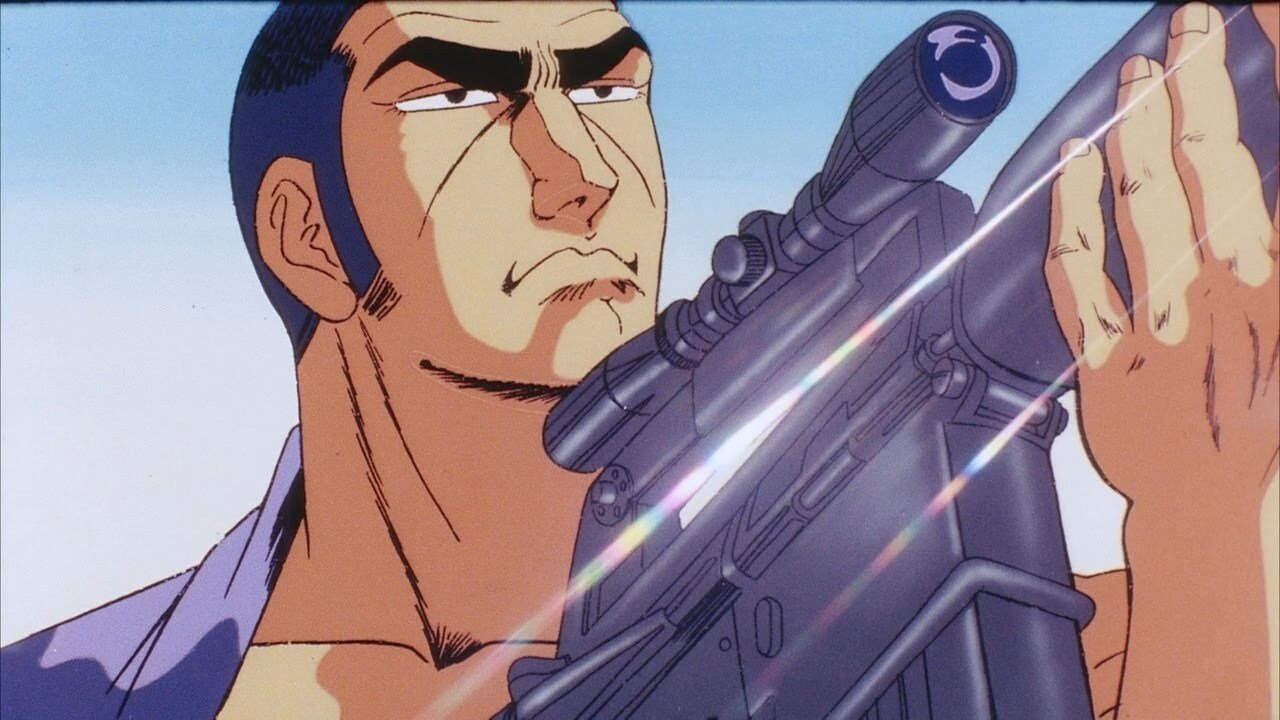
Let's be blunt: this film earned its reputation. The violence is graphic, frequent, and often disturbingly casual. The sexual content, particularly involving the character of Rita, feels startlingly explicit even now, pushing boundaries in a way that few mainstream Western animations dared to at the time. For many of us discovering anime beyond the heavily sanitized versions shown on TV, Golgo 13 was a shocking awakening. It demonstrated that animation could be brutal, sensual, and unapologetically adult. Did the level of violence sometimes feel excessive? Perhaps. But it undeniably contributed to the film's nihilistic worldview and Golgo 13's portrayal as an unstoppable, amoral entity operating outside conventional morality. There's a reason this tape often felt like contraband, something you watched late at night when others were asleep.
The Cold Professional's Legacy
Golgo 13: The Professional isn't a complex character study. Duke Togo remains an enigma from start to finish. It’s about atmosphere, style, and the visceral thrill of watching an apex predator navigate a deadly game. Its influence can be seen in later action anime, particularly those embracing a darker, more violent aesthetic. While perhaps overshadowed by other 80s anime titans like Akira (1988) or Nausicaä of the Valley of the Wind (1984), it holds a special place as a pioneering work of adult animation that refused to compromise its vision. It's raw, stylish, occasionally shocking, and utterly unforgettable.
Rating: 7.5/10
This score reflects the film's undeniable stylistic achievements, its historical significance (especially the early CGI), and its potent atmosphere, balanced against a narrative that's more a series of deadly encounters than a deep plot, and characterization that prioritizes archetype over depth. It’s a film that delivered exactly what it promised: a professional hit, executed with cold, hard style.
For those who remember the thrill of discovering just how dark and different animation could be, popping this metaphorical tape back in offers a potent dose of high-caliber nostalgia, reminding us of a time when anime felt dangerous and thrillingly adult. It’s a perfect slice of late-night, 80s cinematic intensity.