Okay, let's crack open the case on this sun-scorched slice of 80s grit. The hiss of the tape transport mechanism spinning up feels right for this one…
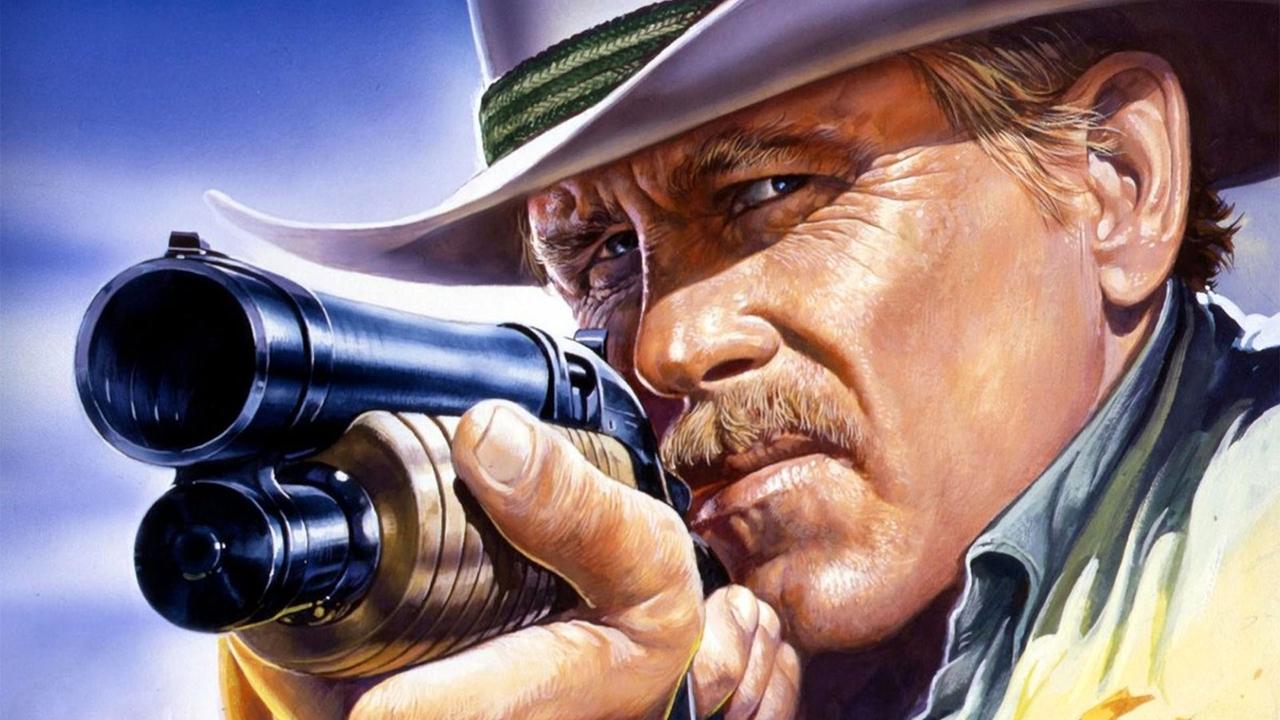
Dust hangs thick in the air, shimmering under a relentless Texas sun. You can almost feel the grit between your teeth before the first gunshot echoes. This isn't just any border town; it's a pressure cooker, simmering with old loyalties gone sour and new threats lurking just beyond the horizon. Welcome to the world of 1987's Extreme Prejudice, a film that hits like a shot of cheap tequila – harsh, potent, and leaving a distinct burn. It’s a modern western soaked in sweat, betrayal, and enough spent shell casings to fill a pickup truck.
Where Friendship Ends and the Killing Begins
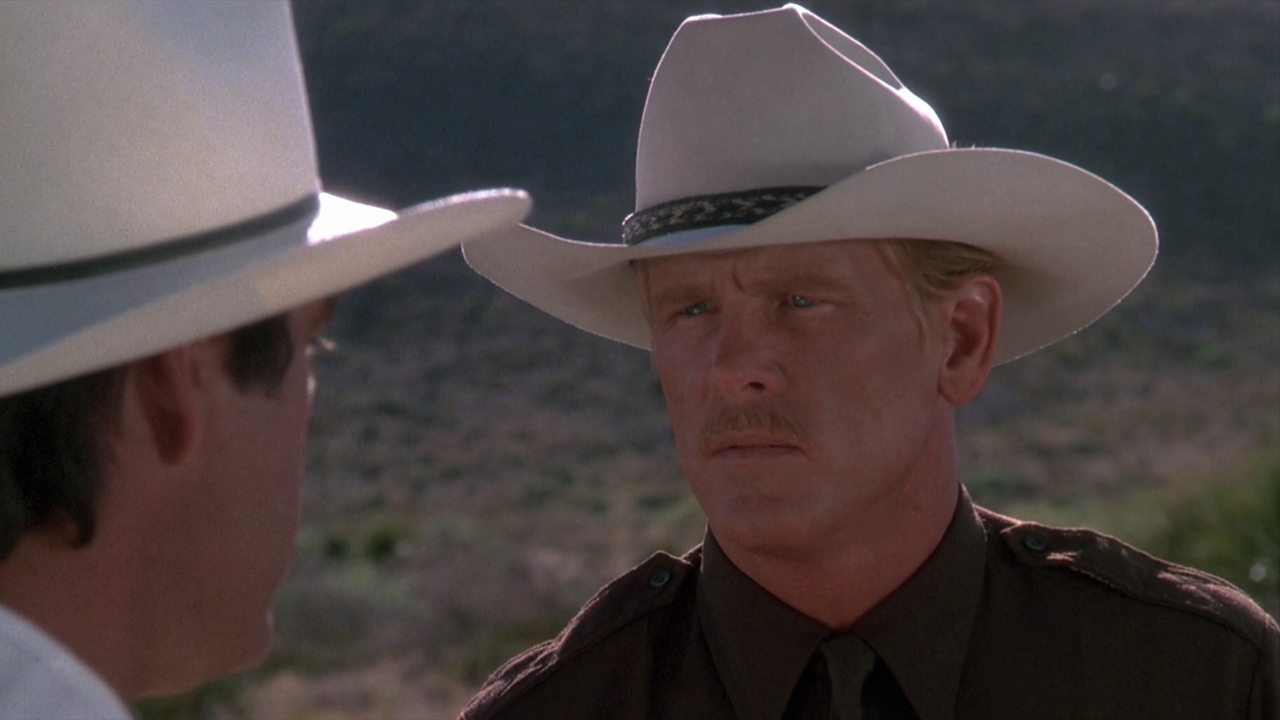
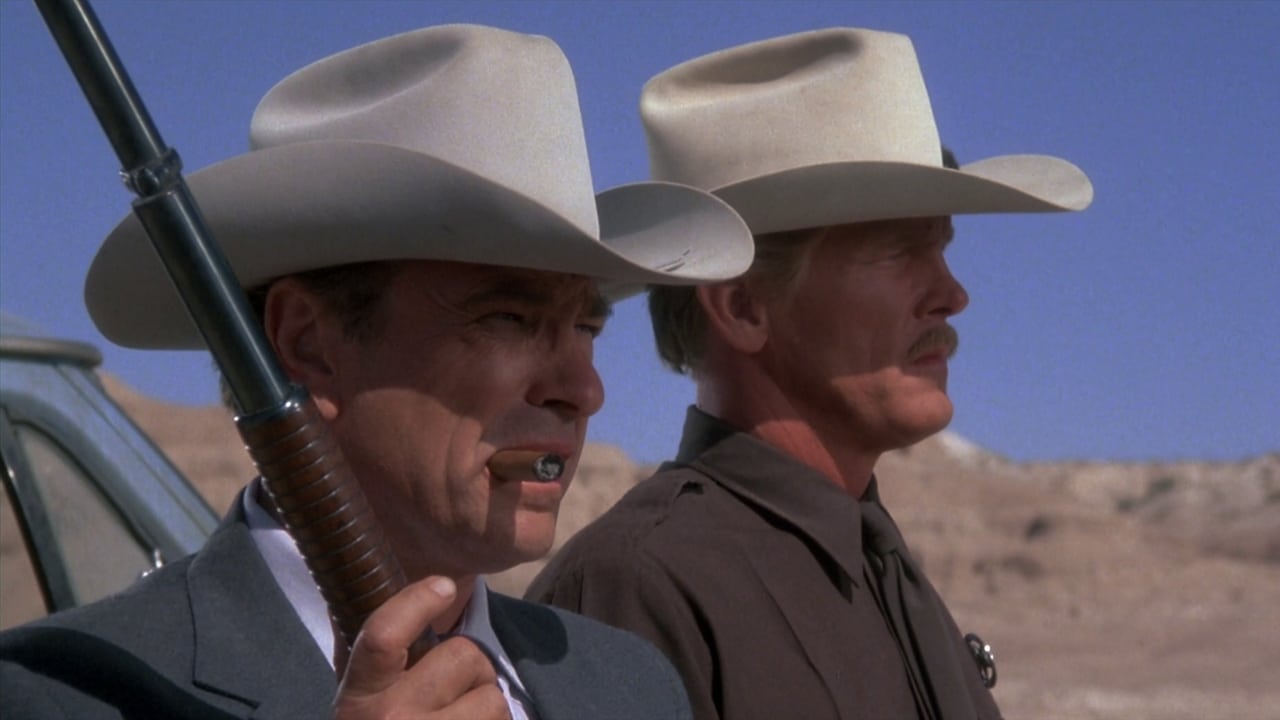
At its heart, this is a story as old as the West itself: two men, once inseparable friends, now stand on opposite sides of the law. Nick Nolte, sporting a stoic intensity and a truly magnificent mustache, is Jack Benteen, a Texas Ranger whose moral compass points true north, even when navigating the murky grey areas of border enforcement. He’s a throwback, a lawman carved from granite, trying to hold back a tide of corruption and violence. Facing him is Cash Bailey, played with charismatic menace by the late, great Powers Boothe. Bailey is the childhood friend who took a wrong turn, embracing the lucrative drug trade and becoming the very thing Benteen swore to destroy. Their shared history, particularly their connection to Sarita (a fiery Maria Conchita Alonso), adds a layer of bitter personal stakes to the inevitable confrontation. It’s a classic setup, but director Walter Hill infuses it with a distinct 80s edge.
Hill's Hardboiled Landscape
Speaking of Walter Hill, the man behind stone-cold classics like The Warriors (1979) and 48 Hrs. (1982), his fingerprints are all over this picture. Hill brings his signature lean, muscular style – minimal exposition, maximum impact. He crafts a world where dialogue is sparse, but glances carry weight, and violence erupts with sudden, brutal finality. There’s an undeniable attempt to evoke the spirit of Sam Peckinpah here, particularly The Wild Bunch. You see it in the dusty locales, the morally compromised characters, and especially in the explosive, slow-motion ballet of bullets that defines the film's climax. Hill, working with a script famously hammered into shape by several writers including the legendary John Milius (Apocalypse Now, Conan the Barbarian), doesn't shy away from the ugliness, presenting a borderland where loyalty is fragile and survival often means embracing the darkness.
Enter the Ghosts
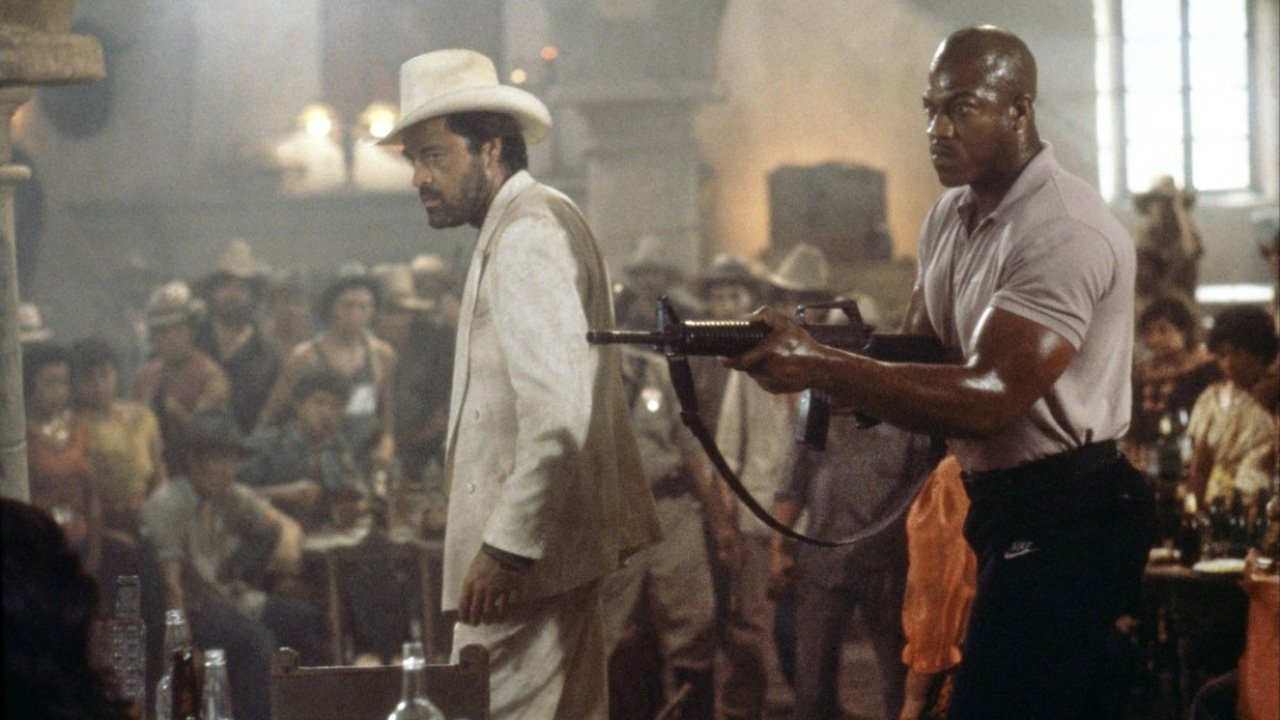
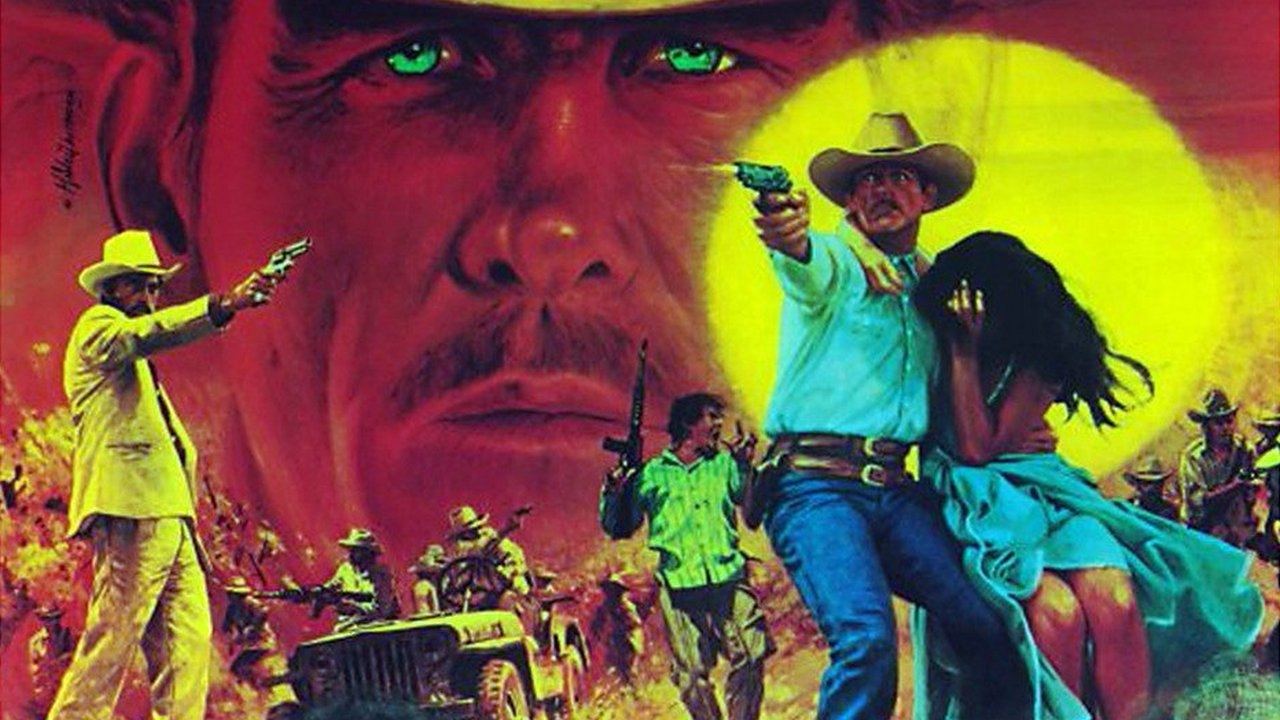
Just when you think it’s a straightforward cops-and-robbers (or rather, Rangers-and-Cartels) story, Hill throws a major curveball. A clandestine military unit arrives, seemingly out of nowhere, operating with ruthless efficiency and unclear motives. Led by the perpetually intimidating Michael Ironside as Major Paul Hackett, this unit is stacked with some of the best character actors of the era: Clancy Brown, William Forsythe, Matt Mulhern, Larry B. Scott. These aren't soldiers; they're ghosts, officially listed as Killed In Action, operating entirely off the books for reasons that only gradually become clear. Their arrival injects a sense of paranoia and escalates the tension exponentially. Who are they really after? Whose side are they on? Their presence transforms the film from a tense border standoff into something altogether more complex and deadly. These guys were unofficially dubbed the "Zombie Unit" by the crew – a fitting moniker for soldiers operating beyond the veil of official existence.
Sun, Sweat, and Squibs
Extreme Prejudice feels hot. Shot primarily around El Paso, Texas, the heat radiates off the screen, contributing to the simmering tension. This isn't the glossy action of later decades; it's gritty, grounded, and visceral. The practical effects, particularly during the film's legendary final shootout, are stunningly effective, even viewed through the fuzz of a well-worn VHS tape. Forget CGI blood spray; this is the era of the squib, and reports suggest Hill used an almost unprecedented number of them to stage the climactic battle in the Mexican town. It’s a masterclass in controlled chaos – raw, bloody, and loud. Remember how impactful those bullet hits felt back then? They still carry a jolt. Despite its visual punch and powerhouse cast, the film struggled to find a massive audience initially, pulling in around $11.3 million against a hefty $22 million budget – a real shame, as it deserved better.
More Than Just Bullets?
While the action is the main draw, the film grapples with themes of loyalty, betrayal, and the changing nature of warfare and law enforcement. Nolte’s Benteen represents an older code, increasingly outmatched by Bailey’s ruthless pragmatism and the cold, detached efficiency of Hackett's unit. The film doesn't offer easy answers, presenting a world where lines are blurred and violence is often the only language understood. Sure, Sarita's character could have been fleshed out more beyond the fulcrum between the two leads, and the plot with the military unit can feel a tad convoluted at times, but these are minor quibbles in the face of such confident, hard-hitting filmmaking.
The Verdict
Extreme Prejudice is pure, uncut 80s action filmmaking with a neo-western soul. It’s tough, uncompromising, and brilliantly cast, featuring career-defining intensity from Nolte and Boothe, backed by arguably one of the best collections of cinematic hard-asses ever assembled for a single mission. Walter Hill directs with a lean, mean precision, delivering bone-jarring action and a palpable sense of sun-baked dread. It might not have set the box office alight back in '87, but for fans who discovered it on video store shelves, it remains a cherished artifact of the era – a film that wasn't afraid to get its hands dirty.
Rating: 8/10
This score reflects the film's powerhouse performances, masterful direction by Walter Hill, gritty atmosphere, and truly spectacular practical action sequences. It’s a near-perfect execution of its hardboiled neo-western ambitions, only slightly docked for a sometimes-dense plot and an underdeveloped female lead. It earns its place as a top-tier 80s action cult classic.
It’s the kind of movie that reminds you why Walter Hill is a master of the genre – a brutal, stylish, and unforgettable trip to the dark side of the border. Doesn't that final shootout still rank among the best of the decade?