Okay, fellow tape travelers, dim the lights and adjust the tracking. Tonight, we're not popping in a blockbuster action flick, but something arguably rarer and more precious from the dusty shelves of 1982 – a six-minute whisper of gothic genius that somehow escaped from the heart of the Magic Kingdom itself. I'm talking about Tim Burton's Vincent, a stop-motion love letter to Edgar Allan Poe, horror films, and the legendary Vincent Price, who graces us with his unmistakable voice. Finding this felt like discovering a secret transmission hidden on a worn-out T-120, a glimpse into a darkly charming world that hinted at so much more to come.
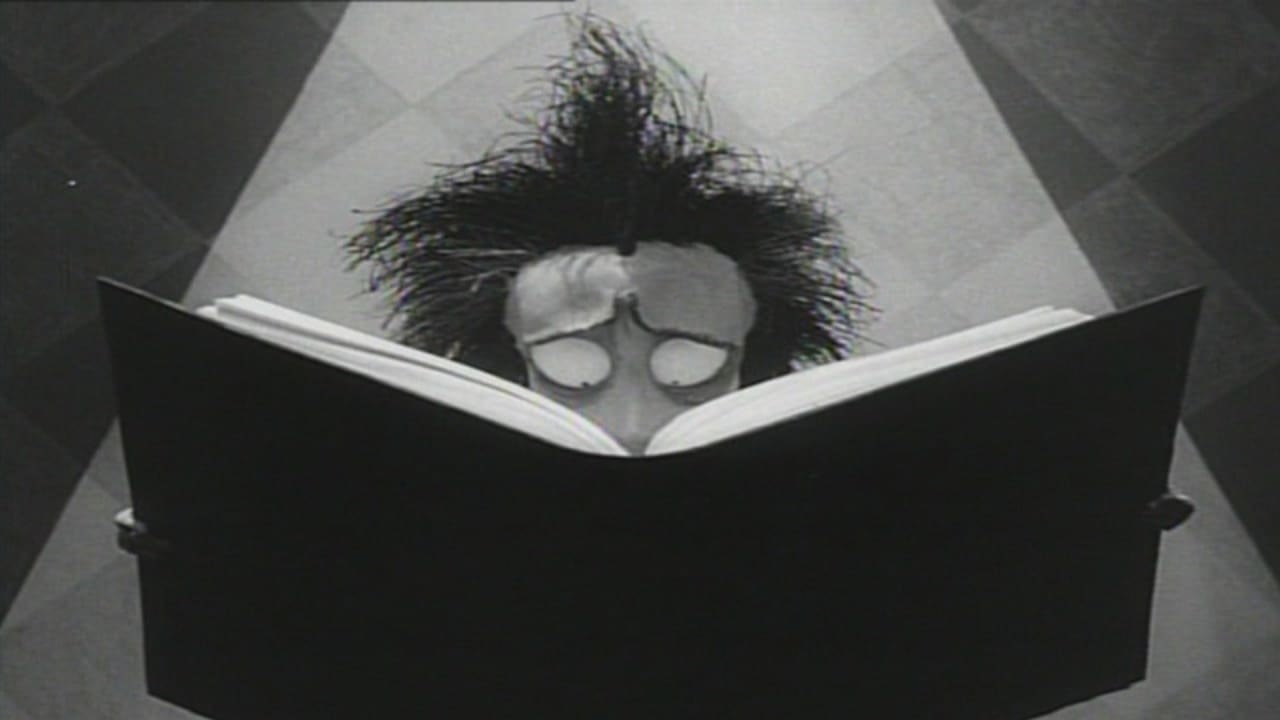
### A Boy and His Beautiful Gloom
The premise is deceptively simple: young Vincent Malloy, a polite suburban seven-year-old, longs to be just like his idol, Vincent Price. Instead of playing outside, he conducts experiments on his dog Abercrombie (attempting to turn him into a zombie, naturally) and wanders his home lost in dramatic, Poe-inspired fantasies, imagining his aunt sealed in wax or his wife buried alive. It's all narrated in perfectly pitched rhyming couplets penned by Burton himself, capturing that delicious melancholy and misunderstood creativity that would become his trademark. This wasn't your typical Saturday morning cartoon fare; it was something... different. Something wonderfully strange.
### Burton Uncaged, Frame by Frame
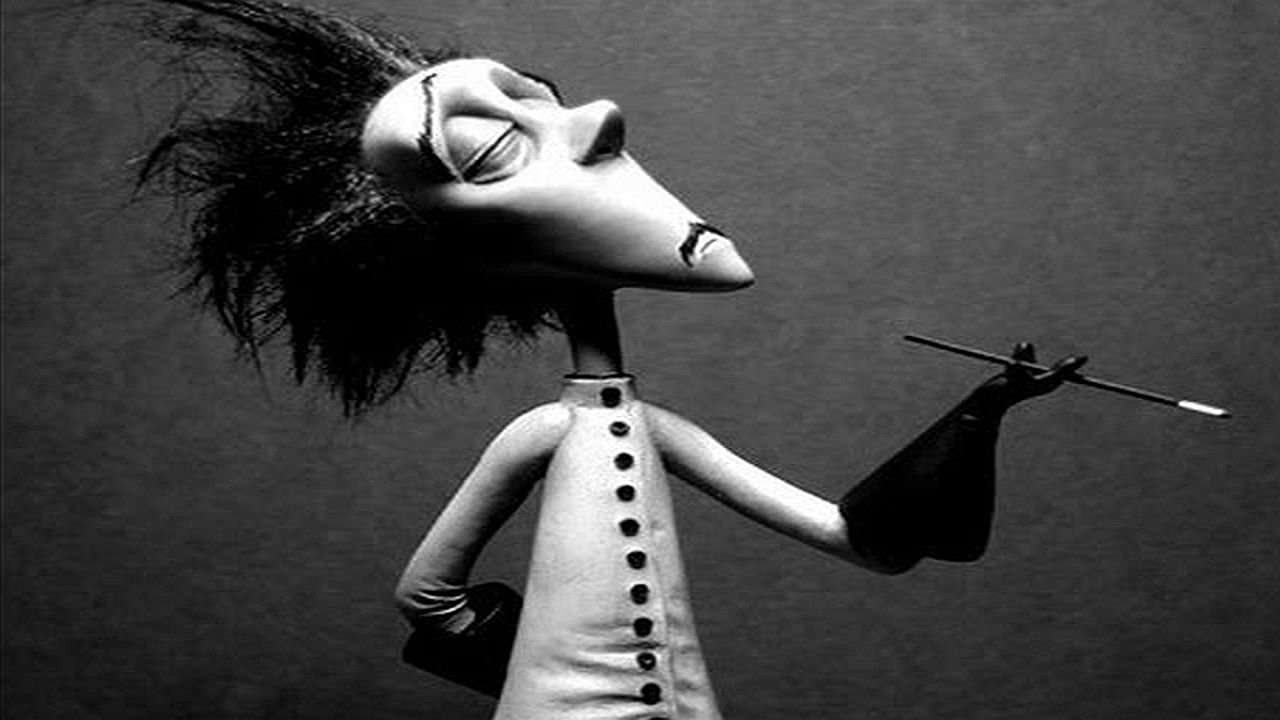
Watching Vincent now feels like looking at the seed from which Burton's entire cinematic forest grew. Created while Burton was feeling creatively stifled as a young animator at Disney – working on films like The Fox and the Hound (1981) that didn't exactly mesh with his sensibilities – this short was a personal project the studio surprisingly allowed him to make. Reportedly greenlit with a modest $60,000 budget, it gave Burton the freedom to unleash his distinctive style. The stop-motion animation, supervised by Disney animator Rick Heinrichs (who'd become a frequent Burton collaborator), is pure, unadulterated Burton: spindly characters, exaggerated angles, deep shadows, and a stark black-and-white palette evoking the German Expressionist masterpieces like The Cabinet of Dr. Caligari (1920) that clearly inspired him.
There's a tangible quality to the animation here, a handcrafted feel that modern CGI, for all its smoothness, can't replicate. You feel the texture of the puppets, the slight jitter of the frame-by-frame movement. Watching it on a slightly fuzzy CRT back in the day, that almost subliminal flicker only added to the dreamlike, slightly unsettling atmosphere. It felt made, constructed with care and passion in someone's dimly lit workshop, much like Vincent Malloy's own imagined world.
### The Master's Voice
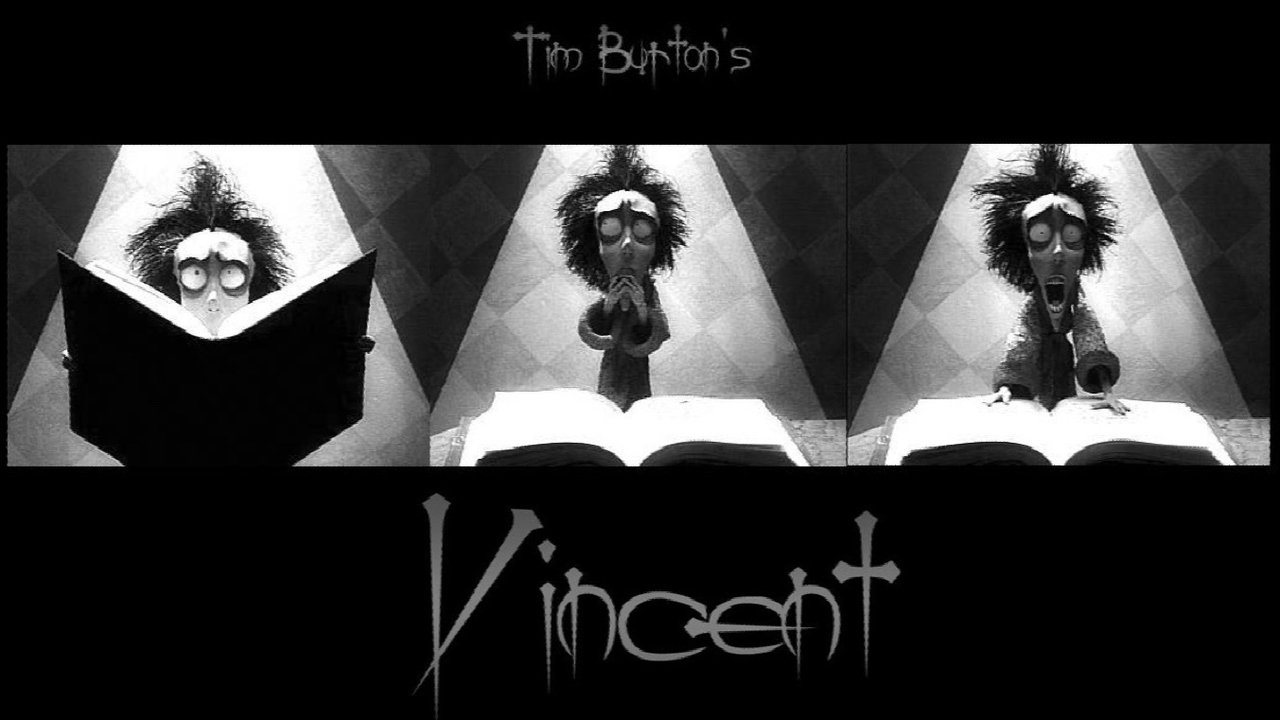
And then there's Vincent Price. Burton, a lifelong admirer who had even cold-contacted Price as a teenager, managed to get his idol to narrate the film. It’s impossible to imagine Vincent without Price's sonorous, perfectly modulated tones delivering Burton’s verse. He brings warmth, gentle irony, and a palpable sense of shared understanding to the lonely boy's plight. Price reportedly adored the project, considering his involvement one of the highlights of his later career. Hearing his voice echo through this miniature gothic world is pure magic – a direct link between the golden age of screen horror and the new wave of dark fantasy Burton was pioneering.
### A Cult Classic Born in the Shadows
Despite its quality and Burton's burgeoning talent, Vincent wasn't exactly pushed into the spotlight by Disney. It received a very limited theatrical release, often playing before the decidedly non-gothic S.E. Hinton adaptation Tex (1982). Most of us probably didn't catch it in theaters. Instead, it became the stuff of legend, a whispered-about gem discovered later – perhaps on a rare animation compilation tape, a bootleg passed among fans, or eventually as a cherished extra feature tucked away on the DVD release of The Nightmare Before Christmas (1993). Its initial obscurity only enhanced its cult status. It felt like our discovery, a secret handshake among those who appreciated the beautifully macabre.
Vincent is more than just a student film or a director's early work; it's a perfectly formed miniature masterpiece. It captures the bittersweet ache of childhood imagination, the feeling of being out of step with the world, and wraps it in visuals that are both haunting and deeply charming. It laid the groundwork for Beetlejuice (1988), Edward Scissorhands (1990), and The Nightmare Before Christmas, proving that darkness could be delightful and that Burton's unique vision was something special.
Rating: 9/10
Justification: For its groundbreaking style, perfect marriage of visuals and Vincent Price's iconic narration, and its undeniable status as the wellspring of Tim Burton's unique cinematic world, Vincent earns a high score. It's a concentrated dose of pure Burtonesque magic, remarkably potent for its six-minute runtime. The slight point deduction is only because its brevity leaves you desperately wanting more.
Final Take: A tiny treasure that looms large in animation history. Vincent is proof that sometimes the most potent spells come in the smallest packages, a gothic nursery rhyme that still resonates from the flickering shadows of the VHS era. Essential viewing for any Burton fan or lover of beautifully crafted gloom.