Alright fellow tape-watchers, let's rewind to a time before Peter Jackson's epic vision dominated Middle-earth on screen. For many of us tethered to the glow of our CRT sets in the early 80s, the conclusion to Tolkien's saga wasn't found in multiplexes, but rather flickered into existence via the distinctive animation style of Rankin/Bass Productions. Their 1980 adaptation of The Return of the King often landed on television screens or video store shelves feeling strangely disconnected, like finding the last chapter of a book you hadn't started reading. And yet, despite its unusual place in the Tolkien adaptation timeline, this animated feature holds a specific, almost storybook charm that’s hard to shake.

### Middle-earth Through a Different Looking Glass
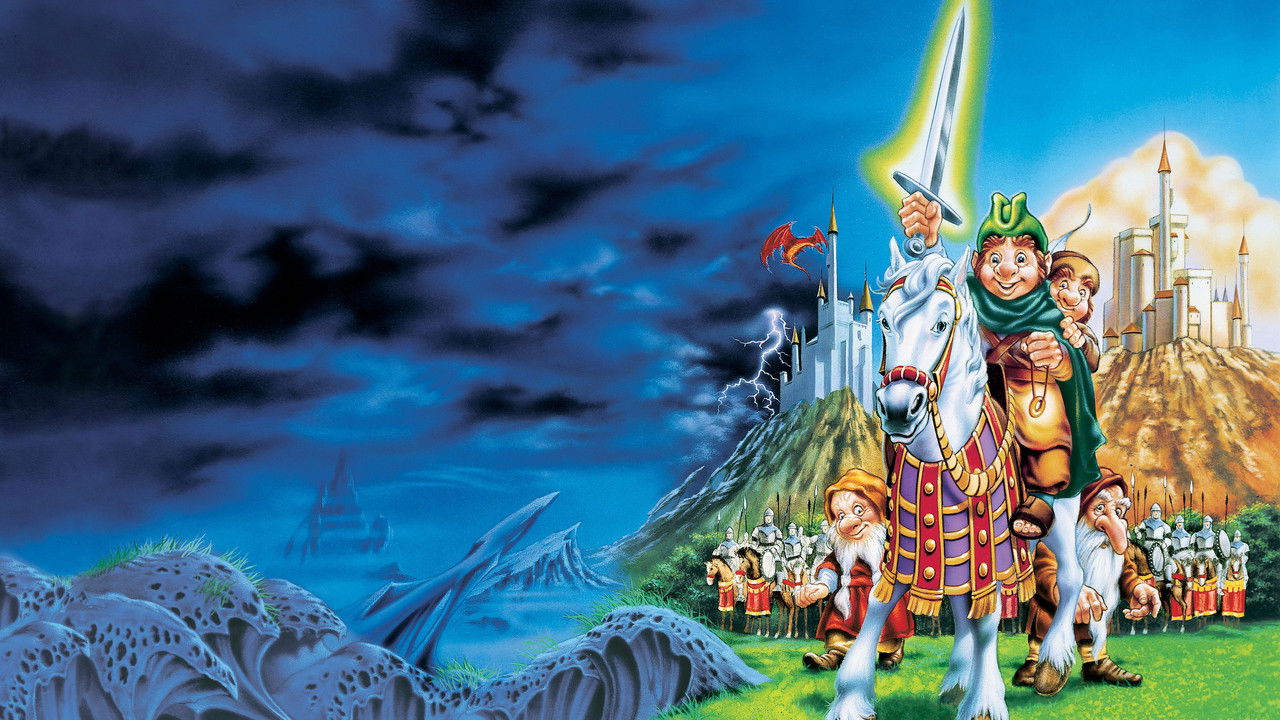
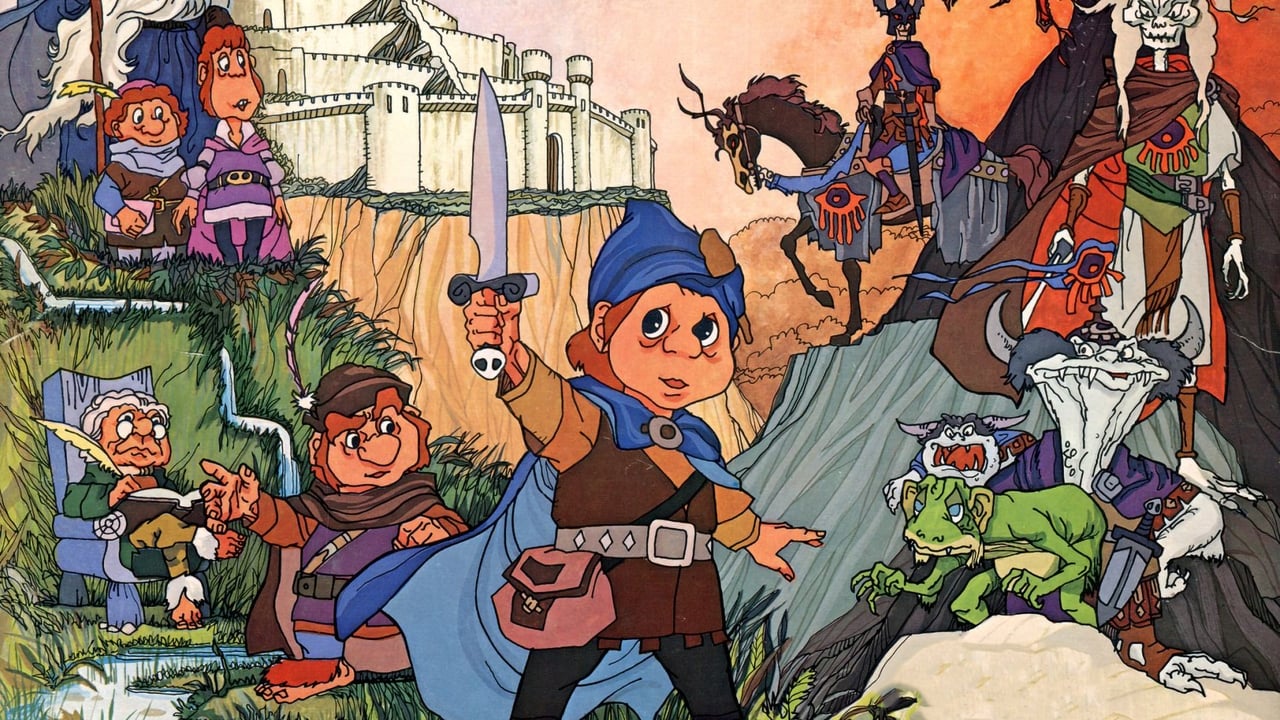
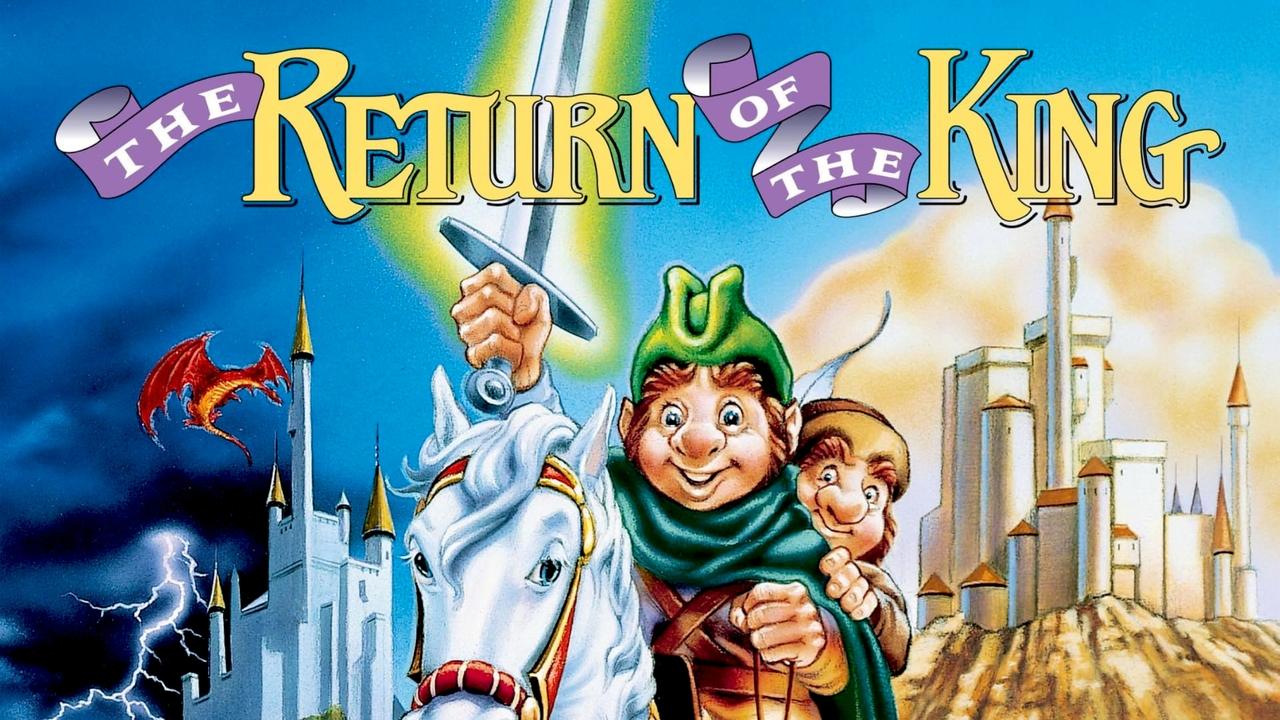
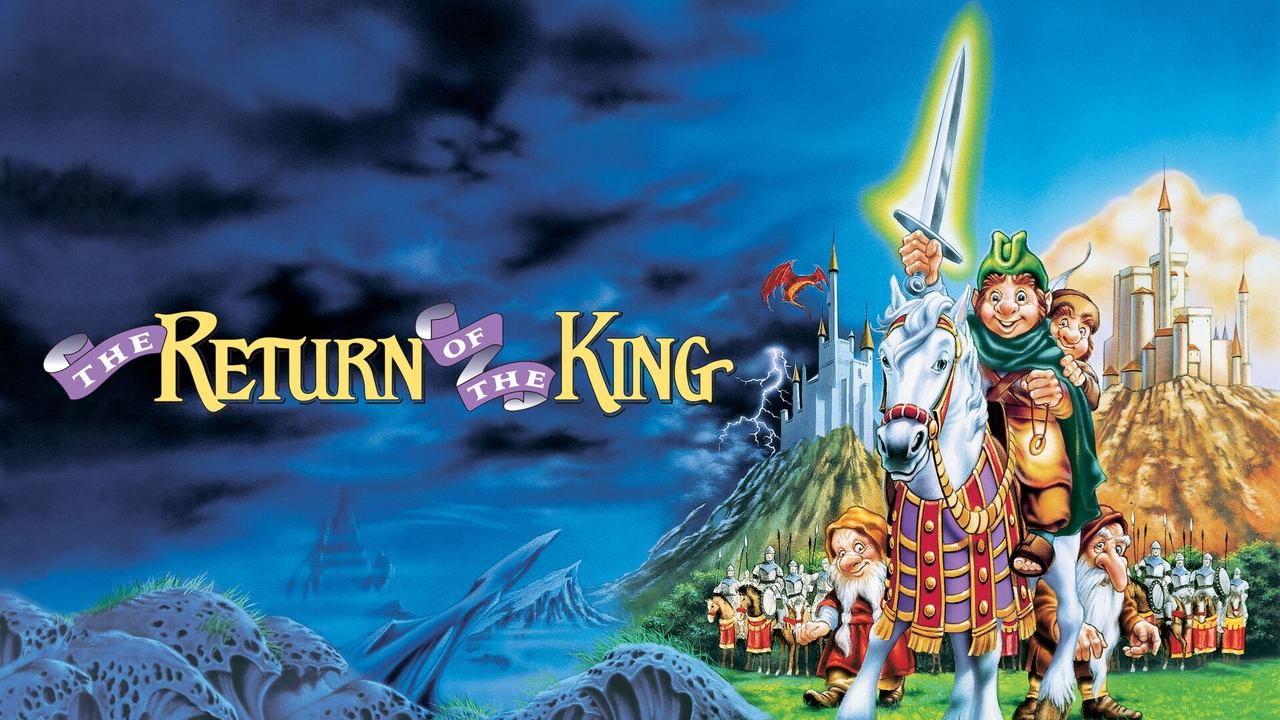
Produced and directed by the legendary animation duo Arthur Rankin Jr. and Jules Bass, and penned by their frequent collaborator Romeo Muller (the creative force behind holiday staples like Rudolph the Red-Nosed Reindeer and Frosty the Snowman), this film carries the unmistakable Rankin/Bass DNA. It feels like a direct sibling to their earlier, much-loved 1977 animated version of The Hobbit. The visual style is less high fantasy epic and more illustrated fairy tale – think gentle water-colour backgrounds, character designs that are sometimes endearing, sometimes slightly odd (Gollum remains uniquely unsettling), and that overall handcrafted feel that defined so much of their output. The animation itself, primarily handled by Japanese studio Topcraft (whose members would later form the core of Studio Ghibli!), possesses a fluid, expressive quality distinct from its American contemporaries.
This aesthetic difference is key, especially considering the film's awkward positioning. Ralph Bakshi's ambitious, rotoscoped The Lord of the Rings had arrived just two years prior in 1978, adapting roughly the first book-and-a-half before abruptly stopping. Rankin/Bass's Return of the King essentially picks up somewhere vaguely after Bakshi left off, but tells its story as if it were a direct sequel only to their own Hobbit. This leaves newcomers utterly bewildered and even those familiar with the books feeling like they missed a few crucial reels. There's a brief prologue attempting to bridge the gap, but it mostly serves to highlight just how much story is being skipped or compressed.
### Voices of Courage and Despair
Despite the narrative hurdles, the film boasts a truly impressive voice cast that lends considerable weight to the proceedings. The wonderful Orson Bean, who had perfectly captured Bilbo Baggins' reluctant heroism in The Hobbit, returns here, stepping into the worn shoes of Frodo Baggins. It’s a fascinating bit of casting continuity that connects the Rankin/Bass Tolkien universe. He conveys Frodo’s weariness and determination with a gentle strength that resonates. Lending his immense gravitas is the legendary director and actor John Huston as Gandalf the White, bringing wisdom and power to the wizard's voice.
We also get the rich baritone of Theodore Bikel (known for Fiddler on the Roof on stage) as Aragorn, embodying the noble king-in-waiting, and the unmistakable, commanding voice of William Conrad (TV's Cannon) as the despairing Steward of Gondor, Denethor. Roddy McDowall, a familiar voice and face from countless genre films including Planet of the Apes, provides the earnest heart of Samwise Gamgee. These seasoned performers elevate the material, grounding the sometimes whimsical animation with genuine dramatic depth.
### Songs, Spectacles, and Orcish Chants
Rankin/Bass were never shy about incorporating musical numbers, and Return of the King is no exception. While perhaps not as memorable overall as the tunes in The Hobbit, the folk-influenced songs by Maury Laws contribute to the film's unique atmosphere. And then there's that song – the Orcish marching chant, "Where There's a Whip, There's a Way!" It's a bizarrely catchy, almost darkly comedic number that sticks in your head long after the credits roll. It’s one of those moments that perfectly encapsulates the film's sometimes jarring tonal shifts – one minute you have the grim determination of Frodo and Sam, the next, slightly goofy-looking Orcs are having a singalong about torture.
Visually, the Battle of the Pelennor Fields is handled with surprising scale for the medium and era, even if it lacks the visceral punch of later live-action interpretations. The confrontation at the Black Gate and the final, desperate journey to Mount Doom capture a sense of hopelessness effectively. It’s moments like these, combined with the earnest voice acting, that allow the core emotional power of Tolkien's climax to shine through, even amidst the stylistic quirks.
### Retro Fun Facts Unearthed
- Bridging the Gap (Sort Of): Rankin/Bass initially wanted to adapt the entire trilogy after The Hobbit's success, but rights issues and Bakshi's project complicated matters. Their Return of the King ended up being commissioned by ABC television as a follow-up primarily to their own Hobbit, hence the narrative disconnect.
- Box Office Blues?: Unlike Bakshi's film which saw theatrical release, Rankin/Bass's Return of the King premiered straight to television in May 1980. While ratings info is scarce, its subsequent life on VHS ensured it reached a wide audience over the years, becoming the version many kids knew.
- Ghibli Connections: As mentioned, the animation was largely done by Topcraft. When Topcraft dissolved shortly after animating Hayao Miyazaki's Nausicaä of the Valley of the Wind (1984), key staff including Miyazaki and Isao Takahata formed Studio Ghibli. So, there's a fascinating, indirect link between this humble Tolkien adaptation and Japanese animation royalty!
- Critical Reception: Reviews at the time were mixed, often acknowledging the quality voice work but criticising the condensed storyline and the jarring jump from previous adaptations (or lack thereof). It was often seen as a less ambitious, perhaps more child-friendly take compared to Bakshi's darker vision.
### A Cherished Chapter, Flaws and All
Watching The Return of the King today is like rediscovering a well-worn storybook from childhood. It’s undeniably dated in places, the narrative leaps are jarring, and the tone can be inconsistent. Yet, there's an undeniable heart to it. The Rankin/Bass style offers a different, gentler window into Middle-earth, one filled with memorable character designs, strong voice acting, and a pervasive sense of earnest, if somewhat simplified, storytelling. It might not be the definitive screen version of Tolkien’s finale, but for a generation who found it on a flickering TV screen or a treasured VHS tape, it remains a significant and often fondly remembered piece of fantasy animation history. It filled a gap, however imperfectly, and brought the epic conclusion to countless young imaginations.
Rating: 6.5/10
Justification: While hampered by its narrative compression and awkward place following (or ignoring) Bakshi's film, the strong voice cast, distinctive Rankin/Bass charm, memorable moments (including that Orc song), and its nostalgic significance as the only conclusion available for many years earn it points. It's a flawed but endearing piece of animation history that successfully conveys some of the story's emotional core.
Final Thought: It may skip a few chapters, but this animated King still holds a curious, charming little corner of the Shire in our collective VHS memories.