Okay, pull up a beanbag chair, maybe crack open a Tab if you can still find one. Let's talk about a film that likely sat on the higher shelves of the video store, perhaps wrapped in slightly opaque plastic, whispering promises of European art house sensibilities mixed with something… else. I'm talking about David Hamilton's Tender Cousins (1980), a film bathed in the kind of gauzy, sun-drenched haze that feels like a half-remembered dream, yet leaves a distinctly uneasy residue long after the VCR clicks off.

A Summer Suspended in Amber
The premise is deceptively simple, evoking countless coming-of-age tales. It's the summer of 1939, war is looming just over the horizon, but within the confines of a sprawling French country estate, 14-year-old Julien (Thierry Tevini) is preoccupied with more immediate concerns: the burgeoning, confusing rush of adolescent desire. His focus settles intensely on his slightly older, luminously beautiful cousin, Julia (Anja Schüte), visiting with her family. What unfolds is less a traditional narrative and more a series of languid vignettes, observations filtered through Julien's hormone-addled perspective, all captured with Hamilton's trademark photographic style.
Hamilton's Gaze

You can't discuss Tender Cousins without discussing David Hamilton. Primarily a celebrated, and indeed controversial, photographer before turning to filmmaking (he also directed Bilitis in 1977), his aesthetic defines the movie. Every frame is meticulously composed, drenched in soft focus, backlit to create ethereal halos around the characters, particularly the young women. It's undeniably beautiful in a purely visual sense, evoking Renoir paintings or perhaps the languor of a humid August afternoon where time itself seems to slow down. The French countryside becomes an idyllic, almost mythical backdrop, detached from the impending global conflict hinted at occasionally. This very aesthetic, however, is inseparable from the film's problematic core. Hamilton's lens lingers, romanticizes, and aestheticizes youthful sensuality in a way that felt provocative then and feels significantly more uncomfortable now. It walks a razor-thin line, and for many viewers, myself included, frequently stumbles across it.
Navigating Difficult Waters
The performances from the young cast are caught within this stylistic web. Thierry Tevini as Julien embodies the awkwardness and single-minded focus of teenage obsession quite effectively. There’s a rawness there, a sense of bewilderment beneath the bravado he sometimes tries to project. Anja Schüte, a German actress who enjoyed a longer career primarily in television, brings an ethereal quality to Julia. She navigates the character's awareness of Julien's gaze, and her own dawning understanding of her allure, with a certain delicate poise. The surrounding adult characters often feel more like set dressing, orbiting the central drama of adolescent awakening, occasionally offering moments of levity or world-weariness.
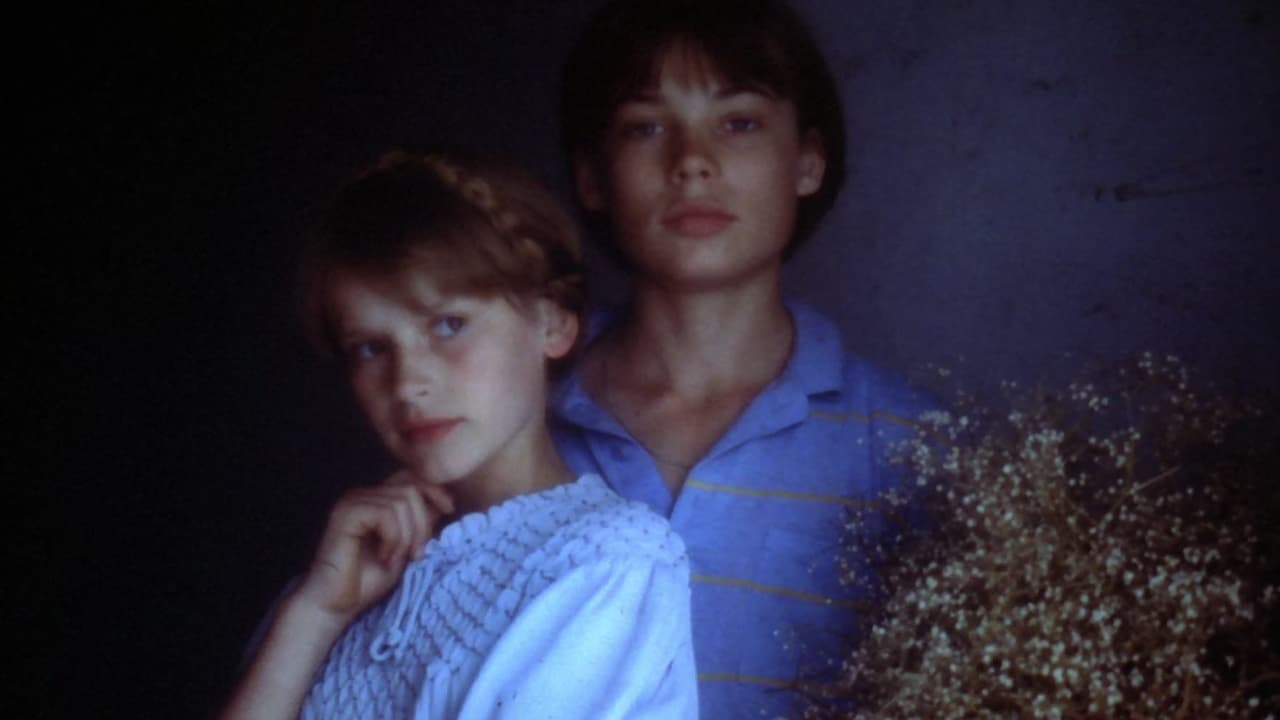

It's worth noting the film is based on a novel by Pascal Lainé, which actually won the prestigious Prix Goncourt in 1979. While adaptations always take liberties, the source material's literary pedigree perhaps provided a veneer of respectability that allowed the film's more explicit themes to reach the screen in certain markets. Finding this on VHS back in the day often felt like uncovering something slightly forbidden, a different flavour of European cinema far removed from the action blockbusters nearby.
A Complex Legacy
Does Tender Cousins work? As a mood piece, an exercise in capturing a specific, sun-dappled atmosphere of adolescent yearning, it has moments of undeniable visual artistry. Hamilton certainly knew how to compose a beautiful shot. But the pervasive, voyeuristic quality inherent in his signature style, applied to themes of burgeoning (and potentially incestuous) sexuality involving minors, makes it a deeply unsettling watch. The film doesn't really interrogate Julien's obsession or the complex power dynamics at play; it mostly observes, often through that soft-focus lens that blurs moral clarity along with the image.
Unlike other coming-of-age films that handle youthful sexuality with sensitivity and insight, Tender Cousins often feels like it prioritizes Hamilton's aesthetic over genuine emotional depth or responsible storytelling. The historical context of 1939 feels largely incidental, a slightly melancholic wallpaper rather than a force shaping the characters' choices or destinies.
Rating: 4/10
This is a tough one to score. Purely on its visual merits and its effectiveness in creating a specific, languid mood, one might argue for a higher number. However, the deeply problematic nature of its gaze and its handling of sensitive themes, hovering uncomfortably close to exploitation under the guise of art, drags it down considerably. The narrative is thin, and the character development outside of Julien's perspective is minimal. It earns points for its unique aesthetic and as a historical artifact representing a certain controversial niche of late 70s/early 80s European filmmaking, but it’s impossible to recommend without significant caveats.
Tender Cousins remains a curious and troubling artifact from the VHS era – a film whose beauty is inextricably linked to its discomfort, leaving you pondering the complex relationship between art, artist, and exploitation long after the screen fades to static.