Some films don't just tell a story; they seep into your mind like a strange dream, leaving behind vivid, unsettling images you can't quite shake. Suzan Pitt's 1979 animated short, Asparagus, is precisely that kind of experience. Forget linear narrative or easy answers. Watching this feels like stumbling into a private, intensely symbolic psychodrama rendered in lush, flowing colours. It’s the sort of celluloid enigma that might have appeared unannounced late one night on some obscure cable channel, or perhaps tucked away on a collector's compilation tape passed between knowing hands – a whispered secret among animation aficionados.

A Descent into the Subconscious
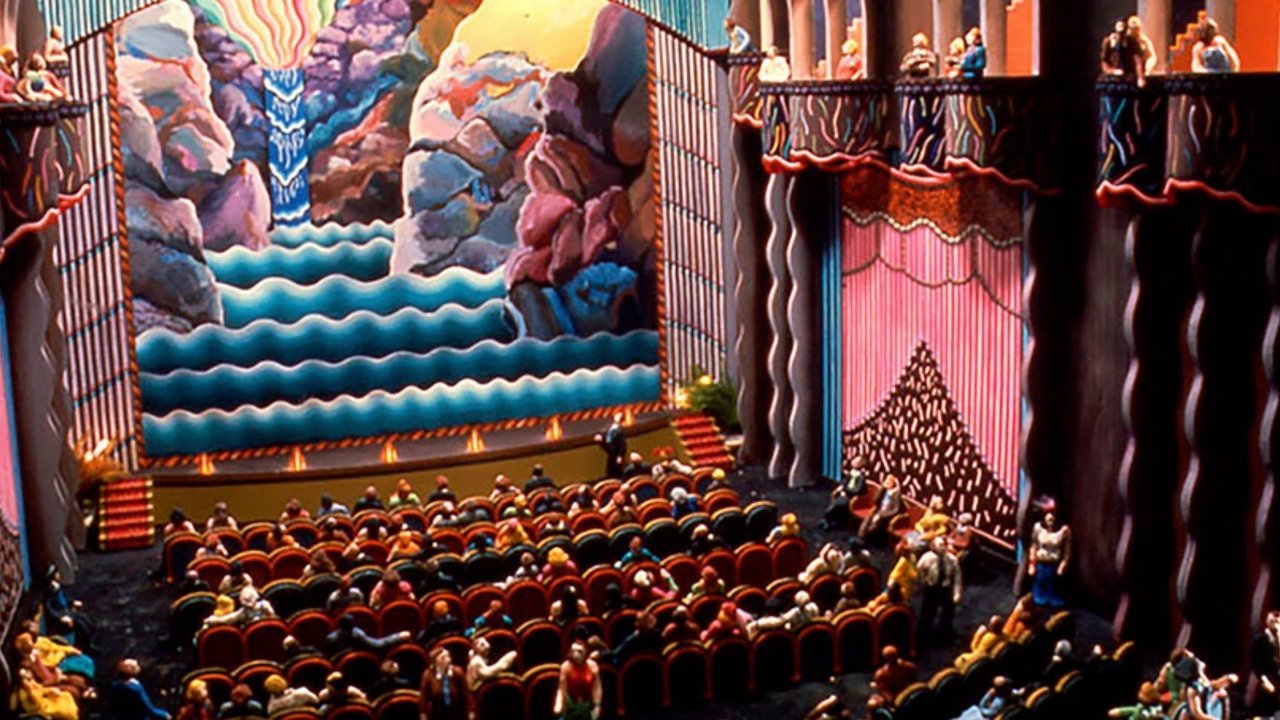
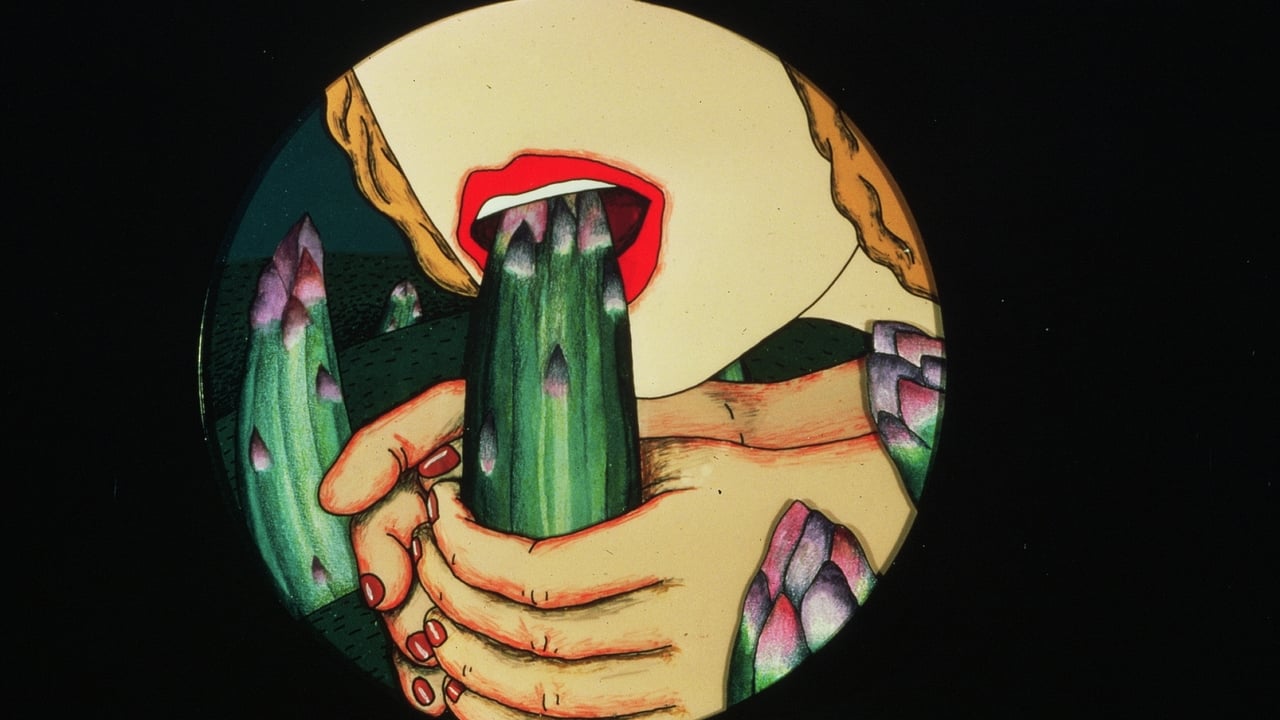
Asparagus unfolds without dialogue, relying entirely on its hallucinatory visuals and Richard Teitelbaum's often discordant, experimental score. We follow a faceless woman – an avatar of feminine interiority, perhaps – as she moves through a series of surreal environments. It begins in a strangely sterile, almost clinical room before she ventures outside into a landscape populated by bizarre flora and fauna. The central, recurring motif, of course, is the asparagus stalk – phallic, vegetative, symbolic. It’s presented, consumed, and ultimately becomes part of a startling, almost primal act of creation within a packed theatre audience. The film is rich with Freudian undertones, exploring themes of sexuality, creativity, voyeurism, and transformation with a directness that feels both confrontational and deeply personal. Remember the feeling of watching something so visually dense you knew you’d need to rewind and pore over it again? Asparagus practically demands it.
The painstaking Art of the Uncanny

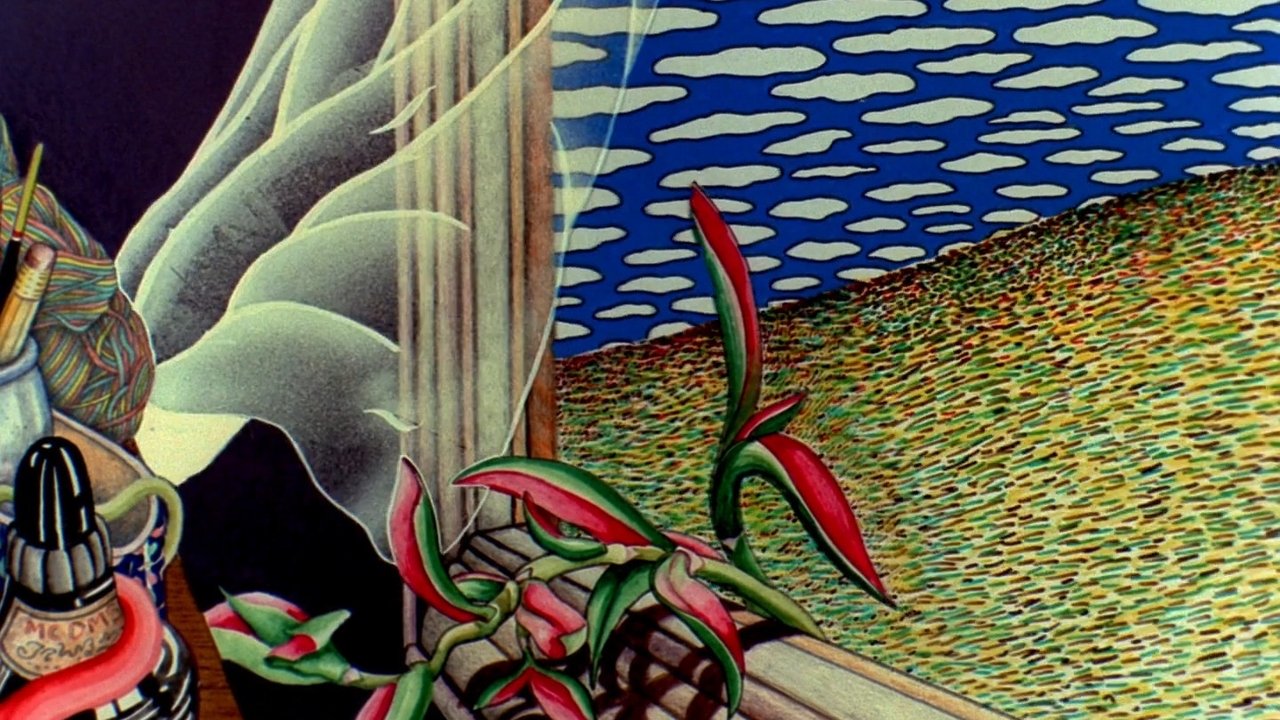
What truly elevates Asparagus beyond mere strangeness is the sheer artistry of its animation. This isn't Saturday morning cartoon fare; this is fluid, painterly motion achieved through laborious cel animation techniques. Suzan Pitt, who sadly passed away in 2019, spent years crafting this 19-minute vision. Every frame feels deliberate, saturated with colour and detail. The movements are hypnotic, sometimes languid, sometimes jarringly abrupt, perfectly mirroring the film's dream logic. Consider the scene where the woman opens her suitcase, revealing not clothes, but a miniature, animated landscape – it's a moment of pure visual poetry, showcasing Pitt's incredible technical skill and boundless imagination. It's the kind of meticulous, hand-crafted animation that feels almost alien in today's digital landscape, possessing a texture and depth that’s utterly captivating. This dedication resulted in a work so unique it famously ran for two years as a featurette alongside David Lynch's Eraserhead at midnight screenings – a pairing that makes perfect sense, given both films' shared DNA of surrealism and unnerving atmosphere.
Echoes in the Dark
This wasn't a film designed for mass consumption, and finding it back in the day often felt like uncovering a hidden artifact. It didn't offer easy scares or comfortable resolutions. Instead, it burrowed under your skin with its potent, often challenging imagery. The explicit, yet abstract, exploration of female sexuality and bodily experience was boundary-pushing for its time, especially within animation. Does that sequence in the theatre, where the mundane transforms into the fantastically grotesque, still feel audacious? It certainly leaves an imprint. The film bypasses intellectual interpretation and aims squarely for the gut, evoking feelings of fascination, discomfort, and wonder simultaneously. It’s a testament to Pitt’s singular vision that Asparagus remains such a powerful, discussed piece within avant-garde animation circles. It wasn’t just animation; it was art that moved, breathed, and bled onto the screen.
A Phallic Vegetable's Legacy
Asparagus is not a casual watch. It demands attention and invites interpretation without offering definitive answers. It’s a challenging, beautiful, and deeply weird piece of work that embodies the artistic freedom found in independent animation. For fans of surrealism, experimental film, or animation that dares to explore the subconscious, it remains essential viewing. It’s a reminder of a time when animation could be intensely personal, provocative, and resolutely adult.
Rating: 8/10
The score reflects the film's undeniable artistic merit, its influential status in avant-garde animation, and its enduring power to fascinate and unsettle. It’s docked slightly only because its abstract, symbolic nature makes it inherently less accessible than narrative-driven films. Still, Asparagus is a potent dose of pure cinematic surrealism, a vibrant, disturbing dream captured on film that, once seen, is rarely forgotten – a true gem for anyone seeking animation far beyond the mainstream. It’s the kind of discovery that made exploring the weirder corners of the video store (or late-night TV) so rewarding.